Back Up Files from a Possibly Infected Windows PC Safely
You can often preserve personal files from a possibly infected PC, but treat the backup as untrusted until it has been scanned on a clean system.
Contain the problem first
- Disconnect the PC from networks if malware is actively spreading or encrypting files. Stop syncing folders to cloud storage until you understand the infection.
- Do not run suspicious installers, scripts, shortcuts, or unknown macro-enabled documents. Avoid plugging your everyday backup drive into the PC if it contains your only good copy.
- If the drive is physically healthy, make a copy of valuable personal files to a separate removable disk. Use a clean boot environment if possible.
- Record the location and date of the suspect copy. Do not merge it directly with your trusted backup archive.
Choose files carefully
Prioritize photos, videos, plain documents, and known project files. File extensions are not proof of safety; an infected document can contain macros or malicious links. Avoid restoring executables, browser extensions, and software cracks from the suspect system.
Scan before restoring
- On a clean, updated Windows PC, connect the suspect backup with AutoPlay disabled and do not open files immediately.
- Run an up-to-date antivirus scan of the backup drive. Inspect detections and file paths.
- Open a small sample of essential files only after scanning. For Office documents, keep macros disabled unless their origin is trusted.
- Restore approved files to a clean installation and monitor for recurring warnings. Keep the suspect source separate until the recovery is complete.
When to seek help
If files are encrypted or Windows keeps changing them, stop ordinary backup jobs that might overwrite earlier good copies. A professional incident-response or recovery service may be appropriate for business or irreplaceable data.
Back Up Selected Files with Qiling Disk Master
Qiling File Backup can create a separate copy of selected folders, but the backup image must still be treated as potentially infected. Scan extracted files before restoration.
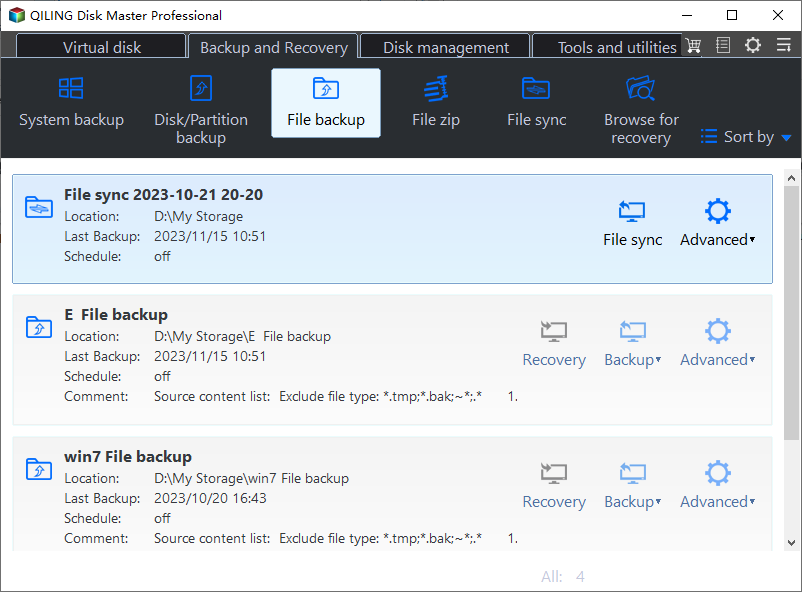
Step 1. Connect a separate backup drive. Open Backup and Recovery and choose File backup.
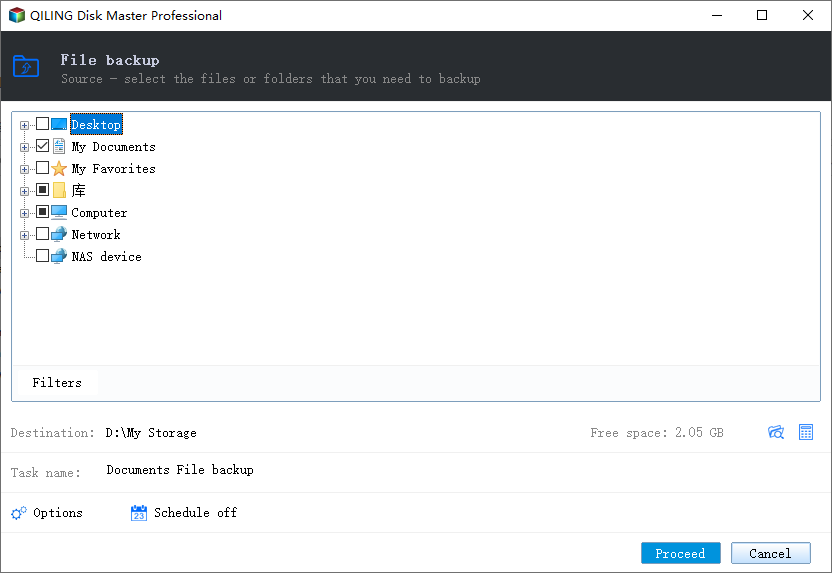
Step 2. In the folder tree, expand the appropriate drive and select the folders you need to protect. Check game saves, Documents, Pictures, or other locations that matter for this task; do not assume every needed file is in one folder.
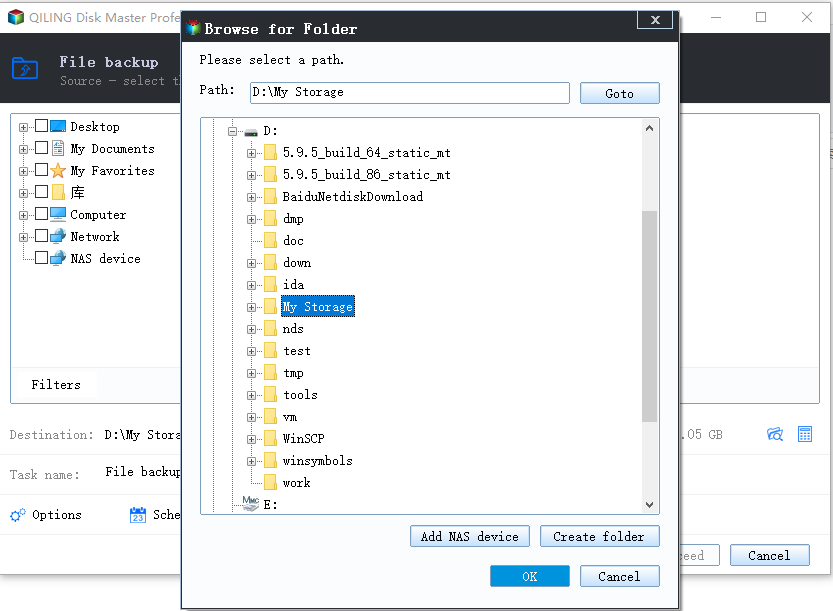
Step 3. Choose a dedicated removable drive as the destination, separate from your trusted backups. Check its free space and give the task a recognizable name. Keep the suspect PC off the network during the backup.
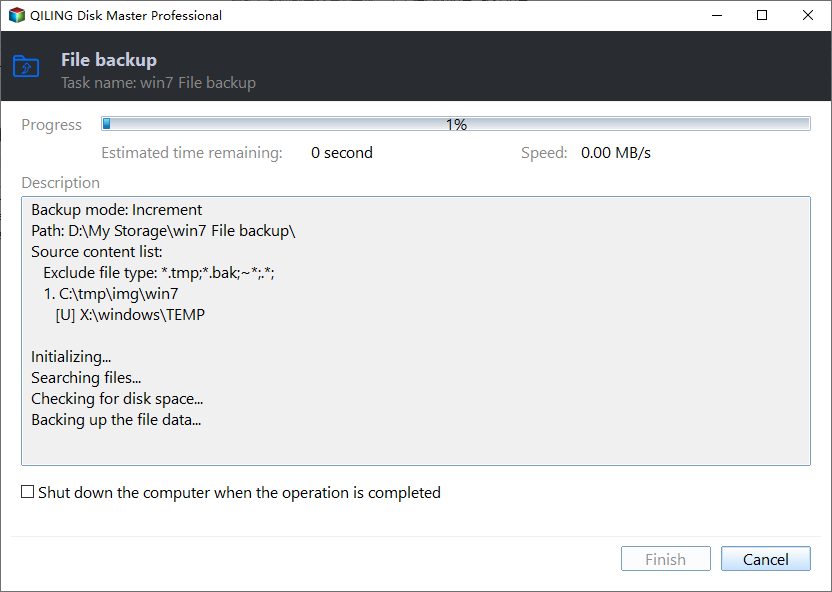
Step 4. Click Proceed and wait for the progress screen to finish. Confirm the backup exists, then keep the backup drive separate from the source PC.
Frequently Asked Questions
Can malware hide in documents? Yes. Treat macro-enabled and unfamiliar documents cautiously.
Should I clone the entire infected disk? A disk image may preserve evidence, but do not use it as a clean restore source without inspection.
Conclusion
Keep a suspect backup isolated, scan it on a clean PC, and restore only reviewed files. Do not merge it with your known-good backup.
Related Articles
- Windows File Backup and Restore Tutorials
Compare ways to protect and restore personal files in Windows. - Windows System Backup and Restore Tutorials
Find system image, recovery drive, and restore guides for Windows. - Windows Disk Backup and Restore Tutorials
Explore disk image backup and restoration workflows for Windows drives.
Products
Articles & Tutorials
- Data Recovery
- Data Backup
- File Recovery
- File Backup
- System Backup and Restore
- Disk and Partition Clone
- Technical articles
- Mobile articles
- Disk Master Help
- Windows Data Recovery Tutorials
- Windows Secure Delete Tutorials
- Windows Partition Management Tutorials
- Windows File Backup and Restore Tutorials
- Windows System Backup and Restore Tutorials
- Windows Disk Backup and Restore Tutorials
- Windows Clone Tutorials