Fix for Low System Reserved Partition on MBR/GPT Disk in Windows 7/8/10
Are you experiencing issues updating to a new system or receiving error messages due to low space in the system reserved partition in Windows 7/8/10? The system reserved partition is a small partition that contains essential system files and is used by Windows to boot and operate. It's often confused with the C: drive, but they serve different purposes. If the system reserved partition is running low on space, it can cause problems with system updates, leading to error messages.
Error Message: The system reserved partition, also known as the MSR partition, is a small partition on a Windows system that stores boot-related data. If you're unable to update this partition or install Windows 10, it may be due to a few reasons.
The reason for the error message:
The system reserved partition is created during Windows installation and takes up about 100MB in Windows 7, 350MB in Windows 8, and 500MB in Windows 10. If the system partition runs out of space, upgrading the system reserved partition may be necessary to resolve the issue.
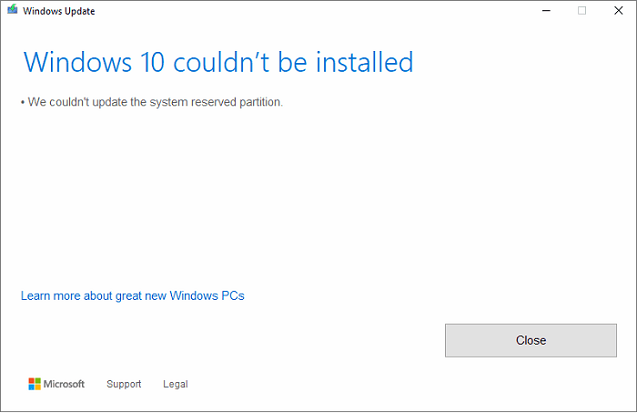
Here you'll be able to extend system reserved partition and fix low system reserved partition issues in Windows 7/8/10 on GPT/MBR disk by following two parts.
You may think it's not possible, but it's actually quite feasible to fix the low system reserved partition error and expand your system partition with ease. To do this, you can follow a series of steps that involve using the built-in Disk Management tool in Windows, creating a bootable USB drive, and using the command prompt to modify the partition size.
Part 1: Backup all computer data
It's highly recommended that Windows users with both MBR and GPT disk configurations back up their important data, including the Windows system, before attempting to extend the system reserved partition in Windows 10/8/7.
A free Windows backup software can help you easily backup all important Windows data or system with simple steps. You can download Qiling Backup, a free software, to directly backup all your Windows data.
Part 2: Extend system reserved partition in Windows 7/8/10
The system reserved partition typically doesn't cause issues, but it plays a crucial role in ensuring the Windows system runs smoothly. However, when this partition runs low on space, serious problems can arise for the Windows system.
The system reserved partition should not be altered, and its size should be kept at around 100MB.
Users are advised to check the system reserved partition usage regularly to prevent potential issues. However, problems may still occur, and low system reserved partition space is a common issue. To fix this, users can extend the system reserved partition, and the method is applicable for both MBR and GPT disk users.
For MBR users: extend system reserved partition
If you have an MBR disk with low space in the system reserved partition, you can only shrink the volume or add a mirror to the system reserved partition, but you cannot extend it.
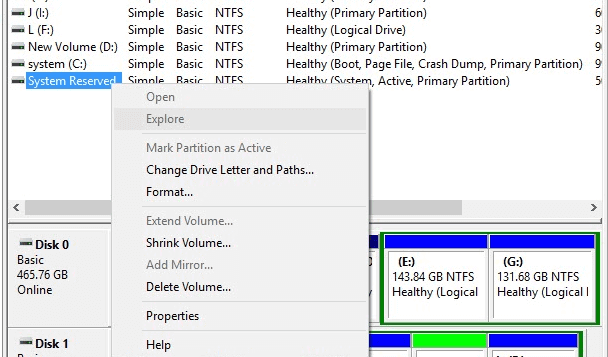
Here, we suggest using Qiling Partition Master, a professional partition manager software, to easily extend the system reserved partition in the MBR disk system.
Step 1. Backup the merged partition with file backup mode
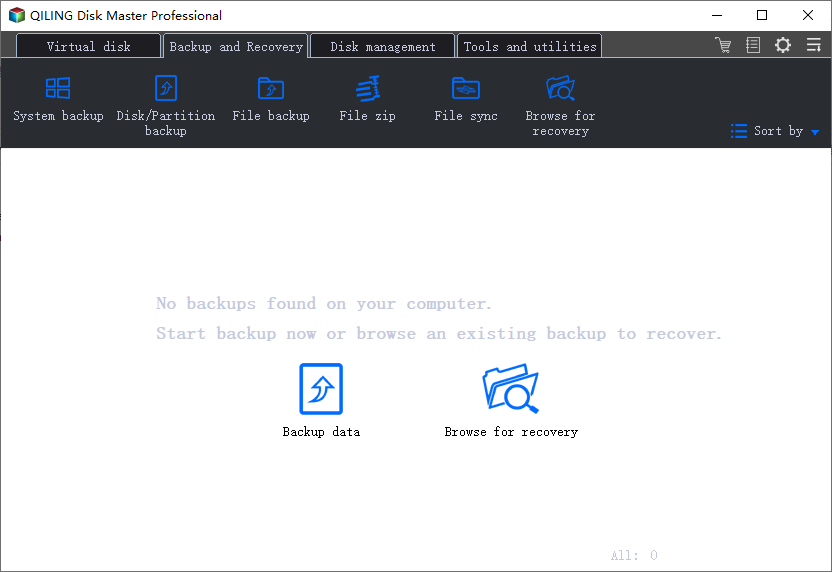
1. Click "File backup" on the main window.
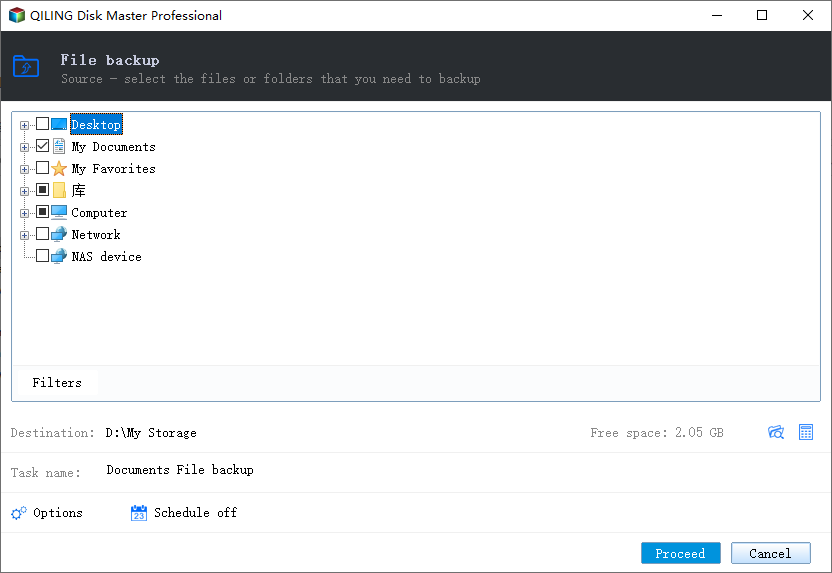
2. Select the files you want to backup and click "Proceed" to initiate the backup process.
Step 2. Delete the merged partition.
Step 3. Extend the partition.
1. To resize or move a partition, first click on the partition you want to adjust, then select the "Resize/Move" option from the Disk Management page.
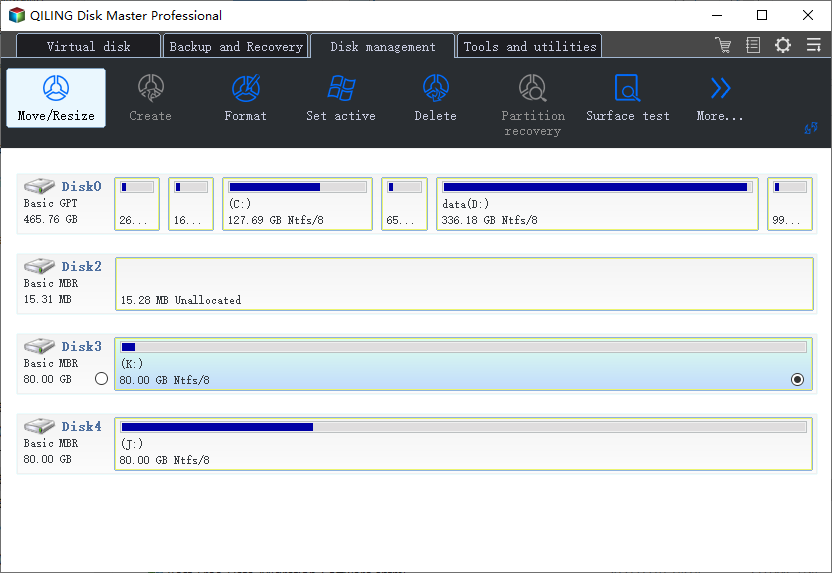
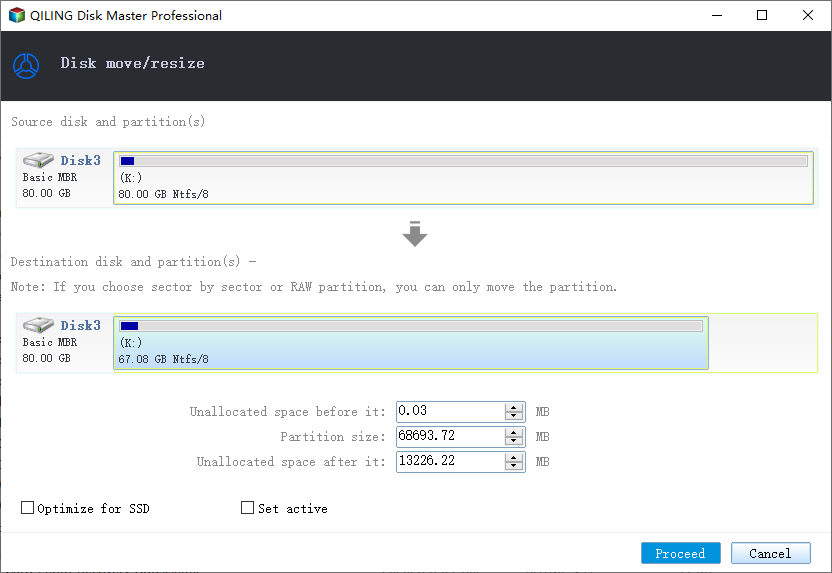
2. To expand a partition in Disk Management, drag the partition end into the unallocated space to add it to the partition, then click "Proceed" to start the process.
Step 4. Restore the backup to the extended partition.
Notice:
Generally, you can't distinguish the Windows system reserved partition via its label. The disk type shows as Active, which is the correct one.
You have successfully extended the system reserved partition with a few a few clicks, and you can now view the changes in the Disk Management window under Windows 10/8/7, and so on.
For GPT disk users: extend system reserved partition
In GPT disks, the system reserved partition is often marked as an EFI system partition, making it invisible to users, which helps protect system security and prevent unexpected problems.
However, this may prevent users from adjusting or resizing system reserved partition in Windows 10/8/7. To fix this issue, users can try the recommended solutions below to see if they resolve the problem.
Method 1. Extend system reserved partition with Qiling Partition Master
To extend the system reserved partition for UEFI users, follow the same steps as for MBR users, but keep in mind the following tips:
- If Qiling Partition Master cannot detect the GPT disk system reserved partition, it cannot extend the space.
- If the system reserved partition is detected as other in the file system but not in the system status, Qiling Partition Master will not be able to extend or add space to the system reserved partition.
Method 2. Search for other solutions to fix low system reserved partition problem
If you don't want to download a third-party tool to fix the low system reserved partition problem and aren't familiar with CMD, we can try searching for alternative solutions.
- Using Command Promptto resize or extend system reserved partition;
Resize system reserved partition in Windows 10:
1. To open Command Prompt, search for "cmd" in the search bar, then right-click on the Command Prompt icon and select "Run as administrator".
2. Input mountvol y: /s> Enter
The command will assign the drive letter Y to the system partition, allowing users to access it directly.
3. To change the Windows boot font, you can type Y: and press Enter. Then, navigate to the Fonts folder by typing cd EFI\Microsoft\Boot\Fonts. This will take you to the directory where the Windows boot font is located.
4. Type `del *.ttf` to delete the font files. Then, press Y and Enter to continue.
Increase system reserved partition in Windows 7/8:
1. To open the Command Prompt as an administrator, navigate to the Search function, right-click on the Command Prompt icon, and select "Run as Administrator" from the context menu.
2. Type mountvol y: /s> Enter
To add a Y: drive letter to access the system partition, you can use the following command in the Command Prompt: `mklink /D Y: C:\` . This creates a symbolic link to the system partition, allowing you to access it through the Y: drive letter.
3. To terminate and restart File Explorer as an administrator, type the command `taskkill /im explorer.exe /f` and press Enter. This will close the current instance of File Explorer. Then, type `explorer.
4. To access the UEFI firmware settings, follow these steps: Open File Explorer, then type Y: \ EFI \ Microsoft \ Boot \ and press Enter. This will allow you to access the UEFI firmware settings.
5. Choose language folders to delete. > restart device
Notice:
This method requires professional knowledge about cmd, so only those who are familiar with the tool should attempt it. Otherwise, attempting this method may cause your computer to experience startup errors.
- Try some other partition manager software;
- Delete system reserved partition (some users tired but not recommended).
Related Articles
- How to Clone 1TB HDD to 2TB SSD Without Reinstalling on Windows 11/10/8/7
- Shred vs. Delete. What is the Difference?
- How to Create EXT2/EXT3 Based Linux Partition from Windows
- How to Resize Partition Using GParted and Qiling Partition Master
- Two Simple Ways to Run an Incremental Copy in Windows
Running an incremental copy in Windows is a good way to save backup storage space and minimize the time required for backup. To do so, two easy ways are listed here. - Solved: Kingston SSD Toolbox Not Detecting SSD in Windows 10
How to deal with the problem of Kingston SSD Toolbox not detecting SSD? The best backup software – Qiling Disk Master Standard can give you a hand.
Products
Articles & Tutorials
- Data Recovery
- Data Backup
- File Recovery
- File Backup
- System Backup and Restore
- Disk and Partition Clone
- Technical articles
- Mobile articles
- Disk Master Help
- Windows Data Recovery Tutorials
- Windows Secure Delete Tutorials
- Windows Partition Management Tutorials
- Windows File Backup and Restore Tutorials
- Windows System Backup and Restore Tutorials
- Windows Disk Backup and Restore Tutorials
- Windows Clone Tutorials