How to Move Windows 10 Installation to Another Drive(SSD/HDD)
PAGE CONTENT:
- 1. Yes, it is possible to move a Windows 10 installation to a new SSD or HDD. This process is called a "clone" or "transfer" of the operating system, and it allows you to keep all of your programs, files, and settings on the new drive.
- 2. There are two ways to move a Windows 10 installation to another drive. One way is to use the built-in tool called "Reset this PC" which allows you to choose whether you want to keep your files, apps, or both, and then select the drive you want to install Windows on.
- 3. Bonus: How to Boot New Drive Successfully
- 4. Conclusion
- 5. FAQ about Move Windows 10 Installation to Another Drive
Is It Possible to Move Windows 10 Installation to A New SSD/HDD
A hard drive is a computer storage device that stores operating systems, applications, and data files, being a crucial part of the computer.
If your hard drive space is full or unavailable, you may need to replace the old hard disk with a larger or new one, which requires reinstalling the operating system and all programs.
This is a question from a Windows user:
Yes, you can clone your old hard drive to the new one, but you'll need to ensure the new drive is identical in size and type to the old one. You can use a cloning software like Qiling to clone the entire drive, including the Windows 10 installation and all your programs. After cloning, you should be able to boot from the new drive without needing to reinstall Windows. However, it's always a good idea to verify that the clone is successful and that everything is working properly before relying solely on the cloned drive.
You can use a tool like Qiling Disk Master clone the entire system to the new drive, including OS and programs, without reinstalling OS and losing data. This process is called a "disk-to-disk clone" and it will create an exact copy of your system on the new drive.
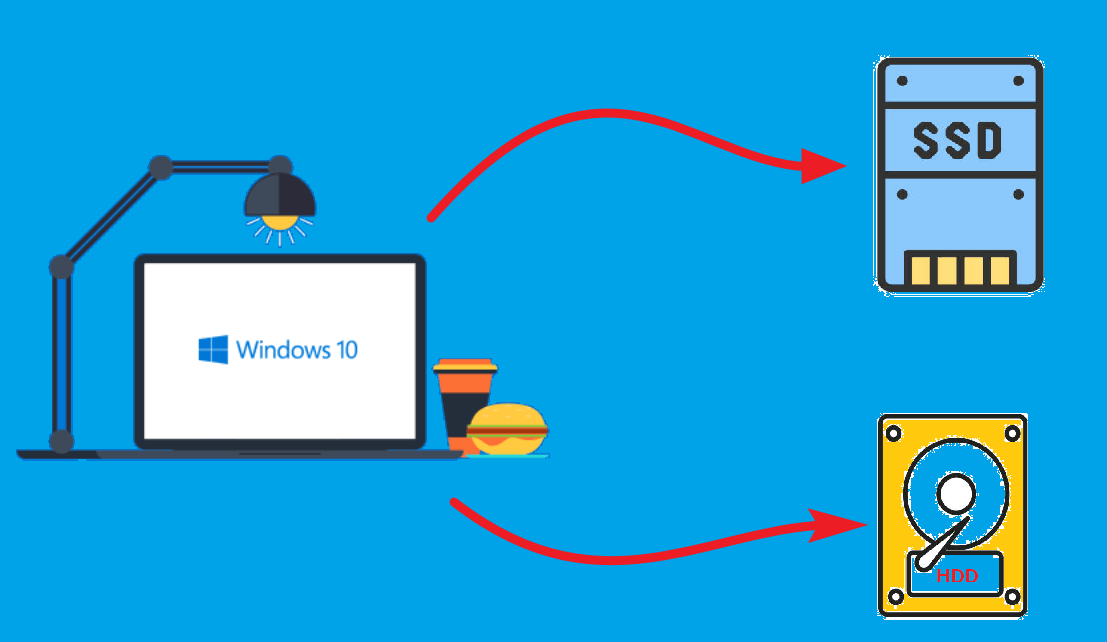
While the task may seem daunting, it's actually manageable with the right tool and clear steps.
Qiling Backup This tool allows you to move your Windows 10 installation to another drive without any issues, making it easy to upgrade your storage without reinstalling the operating system.
It can help clone a hard drive to a solid-state drive, or upgrade to a larger hard drive, making it bootable, and also create and restore a system image for backup purposes.
You can upgrade to Windows 11 without reinstalling Windows and programs, and all your data will remain intact. There are two ways to do this: using the built-in upgrade feature or using a third-party tool. The built-in upgrade feature allows you to upgrade to Windows 11 directly from Settings, while a third-party tool like Qiling Disk Master can help you transfer your data and programs to a new Windows 11 installation without reinstalling them.
You may also be interested:
2 Available Ways to Move Windows 10 Installation to Another Drive
To ensure a smooth transition of your Windows 10 installation to another drive, you should prepare the following in advance:
Preparations You Need to Do:
- Prepare a new SSD or HDD and connect it to the computer. To connect the new hard drive, you can use a SATA or USB cable and install it in your computer's available slot. Make sure your computer can detect the new drive and that its storage space is larger than your system space to ensure a smooth installation process.
- Download and install the system backup and clone software to your computer. Qiling Backup is a lightweight backup solution that can be installed quickly and takes up minimal storage space.
- Initialize the new HDD/SSD if it's an unallocated space. To check if the disk is visible in Disk Management, go to Disk Management and look for the disk in the list. If it's not there, try restarting your computer and then check again. If it still doesn't appear, you may need to take further steps to make the disk visible.
Method 1. Clone Windows 10 Installation to a New SSD/HDD
System cloning is an advanced feature in Qiling Backup Home that allows you to transfer a Windows 10 installation to a different drive without reinstalling the OS and applications.
Follow the steps below:
Step 1. On the main page, click on the "Tools" tab, where you can find system cloning and other utility options.
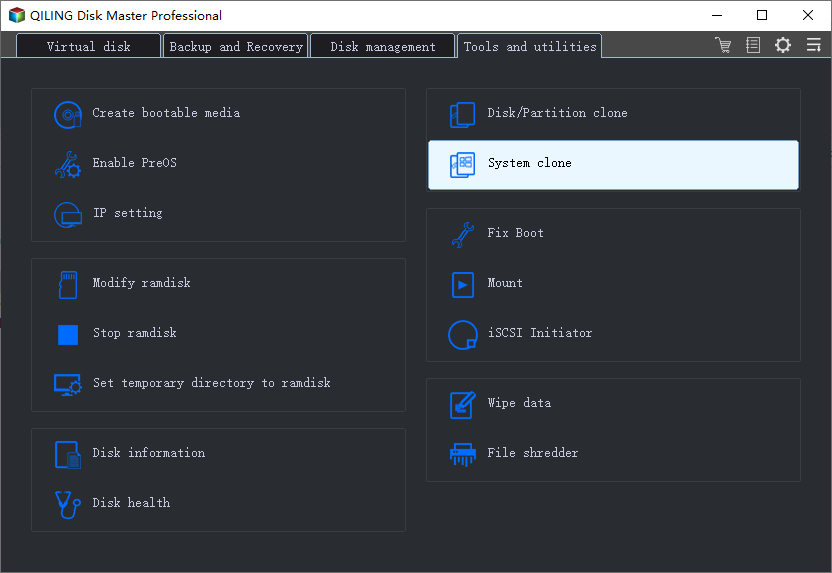
Step 2. Qiling Backup will automatically select the boot and system partition, then choose the target disk and click "Next".
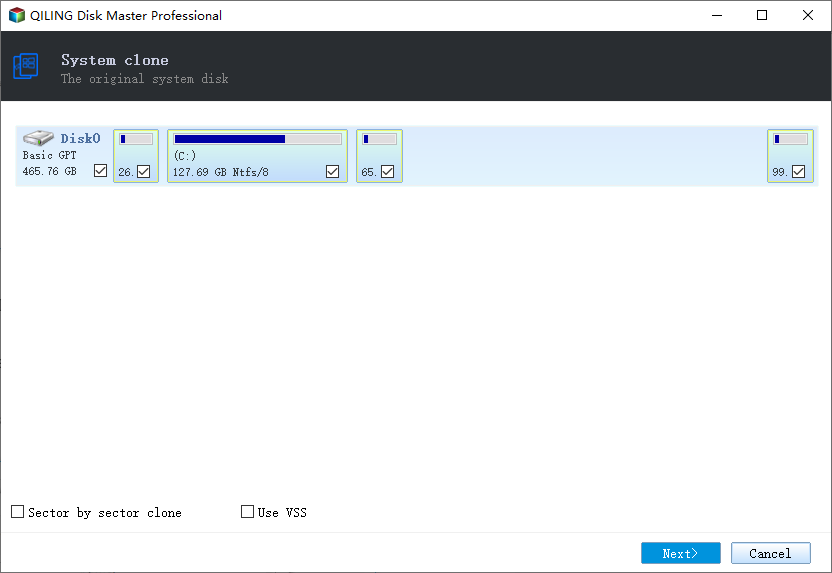
System clone will completely erase all data and is not compatible with cloning a disk with a Master Boot Record (MBR) to a disk with a GUID Partition Table (GPT) or vice versa, so ensure the source and target disks have the same partition style.
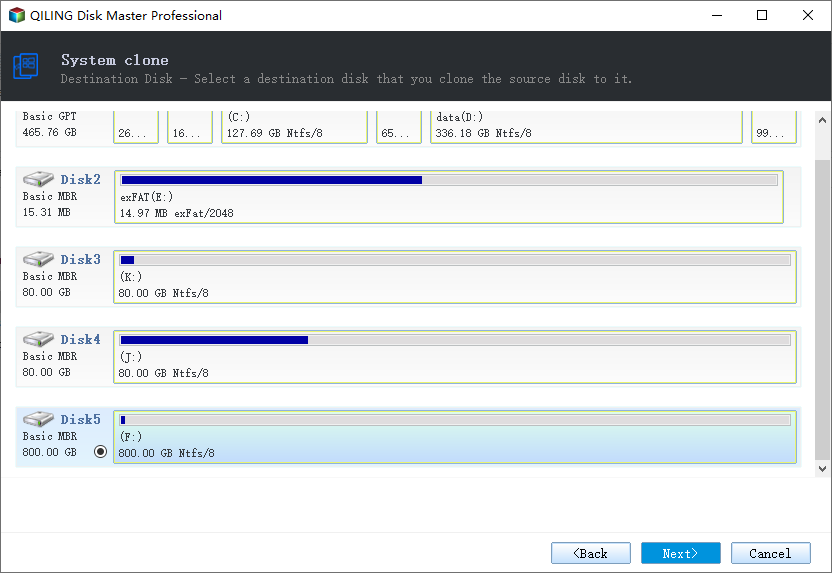
Step 3. If the target disk is a SSD, select "optimize for SSD" in the advanced options.
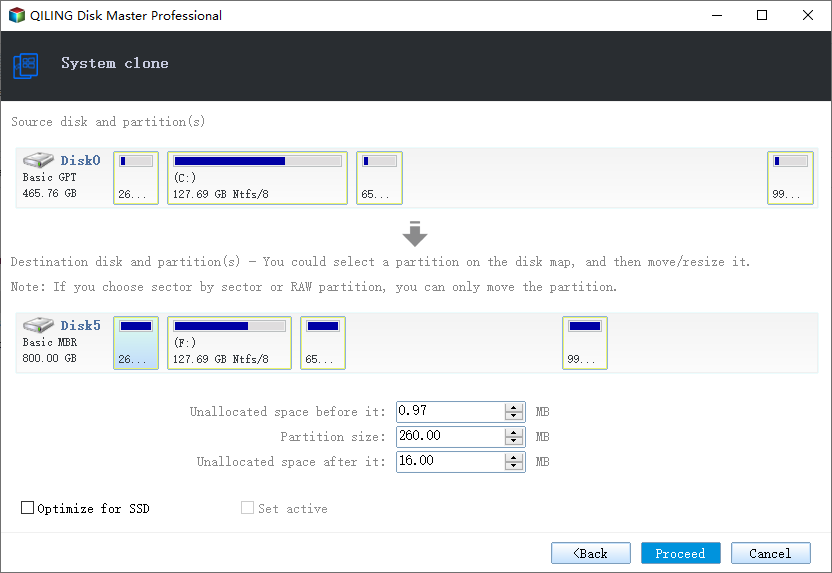
Step 4. Click "Proceed" to start cloning.
Method 2. Create A Windows 10 System Image and Restore it to New Drive
Another working solution is using the backup and restore functions, which involves two main steps: backing up the system first and then restoring the system image to the new hard drive or SSD.
First, create a system image of the old hard drive:
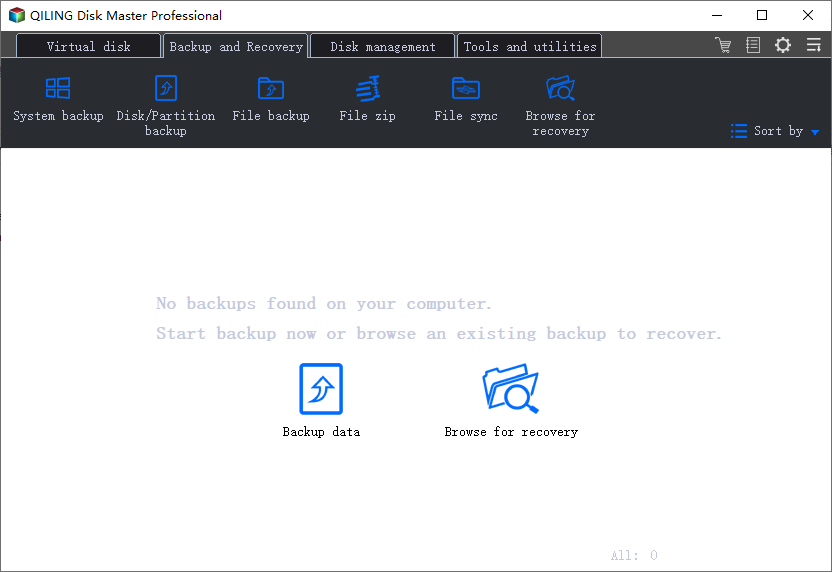
Step 1. Launch Qiling Backup on your computer, and click System Backup on the home screen to start the backup task.
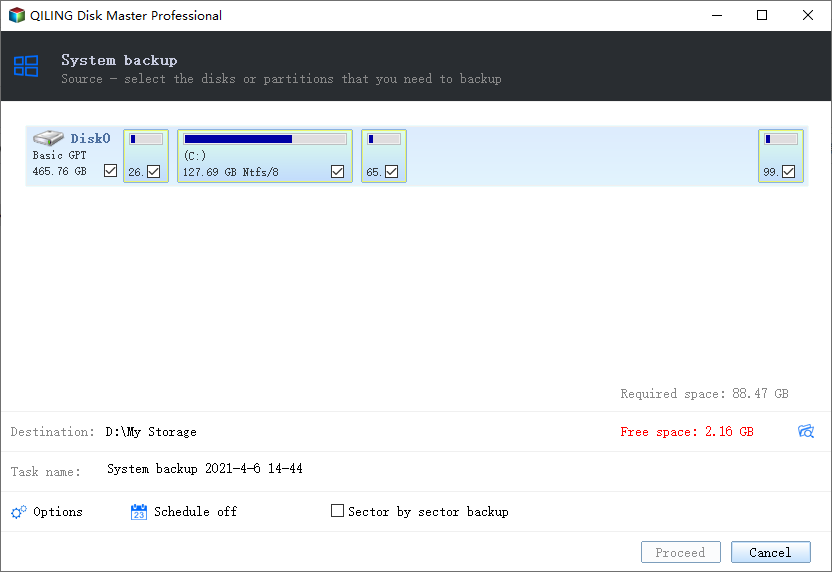
Step 2. You don't need to manually select any system files or partitions, as Windows will automatically choose them. Next, you'll need to select a location to save the system image backup by clicking on the illustrated area.
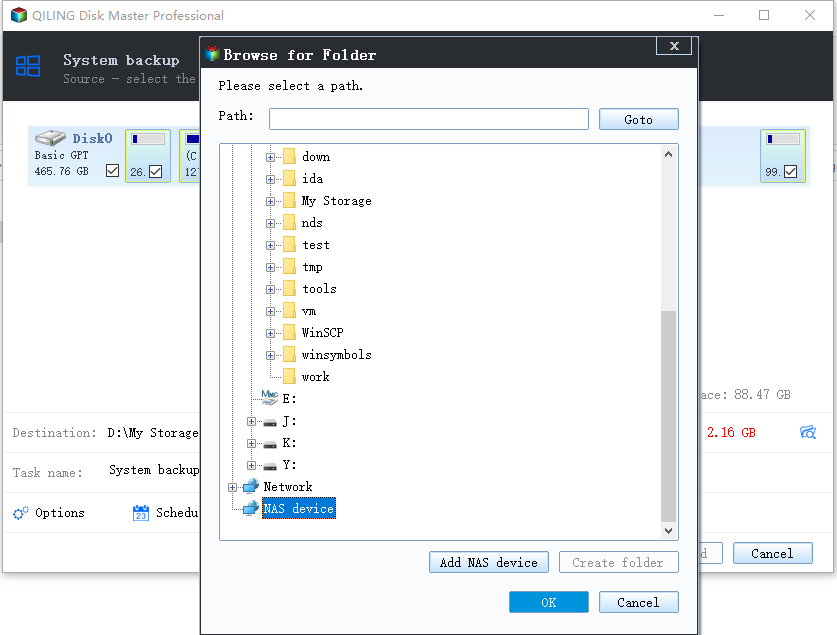
Step 3. The backup location can be another local drive, external hard drive, network, cloud, or NAS, with external physical drives or cloud storage being recommended for preserving system backup files.
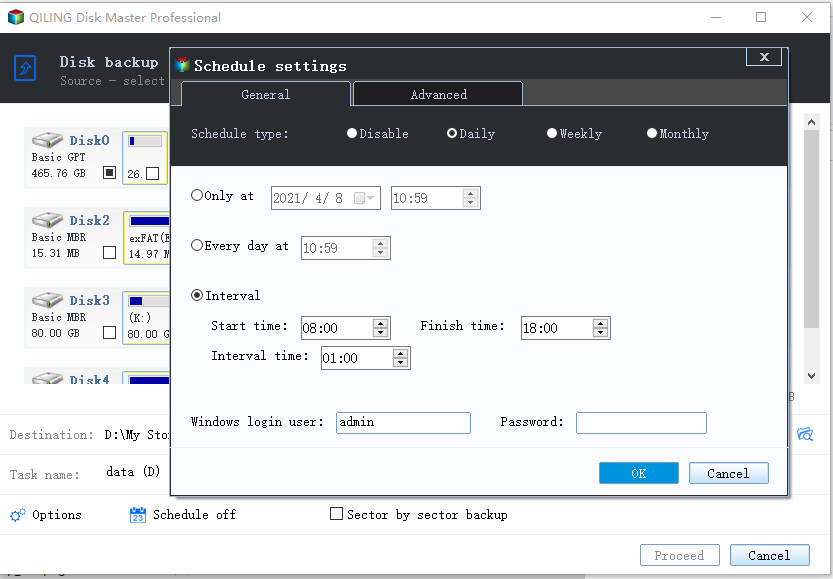
Step 4. The Windows system backup process can be customized by enabling an automatic backup schedule, such as daily, weekly, or monthly backups, or upon a specific event. Additionally, options for differential and incremental backups are available. By clicking "Proceed", the backup process begins, and the completed task is displayed on the left side in a card style.
Second, restore the backup to the new drive:
*Try to boot the computer with the Qiling Backup emergency disk to accomplish system recovery on a non-bootable machine..
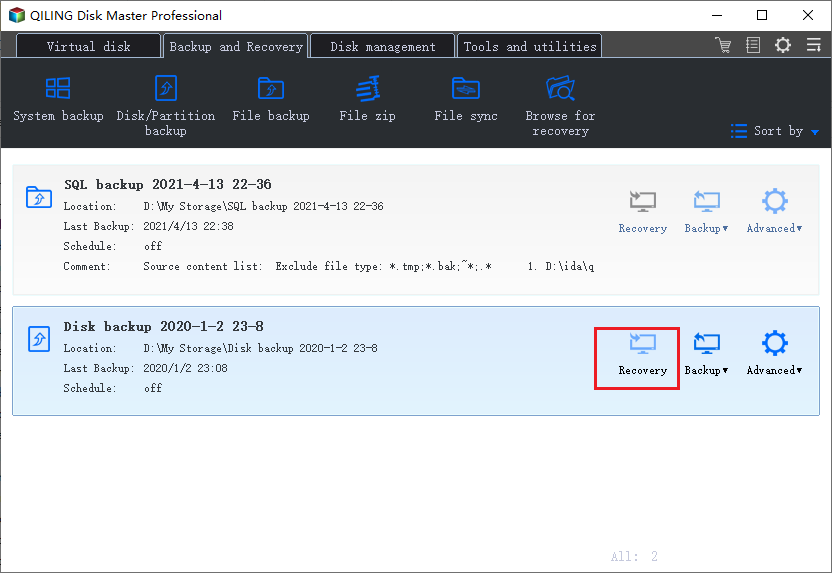
Step 1. Luanch Qiling Backup and click Browse to Recover button.
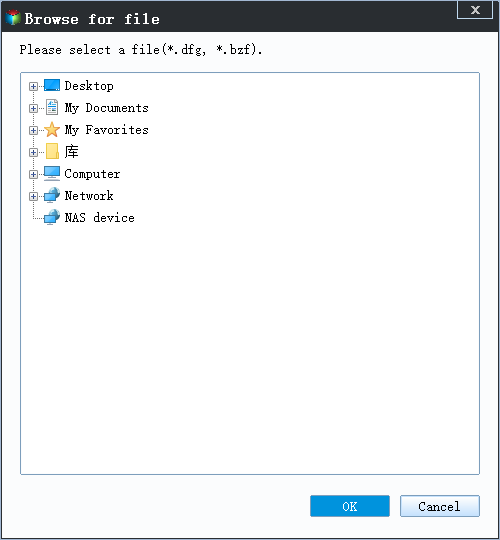
Step 2. Go to the backup location, select the system backup file (a fvd file) created by Qiling Backup.
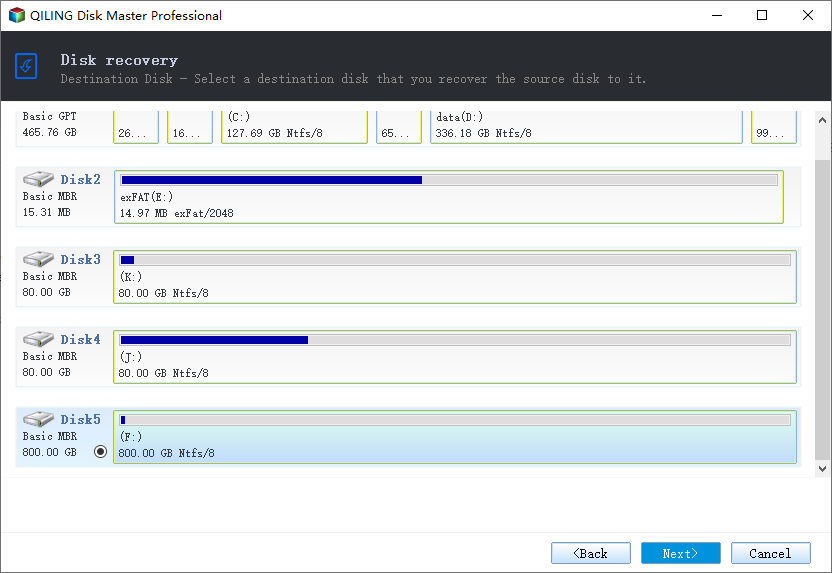
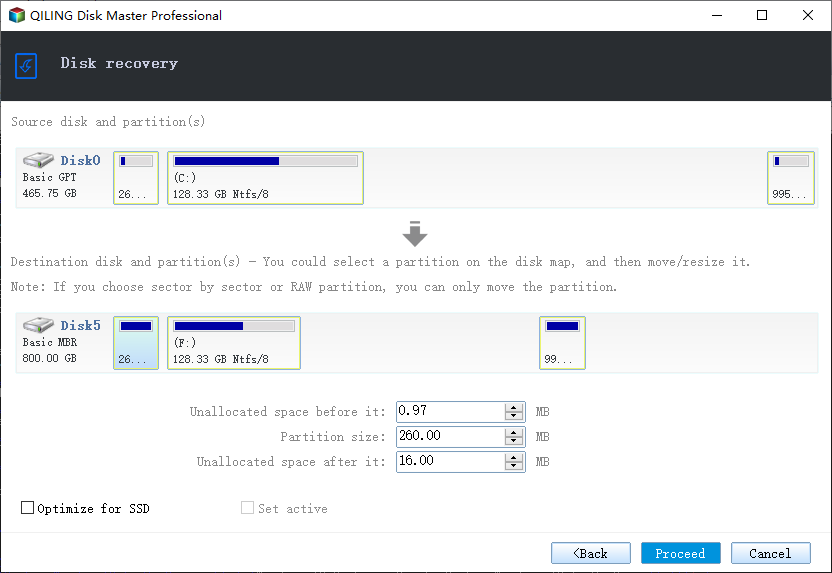
Step 3. To initiate a system recovery, select a recovery disk that matches the partition style of the source disk, ensuring that both disks have the same partition style, such as MBR (Master Boot Record) or GPT (GUID Partition Table).
Step 4. To begin system backup recovery, select Proceed after changing the disk layout to suit your requirements.
Bonus: How to Boot New Drive Successfully
After moving Windows 10 to a new hard drive, you'll need to update the boot order in your computer's BIOS settings. This ensures that the system can successfully boot up from the new disk in the future.
Step 1. Unplug all devices except for the keyboard and mouse from your computer, then shut down your computer.
Step 2. To access the BIOS settings, restart your computer and press the designated key (usually F2, F12, or Del) as soon as the computer starts booting up. This will take you to the BIOS setup screen, where you can make changes to the boot order, time, and other settings.
Step 3. To prioritize your new hard drive or SSD containing Windows 10 in the BIOS, locate the "Boot Order" section and adjust the settings to place your new drive at the top of the priority list, ensuring it boots first.
Step 4. Press "F10" to save and exit BIOS, then restart the computer to verify if it boots successfully from the new hard drive.
If your cloned SSD won't boot, you can refer to the post about Clone SSD Won't Boot for further assistance.
Conclusion
Here is a one-paragraph summary:
Regardless of the method you choose, don't forget to set the boot order in the BIOS correctly to ensure your computer boots up successfully from the new drive.
FAQ about Move Windows 10 Installation to Another Drive
1. How do I move programs from C to D drive?
To safely transfer a program from the C drive to the D drive, follow these steps: go to Windows settings, click on Apps, find the program you want to move, and select a new location, which can be the D partition, and then click Move.
2. Does Windows 10 have Windows Easy Transfer?
Windows 10 does not have a built-in feature like Windows Easy Transfer, but you can use alternative tools like Qiling Backup to move your operating system to a new drive.
Related Articles
- How to Back Up Network Shared Files Using Network Backup Software
- How to Create WinPE Emergency Bootable Disk in Windows 10/8/7 [2022 New]
- Clear & Easy | How to Make A CD Bootable (Also Works with DVD)
- Best Alternative to Carbon Copy Cloner for Windows
- Top 3 Ways to Fix Windows Backup Keeps Failing
You can learn the reasons for Windows backup keeps failing and 3 methods to fix this problem as well as the best alternative to make system image backup easy. Please read on. - Solutions for Windows Boot Manager Windows Failed to Start
Are you struggling with the error: windows boot manager windows failed to start? You can read this article to learn the solutions.
Products
Articles & Tutorials
- Data Recovery
- Data Backup
- File Recovery
- File Backup
- System Backup and Restore
- Disk and Partition Clone
- Technical articles
- Mobile articles
- Disk Master Help
- Windows Data Recovery Tutorials
- Windows Secure Delete Tutorials
- Windows Partition Management Tutorials
- Windows File Backup and Restore Tutorials
- Windows System Backup and Restore Tutorials
- Windows Disk Backup and Restore Tutorials
- Windows Clone Tutorials