New Protection Strategy: Protect Backups from Ransomware
Ransomware is malicious software that attacks and locks down computers, files, and systems, forcing businesses to pay a high ransom to restore their data, with only a 60% chance of full recovery.
Creating regular backups for important files is a common data protection method, but cybercriminals can be more sophisticated and target backups themselves, leaving businesses with no choice but to pay. Even after paying, the attacks don't stop, and the money is often misused to fund more attacks. To protect against this, individuals and organizations need to enhance their data security and restore capabilities, applying a new backup strategy that safeguards backups from ransomware, allowing for rapid data recovery in minutes.
What You Should Do to Protect Backups from Ransomware
1. Don't Click the Link!
To prevent ransomware attacks, protect your data and devices first. Be cautious with unfamiliar emails and text messages, as most ransomware attacks start with spam emails and fake web links. Avoid clicking on links without verifying the sender's identity to stay safe.
Be cautious when downloading software or videos from unofficial sites, as they may contain viruses or ransomware codes from unknown sources. Avoid downloading paid content from websites that claim to be free, as it may also be infected with malware.
2. Implement Endpoint Security
Consider your business's risk level and infrastructure when selecting a security solution. For a business, hiring a cybersecurity expert to assess and test your situation can be beneficial. At a minimum, a good firewall and virus protection are necessary. If your systems are primarily cloud-based, you'll likely benefit from the latest cybersecurity protections and encryption. However, it's always a good idea to consult with your cybersecurity vendor for additional advice.
3. Enforce Backup Strategies
To protect your data, implement sound backup best practices by regularly backing up files to an external hard drive or cloud storage, keeping multiple copies of important files, and testing backups to ensure they are working properly, safeguarding your data and business continuity in the event of a disaster.
For PC users, finding the best virus protection can be a daunting task. Fortunately, there are numerous options available, both free and paid, that can provide top-notch security.
Choosing the right antivirus software for your PC is crucial to protect your computer data. While making backups is essential, antivirus software is also necessary to prevent malware from damaging your system. In this article, we'll guide you on how to select the best virus protection for your PC, ensuring your digital assets are safe and secure.
How Qiling Backup Protects Your Backup from Ransomware
Qiling Backup prioritizes data security by allowing users to create multiple backups with a single software. It supports backing up data to various destinations, including local storage, NAS, and cloud services, ensuring that even if a user's computer is compromised by a virus, their data can still be recovered from a safe location.
The 3-2-1 strategy involves storing three complete backup files, one original and two copies, on at least two different media, with one copy in another location.
Qiling Backup not only creates a local disk backup but also offers a security feature called Security Zone to prevent ransomware attacks. This feature creates a secure and encrypted partition that is inaccessible to both the user and the ransomware, allowing users to keep their backup files and data safe even if their computer is compromised.
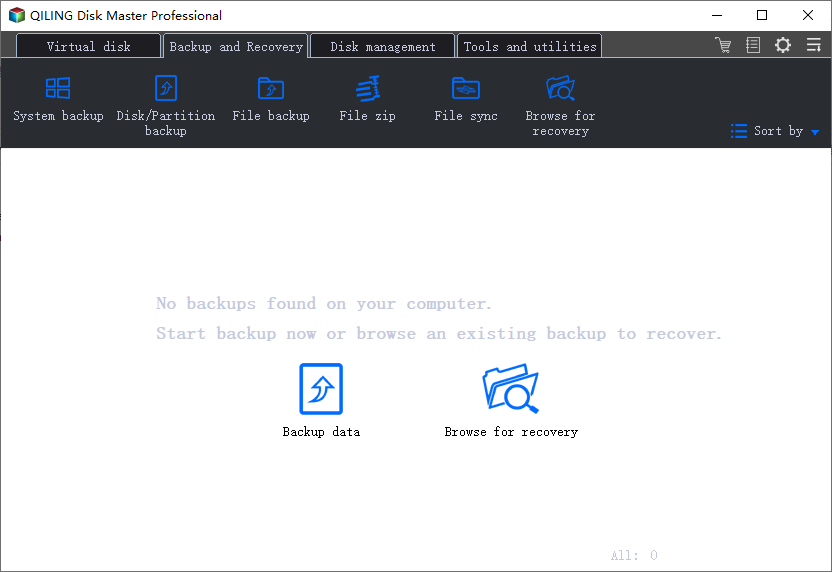
Step 1. Launch Qiling Backup on your computer, and click System Backup on the Backup and recovery page.
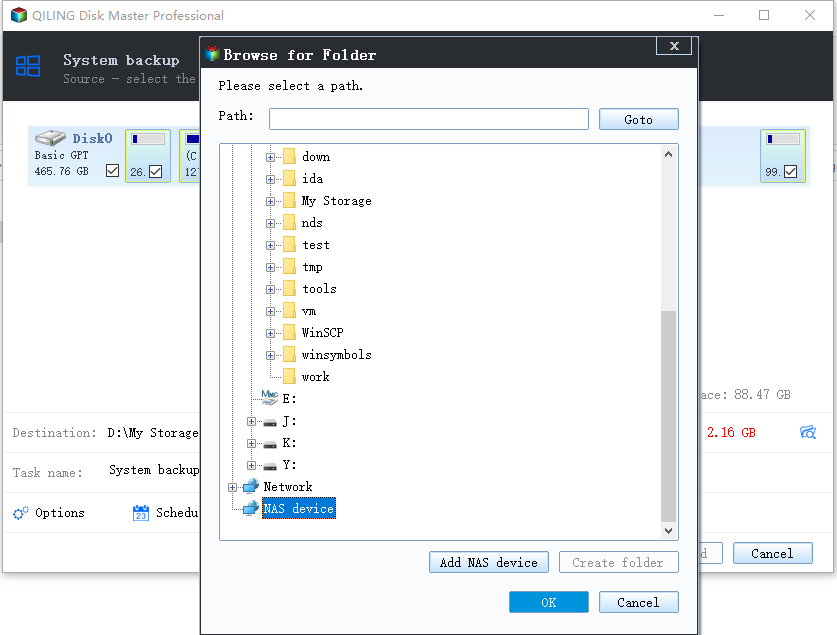
Step 2.You don't need to manually select your Windows operating system information and system-related files and partitions at this step, as they will be automatically selected. Next, you'll need to choose a location to save the system image backup by clicking on the illustrated area.
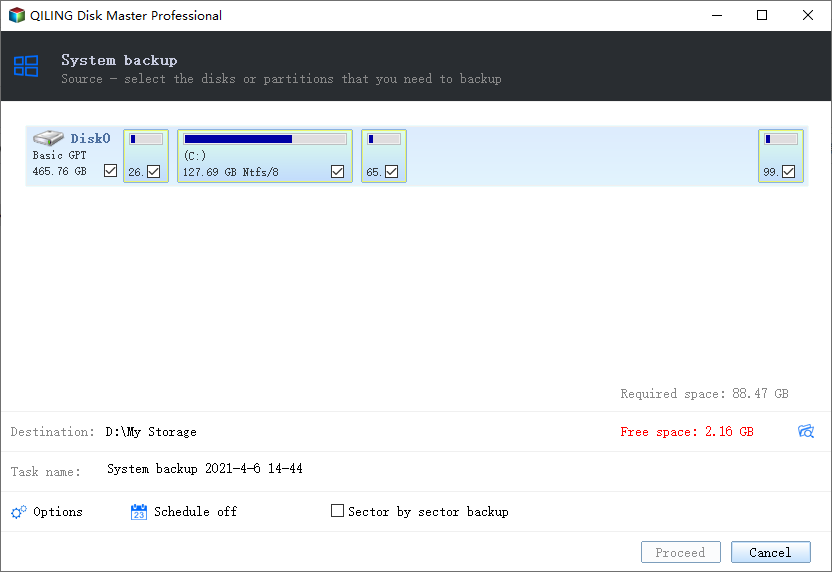
Step 3. The backup location can be another local drive on your computer, an external hard drive, network, cloud, or NAS. It's recommended to use an external physical drive or cloud to preserve system backup files.
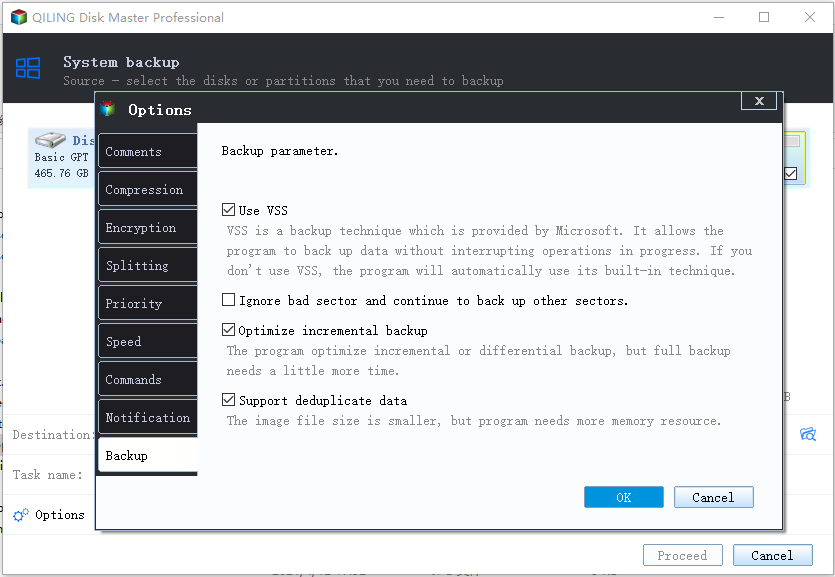
Step 4. Customization settings, such as enabling an automatic backup schedule for daily, weekly, monthly, or event-based backups, and making differential and incremental backups, are available in the Options button. Clicking "Proceed" initiates the Windows system backup process, which is then displayed on the left side in a card style once completed.
The Bottom Line
To protect backups from ransomware, keep them offline and in a secure location, and regularly test them to ensure they're working correctly. This helps safeguard data and minimize the impact of a ransomware attack.
Related Articles
- Execute Bootable Clones on Windows 11 Without Losing Data
- Clone SSD to HDD with SSD to HDD Cloner for Windows 10/11
- Samsung Magician Software Download for Data Backup and OS Migration
- Clone Windows 11? Here's the Software You Can Use
- Workaround | Samsung Laptop Recovery Not Working in Windows
You can try alternatives to restore system when your Samsung laptop recovery not working due to deleted or damaged recovery partition. - Use Toshiba Restore Point to Do Toshiba Factory Reset Easily
The Toshiba restore point helps to restore your computer to a previous date. If the system or disk is damaged, you can also factory reset it or restore from system backup.
Products
Articles & Tutorials
- Data Recovery
- Data Backup
- File Recovery
- File Backup
- System Backup and Restore
- Disk and Partition Clone
- Technical articles
- Mobile articles
- Disk Master Help
- Windows Data Recovery Tutorials
- Windows Secure Delete Tutorials
- Windows Partition Management Tutorials
- Windows File Backup and Restore Tutorials
- Windows System Backup and Restore Tutorials
- Windows Disk Backup and Restore Tutorials
- Windows Clone Tutorials