How to Reinstall Windows 10 Without CD (3 Ways)
Reinstalling Windows 10 can make your PC as good as new, and is often performed as a solution when your PC stops working or doesn't work well and can't be repaired by other methods. It can be a bit tricky, especially without an installation CD, but it's a viable option to get your PC up and running smoothly again.
3 Ways on How to Reinstall Windows 10 Without CD/USB
Here, we created troubleshooting solutions to reinstall Windows 10 without losing data. There are three ways to reinstall Windows 10 without a CD in different cases, providing helpful solutions to deal with problems.
| Workable Solutions | Step-by-step Troubleshooting |
|---|---|
| Tip 1. Reset the Computer |
|
| Tip 2. Create an Installation Disk |
|
| Tip 3. Use a System Image |
|
If you're experiencing issues with Windows 10 on your PC or want a fresh start, you can reinstall Windows 10 to resolve your problems and give your PC a clean slate.
How to Reinstall Windows 10 Without Losing Data (Back Up)
Before you begin, make sure to back up your data to prevent loss. We recommend using professional data backup and recovery software, such as Qiling Backup, which allows you to easily back up files or folders with simple steps.
The backup procedure requires another working computer to create an emergency disk for Qiling Backup, which can then be used to boot the unbootable computer and make a full backup.
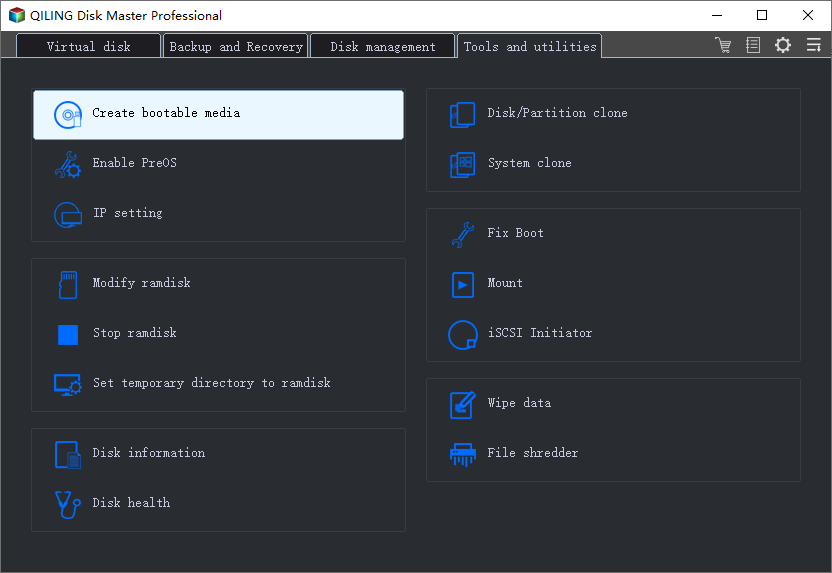
Step 1. To create a Qiling Backup emergency disk, connect a USB flash drive to a working computer and launch Qiling Backup, then click "Tools" and select "Create bootable media".
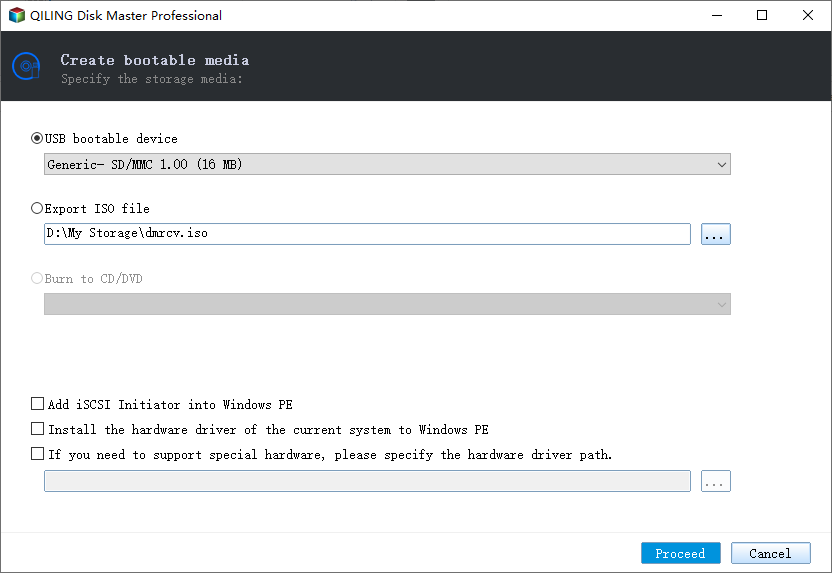
Step 2. Select the USB option when choosing a boot disk location, and then click Proceed.
Step 3. To perform a backup, insert the emergency disk into the computer that needs backing up, restart the PC, and press F2/DEL to enter the BIOS. From there, change the boot sequence to prioritize the bootable disk, then start the computer and run the Qiling backup software from the disk.
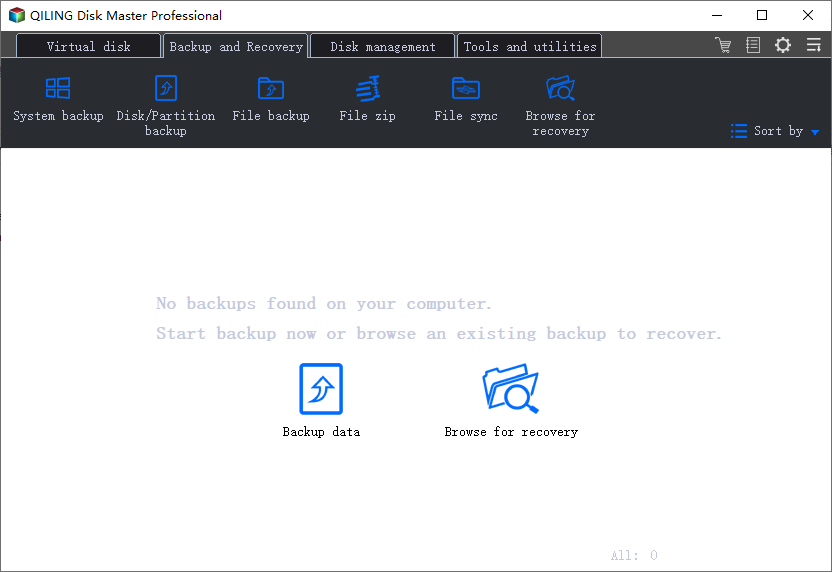
Step 4. To make a full backup of your computer's hard drive(s), go to the Backup and recovery page and select the Disk backup feature. From there, choose the hard drive(s) you want to back up.
Step 5. Select a destination to save your backup file, preferably on external storage media.
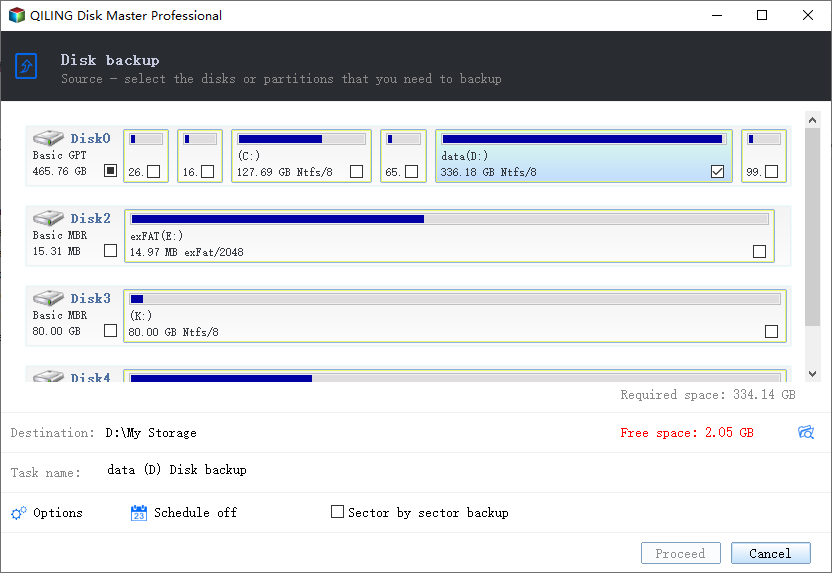
Step 6. Click "Proceed" to execute your operation.
- Tip
- Qiling Backup's System Backup feature is recommended for newly purchased computers or computers with a newly installed system, creating a backup of the original clean system that can be restored to its original state whenever needed.
For Application Backup:
Before reinstalling the system, you may still have programs, data, and accounts to restore. Qiling Disk Master can help with this. This PC transfer software moves applications, files, and accounts between computers with just one click, and can also selectively back up installed programs with their associated data and registry keys in Windows 10.
Full guide: To back up Windows 10 programs, user accounts, and data, create a system image using the built-in Backup and Restore (Windows Backup) tool. This will save a complete snapshot of your system, including installed programs, user accounts, and data.
You can reinstall Windows 10 without losing data by following the steps outlined in the next sections, which provide three ways to do so without a CD.
- 1. Reset Computer to Reinstall Windows 10 Without CD
- 2. Create a Windows Installation Disk to Reinstall Windows 10
- 3. Use a System Image to Reinstall Windows 10 Without CD
Tip 1. Reset Computer to Reinstall Windows 10 Without CD
This method allows you to reset your PC to reinstall Windows 10 without needing an installation CD. It's available when your PC can still boot properly, effectively solving most system problems, similar to a clean install of Windows 10. To proceed, follow the steps below to reset your computer to reinstall Windows 10 without a CD.
Step 1. Go to the "Start" menu, then select "Settings", followed by "Update & Security", and finally "Recovery".
Step 2. Under "Reset this PC option", tap "Get Started".
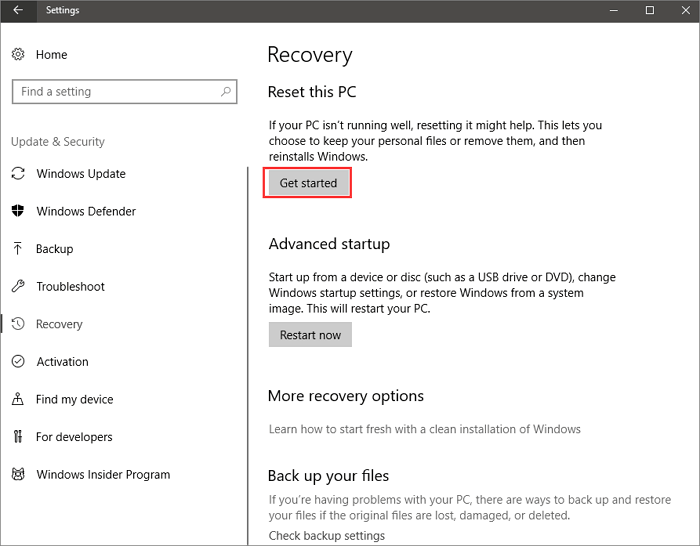
Step 3. When resetting your device, you'll need to choose whether to keep your data files intact or remove everything. Regardless of your choice, your settings will revert to their defaults, and any installed apps will be uninstalled.
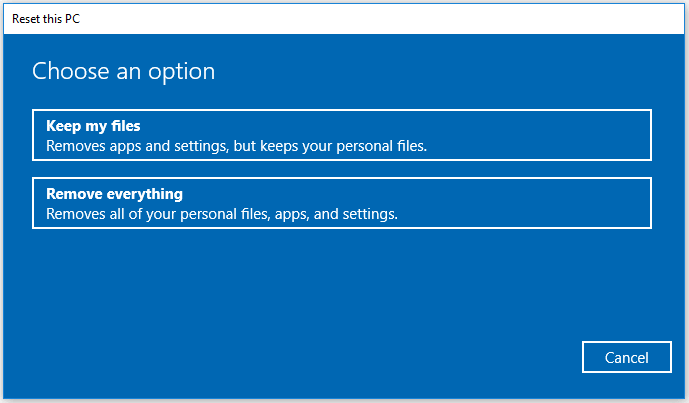
Step 4. After the process, a window will pop up, saying that your apps will be removed. Click Next to proceed.
Step 5. To reset this PC, click the "Reset" button to reinstall Windows 10 without losing any personal files or CDs.
Tip 2. Create a Windows Installation Disk to Reinstall Windows 10
This method allows you to create installation media, which can be used to wipe the disk and install a fresh copy of Windows 10. It can be created on a CD, DVD, USB, SD card, or external hard drive, and a USB drive of 8GB or larger is recommended.
Step 1. Download the media creation tool from Microsoft on a working PC.
Step 2. On the "What do you want to do?" interface, select "Create installation media for another PC" and then click "Next".
Step 3. Choose the language, edition, and architecture (64-bit or 32-bit) for Windows 10. Select the media tool you want to use: Media Creation Tool or USB/DVD Download Tool.
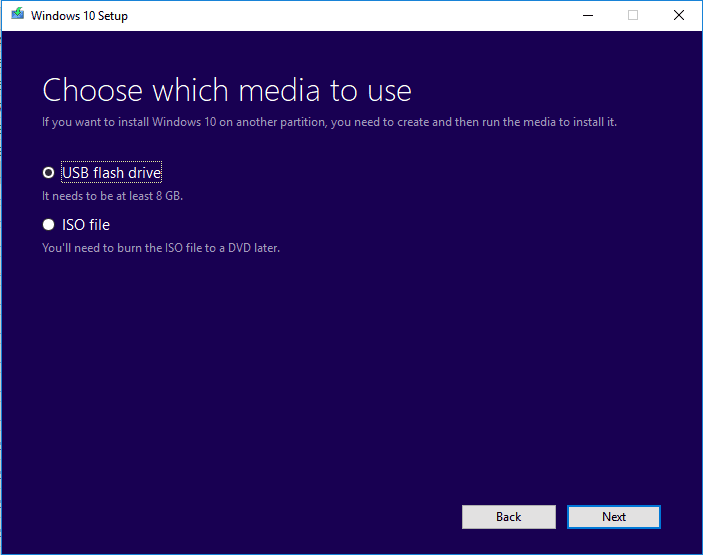
- USB flash drive - connect a blank USB flash drive with at least 8GB of space to your computer.
- ISO file - Save an ISO file to your PC, which can be used to create a DVD. After downloading the ISO file, go to the location where it is saved and use the Windows Disk Image Burner to create an installation DVD with simple steps.
After selecting the drive, the tool will begin downloading Windows 10, which will take a few minutes to complete.
Step 4. Connect the USB flash drive to the new PC where you want to install Windows 10.
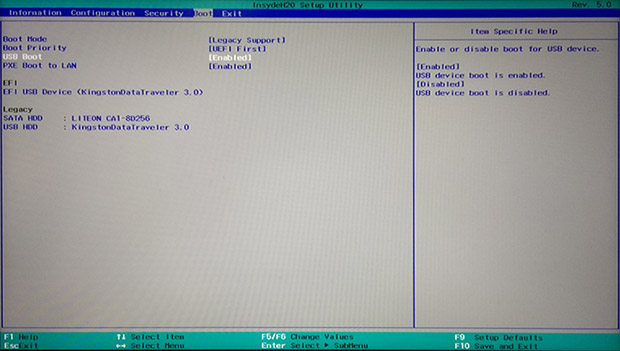
Step 5. Restart your PC and boot from USB or DVD media. If not, press a key (F2, F12, Delete, or Esc) immediately after turning on your PC to open the boot menu and change the boot order.
Step 6. To complete the Windows 10 installation, follow the on-screen instructions. When prompted, enter your Windows 10 license key in the pop-up window that appears for a product key during the installation process.
After completing the steps, simply wait patiently and you'll be able to clean install Windows 10 on your PC.
Tip 3. Use a System Image to Reinstall Windows 10 Without CD
This method works whether your PC can boot properly or not, but it's only helpful if you've created a recovery drive beforehand. However, to create a system backup when you think your PC is in its optimum state, you can use Qiling backup software.
To back up Windows 10 to an external hard drive
Step 1. Launch Qiling Backup on your computer, and click System Backup on the backup page.
Step 2.Your Windows operating system information and all system related files and partitions will be automatically selected, so you don't need to manually select them. Next, you'll need to choose a location to save the system image backup by clicking on the illustrated area.
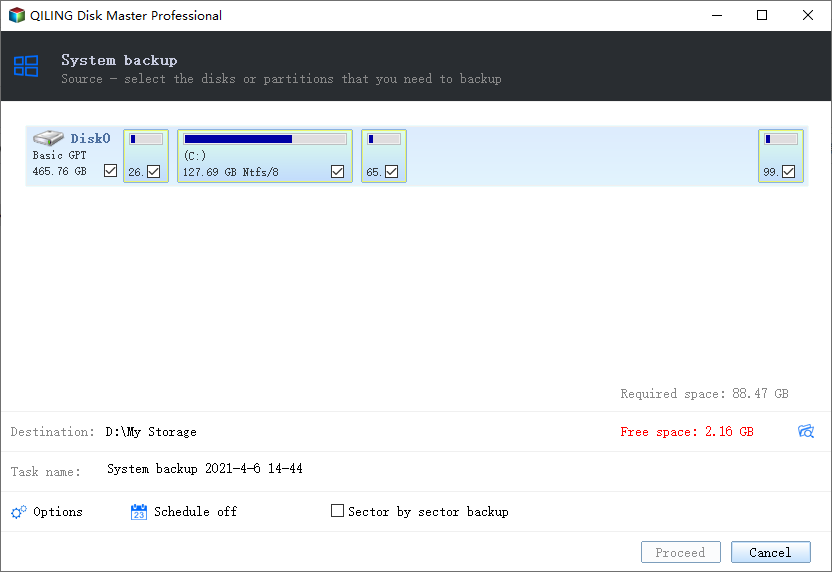
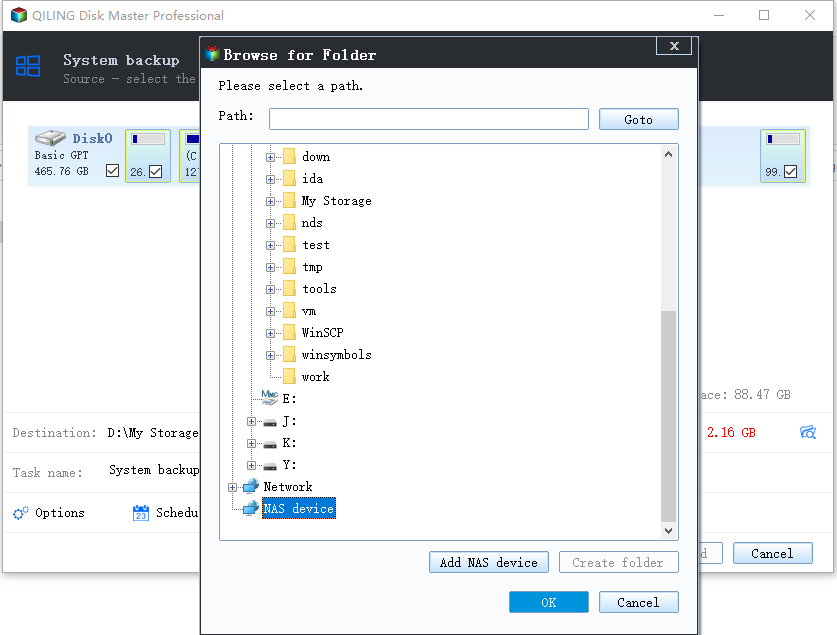
Step 3. The backup location can be another local drive on your computer, an external hard drive, network, cloud, or NAS. We recommend using an external physical drive or cloud to preserve system backup files.
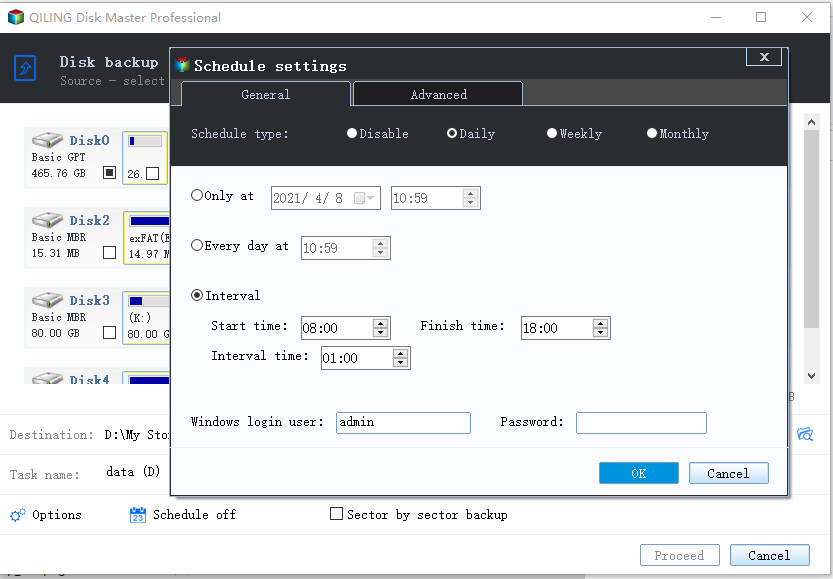
Step 4. Customization settings like enabling automatic backup schedules in daily, weekly, monthly, or upon an event, as well as making differential and incremental backups, are available in the Schedule button. Clicking "Proceed" will initiate the Windows system backup process, which will then display the completed task on the left side in a card style.
Making a system recovery drive is a simple process that involves just three steps. By following these steps, you can create a recovery drive that allows you to restore Windows 10 whenever you need it, which is faster and easier than reinstalling from a CD.
To restore Windows 10 to your PC
To perform system recovery on a non-bootable machine, try booting the computer through the installation media of the operating system, such as a USB drive or CD/DVD, to access the recovery options.Qiling Backup emergency disk.
Step 1. Launch Qiling Backup, click "Browse for Recovery".
Step 2. Choose the system backup file you need from your backup destination, specifically the dfg file created by Qiling Backup.
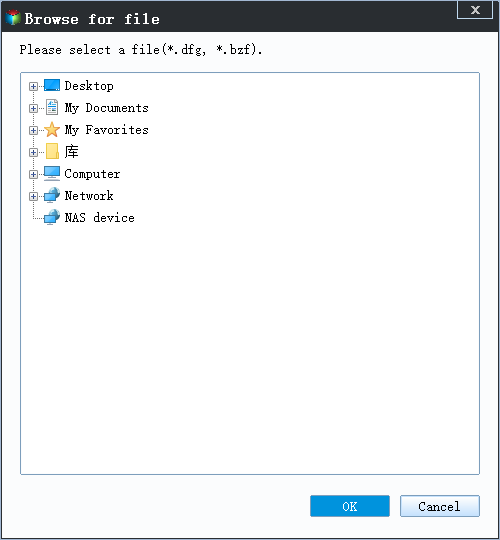
Step 3. Choose the recovery disk.
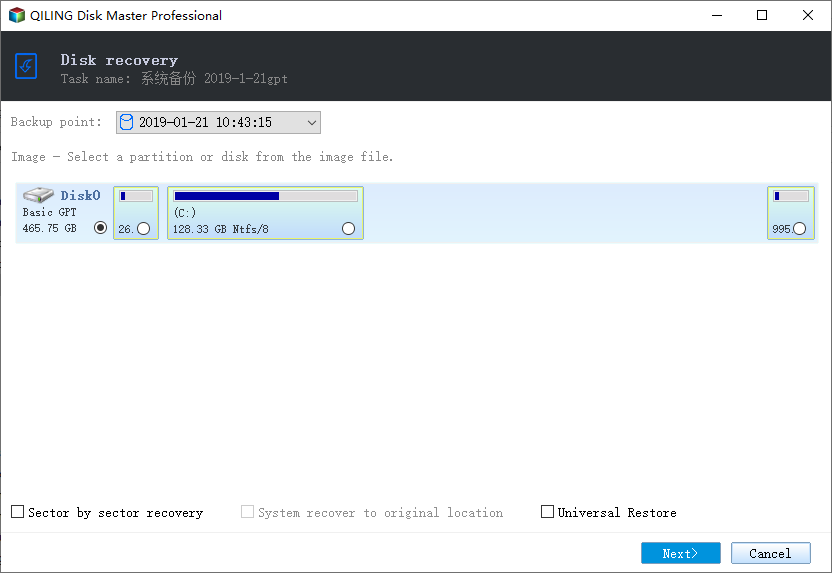
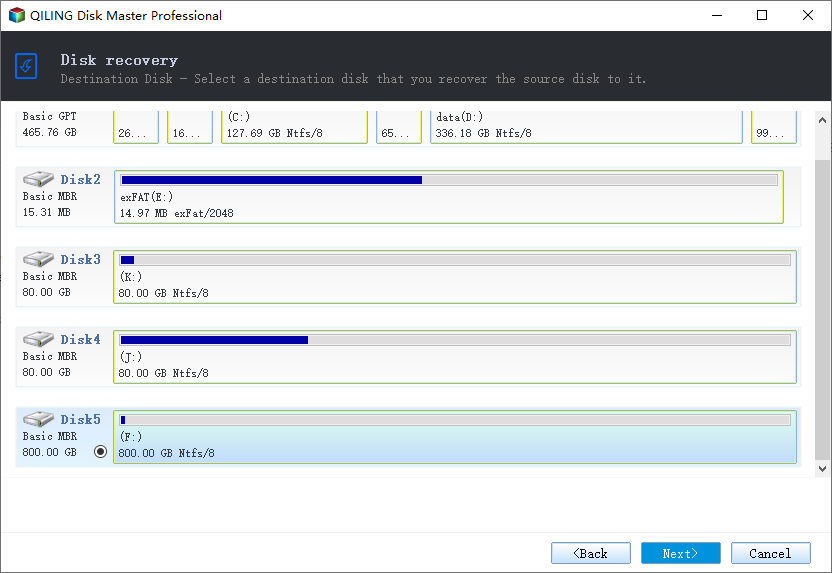
Step 4. Choose the target disk where you want to clone the source disk, ensuring that the partition style of the source disk and the target disk are identical, such as both being MBR or both being GPT.
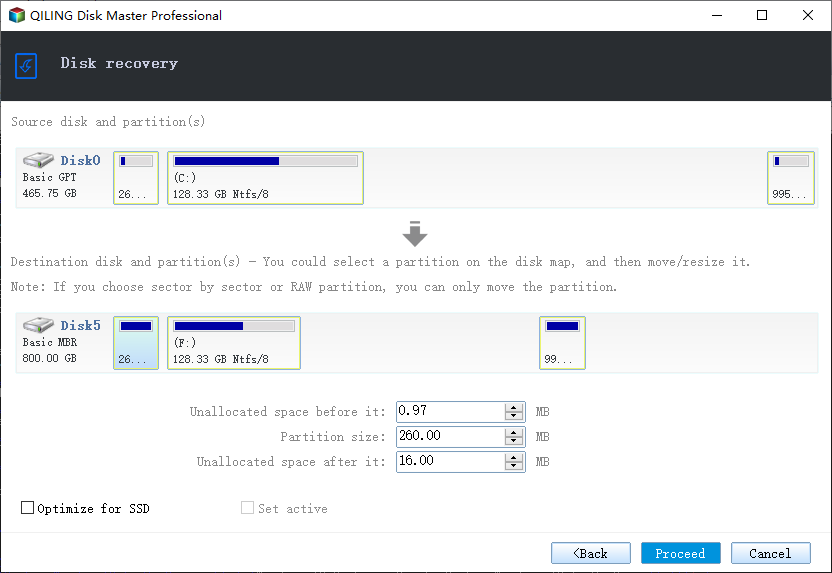
Step 5.To customize the disk layout, follow the system's instructions, and then click "Proceed" to start system backup recovery.
Conclusion
You can reinstall Windows 10 using two methods: without a CD or USB, and from a USB drive. Both methods allow you to choose the best approach based on your specific needs, and the steps to reinstall your Windows 10/8/7 can be adapted accordingly.
Reinstall Windows 10 Without CD FAQs
If you don't have the original installation DVD for Windows 10, you can still perform a clean install by using the Media Creation Tool or a USB drive with the Windows 10 installation files. If you've tried these methods and still have issues, you can refer to a list of questions and answers for further troubleshooting.
How do I reinstall Windows without a disk?
Restore without an installation CD:
- 1. To access the recovery mode on your computer, go to the "Start" menu, select "Settings", then click on "Update & Security", and finally select "Recovery".
- 2. Under "Reset this PC option", tap "Get Started".
- 3. Choose "Remove everything" and then select "Remove files and clean the drive" to complete the process.
- 4. Finally, click "Reset" to begin reinstalling Windows 10.
How do I clean and reinstall Windows 10?
Use the installation media to perform a clean install:
- 1. Download the Media Creation Tool on another PC that is connected to the internet.
- 2. Create Windows Installation Media on empty USB (min 8GB).
- 3. Remove the old disk and connect the new SSD (only the SSD should be attached to the PC).
- 4. Boot PC from Installation Media.
- 5. Set language and other preferences.
- 6. Boot PC from Installation Media... Read More>>
How do I wipe and reinstall Windows 10?
In Windows 10, you can use a built-in tool to wipe your PC and restore it to its factory settings. To do this, go to Start > Settings > Update & Security > Recovery, then select Get started under Reset this PC. You can choose to keep your personal files or remove everything, depending on your needs.
Related Articles
- How to Upload Files to Google Drive Automatically
- Back Up and Restore Outlook 2016 for Mac
- [3 Solutions] Fix Word Not Opening on Mac
- Fix HDD Hard Drive Not Showing Up in Windows 10 Error
- How to Create Bootable Backup in Windows 10 (2 Ways)
Bootable backup for Windows can help you restore computer to its last working state or factory reset it to default settings when it fails. Let's do it now! - Clone Windows 10 Image to Multiple Computers | 3 Simple Steps
This essay show you the best way to clone Windows 10 image to multiple computers simultaneously, just follow the steps to install Windows 10 to several different computers over network.
Products
Articles & Tutorials
- Data Recovery
- Data Backup
- File Recovery
- File Backup
- System Backup and Restore
- Disk and Partition Clone
- Technical articles
- Mobile articles
- Disk Master Help
- Windows Data Recovery Tutorials
- Windows Secure Delete Tutorials
- Windows Partition Management Tutorials
- Windows File Backup and Restore Tutorials
- Windows System Backup and Restore Tutorials
- Windows Disk Backup and Restore Tutorials
- Windows Clone Tutorials