How to Run/Boot Windows 10 from USB Drive
PAGE CONTENT:
- Why do you need a bootable USB drive
- Notable benefits of running or booting Windows 10 from a USB drive
- The useful tool you need
- Guide to run or boot Windows 10 from the USB hard drive
Why do you need a bootable USB drive
Windows system can become corrupted and crash due to various reasons, causing the PC to fail to boot and making important data inaccessible, leaving users frustrated and unable to work with their PC or access their data.
If you have a Windows bootable USB drive, you can boot your PC from it by changing the BIOS boot sequence to prioritize the USB drive. This will allow you to start your PC properly from the removable disk.
There are the things you need to pay attention to:
- You can create a bootable USB drive using an external hard drive, but it's not the only option. You can also use a USB flash drive or pen drive, but they have limitations. USB drives typically have a smaller storage capacity and may not be able to hold the entire operating system and all the necessary files.
- The Windows operating system only recognizes the first partition of a USB flash drive or pen drive, and does not allocate drive letters to subsequent partitions.
- 99% of Windows systems require two partitions, the system and boot partitions. However, when cloning Windows to a USB drive, only the first partition is accessible, rendering it unbootable. Therefore, a USB drive is not a suitable option for cloning Windows, and a larger external hard drive is recommended instead.
- Besides, the USB hard drive needs to have enough free space, larger than the system drive's capacity.
Notable benefits of running or booting Windows 10 from a USB drive
Many users search online for help on running Windows 10 from a USB hard drive, seeking the benefits of this operation, such as being able to boot and run the operating system from a portable device, which can be useful for various purposes like troubleshooting, testing, or even replacing a failed hard drive.
- Users can get their PC to boot properly from a bootable USB hard drive even if Windows can't be accessed from the internal hard drive due to various reasons, such as a corrupted system or a failed boot process. This allows them to troubleshoot and resolve issues without having to reinstall Windows. Users can create a bootable USB drive using a tool like Rufus or a similar software, and then boot their PC from it.
- Install large programs on the USB hard drive to free up internal disk space and run them on any other computer.
If you're looking for ways to boot Windows 10 from an external device, you're in a helpful guide. I can provide you with a step-by-step guide on how to achieve this using Windows 10 USB bootable software. This will allow you to boot your Windows 10 operating system from an external device, giving you the flexibility to use your computer without having to install the OS on the internal hard drive.
The useful tool you need
While Microsoft's Windows media creation tool makes it possible to create Windows ISO image files on a USB or DVD, the process can be too complicated for those who are not tech-savvy. In such cases, third-party backup software can make the job much easier.
Qiling backup software is easy to operate, requiring only a simple cloning process to your external hard drive. The process is both easy and fast.
The software can create a bootable Windows 10 USB hard drive that contains the operating system, installed applications, and personal data, allowing for direct work on a computer without extra setup after booting from the external device.
To install Windows 10, download a system clone software and use it to boot Windows 10 from a USB drive.
Guide to run or boot Windows 10 from the USB hard drive
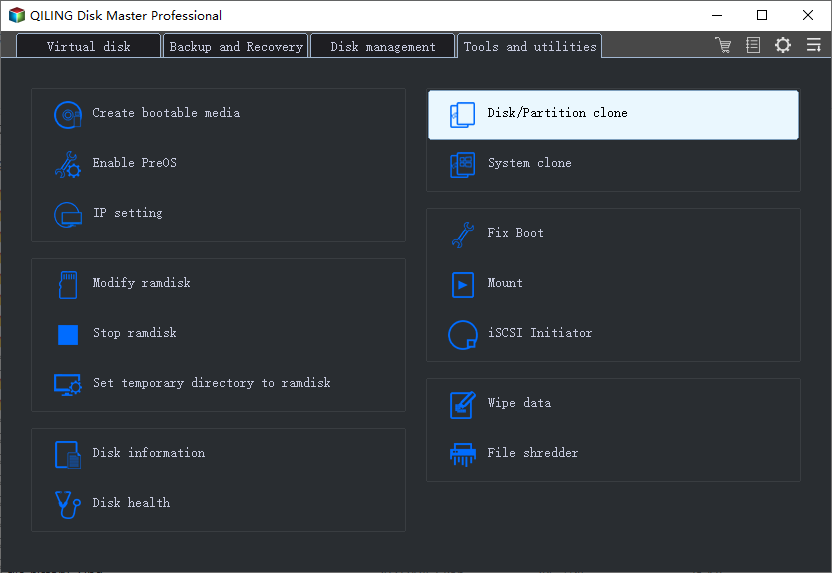
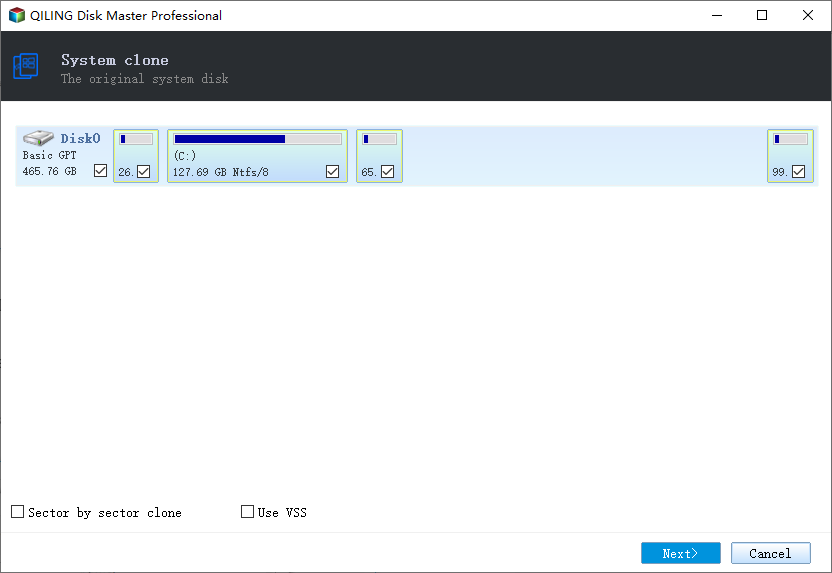
Step 1. Connect the USB drive to your PC and run Qiling Backup. Click "System Clone".
The current system partition (Windows 10) and boot partition will be automatically selected.
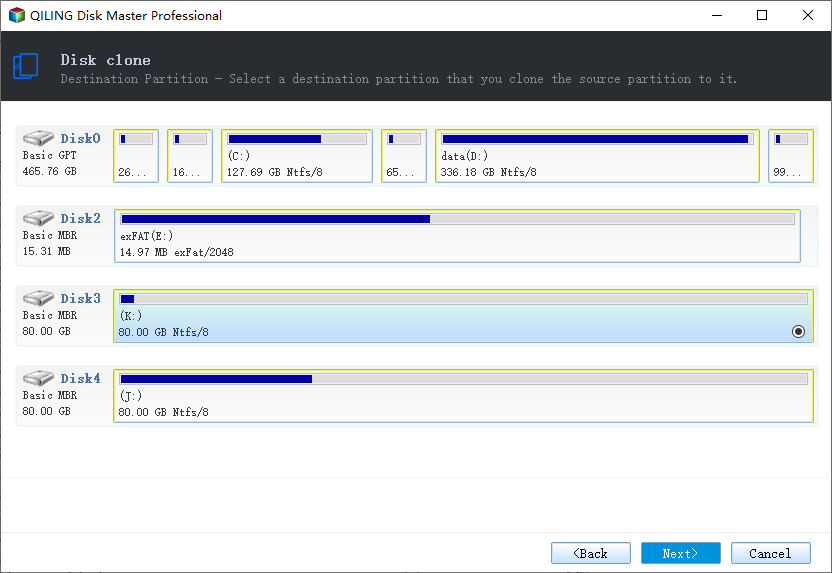
Step 2. Select the destination disk - USB drive to clone system drive (system and boot partition) to.
To check if your USB drive has enough storage space, you can simply plug it into your computer and open the file explorer. From there, you can see the total storage capacity of your USB drive and compare it to how much space is currently being used. This provides you a clear idea of whether your USB drive has enough storage space for your needs.
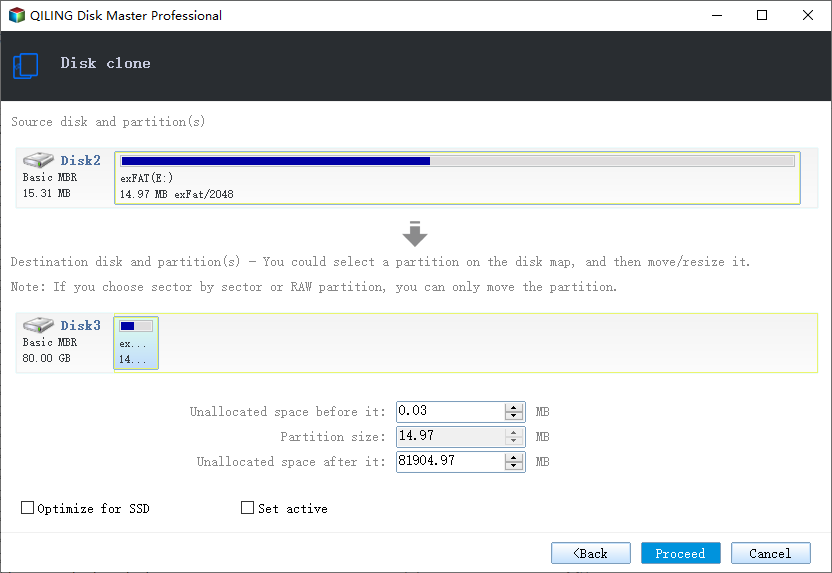
Step 3. Click Proceed to start cloning Windows 10 to USB.
After creating a bootable USB drive, you can use it to run Windows 10 on a PC whenever you want, but first ensure the USB drive or external device is set as the first boot device in the PC's BIOS settings.
- Connect your bootable USB to your computer and press F2 when you start the PC. This will open the BIOS settings where you can set the USB as the first boot device.
- To set the first boot device in the BIOS interface, follow these steps: Select the bootable device, such as a USB drive or CD/DVD drive, from the list of available devices. This will be the device that the computer boots from when it is powered on.
Then you can run Windows from your USB.
For the limits of running software directly from a USB drive, read Can You Run Windows Software Directly from a USB Drive?
Related Articles
- 2021 Complete Guide: How to Boot from SSD After Cloning
- USB Bootable Software & Bootable USB Creation Tool
- Copy or Back Up Program Files(x86) to External Hard Drive in Windows 10/8/7
- Create Portable Windows 10 Creators To Go USB Drive
- How to Clone SSD to Larger SSD in Windows 10/8/7
- How to Do Dell Factory Restore in Windows 7 Command Prompt
This tutorial shows you how to do Dell factory restore in Windows 7 Command Prompt and provides an alternative way to perform Dell factory restore efficiently.
Products
Articles & Tutorials
- Data Recovery
- Data Backup
- File Recovery
- File Backup
- System Backup and Restore
- Disk and Partition Clone
- Technical articles
- Mobile articles
- Disk Master Help
- Windows Data Recovery Tutorials
- Windows Secure Delete Tutorials
- Windows Partition Management Tutorials
- Windows File Backup and Restore Tutorials
- Windows System Backup and Restore Tutorials
- Windows Disk Backup and Restore Tutorials
- Windows Clone Tutorials