Will Replacing a Hard Drive Remove Windows 10?
Windows 10 is stored on the drive, not inside the computer's firmware. If you remove its boot drive and install a blank one, the existing installation does not magically appear on the replacement.
What stays and what does not
The old drive still contains its Windows installation and files after removal. A blank replacement has neither Windows nor your applications. Your activation entitlement may still be associated with the device, but activation and license terms depend on the edition and hardware history. Record the product key or linked Microsoft account before making changes.
If the drive being replaced was only a data drive and Windows boots from another disk, replacing it does not remove the installed OS. Check Disk Management and firmware to identify the actual boot disk.
Choose a migration route
Clone the whole healthy boot drive if you want to retain Windows, installed applications, settings, and files. Choose a clean installation if you want to start fresh or the source system is corrupt. For a clean install, make official installation media and back up personal data first; you will need to reinstall applications.
Do not mistake a file copy in Explorer for a bootable system clone. Hidden EFI/System Reserved and recovery partitions can be essential.
Windows 10 reached the end of standard support in October 2025. If the PC supports a maintained Windows version, consider that option before reinstalling Windows 10; otherwise review Microsoft's Extended Security Updates choices.
After replacing the drive
- Install the new drive and select its Windows Boot Manager entry in UEFI/BIOS.
- Start Windows and check Device Manager, file access, and application launches.
- Open Activation settings if the license is not recognized. Keep the original disk intact until the replacement works reliably.
Keep Windows 10 with a Qiling Disk Clone
Use this path only when the original boot disk is readable. The replacement drive will be overwritten.
Step 1. Connect the new drive and open Qiling Disk Master. Under Tools and utilities, choose Disk/Partition clone and select the whole source disk, not just C:.
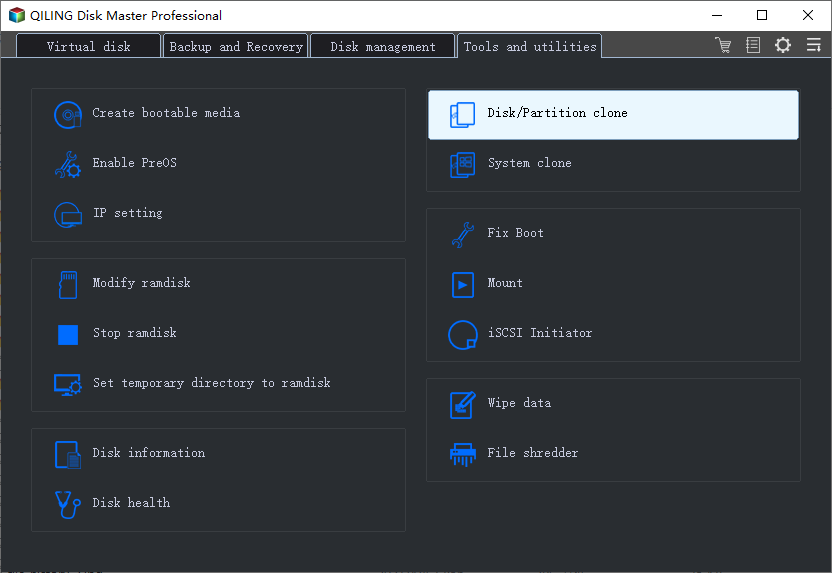
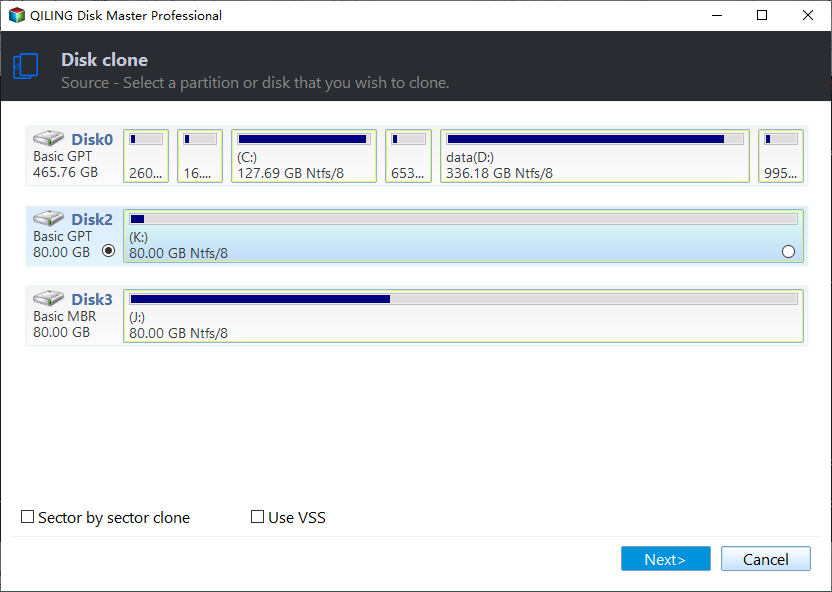
Step 2. Select the current Windows 10 boot drive as the source. Compare its capacity and partition map, including EFI/System Reserved and recovery partitions, then click Next.
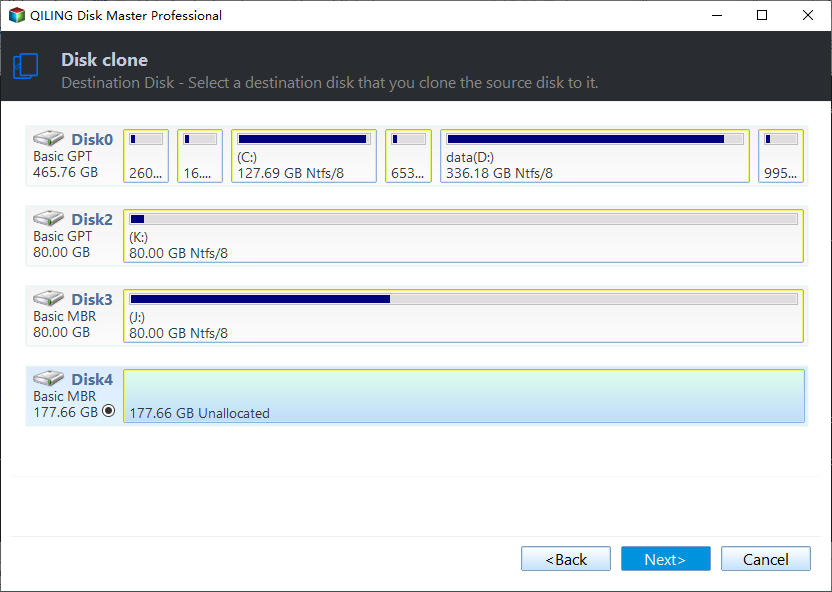
Step 3. Select the new replacement drive as the destination and click Next. Check the disk number and capacity: every existing file on this destination may be overwritten.
Step 4. Review the source-to-destination layout. Confirm that all required partitions fit; enable Optimize for SSD for an SSD target and adjust the layout only if you understand the resulting space. The preview shown is an example; check your own disk map.
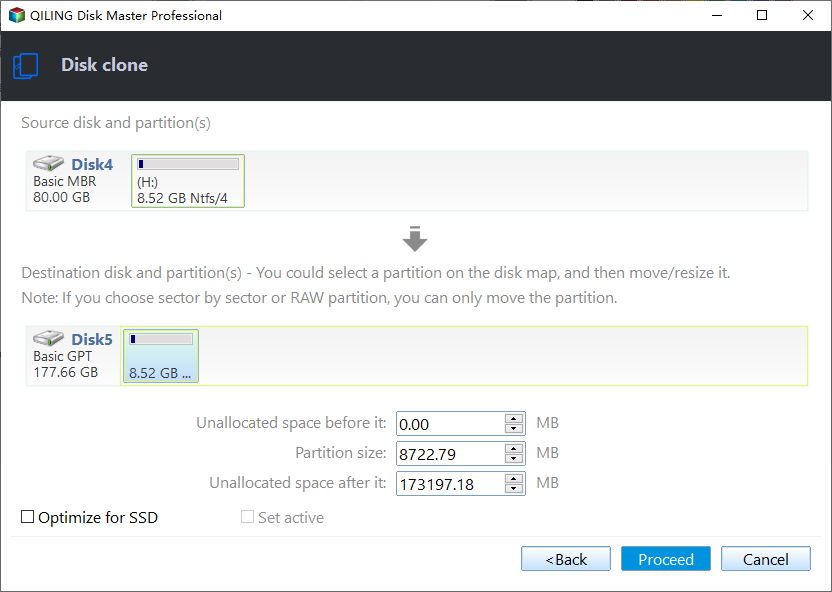
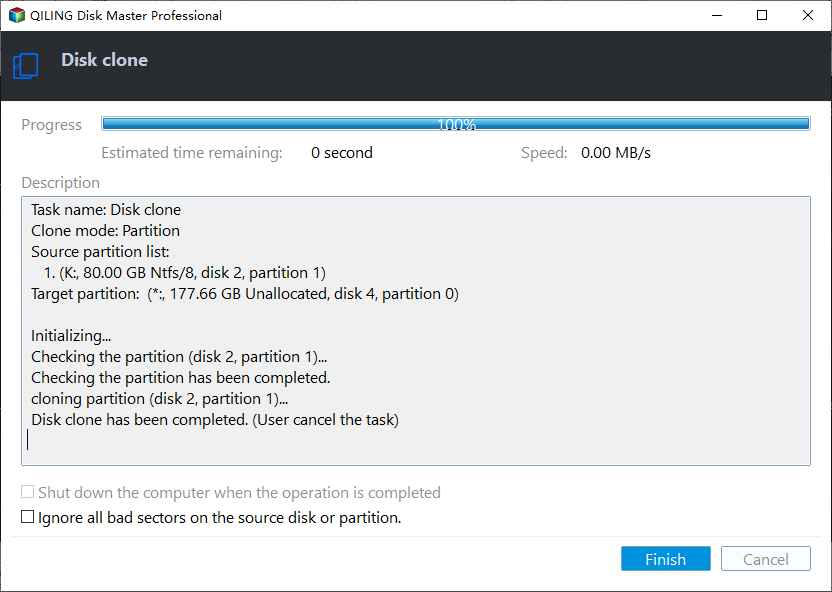
Step 5. Click Proceed, read and confirm the overwrite warning, and keep both drives connected until completion. Swap the drives, test Windows 10, and keep the original as a fallback until verification is complete.
Frequently Asked Questions
Does replacing a data-only drive remove Windows? No, provided the Windows boot drive remains installed and selected.
Can I reinstall Windows 10 instead of cloning? Yes, but you must reinstall apps and restore files from a backup; activation may need a check.
Conclusion
Replacing a blank disk does not transfer Windows 10. Clone the full boot disk or perform a clean installation, then verify the replacement before erasing the original.
Related Articles
- Windows Cloning Tutorials
Browse Windows disk clone, system migration, and SSD upgrade guides. - Windows Disk Backup and Restore Tutorials
Plan a separate disk image before changing a boot drive. - Windows System Backup and Restore Tutorials
Find system image and recovery options for Windows PCs. - Will You Lose SSD Data When Upgrading a Motherboard?
Understand what remains on an SSD after a motherboard upgrade, prepare encryption and Windows activation, back up files, and check first boot.
Products
Articles & Tutorials
- Data Recovery
- Data Backup
- File Recovery
- File Backup
- System Backup and Restore
- Disk and Partition Clone
- Technical articles
- Mobile articles
- Disk Master Help
- Windows Data Recovery Tutorials
- Windows Secure Delete Tutorials
- Windows Partition Management Tutorials
- Windows File Backup and Restore Tutorials
- Windows System Backup and Restore Tutorials
- Windows Disk Backup and Restore Tutorials
- Windows Clone Tutorials