Windows 10 Backup Not Working? Top Solutions to Make Windows Backup Work
Part 1. Introduction
If your Windows 10 backup isn't working, it's likely due to a background issue that's preventing your backed-up data from being accessed. This can be caused by various problems, resulting in a pop-up notification that says "Windows backup is not functioning."
If you're experiencing issues with Windows 10 Backup not working, you may encounter an error message stating that your backup isn't functioning or that File History doesn't recognize a disk. This guide will help you resolve the issue, providing a solution to get your Windows 10 backup working properly.
Part 2. Windows 10 Backup Not Working
Windows 10 Backup often fails to back up all types of data files or results in a 0-byte error, and sometimes it won't back up to an external drive or finish the backup process correctly.
Windows 10 backup issues occur in two forms: Windows 10 File History backup not functioning and Backup and Restore Windows 7 not working in Windows 10, preventing users from successfully backing up their data.
This issue may occur for various reasons, including the Startup Type not being set to Automatic, an unformatted hard drive, or corrupted data.
Part 3. Windows 10 Backup Crashes Issue - File History & Backup and Restore
Windows 10 File History may not be functioning properly when trying to back up certain files or folders, leading to potential issues. Two possible scenarios where this can happen will be explored in the next section.
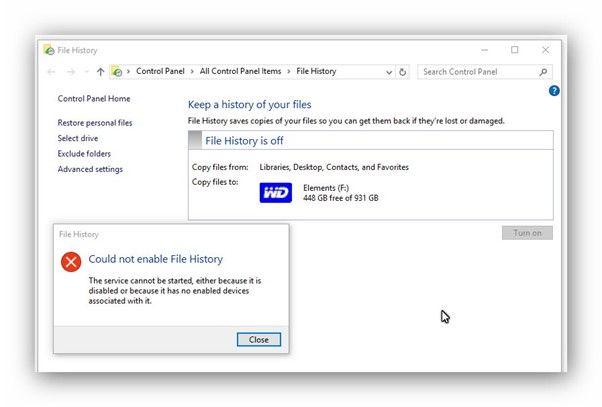
Case 1. Windows 10 File History Not Working
The file history feature in Windows 10 and Windows 8 allows you to back up data and operating system files to a chosen location, providing a safety net in case of system failures or other issues. This backup can be used to restore the system to its previous state, effectively rolling back to the point in time when the backup was created.
Customers who updated to Windows 10 are experiencing issues with the Windows backup feature, including the "File History" feature, which is not functioning on their devices despite being configured to create backups.
The recent change in Windows 10 settings has caused a problem, where backups are not being automatically stored. This is due to the File History function being set to Off by default.
In Windows 10, you can activate the File History feature by manually making changes to the settings, which will allow you to create automatic backups of your file history. If this doesn't work, try turning off File History and then turning it back on again to force a refresh, or try removing and re-adding the folder to the list of things to include. This may resolve the issue.
If the issue persists, check the Event logs for any problems after clicking the Advanced setting button on the page displaying the file history.
Case 2. Backup and Restore (Windows 7) Not Working
Backup and restore not working? If Backup and Restore is blank or not open, it may not be functioning properly.
1. The first scenario is a blank backup and restore.
The Backup and Restore page in Windows 7 is blank, preventing the launch of the backup and restore feature, which is a known issue.
2. The Backup and Restore functions are not accessible, making it difficult for users to restore their data in case of a system failure or other issues.
When you click the Backup and Restore button, no response is shown on the screen, indicating that the "Backup and Restore cannot open." This is the actual situation with disabled Windows backup.
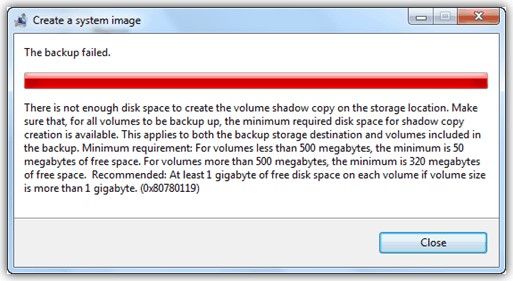
Windows Backup may fail with the warning "The backup did not finish successfully" if you attempt to generate a one-time backup or a scheduled backup using Backup and Restore (Windows 7) or get the message "the most recent backup was unable to complete properly" on Windows 10.
When working with external hard disk drives or USB sticks, you may encounter issues with the Backup and Restore feature not working. This could be due to various reasons, such as corrupted files, incorrect drive letter assignments, or compatibility problems with the operating system or backup software. Additionally, issues with the drive itself, such as bad sectors or faulty hardware, can also prevent the Backup and Restore feature from functioning properly.
- The backup procedure timed out before it could complete.
- The virus has caused the files to become corrupted, making it difficult for Windows to locate and process them, potentially leading to some files being missed or skipped.
- The destination disk was removed from the linked computer when the backup was created.
- I/O device error.
Part 4. Qiling Backup - Best Alternative to Windows 10 Backup Tools
If you're having trouble with backups in Windows 10, we suggest using a tool that can back up your computer's state, files, and data, and duplicate it so it can be used as a backup or substitute if the primary system data is corrupted, deleted, or lost. This tool will help resolve backup issues.
Qiling Backup offers a simplified user interface that streamlines the process of backing up files or an entire PC. Once you select the desired backup, the application takes care of the rest, eliminating the need for manual intervention. Qiling Backup also addresses common issues with Windows backups, providing multiple backup options, including disk/partition, file, system, and smart backups.
Cloning your hard disk can be a good option when it needs to be replaced, allowing you to restore data to the original location or a second location and replace existing files. The tool also features a Smart Backup function that enables you to schedule file monitoring, creating a backup whenever changes are detected in monitored files, ensuring you never lose your latest work.
Main Features of Qiling Backup
- In the event of a system crash, a backup and restore operation can be easily performed to recover the system. This allows for quick recovery of the system, minimizing downtime and data loss.
- Back up your data to a specified place, creating a copy on your FTP for extra insurance.
- This software enables users to create a copy of their important data, such as documents, photos, and videos, onto a CD, DVD, or USB drive, providing a safeguard against data loss due to hardware failure, theft, or other unforeseen events.
- Programmatically Automate a Task Involving Backups
- Save a copy of the backup to both your local disk and to the cloud. This will ensure that your data is safe in case of a hardware failure or other disaster.
Part 5. Conclusion
If you're experiencing issues with Windows 10's backup, such as file backup not functioning or system image recovery and backup failing, there are steps you can take to troubleshoot and resolve the problem. By understanding the root cause of the issue and attempting to repair it based on real scenarios, you can eliminate the problem and ensure your important files and system are properly backed up.
The Qiling Backup can help prevent future failures of the Windows 10 Backup process by assisting you in backing up your computer data or system. You can download the Trial Edition for free to get started.
Part 6. Windows 10 Backup Not Working FAQs
1. Why does my Windows 10 backup keep failing?
If your Windows 11/10 computer's backup didn't finish properly and keeps failing, try removing or reorganizing files in the WindowsImageBackup folder, deleting EFI System and Recovery partitions, or running a disk check to identify any defects or faulty sectors.
2. Why does Windows 10 backup take so long?
The time it takes for a backup to complete depends on the backup type, data volume, and destination disk speed, with large backups potentially taking days to finish, especially if connected via slow speeds like USB1, and compression can further slow the process.
3. Can I use my computer while it is backing up?
Avoid making changes to your Windows backup, but if you need to use your computer while backing up, do so for low-memory, low-time-consuming tasks like typing a paper or listening to music.
A backup can finish without containing every expected file; this missing-files-after-backup guide explains how to inspect the selected folders, filters, and backup point.
Related Articles
- How to Backup Google Drive to OneDrive? Best Solutions
- Backup User Profile in Windows 10/11 or Transfer to New PC [Complete Guide]
- How to Backup Specific Folders Windows 10 (Quick & Easy)
- Download Qiling Backup Free 13.0 (Official)
- 500 GB Free Cloud Storage 2023
Looking for the best 500 GB free cloud storage options? You're in luck! There are several helpful options available that let you store all your personal or business data. Whether you're looking for a personal or business solution, you'll find a suitable option to suit your needs. - Add Folder to OneDrive Backup Without Moving: 3 Working Ways
Discover the effective tools to add folders to OneDrive Backup without moving the folder. Here is a simple guide to help you secure and organize your important files. Keep reading and learn how!
Products
Articles & Tutorials
- Data Recovery
- Data Backup
- File Recovery
- File Backup
- System Backup and Restore
- Disk and Partition Clone
- Technical articles
- Mobile articles
- Disk Master Help
- Windows Data Recovery Tutorials
- Windows Secure Delete Tutorials
- Windows Partition Management Tutorials
- Windows File Backup and Restore Tutorials
- Windows System Backup and Restore Tutorials
- Windows Disk Backup and Restore Tutorials
- Windows Clone Tutorials