Can You Clone a Running Windows HDD?
A running Windows HDD can sometimes be cloned through a snapshot, but active writes and source errors complicate the result. Plan the clone for a quiet period.
Why the drive is changing while you copy it
Windows writes logs, page data, browser caches, and application files in the background. Snapshot support can freeze a consistent view of supported volumes; it does not guarantee every open database or virtual-machine image is application-consistent.
Prepare the running PC
- Save documents and close games, editing software, virtual machines, database programs, and background downloads.
- Back up critical files separately, including anything updated during the day.
- Connect the destination and confirm model, capacity, and the data it will overwrite.
- Check whether the cloning tool offers a live snapshot or requires bootable media. If the HDD has read errors, avoid repeated long scans.
While the clone runs
Keep the PC powered and awake. Avoid software installation, Windows updates, and editing large source files. If your tool reports a snapshot or read failure, stop and investigate instead of assuming the clone is usable.
Test before retiring the HDD
Power down, boot from the target alone when possible, open representative files, and verify your current work. Preserve the HDD until the cloned installation passes those checks.
Clone the Disk with Qiling Disk Master
Use a full disk clone for a bootable replacement, and choose the source HDD and target drive carefully. Leave the PC idle during the operation.
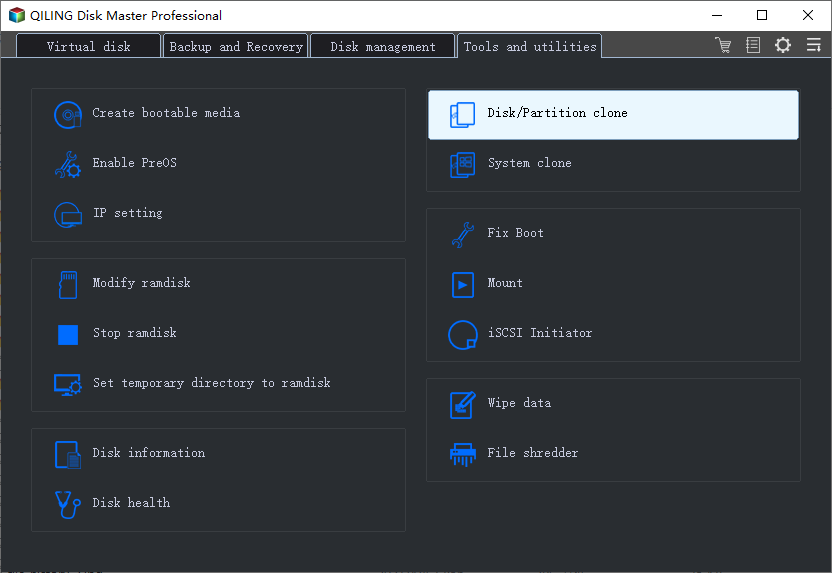
Step 1. Connect the destination drive. Open Tools and utilities in Qiling Disk Master and choose Disk/Partition clone. For a boot-drive replacement, choose the entire disk rather than only C:.
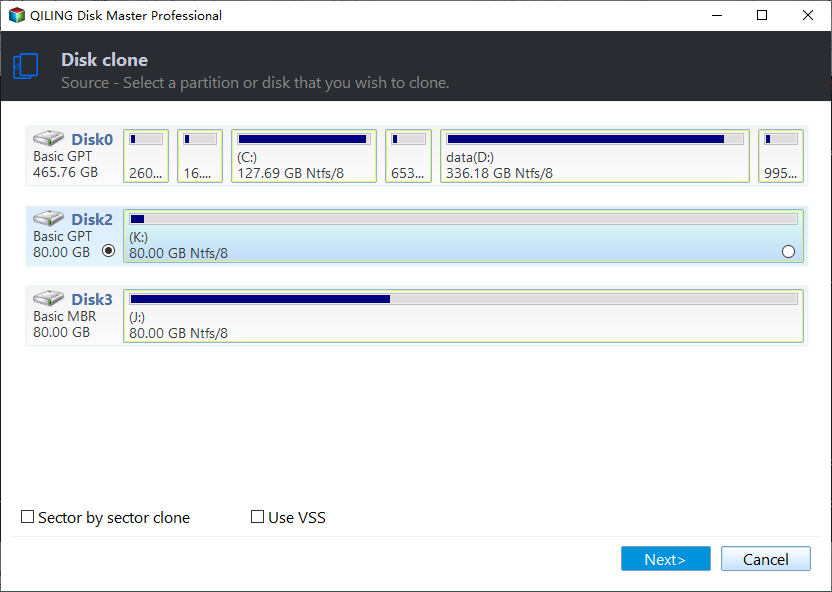
Step 2. Select the existing system disk as the source. Compare its model, capacity, and partition map; include the boot and recovery partitions. Click Next.
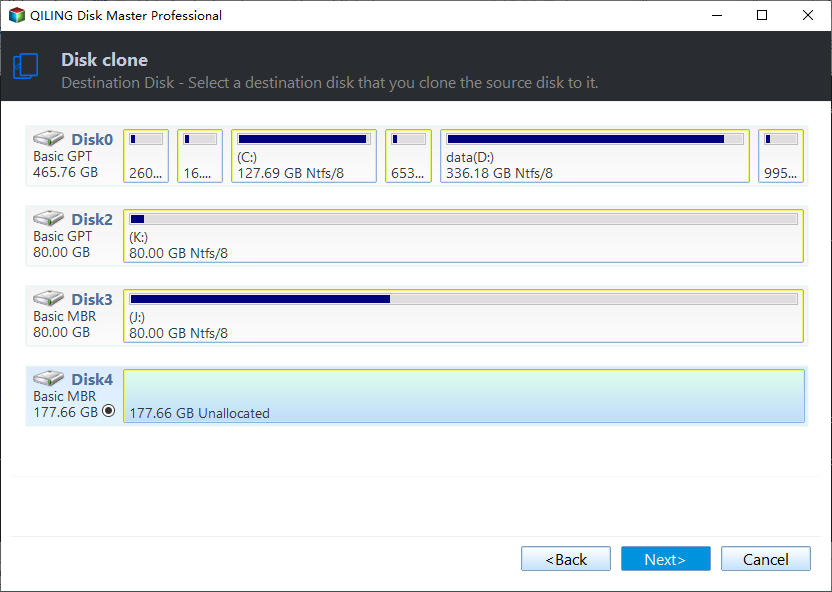
Step 3. Select the new drive as the destination by model and capacity, then click Next. Cloning overwrites this disk, so move its useful files elsewhere first.
Step 4. Inspect the source-to-destination layout. Ensure the required partitions fit; use Optimize for SSD when the destination is an SSD and that option is available. The screenshot illustrates the preview controls; verify your own whole-disk partition map.
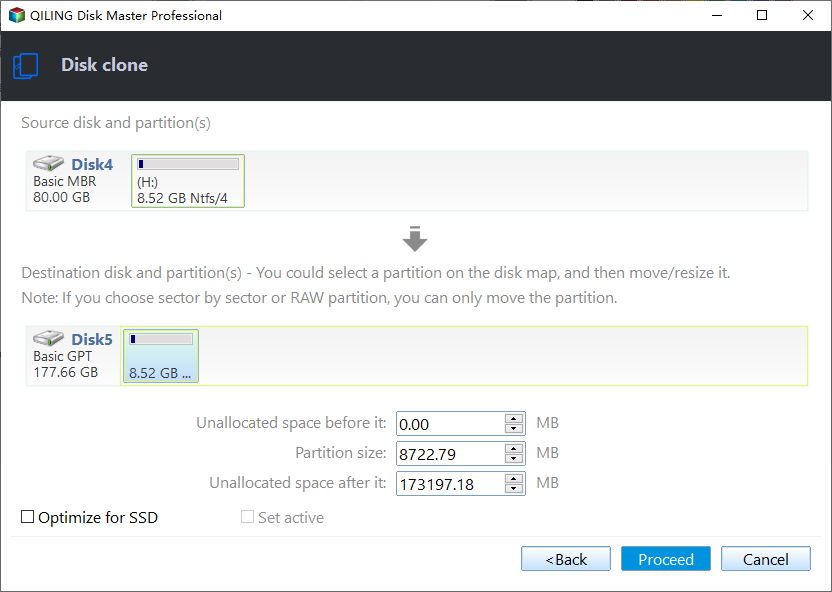
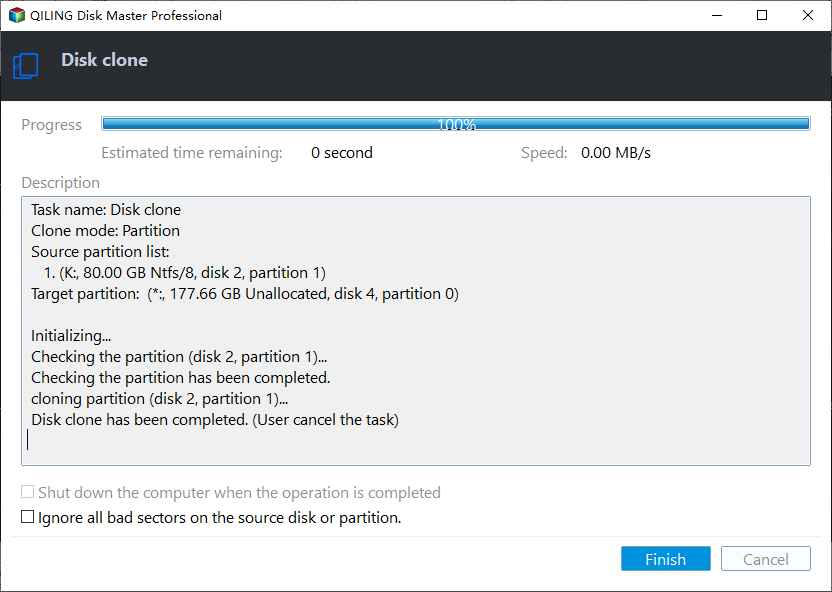
Step 5. Click Proceed. Read any overwrite warning and confirm only after rechecking the target disk. Keep both drives connected until the progress screen reports completion; then boot-test the destination before reusing the source.
Frequently Asked Questions
Can a failing HDD be cloned live? It may be possible, but heavy reads can worsen a failing drive. Protect critical files first.
Does a snapshot copy new changes made after it starts? A point-in-time snapshot does not guarantee later changes are included.
Conclusion
A running HDD may be cloned with snapshot support, but reduce active writes and verify the destination before retiring the source.
Related Articles
- Windows Cloning Tutorials
Review practical HDD-to-SSD and system disk migration guides. - Windows Disk Backup and Restore Tutorials
Explore disk image backup and restoration workflows for Windows drives. - Windows System Backup and Restore Tutorials
Find system image, recovery drive, and restore guides for Windows. - Can You Clone a Hard Drive Without Installing Software?
Compare hardware duplicators, Windows image-and-restore, and manual file copying; learn when a true bootable disk clone still needs a dedicated method. - How to Move an HDD to SSD Without a USB Cloning Cable
Move Windows from HDD to SSD without a USB cloning cable by using a second internal port or a backup-image-and-restore workflow.
Products
Articles & Tutorials
- Data Recovery
- Data Backup
- File Recovery
- File Backup
- System Backup and Restore
- Disk and Partition Clone
- Technical articles
- Mobile articles
- Disk Master Help
- Windows Data Recovery Tutorials
- Windows Secure Delete Tutorials
- Windows Partition Management Tutorials
- Windows File Backup and Restore Tutorials
- Windows System Backup and Restore Tutorials
- Windows Disk Backup and Restore Tutorials
- Windows Clone Tutorials