Can You Clone a Hard Drive Without Installing Software?
“Without software” can mean avoiding a new program on the source PC, but a bootable disk copy still needs a copying mechanism. A standalone hardware duplicator can clone compatible drives; Windows image-and-restore and manual file transfer are different workflows.
Method 1: a standalone disk duplicator
Use a duplicator that explicitly supports both drive protocols, capacities, and sector formats. Power it off, attach the source and target to the labeled bays, and check both model names and capacities. Back up the target first. Start the copy only after confirming direction; the target is overwritten.
Wait for completion, then test the target in the computer. A hardware device still has firmware and limitations. It cannot repair unreadable sectors, may need an equal-or-larger target, and can copy an already-corrupt Windows installation.
Method 2: Windows image and restore
An image backup stored on external media can later be restored to a new drive. This is not a direct disk-to-disk clone. Create a full system image using a supported backup method, keep recovery media available, replace the drive, boot recovery media, choose the image and target, and restore. The restore can overwrite the target.
Check the backup method's current Windows support and perform a test restore. Built-in Windows tools change over time; do not assume an old “Backup and Restore” screen offers the same path on every edition.
Method 3: file copying when boot is not required
For a data-only drive, copy the needed folders to a separate disk and compare file counts and representative files. File Explorer cannot turn a copy of C: into a bootable Windows installation because boot partitions, protected files, and metadata are missing.
For a healthy Windows disk where you want applications and settings intact, a verified full-disk clone is usually clearer. Keep the original disk until the replacement passes boot and file checks.
Use Qiling for a Direct Windows Disk Clone
If a hardware duplicator is unavailable, Qiling provides a graphical direct-clone path. These steps are an alternative, not a “no software” method.
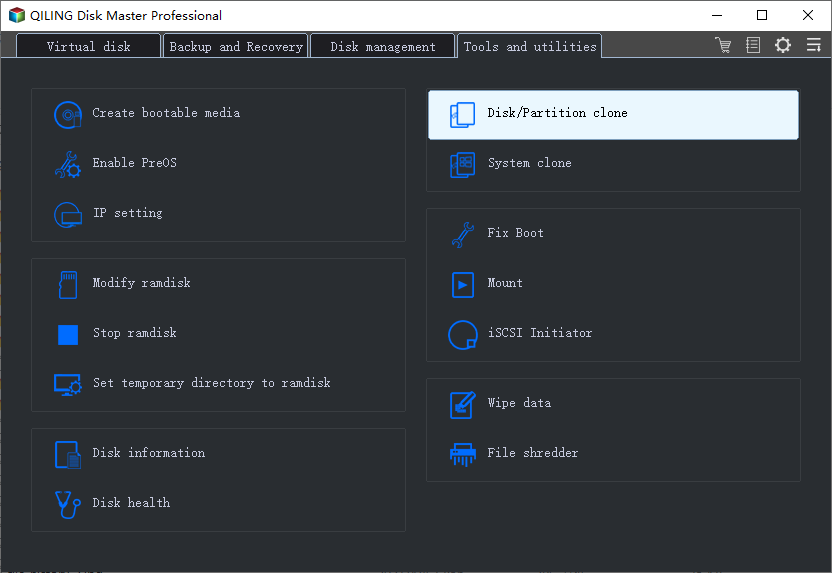
Step 1. Connect the destination by a compatible SATA or NVMe port or enclosure. Open Qiling Disk Master and choose Tools and utilities > Disk/Partition clone. Connect a healthy source and a compatible target.
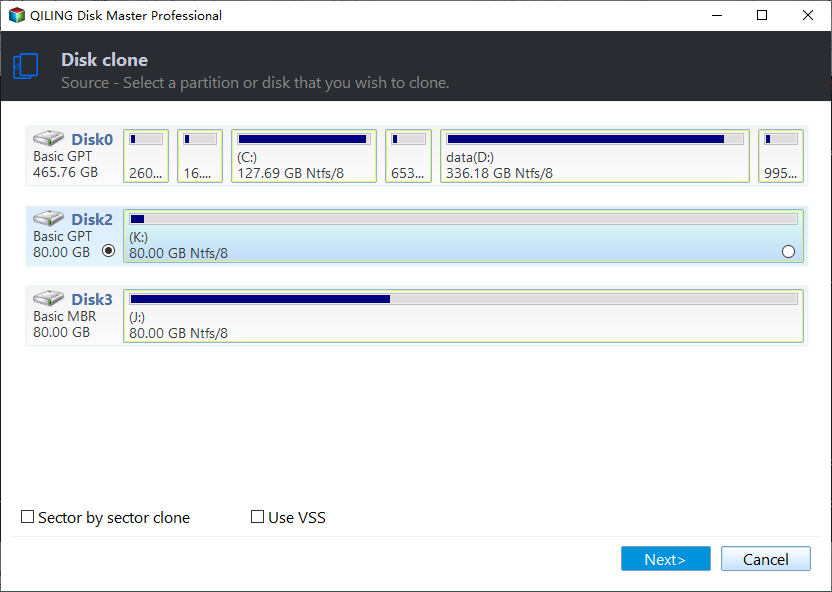
Step 2. Select the entire source disk row by model and capacity, not just its C: partition. Choose the entire Windows disk with EFI and recovery partitions.
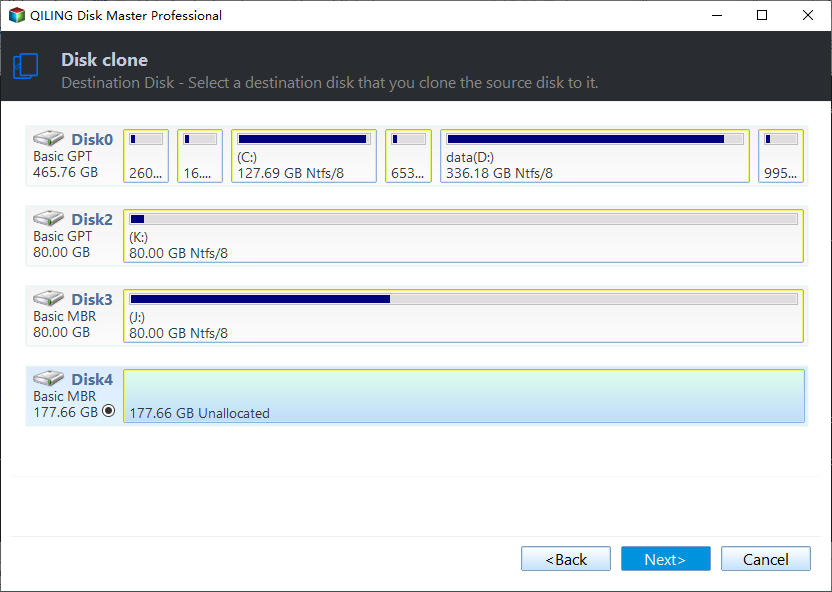
Step 3. Click Next, choose the destination disk by model and capacity, and click Next again. Existing target data will be overwritten. Choose the replacement and verify no needed data remains on it.
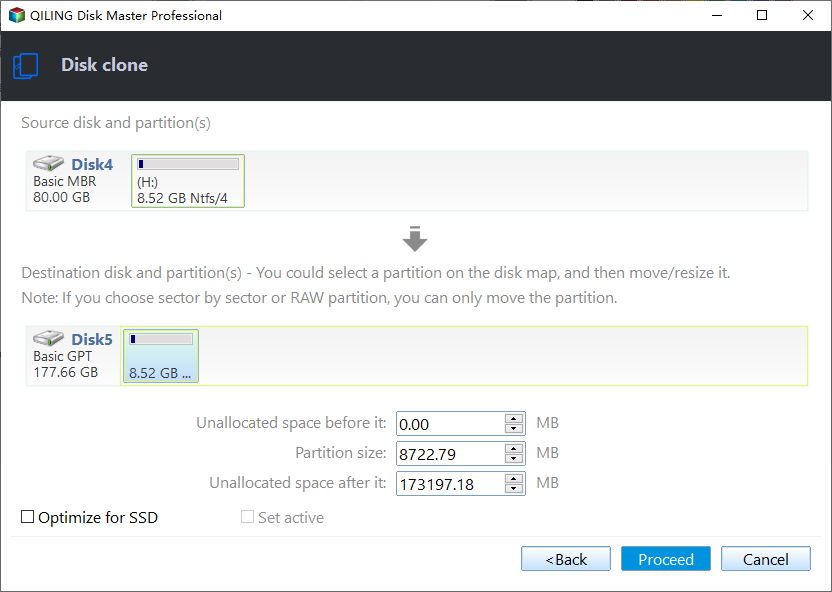
Step 4. Review both disk identities and the proposed layout. Click Proceed, confirm the erase warning, and wait without disconnecting either drive. Confirm the source/target direction and layout before Proceed.
Step 5. Test the target independently before erasing or reusing the source. Boot from the target independently and inspect files and apps.
Frequently Asked Questions
Does copying every visible file clone Windows?
No. It omits hidden boot structure and may fail on in-use protected files.
Is a hardware duplicator always safer?
No. Wrong bay selection can erase the source, and compatibility and source health still matter.
Conclusion
Use a compatible hardware duplicator for a literal software-free copy, or choose image-and-restore, file transfer, or a tested clone according to the goal.
Related Articles
- Image a Hard Drive
Learn the image-and-restore route. - Transfer a Boot Drive
Keep the full Windows boot layout.
Products
Articles & Tutorials
- Data Recovery
- Data Backup
- File Recovery
- File Backup
- System Backup and Restore
- Disk and Partition Clone
- Technical articles
- Mobile articles
- Disk Master Help
- Windows Data Recovery Tutorials
- Windows Secure Delete Tutorials
- Windows Partition Management Tutorials
- Windows File Backup and Restore Tutorials
- Windows System Backup and Restore Tutorials
- Windows Disk Backup and Restore Tutorials
- Windows Clone Tutorials