Clone a Windows Dynamic Disk to an SSD: Check the Layout First
A Windows dynamic disk can contain a simple volume or a volume spread across several physical disks. That difference determines whether a single-disk clone can preserve the data. Do not treat a spanned, striped, mirrored, or RAID-5 volume as an ordinary basic disk.
Inspect every disk in the volume
Open Disk Management and note which disks are marked Dynamic. Record each volume type and all physical members. A simple volume occupies one disk; spanned and striped volumes may depend on multiple disks. Mirrored and RAID-5 configurations add still more recovery requirements.
A clone of one member of a multi-disk volume may not contain a complete usable file system. Do not disconnect or convert a member until a verified backup exists. Confirm product support for the exact dynamic layout before planning a disk-level clone.
Choose a conservative migration path
Back up important files to independent storage first. For a simple single-disk dynamic volume, check whether the cloning software explicitly supports it and whether the destination will remain dynamic. For a multi-disk volume, a file or application-aware backup followed by restoration to a new supported layout is usually easier to reason about.
Changing a dynamic disk back to basic can delete volumes with built-in tools. Do not follow a conversion guide that promises no data loss without checking its actual method and maintaining a backup. A boot/system dynamic layout adds further startup constraints.
Restore and verify
Create the replacement SSD layout appropriate for the new PC, restore files or the supported backup, and check representative data. For an operating-system migration, use a supported system recovery process and verify boot independently.
Keep all old dynamic disk members intact until files, permissions, and applications have been tested. Record the old layout so recovery remains possible if an unexpected volume is missing.
Protect Files Before a Dynamic-Disk Migration
Qiling File backup is shown as a data-protection path, not a claim that its generic disk-clone wizard supports every dynamic volume type. Do not dismantle a multi-disk volume before a verified restore.
Step 1. Connect a separate backup drive. In Qiling Disk Master, open Backup and Recovery > File backup. Use separate healthy storage outside the dynamic volume.
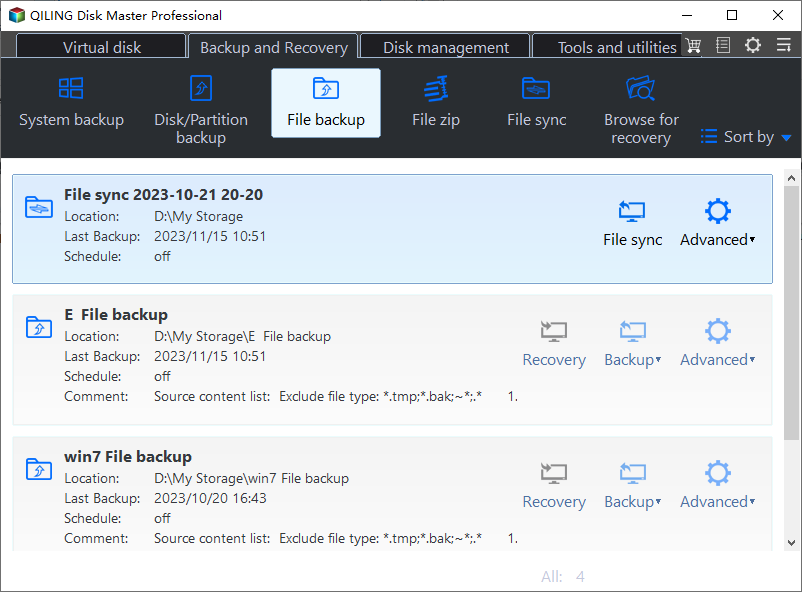
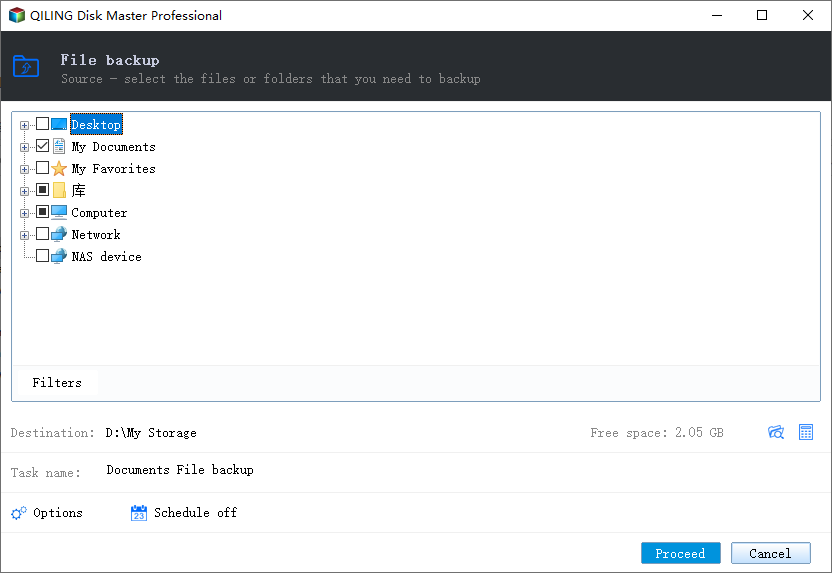
Step 2. Select the important folders in the source tree. Select folders across the entire volume, including application data and shared directories.
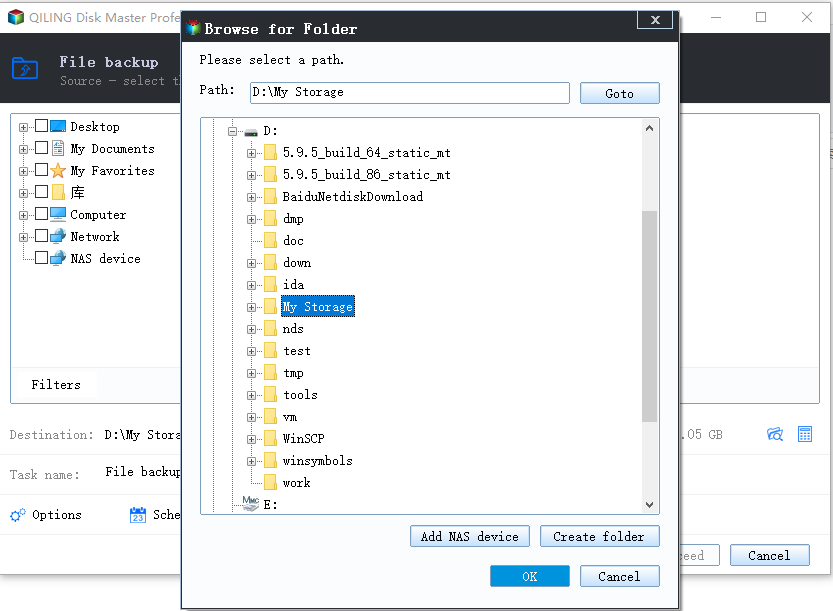
Step 3. Browse to a destination on the separate drive and confirm sufficient space. Choose a destination that does not depend on any of the dynamic source disks.
Step 4. Review the folders and destination, then click Proceed. Wait for completion without disconnecting the storage. Confirm the source path is readable and the backup job includes hidden business-critical folders.
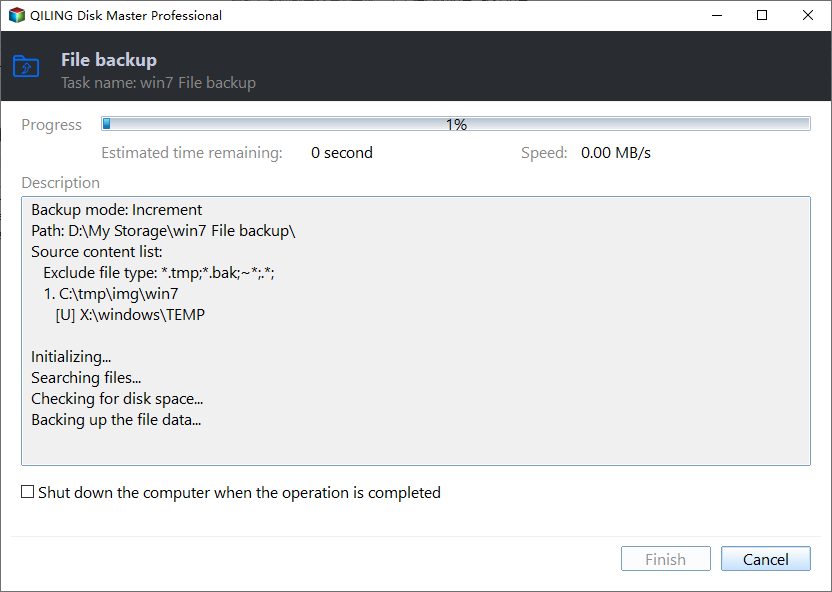
Step 5. Restore a sample to a different folder and open the files. Verify a restored sample before converting, removing, or replacing any dynamic disk member.
Frequently Asked Questions
Can I clone one disk from a spanned volume?
Not as a complete independent copy of the spanned volume; all member disks and metadata matter.
Is dynamic-to-basic conversion always lossless?
No. Built-in conversion can require deleting volumes, so preserve a verified backup.
Conclusion
Map the dynamic volume first. Protect files independently and use only a migration path proven for the exact layout.
Related Articles
- Windows Disk Backup
Plan a separate recovery copy before structural changes. - Clone Multiple Partitions
Compare ordinary basic-disk cloning.
Products
Articles & Tutorials
- Data Recovery
- Data Backup
- File Recovery
- File Backup
- System Backup and Restore
- Disk and Partition Clone
- Technical articles
- Mobile articles
- Disk Master Help
- Windows Data Recovery Tutorials
- Windows Secure Delete Tutorials
- Windows Partition Management Tutorials
- Windows File Backup and Restore Tutorials
- Windows System Backup and Restore Tutorials
- Windows Disk Backup and Restore Tutorials
- Windows Clone Tutorials