How to Choose Free Hard-Drive Cloning Software for Windows
The best free clone tool is the one that supports your actual source, destination, and boot layout without hiding a necessary step behind an unexpected license. Free download does not always mean every clone function is free.
Decide what the tool must do
List the disk interface, partition style, source and target capacities, encryption state, and whether Windows must boot afterward. A data-only copy and a boot-disk migration have different requirements. Check if the tool includes EFI or System Reserved partitions, supports a smaller target, and documents any sector-size limitations.
Clonezilla Live is a no-cost, bootable, text-menu option with an official disk-to-disk guide. It may be suitable for a compatible equal-or-larger destination but demands careful source/target identification. Windows utilities such as File History are backups, not direct full-disk clones.
Check licensing and downloads
Download from the publisher, inspect the current feature list and license, and avoid cracks or repackaged installers. A product may provide a trial while requiring payment for the actual migration. Do not promise a universally free full clone based on an old review.
Keep a separate backup of important files regardless of tool choice. A clone overwrites the target and can replicate corruption from the source. If the source reports read errors, assess recovery before a full-disk pass.
Verify the result
After cloning, compare destination partitions with the source and boot from the new disk alone when possible. Check Windows Boot Manager, encryption, apps, and representative files. Record exact error messages if the first boot fails.
A tool should also let you understand its restore or rollback path. Preserve the original until the new disk has passed several restarts. Speed claims and popularity rankings matter less than a supported, testable workflow.
Evaluate Qiling Disk Master on Your Disk Layout
Use these steps only after checking the license and supported features of the installed Qiling edition. This article does not claim its complete clone function is free in every edition.
Step 1. Connect the destination by a compatible SATA or NVMe port or enclosure. Open Qiling Disk Master and choose Tools and utilities > Disk/Partition clone. Connect both disks and record their model names.
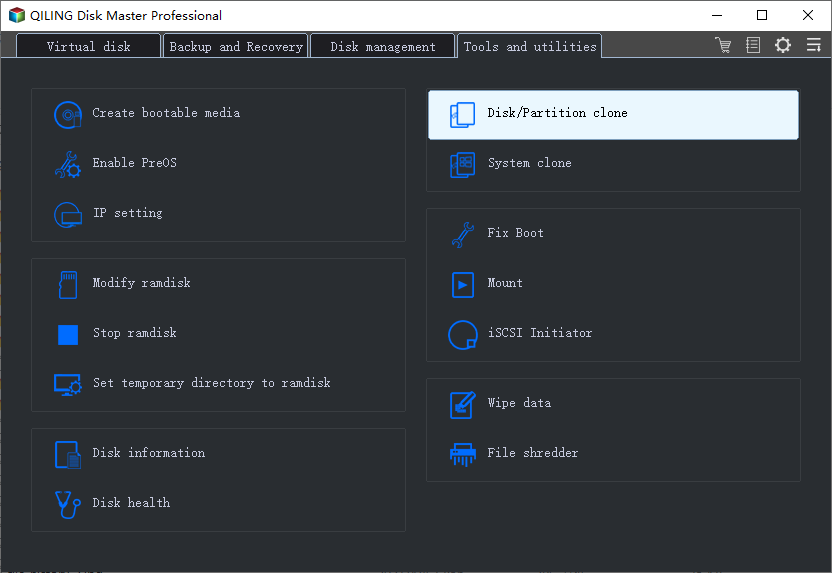
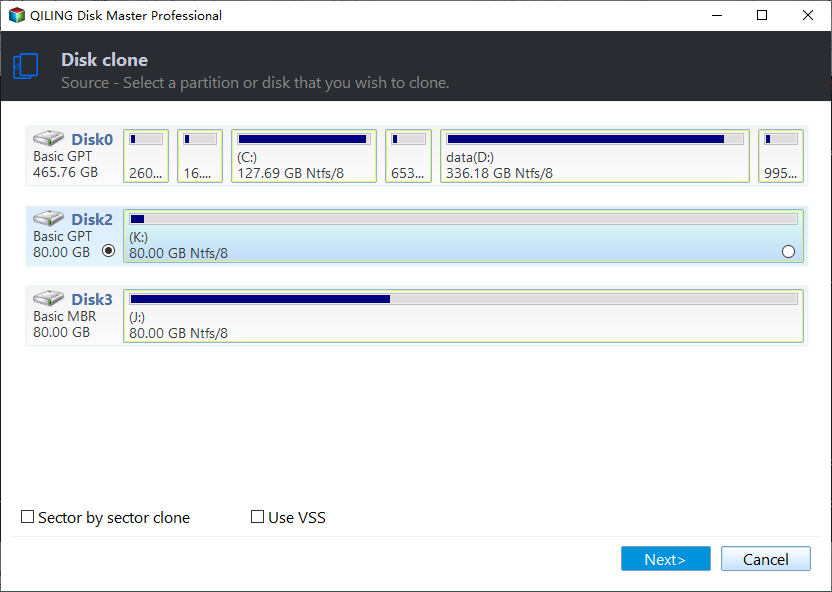
Step 2. Select the entire source disk row by model and capacity, not just its C: partition. Select the whole Windows disk rather than only C:.
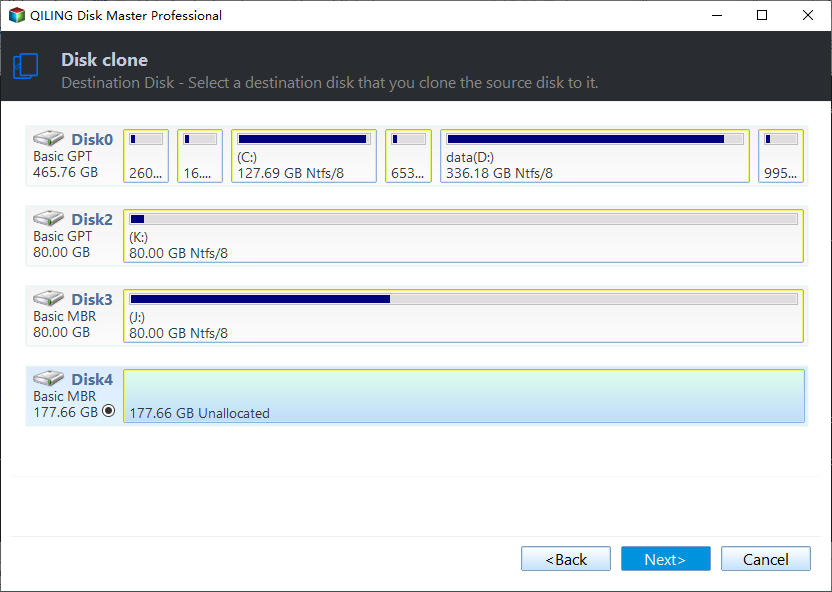
Step 3. Click Next, choose the destination disk by model and capacity, and click Next again. Existing target data will be overwritten. Choose the compatible replacement and back up its existing contents.
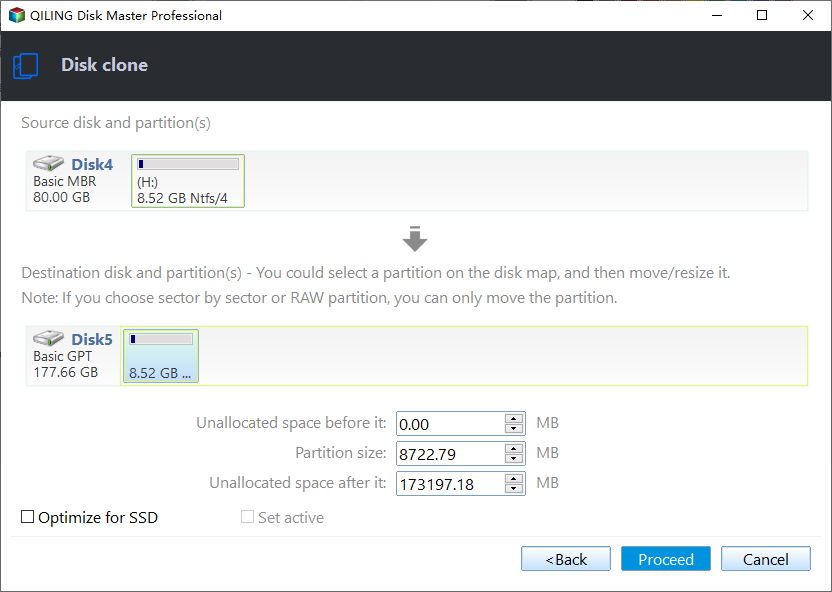
Step 4. Review both disk identities and the proposed layout. Click Proceed, confirm the erase warning, and wait without disconnecting either drive. Check the preview and any edition or feature notice before Proceed.
Step 5. Test the target independently before erasing or reusing the source. Verify the new drive boots and open sample files.
Frequently Asked Questions
Is a free download a free clone license?
Not necessarily. Read the current license and confirm the required function is included.
Can Windows copy its boot disk by File Explorer?
No. A file copy does not recreate boot partitions and configuration.
Conclusion
Choose by compatibility, licensing clarity, and verified boot results rather than a generic “best free” ranking.
Related Articles
- Clone with Clonezilla or Qiling
Compare two different workflows. - HDD Clone Software Download
Check download and license safety.
Products
Articles & Tutorials
- Data Recovery
- Data Backup
- File Recovery
- File Backup
- System Backup and Restore
- Disk and Partition Clone
- Technical articles
- Mobile articles
- Disk Master Help
- Windows Data Recovery Tutorials
- Windows Secure Delete Tutorials
- Windows Partition Management Tutorials
- Windows File Backup and Restore Tutorials
- Windows System Backup and Restore Tutorials
- Windows Disk Backup and Restore Tutorials
- Windows Clone Tutorials