How to Recover Files from Fdisked Hard Drives in Windows 10/11
What Is a Partition
Partitioning refers to dividing a disk into separate sections, each behaving like a separate disk drive, allowing multiple operating systems to run on the same system. This is useful for running multiple OSes, such as Windows and UNIX, from the same disk.
Partitioning on DOS and Windows machines can improve disk efficiency by automatically assigning cluster size based on disk size, but large clusters can result in wasted space, called slack space. Utilities like Fdisk, Partition Magic, and Qiling Disk Master help manage hard disk partitions.
Fdisk Explanation
The Fdisk command is used to prepare a new hard disk for use, dividing the hard drive and installing an operating system, application programs, and user data. It has a long history, originally existing as a standalone DOS program before being integrated into Windows.
Symptoms
Where previously the computer would boot and be usable, systems that have been Fdisked often report the following errors: these errors are frequently displayed on a black screen with white text. The system reports that it cannot find the boot sector, or that the boot sector is corrupted, or that the boot sector is missing, or that the boot sector is invalid, or that the boot sector is unknown, or that the boot sector is not found, or that the boot sector is corrupted and cannot be read, or that the boot sector is not found and the system will not boot, or that the boot sector is invalid and the system will not boot, or that the boot sector is missing and the system will not boot, or that the boot sector is unknown and the system will not boot.
- No boot device
- Operating System not found
- Primary Hard Disk not found. Press F1 to Continue
- Master Boot Record Not Found
- Invalid or corrupt FAT
- Invalid partition table entries
- Invalid sector
- Cannot find the file or program
- Invalid command.com
- Primary/Secondary Hard disk failure
- Non-system disk
- Disk error
How to Recover Files from a Fdisked Drive
If you're unable to boot your computer, consider using a data recovery bootable disk or connecting the hard drive to another computer as a slave to recover lost data.
Deep Data Recovery is the ultimate hard drive recovery software that can restore files from lost partitions, formatted hard drives, RAW drives, and inaccessible or corrupted hard drives.
Step 1. To recover lost files, run Deep Data Recovery, select the partition where the files were stored, and click "Scan". Qiling data recovery software supports partition recovery with various file systems, including FAT (FAT12, FAT16, FAT32), exFAT, NTFS, NTFS5, ext2, ext3, HFS+, and ReFS.

Step 2. To quickly find lost data from numerous scan results, you can use the filter or search function to narrow down the results.

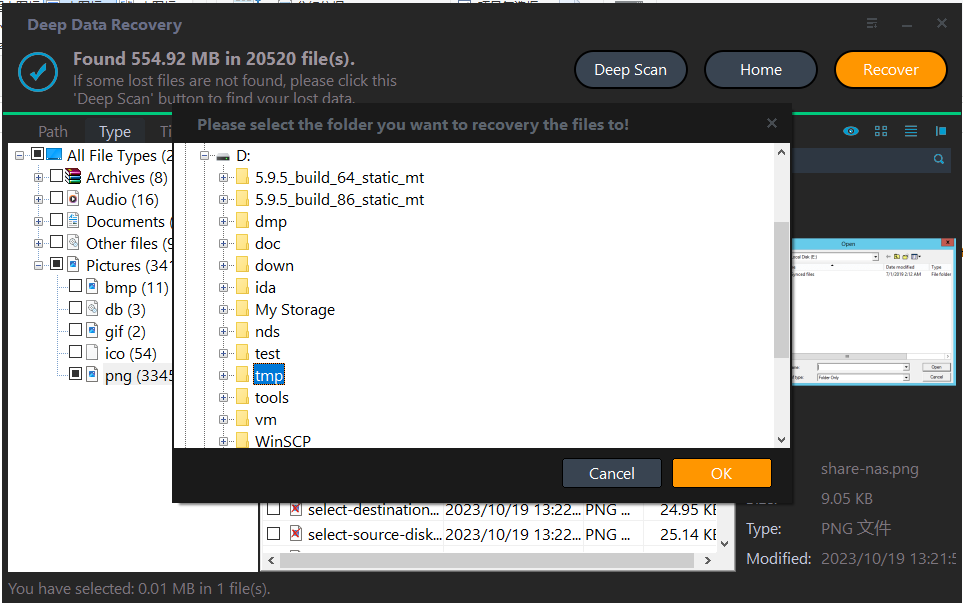
Step 3. Before recovery, you can preview files to ensure they are recoverable. Once you've identified the data you want to recover, select all desired files and click "Recover" to restore them from existing partitions. It's essential to avoid saving the recovered files to the same partition where the data was lost.
Related Articles
- Recover Deleted Word Documents Windows 10/11 in 4 Ways [2023 Update]
- EFS Decryption Guide: How to Recover Encrypted Files on NTFS Drive Without Effort
- Recover Access Files with Access Database Recovery Software
- Download Qiling Data Recovery Crack 3.2 [Full Crack]
- The Best 5 Data Recovery Services Near Me in Seattle, WA
IT professionals in Seattle, WA, who provide data recovery services can assist you in recovering important data, including documents, films, images, and other lost items. This article lists the top 5 data recovery services in Seattle, WA. - Top List of Data Recovery Services in USA [2023 NEW]
To find a data recovery service near you in the USA, you can use a service finder to locate a data recovery service in your area.
Products
Articles & Tutorials
- Data Recovery
- Data Backup
- File Recovery
- File Backup
- System Backup and Restore
- Disk and Partition Clone
- Technical articles
- Mobile articles
- Disk Master Help
- Windows Data Recovery Tutorials
- Windows Secure Delete Tutorials
- Windows Partition Management Tutorials
- Windows File Backup and Restore Tutorials
- Windows System Backup and Restore Tutorials
- Windows Disk Backup and Restore Tutorials
- Windows Clone Tutorials