How to Copy Files Using Command Prompt Windows 10
User case - You can move files and folders from one drive to another using the command prompt in Windows by using the "copy" and "move" commands. For example, to move a file from drive C to drive D, you would type "move C:\file.txt D:\", replacing "file.
Using the command prompt to copy files has advantages over manual copying. It saves time and allows for unattended copying, where you can enter commands and leave the computer to run the task independently.
If you're looking for ways to copy files using the command prompt, you're in the right place. This article will guide you through the process and also mention other methods of copying files. To copy files using the command prompt, you can use the copy command, followed by the source and destination file paths, separated by a space.
| Workable Solutions | Step-by-step Troubleshooting |
|---|---|
| Copy Files Using Command Prompt Step by Step | Right-click the Start button and choose "Command Prompt (Admin)" to open CMD...Full steps |
| Other Easier GUI (Graphical User Interface) Methods to Copy Files | 1. Use a USB Flash Drive;2. Use OneDrive;3. Use PC Data Transfer Software...Full steps |
How To Copy Files Using Command Prompt Step by Step
You can use the Copy and Xcopy command lines to copy files on your computer efficiently.
1. Use the Copy Command to Transfer Specific Files
Right-To open the Command Prompt as an administrator, click the Start button and select "Command Prompt (Admin)" from the menu. This will open the Command Prompt window with administrator privileges.
To copy files, use the copy command from the command line, such as `copy file.txt C:\Users\username\Documents`.
copy c:\myfile.txt e:
The command `copy C:\myfile.txt E:\` will copy the file "myfile.txt" from the C: drive to the E: drive.
copy *.txt e:
The command `copy *.txt E:\*` copies all text files in the current directory to the E: drive using a wildcard.
copy d:\example.xls
The command copies the "example.xls" file from the D: drive to the current directory, using the current directory as the destination by default.
2. Using the XcopyCommand to Copy AllFiles
Xcopy is a command that copies files or groups of files between directories, making it convenient for copying data to and from a fixed drive.
Step 1. To find Command Prompt, go to Start, type "cmd" in the search box, and run it as administrator by right-clicking on the result.
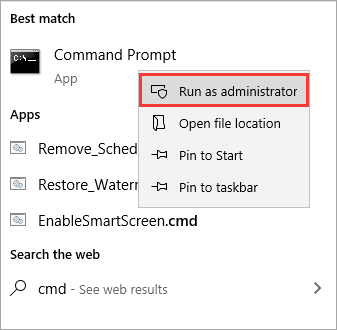
To copy folders and subfolders, including their contents, from one location to another, use the Xcopy command in the command prompt. For example, to copy the "test" folder and its subfolders from the C drive to the D drive, type "xcopy C:\test D:\test /s" in the command prompt, replacing "C:\test" with the source folder path and "D:\test" with the destination folder path. The "/s" option is used to include subfolders.
Xcopy C:\test D:\test /E /H /C /I
- /E — Copies all subdirectories, including any that are empty.
- This utility copies files that are hidden or have system file attributes, allowing users to access and transfer these files.
- /C – Even if an error occurs, keep copying.
- When in doubt about the destination, always assume it's a folder. This helps avoid confusion and ensures you're saving files to the correct location.
A command-The command line interface (CLI) has a significant drawback compared to a graphical user interface (GUI). As a text-only interface, it can be overwhelming and difficult to navigate, with a high learning curve and ample room for error. Additionally, the CLI requires a vast number of instructions to accomplish even simple tasks, and users often struggle to figure things out on their own due to the lack of visual cues and intuitive design.
Other Easier GUI (Graphical User Interface) Methods to Copy Files
Here are three easier ways to transfer and copy files from one drive or one computer to another: you can use a cloud service like Google Drive, Dropbox, or OneDrive to upload your files and then access them from another device; you can also use a USB drive to physically transfer files from one device to another; or, you can use a file transfer service like FileZilla or WinSCP to securely transfer files between devices.
1. Use a USB Flash Drive
USB flash memory devices, also known as memory keys and memory sticks, can store a small number of files or a large quantity of data, depending on the drive's capacity.
Step 1. Place the flash drive in one of your computer's USB ports.
Step 2. Open File Explorer, look for the flash drive's entry in the left pane, and select it to access its contents.
Step 3. Drag the files you want to copy into the drive's folder.
Step 4. Insert the flash drive into the other PC's USB slot and wait for the files to transfer, then remove the flash drive.
Step 5. You can copy files to a new PC by dragging and dropping them into a folder in a File Explorer window.
2. Use OneDrive
Transferring files across your Windows devices can also be done through cloud drive, which shares files with any Windows app that supports cloud storage services like OneDrive. However, this method has its drawbacks, including limited storage space, slow upload times, and potential expenses. Nevertheless, it can be a great option for transferring smaller files more frequently.
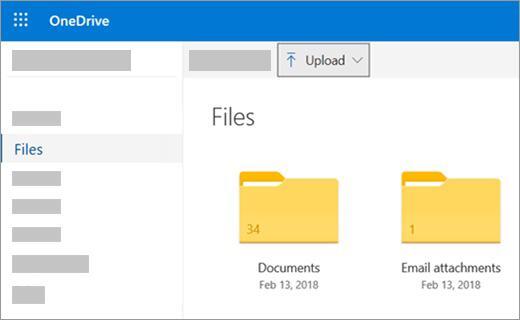
Step 1. Drag and drop files into OneDrive.
To upload a file to OneDrive, sign in to your account, add the file, and click "Add" to send it to your cloud storage.
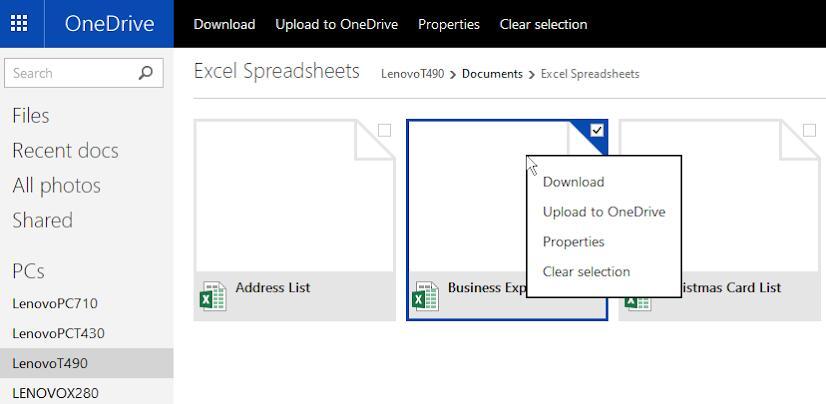
Step 2. Get the files you need.
To transfer a file from one laptop to another on the same network, open the OneDrive software on the second laptop, right-click the file, and select "Download". This will complete the file transfer from the first laptop to the second laptop on the network.
3. Use Free PC Data Transfer Software – Qiling Disk Master
Qiling Disk Master Free is a tool that allows for easy file and program transfer between two PCs, as well as backing up data and applications, making it a user-friendly data and application backup software. It can also transfer files between local disks/drives or between two computers for free.
The software doesn't require advanced computer skills or special equipment, and purchasing a lifetime license grants access to free upgrades for life.
Download PC data transfer software to transfer files between computers in simple clicks.
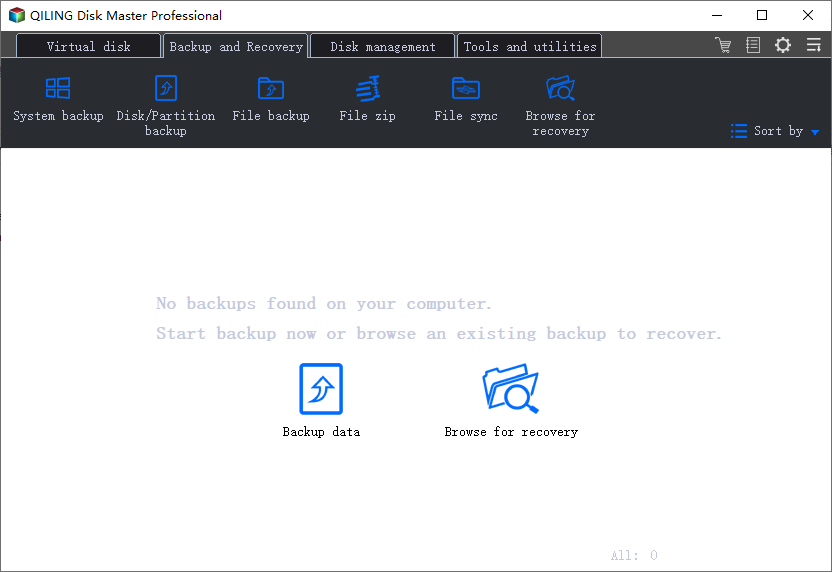
Step 1. Open Qiling Disk Master on both of your computers. Choose "File sync" to go to the next step.
Step 2. Connect two PCs via the network by entering the target PC's password or verification code, ensuring the correct transfer direction is chosen, and clicking "Connect" to proceed.
The verification code is located on the top right corner of the main "PC to PC" screen on the target computer.
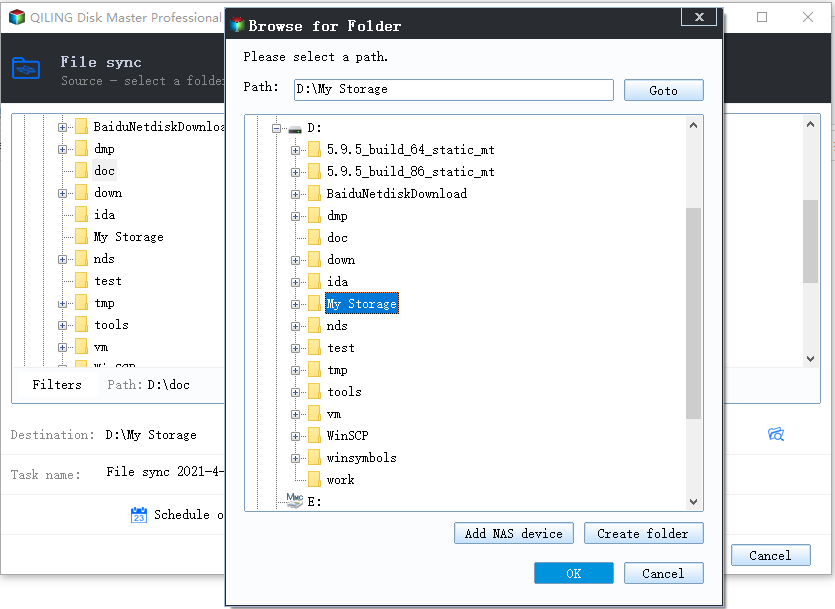
Step 3. Select the files you want to transfer, and you can also customize the storage path for the transferred data.
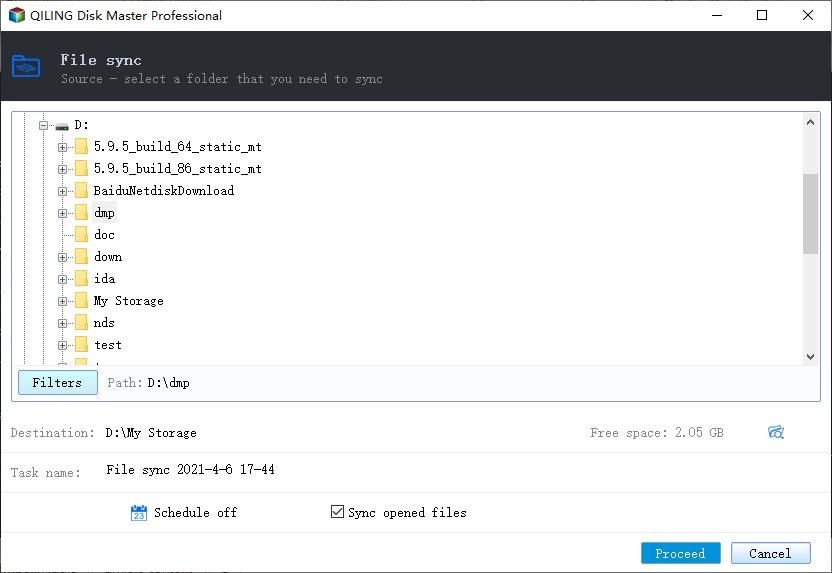
Step 4. To transfer files from PC to PC, click "Proceed" after initiating the process. The transfer time is determined by the size of the file, so be patient and wait for the process to complete.
Conclusion
Copying files from one drive/computer to another can be done in various ways, but each method has its advantages and disadvantages. Despite this, using Qiling Disk Master is recommended as it poses no security threats and is easy to use.
Related Articles
- How to Send Files to Dropbox? Follow This Guide!
- How to Change Webex Meeting Location
- How to Transfer Files Using Easy Transfer Cable Between Computers
- How to Keep Microsoft Office after system Restore
- (Solved) No Disks Are Available for Use as a Backup Storage Destination
If you have a problem fixing the 'no disks are available for use as a backup storage destination' error, click on this article and learn 5 effective solutions. - Solved: One of The Volumes Specified for Backup is Invalid
You will find the several solutions to fix the one of the volumes specified for backup is invalid error message and get better way to create a system image in Windows 10, 8, 7.
Products
Articles & Tutorials
- Data Recovery
- Data Backup
- File Recovery
- File Backup
- System Backup and Restore
- Disk and Partition Clone
- Technical articles
- Mobile articles
- Disk Master Help
- Windows Data Recovery Tutorials
- Windows Secure Delete Tutorials
- Windows Partition Management Tutorials
- Windows File Backup and Restore Tutorials
- Windows System Backup and Restore Tutorials
- Windows Disk Backup and Restore Tutorials
- Windows Clone Tutorials