4 Quick-Fixes: File Transfer Speed Slow Between 2 Computers on LAN
You're experiencing slow file transfer speeds over your LAN, despite having a gigabit router and wired PCs. The transfer rate fluctuates between 900Mbps and 50Mbps or even drops to zero. This issue might be caused by network congestion, outdated network drivers, or a faulty router. Try checking and updating your network drivers on both PCs, and also ensure that your router's firmware is up-to-date. If the problem persists, consider using a different transfer method, such as an external hard drive or a cloud storage service. Additionally, you can try restarting your router or switching to a different Ethernet port on your router to rule out any hardware issues.
The above-The user is experiencing slow file transfer speeds between two computers on a Local Area Network (LAN). They need to transfer files, such as photos, videos, and documents, from an old computer to a new one. The user is looking for a solution to this issue.
Sharing files on a Local Area Network (LAN) is generally straightforward, but issues with slow transfer speeds between two computers can be frustrating. Fortunately, there are solutions available to resolve this problem.
If you're experiencing slow file transfer speeds between two computers on a Local Area Network (LAN) at your end, don't worry! We've got a list of quick solutions to help you resolve this common issue. But before we dive into the fixes, let's quickly understand why this problem arises.
| Workable Solutions | Step-by-step Troubleshooting |
|---|---|
| 1. Turn Off "Remote Differential Compression" | Step 1. Press the "Windows+ S" key together and enter "windows features"...Full steps |
| 2. Disable "TCP Auto-Tuning" | Step 1. Press the "Windows + X" key together and choose "Command Prompt (Admin)" to open the Command Prompt as an administrator. This will allow you to run commands with elevated privileges, giving you access to system settings and files that are normally restricted.Full steps |
| 3. Disable "Large Send Offload (LSO)" | Step 1. Press the "Windows + X" key together and choose "Device Manager" from the menu that appears. This will open the Device Manager window, where you can view and manage all the hardware devices connected to your computer.Full steps |
| 4. Use Qiling Disk Master | Step 1. Open Qiling Disk Master on both of your computers, then choose "PC to PC" to transfer data between them.Full steps |
Why Is the Transfer Speed Slow BetweenComputers on LAN
The problem of slow file transfer speed between two computers on a Local Area Network (LAN) can arise due to a variety of reasons, including poor network configuration, outdated network protocols, insufficient bandwidth, hardware issues such as faulty network cards or slow hard drives, and software problems like outdated drivers or inefficient file transfer protocols.
- Router settings or hardware failure
- Antivirus software
- Enabled LSO feature
- VPN programs
- Proxy
- Outdated drivers and system softwar
One or more of the above-To ensure smooth file transfer speed between two computers on a Local Area Network (LAN), it's essential to avoid common causes that can slow down the process. These include network congestion, outdated network drivers, conflicting network settings, and interference from other devices. By identifying and resolving these issues, you can enjoy a flawless transfer speed.
How to Fix the Slow LAN Transfer Speed of Files in Windows
As you have got to know the possible reasons behind whyfile transfer speed slow between two computers on LAN, now it's time for you to fix this issue with any of the 4 methods stated below!
To address slow file transfer speeds on your Windows PC, let's examine each method in detail. First, checking for disk errors and running the built-in Check Disk (chkdsk) utility can help identify and fix any issues that may be slowing down file transfers.
Solution 1. Turn Off "Remote Differential Compression"
To resolve the issue of slow file transfer speed between two computers on a Local Area Network (LAN) caused by Remote Differential Compression (RDC), you can disable RDC by following a few simple steps. This will help improve the file transfer speed between the two computers.
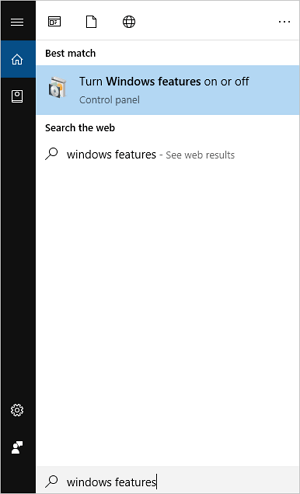
Step 1. Press the "Windows+ S" key together and enter "windows features" in the search bar below to access the Turn Windows Features On or Off window. From there, you can toggle the status of various Windows features on or off as needed.
Step 2. Here, click on "Turn Windows features on or off."
Step 3. Uncheck the "Remote Differential Compression" option and click "OK".
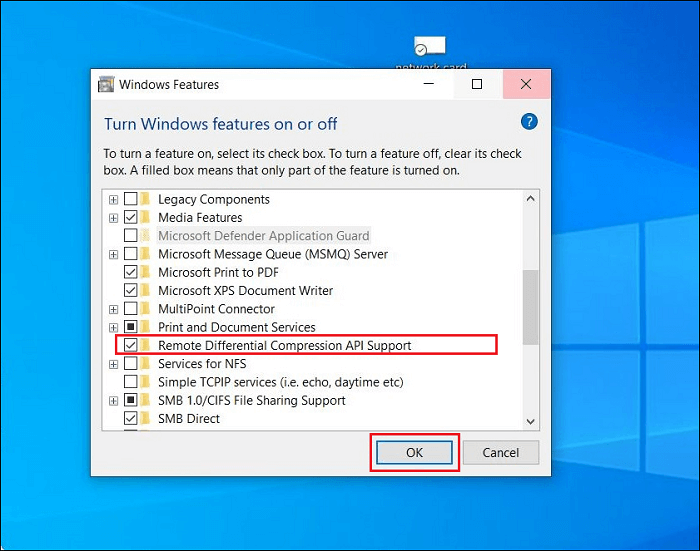
Step 4. To resolve the issue, restart your PC, and repeat this on all PCs on your network. After that, check if the problem persists.
Solution 2. Disable "TCP Auto-Tuning" to Speed Up Transfer Speed
If this method didn't solve your issue, try fixing it by disabling the "TCP Auto-Tuning" feature.
Disabling auto-tuning can improve file transferring speed over the network.
To disable TCP Auto-Tuning, go to the Command Prompt and type the command "netsh interface tcp set global autotuning=disabled" and press Enter. This will disable the TCP Auto-Tuning feature on your Windows PC.
Step 1. Press the "Windows + X" key together and choose "Command Prompt (Admin)".
Step 2. Enternetsh int tcp set global autotuninglevel=disabled,and press the "Enter" key.
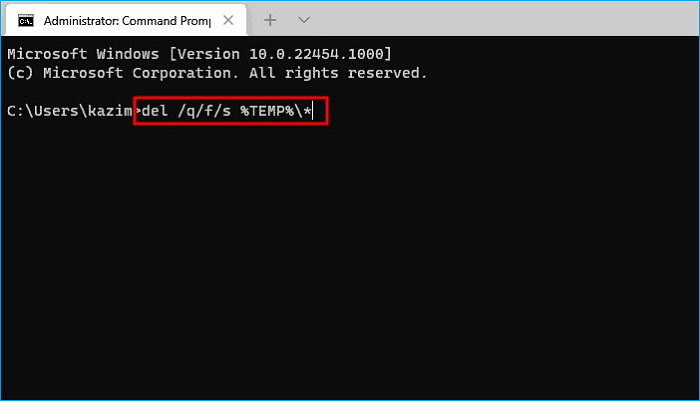
Step 3. Now, try to transfer all the files and check the transfer speed.
NOTE: To turn on Auto-Tuning, go to "Command Prompt (Admin)" and enter the command `netsh int tcp set global autotuninglevel=normal` and press the "Enter" key. This will enable Auto-Tuning again.
Solution 3. Disable "Large Send Offload (LSO)"
Disabling the "Large Send Offload" (LSO) feature can also help fix slow file transfer speed between two computers on a LAN. To do this, follow the steps to disable LSO.
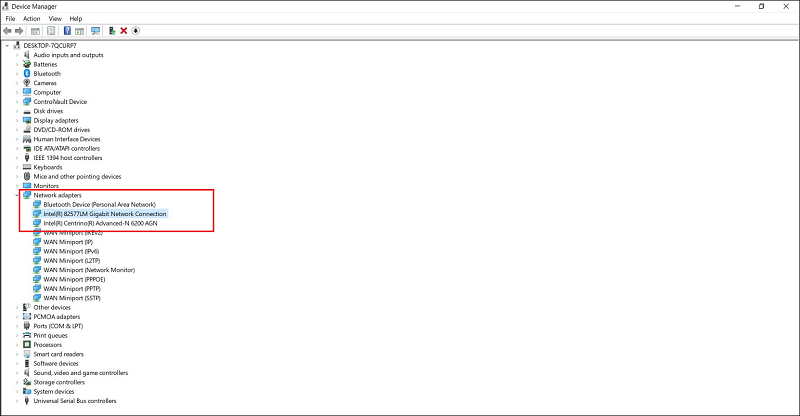
Step 1. To access the Device Manager on your Windows computer, press the "Windows + X" key together, and from the drop-down list, choose "Device Manager".
Step 2. Now, double-click on your "Network Card" and tap on the "Advanced" tab.
Step 3. Here, choose "Large Send Offload Vtwo (IPv4)" and set the value to "Disabled".
Step 4. Repeat the same step for "Large Send Offload Vtwo (IPv6) and hit the "OK" button.
To disable LSO, go to your browser's settings, click on "Advanced," then "Privacy and security," and finally "Cookies and other site data." From there, select "Manage cookies and site data" and toggle off "Allow sites to save and read cookie data" and "Save and read locally stored data." This will prevent LSO from functioning.
Solution 4. Use Qiling Disk Master Free to Speed Up the Transfer
The methods outlined here can be an excellent tool to help fix the issue, with Qiling Disk Master Free being a top-notch tool that allows you to transfer all kinds of files between two PCs, including folders, files, music, documents, photos, and programs, for free in Windows 7/8/10. Additionally, you can transfer settings from your old PC to a new PC over the internet or by creating an image file with just a few clicks.
The Qiling Disk Master tool offers a range of features, including the following features.
- Migrate custom files and favorites
- Completely automatic and intuitive to use
- Free tech support
- Migrate user account and settings
- Flawless data migration for Windows PC
Using the Qiling Disk Master tool can help you transfer files between two PCs efficiently, eliminating slow transferring speeds and making the process smoother.
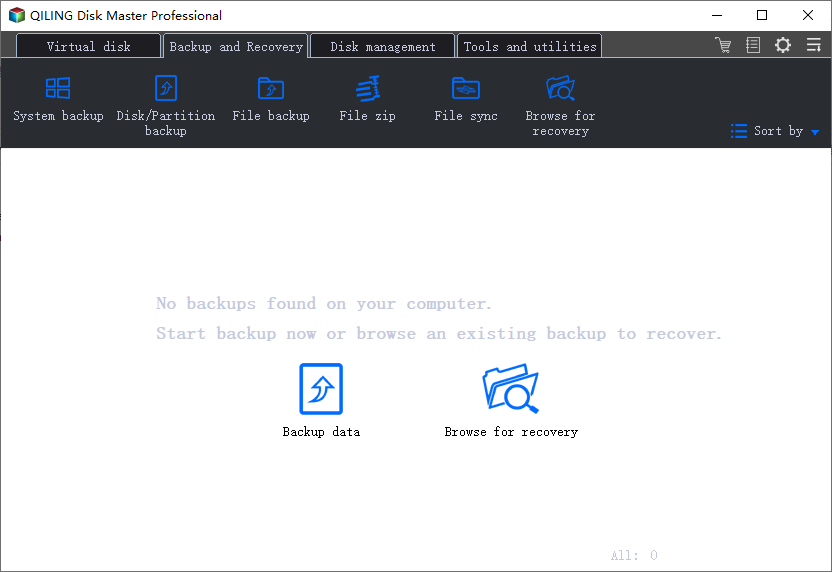
Step 1. Open Qiling Disk Master on both of your computers. Choose "File sync" to proceed with the next step.
Step 2. Connect two PCs via the network by entering the password or verification code of the target PC, ensuring the correct transfer direction is chosen, and clicking "Connect" to proceed.
The verification code is located on the top right of the main screen for "PC to PC" on the target computer.
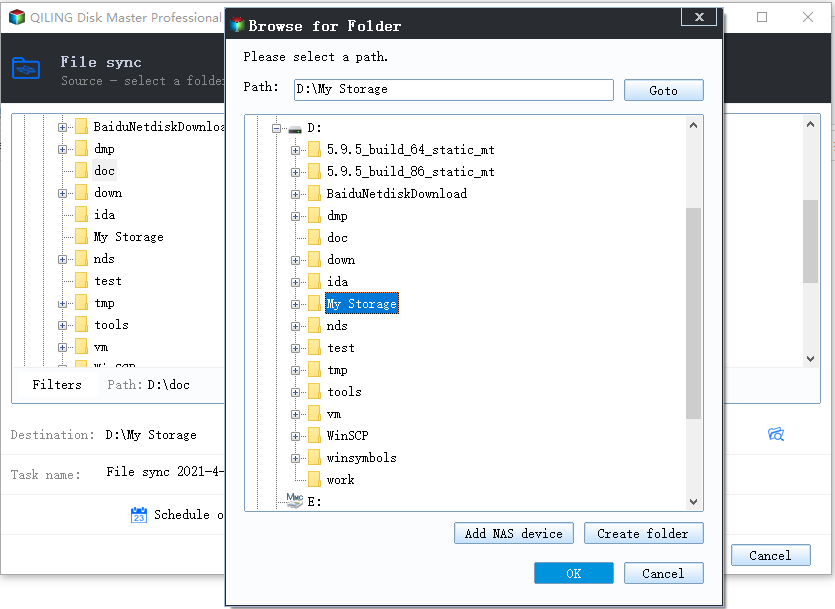
Step 3. To transfer files, select "Files" to choose the files you want to transfer, and then select the specific files you want to transfer. You can also click the Edit icon to customize the storage path for the transferred data.
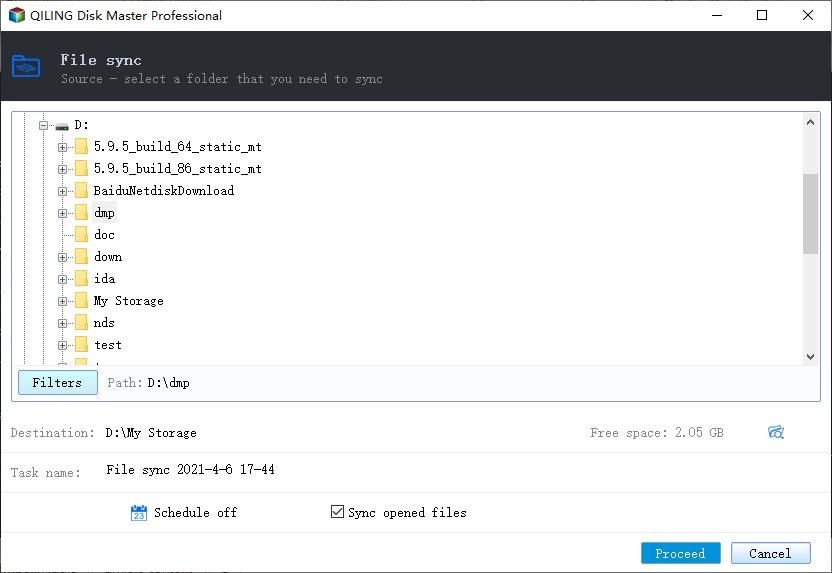
Step 4. To transfer files from one PC to another, simply click "Proceed" to initiate the transfer process. The time it takes will depend on the size of the file, so be patient and wait for the transfer to complete.
Conclusion
Fixing slow file transfer speed between two computers on LAN is a breeze! By considering your system requirements, you can quickly resolve the issue using one of the simple fixes above. However, based on user reviews, we recommend using the Qiling Disk Master tool to share files between PCs, as it offers excellent features to make file transferring a seamless experience.
Related Articles
- 3 Best Windows 11 Data Transfer | Tips to Share Files to New Windows 11
- Is There Any SSD Data Migration Software? How to Use It
- [2022 Update] How to Use Lenovo Migration Assistant and its Alternatives
- How to Transfer Files Using Easy Transfer Cable Between Computers
- Best NAS Backup and Disaster Recovery Solution in Windows 10/8/7
NAS drive isn't 100% safe. To ensure the data security, an efficient NAS backup and disaster recovery solution is required. If unluckily, you lost some data without any backup, you may need data recovery software to retrieve deleted files. - Quick Fix: No Restore Previous Versions Option in Windows 10
Why is there no Restore previous versions option? Here you can learn how to recover it. To retrieve files easily, you can use Qiling Disk Master Standard.
Products
Articles & Tutorials
- Data Recovery
- Data Backup
- File Recovery
- File Backup
- System Backup and Restore
- Disk and Partition Clone
- Technical articles
- Mobile articles
- Disk Master Help
- Windows Data Recovery Tutorials
- Windows Secure Delete Tutorials
- Windows Partition Management Tutorials
- Windows File Backup and Restore Tutorials
- Windows System Backup and Restore Tutorials
- Windows Disk Backup and Restore Tutorials
- Windows Clone Tutorials