How to Recover Data from Flash Drive on Mac with Super Simple Steps
Losing data can be a significant concern for computer users, as a single mistake can result in the loss of important files and information, such as a novel draft, a presentation, or sensitive client data.
Thankfully, there are ways to recover data from a Mac flash drive, and the next steps can be taken to do so.
When Do You Need USB Data Recovery on Mac?
A USB is a small device used to transfer or store data between devices, and is easy to use.
UBS drives are a convenient and affordable way to expand storage capacity, compatible with all devices and modern TVs, and easily portable, taking up minimal space. They come in various sizes, including 1TB and 2TB, making them ideal for storing data and freeing up Mac storage, and can be easily connected to a Mac when needed.
A USB device can suffer from data loss due to various reasons such as sending files to trash, unplugging it incorrectly, removing it while writing or reading, virus infection, not showing up on Mac, file corruption, system crash, unexpected shutdown, or human error.
If your USB drive is not showing up on your Mac, first try restarting your Mac and the USB drive. If that doesn't work, try using the Disk Utility app to repair the drive.
What to Do When You Lose Data from Flash Drive on Mac?
If you've lost data, you can handle it differently depending on the cause. The most common reason is accidental deletion from a USB drive, which can be recovered using various methods.
If you accidentally deleted them, you can use Command+ Z to restore them.
If you're missing files and don't know when they went missing, you can try Mac Trash recovery on your desktop. Select the files you want to restore, right-click on them, and click the 'Put Back' button that appears in the options. This will put the files back in their original place.
Your Mac's trash folder may not display all your deleted files, and they might be hidden or sent to a different trash folder altogether. For instance, files you see in the trash folder might not be visible when another USB device is connected to your Mac. To view all your deleted files, you can enable hidden files, which can be done in two ways.
- If your Mac has Sierra or a later version, you can see your hidden files by pressing Shift + Command + . (period). This will display a folder called 'trashes', where you can find your deleted files.
- To enable the ability to see all files in the Finder on a Mac running an older macOS than Sierra, you can open the Terminal app and manually enter the command. Press Command + Space to open Terminal, then type in 'com.apple.inder AppleShowAllfiles TRUE' and 'killall Finder' to execute the command. This will allow you to see all files in the Finder, rather than just those that are hidden.
If your files are not deleted accidentally and are still in the trash, you can use dependable USB recovery software to recover them.
Highly Praised USB Recovery Software for Mac
The Qiling Mac data recovery program is a top-notch recovery software for Mac that can tackle all data loss scenarios, from a single document to a larger data loss, regardless of size. It's a powerful tool that can help recover lost data due to various reasons, making it a reliable solution for users who need to retrieve their important files.
- The software conducts a thorough scan of your computer, locating files you're searching for, even if they're in the trash, and narrows down the results.
- This tool helps filter files by only looking for files and data that need to be recovered, allowing you to focus on what's important.
- The "Previews files" feature allows you to view the files to be recovered, ensuring you have the correct files you want to retrieve.
- If the MacOS fails to boot, Qiling provides a bootable USB drive that can be used to recover files even when the system has crashed.
- The program allows you to send your important files to the cloud for added security and safety, if desired.
- If you're unable to find your data or have trouble using a program, IT support is available to help resolve the issue and prevent data loss.
To recover data from a USB flash drive on your Mac, follow these steps. First, insert the USB drive into your Mac and open the Disk Utility app.
Step 1. Connect your USB flash drive to your Mac, launch Deep Data Recovery for Mac, select file types and click "USB/SD Scan" to start the recovery process.
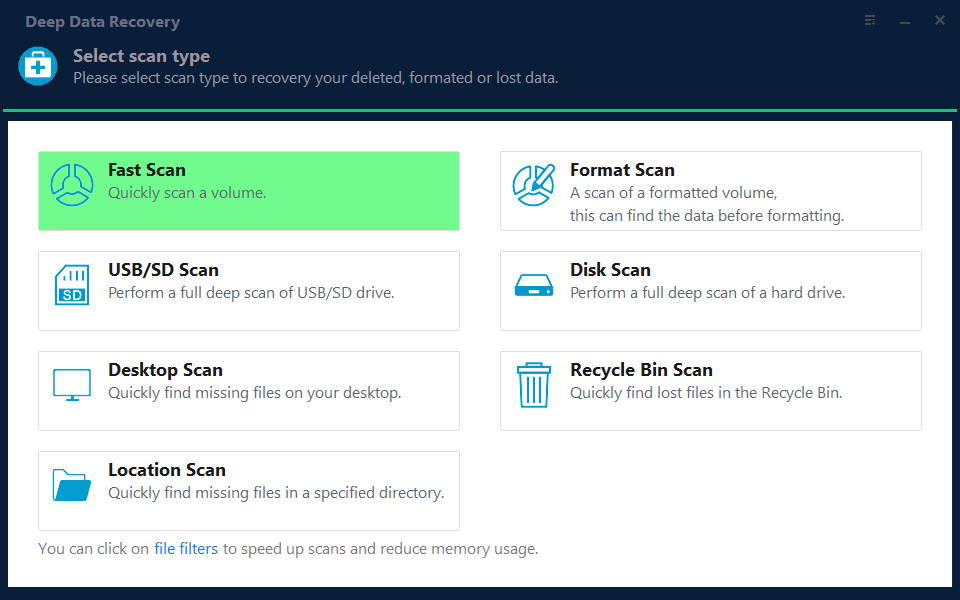
Note: You can choose different search modes based on where and why the data was lost.
Step 2. To recover lost files from a flash drive, select the drive and click "Scan" in the software, allowing it to search for the lost files on the drive.

Step 3. After a quick scan and deep scan, all files will be presented in the left panel in the scan results.

Step 4. Select the files you want to recover and click the "Recover" button, but do not save the recoverable files to the USB drive to avoid data overwriting.
Frequently Asked Questions on USB Recovery on Mac
1. Why do files suddenly disappear from the flash drive on Mac?
Files can disappear from a Mac flash drive due to a virus, incorrect file explorer settings, accidentally sending them to the trash, a MacOS crash, human error, or damage to the USB.
2. How to recover permanently deleted files on mac free?
If you want to recover permanently deleted files on a Mac for free, you can use Deep Data Recovery for Mac. This app scans the disk or partition where the files were lost and recovers them, allowing you to preview and save the recovered data to a new drive.
3. How to recover deleted files from a flash drive without the software?
You can recover deleted files from a flash drive by manually searching for them in the trash or looking through hidden files in the trash for that drive.
Related Articles
- 5 Best Free Snipping Tools for Mac
- Step-by-step Guide: How to Stop macOS Automatic Update
- Format Your Mac For Sale without Difficulty
- No.1 Recuva for Mac Free Download
- Ultimate Guide on SD Card Recovery in 2022
SD cards are widely used due to their high data transmission speed and hot-swappable features, which often lead to data loss problems. If you accidentally delete files on your SD card, you can use various recovery methods and SD recovery software to help recover deleted files. - Fix SD Card Files Not Showing in Mobile Phone, Camera or PC
If your SD card is not showing files on your mobile phone, camera, or computer, follow a comprehensive solution. First, recover important data such as photos, videos, audio, and documents on the SD card using data recovery advice.
Products
Articles & Tutorials
- Data Recovery
- Data Backup
- File Recovery
- File Backup
- System Backup and Restore
- Disk and Partition Clone
- Technical articles
- Mobile articles
- Disk Master Help
- Windows Data Recovery Tutorials
- Windows Secure Delete Tutorials
- Windows Partition Management Tutorials
- Windows File Backup and Restore Tutorials
- Windows System Backup and Restore Tutorials
- Windows Disk Backup and Restore Tutorials
- Windows Clone Tutorials