Can't Download Apps in iOS 12/11 on iPhone and iPad? Fixed Here!
Quick Navigation:
- Top Tips to Fix Can't Download/Update Apps in iOS 12/11
- Fix1. Sign out and Sign into the App Store
- Fix 2. Check the Wi-Fi Connection
- Fix 3. Delete and Restart the App Download
- Fix 4. Disable Restrictions for Installing Apps
- Fix 5. Check Available Storage
- Fix 6. Restart Your iPhone/iPad
- Fix 7. Set Date and Time Automatically
- Fix 8. Update to the Latest iOS
- Fix 9. Restore iPhone to Factory Settings
Applied to: iPhone and iPad in iOS 12/11.4/11.3/11.2/11.1/11.0.
Some iPhone and iPad users have encountered issues with downloading and updating apps after upgrading to iOS 12 or iOS 11, with problems such as apps not downloading from the App Store, failing to install, or refusing to update. If you're experiencing this issue on your iPhone XS Max, X, 8, 7, 6, or iPad, don't worry - it's a common problem that can be resolved with various workarounds. You can try following the steps listed on this page to address the issue and get your apps working again.
Top Tips to Fix Can't Download/Update Apps in iOS 12/11
If some apps are interrupted while downloading or updating, try the following solutions.
Fix1. Sign out and Sign into the App Store
To resolve the issue, start by verifying that the Apple ID associated with the App Store is correct. If it's in order, try signing out of the App Store and then signing back in to see if that resolves the problem.
To sign out of your Apple ID on your iPhone, go to the "Settings" app, tap "iTunes & App Store", then tap your Apple ID at the top. From the pop-up menu, select "Sign Out".
Now, run the App Store to download apps to check if the problem is solved. If you see "cannot connect to App Store" on your device screen when downloading and installing apps, fix that issue first.
Fix 2. Check the Wi-Fi Connection
If you're experiencing issues with app downloading, try switching to another Wi-Fi network or cellular data. If the problem persists, try watching a video from the internet to test your Wi-Fi connection. If the video doesn't load, it may indicate a problem with your Wi-Fi, and you should seek help to resolve the issue.
Fix 3. Delete and Restart the App Download
If the app fails to download or update, you can try deleting it and reinstalling it directly.
Fix 4. Disable Restrictions for Installing Apps
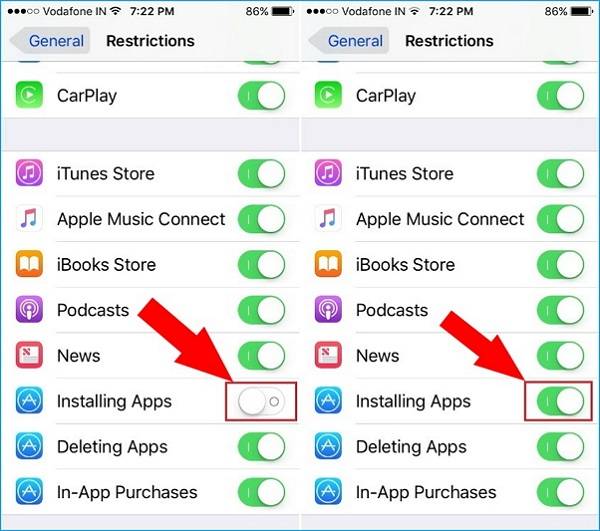
If you're unable to install an update on your iPhone, it's possible that the iOS Restrictions are blocking the function. This means that the ability to download apps, including updates, has been disabled.
To enable the feature, go to Settings, then General, then Restrictions, enter your passcode, and toggle on "Installing Apps" while also turning on the updating feature.
Fix 5. Check Available Storage
If you're running low on storage space on your iPhone or iPad in iOS 12/11, you won't be able to download or update apps. To resolve this, check your available storage space and free up space by deleting unwanted documents and apps.
To check how much free space is available on your device, go to "Settings", tap on "General", then tap on "About" and look for the "Available" storage space. This will give you an idea of how much storage space is left on your device.
If your iPhone is running low on storage, you can free up space by deleting unwanted files, such as apps, photos, podcasts, or videos, or by exporting them to a computer or cloud storage.
Fix 6. Restart Your iPhone/iPad
If the app appears on your Home screen but is dim or has white with lines on it, don't delete it. Instead, restart your device and then redownload the app from the App Store. This should resolve the issue.
To restart your device, press and hold the sleep/wake button until the slider appears, then slide right to turn it off. After about 30 seconds, hold down the sleep/wake button again to restart.
Fix 7. Set Date and Time Automatically
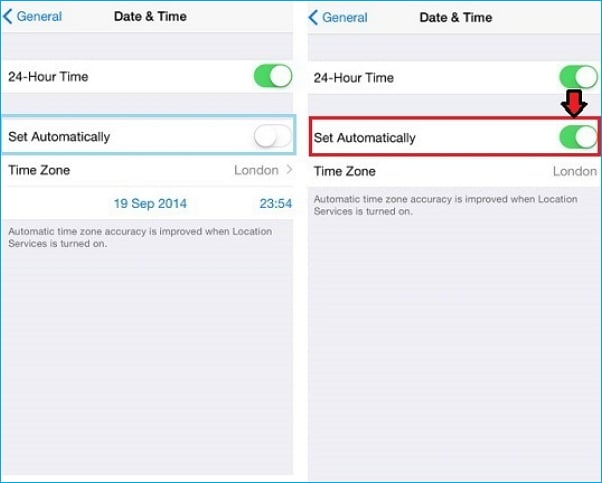
To resolve the issue of apps not downloading or updating in iOS 11/12, set your iPhone's date and time to automatically update. This simple setting adjustment can resolve the problem.
To enable the "Set Automatically" feature, go to your device's "Settings" and tap on "General". From there, tap on "Date & Time" and slide the toggle to turn it on.
Fix 8. Update to the Latest iOS
Updating to the latest version of iOS can often resolve issues caused by system bugs, providing a solution to many problems in iOS 12 or 11.
Go to Settings, then General, then Software Update, and check if there is a new version available. If so, download and install it on your device.
Fix 9. Restore iPhone to Factory Settings
If all else fails, you may need to erase all content and settings on your iPhone and restore it to its factory settings, which will result in data loss. Before doing this, it's recommended to make a backup of your iPhone using a free data transfer tool like Qiling MobiMover Free, which can transfer various types of files such as contacts, messages, and photos.
- Notice:
- Upgrading to a new iOS can cause various issues on different Apple devices, including problems with screen recording, Apple Music playback, and the App Store. If you're experiencing any of these issues, you can find potential solutions by searching the iPhone troubleshooting index page.
Related Articles
- [Detailed Guide]How to Put iPhone 8/iPhone X in DFU Mode
- How to Monitor a Folder and Move Files Automatically?
Need to copy files from one folder to another automatically? Read this article patiently to get the best automated file mover utility in Windows to assist you. - How to Move Files to Google Drive with Ease
You will learn 8 practical ways and how to move files to Google Drive easily, even in different situations. - Quickly Move My Documents to Another Drive in Windows 10
This tutorial demonstrates how to move My Documents to another drive in Windows 10 with two easy ways, both Windows inbuilt feature and Qiling Disk Master.
Products
Articles & Tutorials
- Data Recovery
- Data Backup
- File Recovery
- File Backup
- System Backup and Restore
- Disk and Partition Clone
- Technical articles
- Mobile articles
- Disk Master Help
- Windows Data Recovery Tutorials
- Windows Secure Delete Tutorials
- Windows Partition Management Tutorials
- Windows File Backup and Restore Tutorials
- Windows System Backup and Restore Tutorials
- Windows Disk Backup and Restore Tutorials
- Windows Clone Tutorials