[iOS 11 Fixed] 8 Tips to Fix iOS 11 Cellular Data Not Working on iPhone and iPad
Quick Navigation:
- How to fix iOS 11 cellular data not working on iPhone and iPad
- 1. Make sure the Cellular Data is enabled
- 2. Make sure enable Cellular Data for certain apps
- 3.Reset Network Settings on iPhone/iPad
- 4.Restart or force restart your iPhone/iPad
- 5. Check for a Cellular Carrier Update
- 6. Update to the latest iOS version on iPhone or iPad
- 7. Backup, factory reset & restore your iPhone/iPad
- 8. Downgrade iOS 11 to iOS 10
Many users have found that cellular data not working on iPhone and iPad in iOS 11, presenting issues such as inability to transmit data or access the internet when connected to a cellular network, or some apps not connecting to cellular data, with the Cellular Data button grayed out and unable to be toggled on. Solutions include checking for iOS 11-specific features, restarting the device, toggling Airplane Mode on and off, resetting network settings, and checking for carrier settings updates. Additionally, users can try resetting the iPhone or iPad to its factory settings, or visiting an Apple Store or authorized service provider for further assistance. It is also recommended to check for software updates and ensure that the device is running the latest version of iOS.
How to fix iOS 11 cellular data not working on iPhone and iPad
1. Make sure the Cellular Data is enabled
In iOS 11, double-checking the general settings of Cellular Data is a crucial step before proceeding, despite its seemingly useless and comical nature.
Go to "Settings">"Cellular"> toggle the "Cellular Data"on.
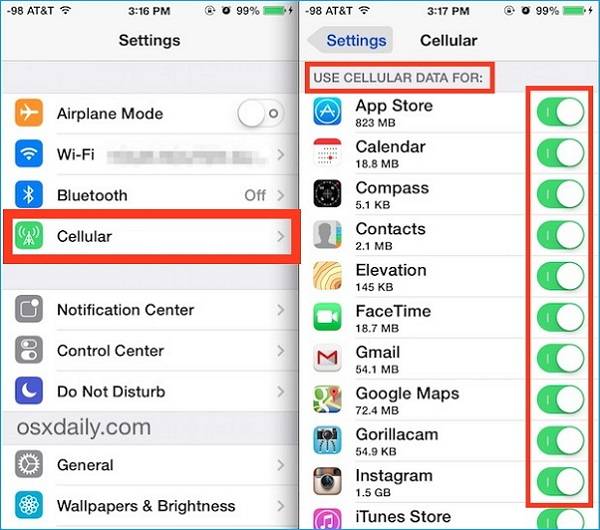
2. Make sure enable Cellular Data for certain apps
For some users, certain apps may not work with cellular data, but they can work with Wi-Fi, suggesting that the cellular data option for those apps may not be enabled.
To check which apps are using cellular data, go to Settings, then Cellular, and scroll down to see the list of apps. If an app is not using cellular data, tap on it and select "WLAN & Cellular Data" to enable it.
3.Reset Network Settings on iPhone/iPad
If you've ensured that Cellular Data is enabled but it still isn't working, try resetting network settings on your iOS iPhone or iPad. This can often resolve cellular data issues and is a straightforward process.
On the iPhone/iPad, go to "Settings", then select "General", followed by "Reset", and finally "Reset Network Settings". Enter the passcode to confirm the operation.
4.Restart or force restart your iPhone/iPad
After resetting network settings on your iPhone or iPad, restart the device. This should resolve the issue where the Cellular Data button is grayed out and cannot be toggled on or off.
To restart your iPhone or iPad, press and hold the Sleep/Wake button until a slider appears on the screen with the option to "slide to power off". Wait for about 15 seconds, then press and hold the Sleep/Wake button again to turn it back on.
To force restart an iPhone or iPad, press and hold the wake/sleep button and the Home button (for iPhone 6 and earlier) or the wake/sleep button and the volume down button (for iPhone 7 and later) until the Apple logo appears.
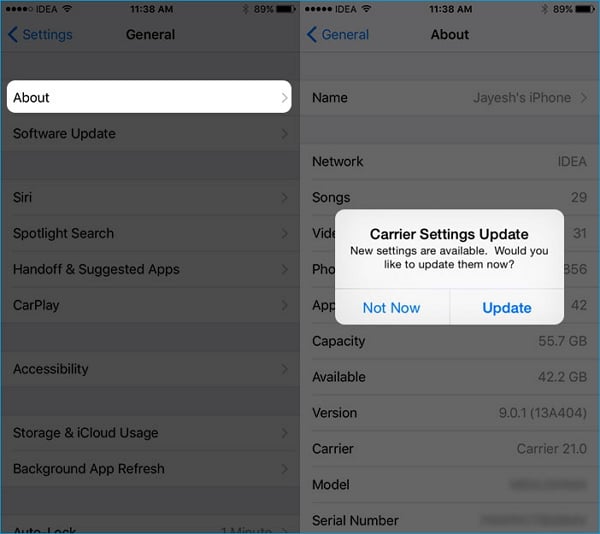
5. Check for a Cellular Carrier Update
Cellular carrier providers often offer updates to the iPhone to enhance compatibility with their network. This is typically done to ensure seamless connectivity and optimal performance.
Go to "Settings", then "General", then "About", and check if a cellular carrier settings update is available.
6. Update to the latest iOS version on iPhone or iPad
If cellular data isn't working on iOS 11, it's likely due to bugs in the current iOS version. Updating to the latest iOS 11 version may resolve the issue.
To update your iPhone or iPad, go to Settings, then General, and finally Software Update. If a new version is available, download and install it.
7. Backup, factory reset & restore your iPhone/iPad
If the cellular carrier and iOS updating still can't settle the issue, you can try factory resetting and restoring your iPhone or iPad. Before doing so, make a backup of your data using a free iPhone data transfer software like Qiling MobiMover Free, which can transfer contacts, messages, notes, and other data to your computer at one click, allowing you to restore your device with the backup file after resetting it.
To reset your device, go to "Settings" and then select "General". From there, choose "Reset" and confirm that you want to "Erase All Content and Settings".
8. Downgrade iOS 11 to iOS 10
If you've tried the previous troubleshooting steps and still can't resolve the issue, you can try downgrading your iPhone's iOS from 11 to 10 or 10.3.3. After downgrading, restore your iPhone from an iOS 10 backup. Please note that iOS 11 backups cannot be restored to iOS 10 devices, so make sure you have a backup from before you upgraded to iOS 11. This will ensure you don't lose any data.
Related Articles
- Live Photo Not Working on iPhone X/iPhone 8 in iOS 11? Fixes Here!
- How to Get Emojis on iPhone X/8/8 Plus with Ease
- How to Fix iPhone Flashlight Won't Turn on in iOS 11
- How to Close Apps on iPhone X and iPhone 8/8 Plus
Products
Articles & Tutorials
- Data Recovery
- Data Backup
- File Recovery
- File Backup
- System Backup and Restore
- Disk and Partition Clone
- Technical articles
- Mobile articles
- Disk Master Help
- Windows Data Recovery Tutorials
- Windows Secure Delete Tutorials
- Windows Partition Management Tutorials
- Windows File Backup and Restore Tutorials
- Windows System Backup and Restore Tutorials
- Windows Disk Backup and Restore Tutorials
- Windows Clone Tutorials