6 Fixes to iPhone Not Showing Up on PC in Windows 10/8/7
Error Description - iPhone Not Showing Up on PC or iTunes
You're trying to connect your iPhone to a PC to manage or transfer photos, but your PC can't detect your iPhone and it's not showing up in iTunes, making it hard to view photos via Windows File Explorer or sync data from iTunes to your device.
When an iPhone doesn't show up on your PC or iTunes, it's likely due to a computer not recognizing the device, caused by various reasons. To resolve the issue, you can follow a full guide, which involves troubleshooting steps to get your iPhone recognized by your computer and iTunes.
Part 1. Simple Fixes to iPhone Not Showing Up on PC or iTunes
When a computer doesn't recognize your iPhone, iPad, or iPod, it's not always a critical error. Sometimes, a locked iPhone or outdated iTunes can cause the issue, making your iPhone not show up on your PC in Windows 10, 8, or 7. Before trying advanced troubleshooting tips, try these easy fixes first.
- To connect your iPhone to your computer, make sure your iPhone is turned on, unlocked, and you select "Trust" in the prompt that asks you whether to trust the computer.
- Make sure you have installed the latest version of iTunes on your computer.
- Try another USB port or USB cable
- Restart your iPhone and the computer
Part 2. Advanced Tips to Fix iPhone Not Showing Up on PC or iTunes
The Apple Mobile Device USB driver is necessary for a computer to recognize your Apple device. When your iPhone is not showing up on PC, it is possible that the Apple Mobile Device USB Driver is not installed successfully or correctly on your PC. In such a situation, follow the steps below to give a shot.
Method 1. Reinstall Apple Mobile Device USB Driver
To reinstall the Apple Mobile Device USB driver, go to the Apple Support website and download the latest version of iTunes, or go to the Microsoft Support website and download the latest version of iTunes for Windows. Once downloaded, run the installer and follow the prompts to reinstall the driver.
If you downloaded iTunes from the Microsoft Store:
Step 1. Reconnect your iPhone to the computer and unlock your device.
Step 2. Right-click the "Start" button and choose "Device Manager".
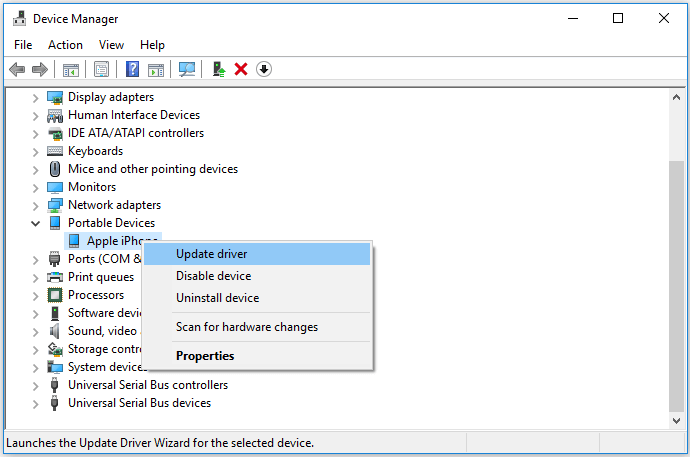
Step 3. Expand "Portable Devices", right-click "Apple iPhone", and choose "Update driver".
Step 4. In the new window, choose "Search automatically for updated driver software".
Step 5. After it has finished, go to iTunes to see if your iPhone is showing up.
If you downloaded iTunes from Apple:
Step 1. Reconnect your iPhone to the computer, unlock your device, and close any automatically running iTunes.
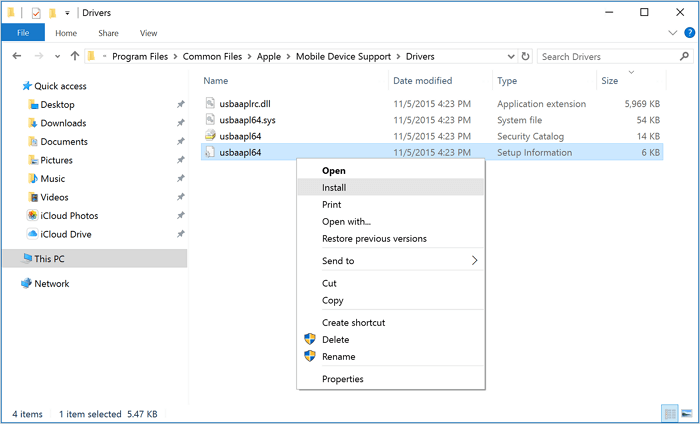
Step 2. Press "Windows + R" and enter %ProgramFiles%\Common Files\Apple\Mobile Device Support\Drivers.
Step 3. Hit Enter.
Step 4. Right-click on the usbaapl64.inf or usbaapl.inf file and choose "Install".
Method 2. Check Device Manager
If your iPhone is still not showing on computer or iTunes, check if the driver is correctly installed.
Step 1. Right-click the "Start" button and choose "Device Manager".
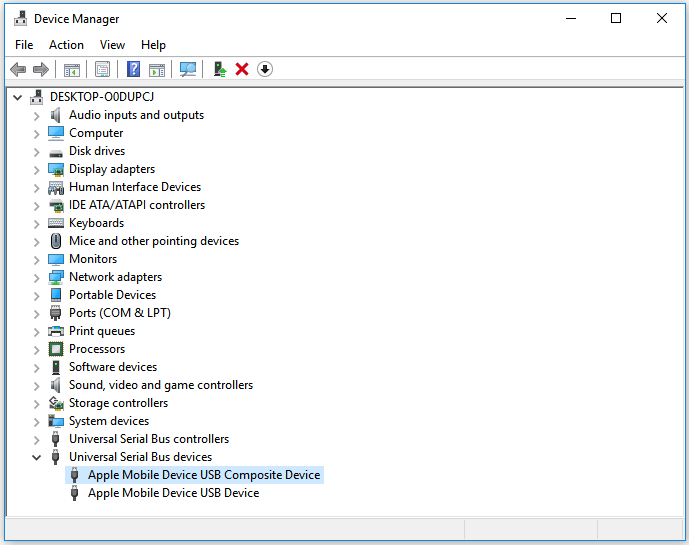
Step 2. The Universal Serial Bus (USB) controllers are a group of hardware components that manage the communication between a computer and external devices connected via USB ports. Within this group, the "Apple Mobile Device USB Driver" is a specific driver responsible for facilitating the communication between an Apple device (such as an iPhone or iPad) and the computer, allowing for data transfer and synchronization.
- If you're unable to connect your iPhone to your computer, try using a different USB cable to see if that resolves the issue. Alternatively, you can try connecting your iPhone to a different computer to rule out any issues with the computer itself.
- If there is an error symbol next to the driver, restart the Apple Mobile Device Service.
If you're still having trouble getting your iPhone to show up on your PC, you might need to reach out to Apple Support for assistance. Alternatively, if you've successfully resolved the issue, you can proceed to learn how to transfer files between your iPhone and PC.
Bonus Tip: How to Transfer Files from PC to iPhone
Now that your PC can recognize your iOS device, you can start to transfer data between your computer and iPhone. This can be done using File Explorer, iTunes, or third-party software like Qiling MobiMover.
- File Explorer is a feature in Windows that allows users to transfer photos and videos from their iPhone, iPad, or iPod to their PC, but it does not support the transfer of other file types.
- iTunes: Syncs data to iOS device or iPadOS device and will cause data loss.
- Qiling MobiMover is a tool that allows you to transfer various types of data between an iDevice and a computer, or between two iDevices, without syncing. You can use it to move photos, videos, music, contacts, books, and more between devices.
To transfer files from your iPhone to your PC using Qiling MobiMover, follow these steps. First, download and install Qiling MobiMover on your PC.
Step 1. Connect your iPhone to a Windows 10 PC with a USB cable. Tap "Trust" on your iPhone screen if prompted. Open MobiMover, select "Phone to PC" mode, and click "Next" to proceed.
Step 2. All the apps available on your iPhone are loaded here, allowing you to choose all or a specific type to transfer. Before proceeding, you can also customize a storage path to keep the transferred content, or it will be saved on your Windows 10 desktop. Once you've made your decision, click "Transfer" to start moving files from your iPhone to your PC.
Step 3. MobiMover supports transferring data from an iOS device to Windows 7 and Windows 8 computers, in addition to Windows 10.
The Bottom Line
If your iPhone isn't showing up on your PC, try using the original Apple USB cable, keeping your iPhone unlocked and trusting the computer. If that doesn't work, you can try reinstalling or updating the Apple Mobile Device USB driver. If you're still having issues, consider reaching out to Apple support for further assistance.
Related Articles
- iPhone File Manager for Windows - Qiling MobiMover
- How to Delete All Contacts on iPhone 13/12/11
- How to Transfer Files from iPhone to PC in 6 Ways
- How to Transfer Messages from iPhone to iPhone
Products
Articles & Tutorials
- Data Recovery
- Data Backup
- File Recovery
- File Backup
- System Backup and Restore
- Disk and Partition Clone
- Technical articles
- Mobile articles
- Disk Master Help
- Windows Data Recovery Tutorials
- Windows Secure Delete Tutorials
- Windows Partition Management Tutorials
- Windows File Backup and Restore Tutorials
- Windows System Backup and Restore Tutorials
- Windows Disk Backup and Restore Tutorials
- Windows Clone Tutorials