Siri Not Available in iOS 11/11.1/11.2? Fixed Here!
Quick Navigation:
- 6 top tips to fix Siri not available in iOS 11
- 1. Make sure the Siri is on
- 2. Check the network is connected or not
- 3. Check and clean Microphone on iPhone
- 4. Restart your iPhone
- 5. Reset all settings
- 6. Update to the latest iOS version
"I have updated my iPhone 6S to the latest iOS 11.2 last night and the device works well at the very beginning. While, this morning, when I want to use Siri to make a call, the "Siri Not Available" occurs on the screen and I am very confused as I haven't change any settings on my iPhone. Any effective suggestion? Thanks!" - A user from Apple Discussion
iOS 11 brings a series of surprises to iPhone, including a highly-customized Control Center, a Files app that brings all your files together, and a more intuitive Multitasking feature. However, some unexpected issues occur, such as Siri not being available, which many users have reported experiencing on their iPhone 7 or iPhone 7 Plus. This issue can be frustrating, but don't worry, we have identified 6 easy and effective methods to troubleshoot and fix Siri not available in iOS 11.
6 top tips to fix Siri not available in iOS 11
In iOS 11, Siri has become a more personal and intelligent assistant, capable of tasks like sending messages, setting times, and translating languages. To make the most of Siri's capabilities, you can try fixing the issue of Siri not being available. By following the solutions below, you can troubleshoot and resolve the problem, making Siri a more helpful and useful tool for you.
1. Make sure the Siri is on
Many issues arise due to careless settings, and it's easy to overlook the simplest solutions. For instance, forgetting to turn Siri on can lead to the "Siri not available" problem, making it essential to double-check settings to avoid such frustrations.
To enable the "Hey Siri" feature, go to your iPhone's Settings app. Tap on "Siri & Search" and make sure the switch next to "Hey Siri" is turned on.
2. Check the network is connected or not
Users may experience issues with Siri not working due to a poor network connection on their iPhone, which can also affect other features such as GPS and iMessage, particularly in iOS 11, 11.1, or 11.2.
To check the network, go to the "Settings" app, tap on "WLAN" or "Cellular" depending on your device's network type, and verify the network connection.
3. Check and clean Microphone on iPhone
If your iPhone's microphone is blocked or damaged, Siri may not be able to hear you. To troubleshoot, clean the microphone apertures. If Siri still doesn't work, try changing your earphones. If that resolves the issue, you may need to repair or replace your iPhone's microphone at an Apple Store.
4. Restart your iPhone
Restarting an iPhone can resolve various software-related issues, including notifications not working in iOS 11, screen recording not functioning, and AirDrop not working.
To turn off your iPhone, press and hold the Sleep/Wake button until the red power off slider appears, then drag the slider to the right to power off. Wait 30 seconds, then press and hold the Sleep/Wake button again until the Apple logo appears, and your iPhone will turn back on.
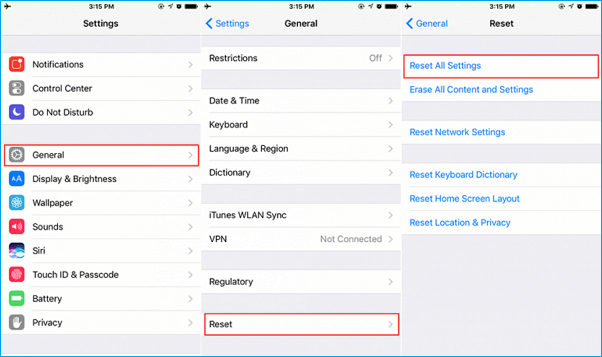
5. Reset all settings
Updating your iPhone's iOS can sometimes cause settings to change unnoticeably, leading to issues like Siri not working properly. To fix this, simply reset all settings on your iPhone, which won't erase any of your data. This should resolve the problem and get your iPhone working as expected again.
To reset your iPhone, go to Settings > General > Reset > Reset All Settings. This will erase all of your settings and preferences, so you'll need to set up Siri again. To do this, go back to Settings > General > Siri, and follow the prompts to set up Siri.
6. Update to the latest iOS version
If the issue with Siri not being available in iOS 11 is due to bugs in the operating system, the most effective solution is to update to the latest version of iOS, which should have resolved the bugs present in the previous version.
To check if there is a new iOS 11 version available for your iPhone, go to Settings, then General, and finally Software Update. If an update is available, tap Download and Install to begin the installation process.
- Tips
- Bonus Tips: When using your iPhone, you may encounter application not working issues, which can be software or hardware-related. To keep your data safe, it's essential to back up your iPhone on a schedule using iTunes, iCloud, or a reliable iPhone manager tool. One such tool is Qiling MobiMover Free, a 100% free iPhone data transfer software that allows you to back up your iPhone to a computer and transfer files from PC to iPhone with just one click, making it a great option when resetting all content and data on your iPhone.
To back up all your iPhone content to computer using MobiMover, follow these steps. First, download and install MobiMover on your computer, then connect your iPhone to the computer using a USB cable.
Step 1. Connect your iPhone to your PC, trust the computer, and launch Qiling MobiMover. Go to "Backup Manager" and select "Back up" to start the backup process.
Step 2. Since all the supported files are selected by default, click "One-Click Backup" directly to start backing up your iPhone to computer.
Step 3. Wait patiently until the backup process completes. When you need to restore the backup, go to Backup Manager > Restore and follow the onscreen instructions to restore the backup.
Related Articles
- Six Ways to Fix Airdrop Not Working on iPhone or iPad
- How to Close Apps on iPhone X and iPhone 8/8 Plus
- How to Reset iPhone 8/iPhone X to Factory Settings in 2 Ways
- How to Fix iOS 11 Flashlight Not Working on iPhone and iPad
Products
Articles & Tutorials
- Data Recovery
- Data Backup
- File Recovery
- File Backup
- System Backup and Restore
- Disk and Partition Clone
- Technical articles
- Mobile articles
- Disk Master Help
- Windows Data Recovery Tutorials
- Windows Secure Delete Tutorials
- Windows Partition Management Tutorials
- Windows File Backup and Restore Tutorials
- Windows System Backup and Restore Tutorials
- Windows Disk Backup and Restore Tutorials
- Windows Clone Tutorials