3 Simple Methods to Back up iPhone or iPad to Computer with or without iTunes
If you're an iOS user, you might have experienced the frustration of data loss. To prevent this from happening or minimize the risk, it's essential to have a proper backup strategy. You can back up your iPhone or iPad to iCloud, copy data to your computer, or move data to an external drive. In this guide, we'll focus on backing up your iPhone or iPad to your computer, and provide three methods to do so. If you encounter any errors during the backup process, you can refer to the troubleshooting tips in part 4 to resolve the issue.
Let's take a quick look at the comparison table that lists the benefits and drawbacks of each method, which can help you quickly find the way that works best for you. This table provides a concise summary of the advantages and disadvantages of each approach, allowing you to make an informed decision.
| Tools | Benefits | Drawbacks | Target Users |
|---|---|---|---|
| MobiMover |
|
Android Phones are not supported | Companies, businessmen, individuals, and users who are looking for efficient backup tools |
| iTunes |
|
|
If you're a personal user or someone who wants to transfer all iPhone data to a computer, you can use the "Quick Start" feature on your iPhone. This feature allows you to transfer data, such as contacts, photos, and more, to a new iPhone or a computer. |
| iTunes Sync |
|
The speed of backing up is limited by the Wi-Fi | Individuals and people who have the habit of backup |
Part 1. Quickest and Safest Way to Back up iPhone to Computer without Data Loss
If you don't like using iTunes or don't have it available, you can use free alternatives to transfer your iPhone files to your computer. One such option is Qiling MobiMover, a professional and reliable tool that allows you to efficiently back up your iPhone data to your computer without errors, supporting various file types including photos, videos, music, voice memos, contacts, messages & attachments, and notes.
Step 1. Connect your iPhone to your computer with a USB cable, then select the "Backup Manager" from the left panel and choose "Backup" to proceed.
Step 2. To back up all files from iPhone to computer, tick the box next to "Select All" and set the destination on computer, then click on "One-Click Backup" to start the backup process.
Step 3. MobiMover will start immediately to back up iPhone files to your computer without requiring iTunes. The process will complete once it finishes.
Part 2. How to Back up iPhone or iPad to PC/Mac Using iTunes
Backing up your iPhone or iPad via iTunes to your computer is a straightforward process. Everything on your iPhone can be backed up and restored via iTunes, but before using it, there are a couple of things to note. iTunes may not be able to recognize your iPhone 8/8 Plus, and you might encounter iTunes sync errors like error 54 while syncing. Despite these potential issues, backing up your iPhone with iTunes is still a viable option, and the process involves following a series of steps.
Step 1. Download and install the latest version of iTunes on your computer, or check for updates by going to Help > Check for Updates.
Step 2. Connect your iPhone or iPad to the computer with its original USB cable, then open the software to begin the process.
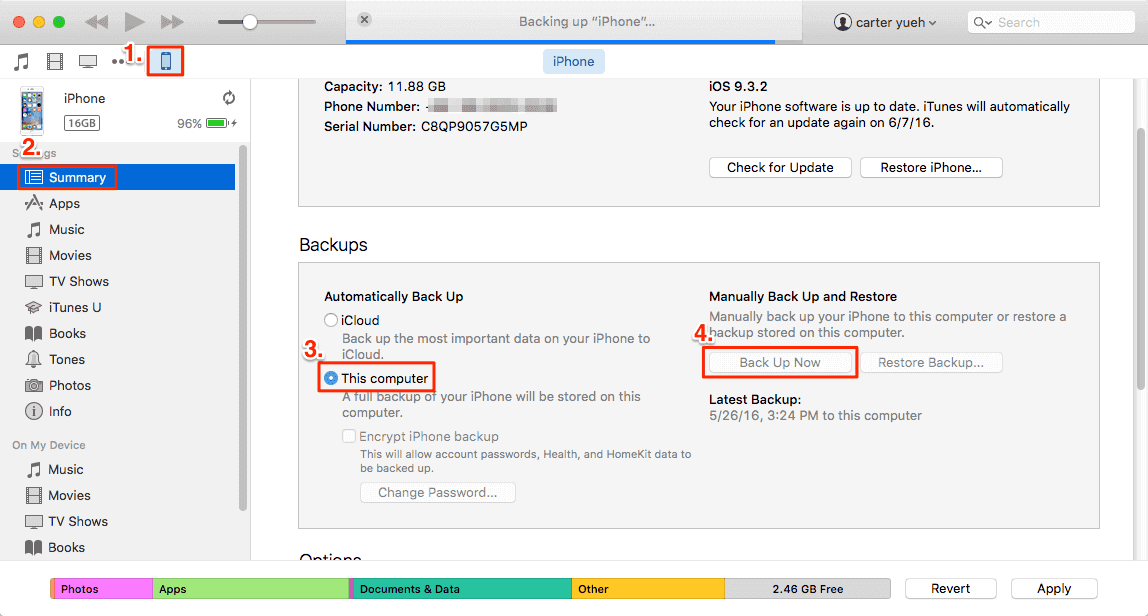
Step 3. Click your iPhone, iPad, or iPod touch in the upper left corner.
Step 4. On the Summary page, select "This Computer" and click "Back UP Now."
Part 3. How to Back up iPhone or iPad to PC/Mac Using iTunes Sync
To back up your iPhone to a computer without a cable, you can use a method that's suitable for those who regularly back up their data. First, make sure iCloud is turned off, and then you can proceed with the backup process. This method allows for a wireless connection between your iPhone and computer, making it a convenient option for those who prefer not to use a cable.
Step 1.Set Up iTunes on PC/Mac
- To set up your iPhone, connect your iPhone and PC/Mac to the same Wi-Fi network. This will allow them to communicate with each other and facilitate the setup process.
- Connect your iPhone to iTunes using an original cable for the first time, then you won't need to use the cable again.
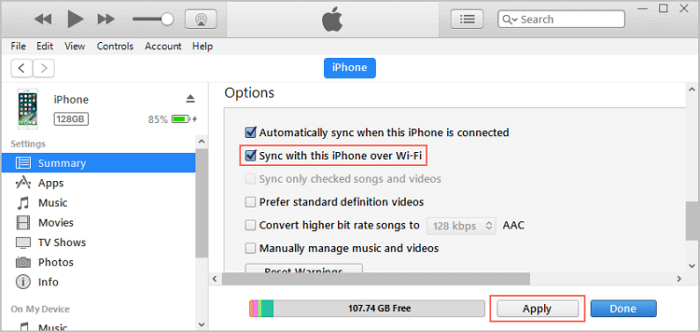
- On the Summary page, enable the "Sync with this iPhone over Wi-Fi" checkbox and click the "Apply" button.
Step 2. Set Up iTunes Wi-Fi Sync on iPhone, iPad, iPod touch
- To prevent iTunes from continuously detecting your iPhone or iPad, unplug the cable from your device. This will stop the detection process, allowing you to use your device without interruptions.
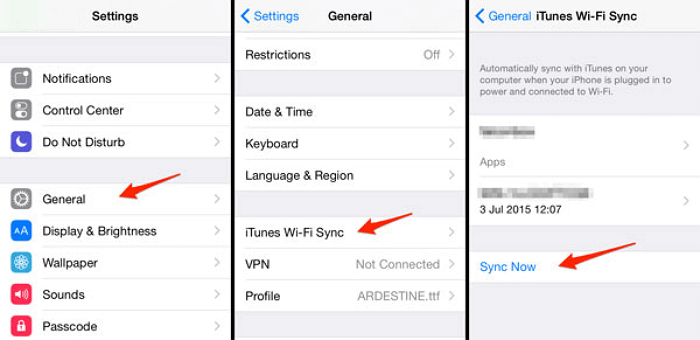
- To enable Wi-Fi syncing on your iPhone, go to the Settings app, then tap "General", and finally toggle on "iTunes Wi-Fi Sync".
- To sync your iPhone, click on the "Sync Now" button, which will initiate the syncing process.
Part 4. iPhone Won't Back Up to Computer? How to Fix?
The frustrating issue of an iPhone not backing up to a computer can be caused by various factors, including issues on the computer itself, iTunes, or the iPhone. In most cases, the problem is software-related, but a damaged cable or defective USB port on the computer can also be the culprit. To resolve the issue, you can try simple fixes such as switching to a new USB port or using an alternative cable. If these don't work, there are other troubleshooting tips that can help resolve the problem.
- Reboot your computer and your iPhone, iPad, and iPod touch.
- Update your iTunes to the latest version.
- Make sure there's enough storage on your PC.
- Contact Apple Support.
Conclusion
You can back up your iPhone using three different methods, each with its own pros and cons. MobiMover allows for a safe and quick backup to your computer with just one click, supporting a wide range of files and enabling you to back up either the whole or specific files. Alternatively, you can use iTunes to back up your data to your computer, which also supports restoring, but has some restrictions on data transfer. Ultimately, the choice of backup method depends on your individual needs, and our guide aims to provide a helpful comparison of these options.
Related Articles
- How to Send Photos via Bluetooth on iPhone to Computer
- How to Connect iPhone to HP Laptop
- How to Sync iPod Touch to a New Computer Without Losing Data
- How to Transfer Photos from Old iPhone to New iPhone in 6 Ways
Products
Articles & Tutorials
- Data Recovery
- Data Backup
- File Recovery
- File Backup
- System Backup and Restore
- Disk and Partition Clone
- Technical articles
- Mobile articles
- Disk Master Help
- Windows Data Recovery Tutorials
- Windows Secure Delete Tutorials
- Windows Partition Management Tutorials
- Windows File Backup and Restore Tutorials
- Windows System Backup and Restore Tutorials
- Windows Disk Backup and Restore Tutorials
- Windows Clone Tutorials