2 Ways to Unlock a Found or Lost iPhone
Quick Navigation:
- How to Unlock a Lost or Found iPhone with an iPhone Unlocker
- How to Unlock a Found iPhone Passcode without Computer
- The Final Words
If you've found an old iPhone without a passcode, you might be wondering how to unlock it or if someone else can unlock your lost iPhone. This guide will help you understand the process, and we'll take you through the steps to figure out the mystery.
Before we get started, it's necessary to note that any attempts to buy or use a stolen iPhone would result in some bad consequences, as shown below. Think twice if you're planning to do such things.
- The police might knock at your door and take the iPhone back. They will likely ask you questions about the phone and the circumstances surrounding its recovery.
- The previous owner might be able to track the stolen iPhone's location using their Apple ID account.
- If an iPhone is locked to a specific carrier due to being activation locked by its previous owner, it cannot be set up or used even if it's unlocked. This is because the device is tied to the original owner's account and cannot be activated on a new carrier without their permission.
How to Unlock a Lost or Found iPhone with an iPhone Unlocker
One of the most time-efficient ways to remove a passcode from a locked iPhone or iPad is to use a professional passcode remover. These tools can bypass various types of passcodes, including 4/6 digit codes, Touch ID, and Face ID. For instance, Qiling MobiUnlock can effectively remove passcodes from an iPhone, making it a reliable solution.
Qiling MobiUnlock is a highly popular iPhone unlock software that has helped thousands of users resolve issues such as forgotten passcodes or iPhones being disabled without a passcode. Its reputation has been endorsed by many bloggers and websites, making it a target for thieves.
Now, let's take a look at how to unlock an iPhone with Qiling MobiUnlock.
Step 1. Download and open Qiling MobiUnlock, then select "Unlock Screen Passcode" to proceed.
Step 2. Connect your iPhone to the computer using a USB cable, and then click the "Start" button to initiate the process.
Step 3. Check your device model and click "Next" to download the latest firmware version for your device. If the firmware has already been downloaded, manually select the package.
Step 4. After downloading or selecting the firmware, click "Unlock Now". A new window will then appear, requiring you to enter the necessary information. Simply fill in the required details and click "Unlock" again to remove your iPhone's password.
Step 5. To remove a password from an iPhone, you will need to reset the device. This can be done by going to Settings > General > Reset. From there, select "Erase All Content and Settings."
Note: Even if thieves unlock your device, they can't use it unless they log in to the Apple ID linked to this device, providing an added layer of security and protection for your personal data.
How to Unlock a Found iPhone Passcode without Computer
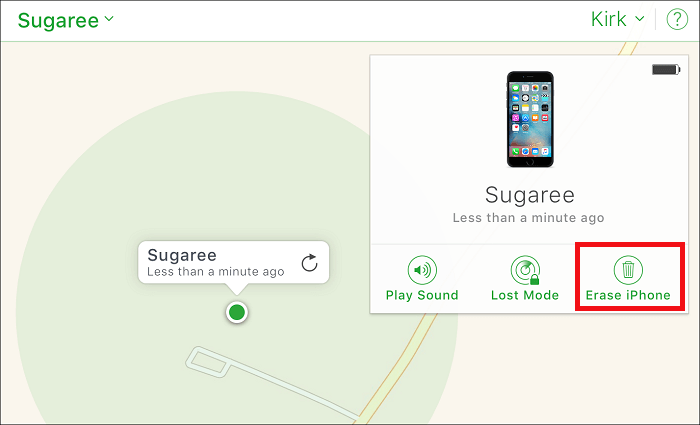
To unlock an iPhone without a passcode, you can use the Find My app, which is designed to help users locate and track devices linked to their iCloud accounts, as long as the Find My feature is enabled on your device and you remember the Apple ID, you can remotely erase your device.
Obviously, people except yourself can't meet either of these requirements, so they can't remove passcodes in this way. But this method makes sense to keep your information secure when your device is lost or stolen. Here are the steps.
Step 1. To continue, prepare another iPhone or iPad, making sure it has an active internet connection. This device should also have the Find My app installed, which will be used to locate the device you're trying to recover.
Step 2. To sign in to this app with your Apple ID and password, tap the "Sign in" button and enter your Apple ID and password in the fields provided. If you don't have an Apple ID, you can create one by tapping the "Create one" button and following the prompts to set up a new account.
Step 3. To locate a stolen iPhone, log in to the Find My app on another Apple device, tap the iPhone's name on the map, and it will be displayed on the screen, showing its current location.
Step 4. Choose "Erase iPhone."
Step 5. All data on your iPhone will be completely erased after that.
The Final Words
Our guide on unlocking a found or lost iPhone or iPad aims to educate users on the methods someone else can use to remove a passcode from their device. While theoretically, unlocking a lost or stolen iPhone is not possible, in practice, it can be done through illegal means. Apart from the two methods we introduced, someone else may also take your device to a mobile phone repair shop to unlock it.
If someone else sets their mind to unlock your device, nothing is difficult to achieve. To avoid potential data loss, consider backing up your iPhone regularly, especially if you often leave it unattended in public. This way, your data will be protected even if your phone is stolen or lost.
Related Articles
- Does System Restore Remove/Delete Files? Answered!
Does System Restore remove/delete files, programs? Some people still cannot figure out what Windows System Restore can and cannot do. Follow this article and make it clear. - What Is File Level Backup and How to Do It in Windows 10/8/7?
You will get the file-level backup meaning and how to backup your crucial data with this method in Windows 11, 10, 8, 7. Block-level file backup supported. - How to Perform Hard Disk Image File Restore in Windows 10
You can learn how to perform Windows 10 hard disk image file restore in this article with Windows built-in tool and another freeware (Qiling Disk Master). - Backup Only New Files to External Hard Drive in Windows 10(2 Ways)
You will learn how to backup only new or changed files to external hard drive using Windows built-in tool and the best free software.
Products
Articles & Tutorials
- Data Recovery
- Data Backup
- File Recovery
- File Backup
- System Backup and Restore
- Disk and Partition Clone
- Technical articles
- Mobile articles
- Disk Master Help
- Windows Data Recovery Tutorials
- Windows Secure Delete Tutorials
- Windows Partition Management Tutorials
- Windows File Backup and Restore Tutorials
- Windows System Backup and Restore Tutorials
- Windows Disk Backup and Restore Tutorials
- Windows Clone Tutorials