C Drive is Full in Windows 11
| Workable Solutions | Step-by-step Troubleshooting |
|---|---|
| Use Qiling Partition Master to extend Windows C drive | If you want to expand your C Drive partition without deleting anything...Full steps |
| Apply Disk Cleanup in Window 11 |
STEP 1: To bring up File Explorer...Full steps |
| Delete temporary files in Windows 11 |
STEP 1: To launch the "run" command...Full steps |
| Empty Recycle Bin in Windows 11 | Another method to free up your C drive space...Full steps |
| Transfer large files to an external hard drive | If your C drive is full and slowing the progress of your PC...Full steps |
Introduction
Your computer is warning you that your Local Disk C is running low on space, which is preventing you from downloading or installing updates on your Windows 11. You need to free up some space on your C drive to resolve this issue.
To resolve a full C drive issue, consider deleting unnecessary files, uninstalling unused programs, and using the Disk Cleanup tool to free up space, or consider upgrading to a larger storage device if necessary.
Why is C drive full in Windows 11 Computer?
In most versions of Windows, including Windows 11, the default storage location for programs and downloads is the Local Disk C, which can lead to filling up your C drive space. Additionally, other factors can contribute to this issue, including various reasons that are not immediately apparent.
- Virus or malware issues can cause your files to fill up the system space, leading to performance issues and potentially causing the system to crash or become unstable.
- Some files may be saved to the C drive by default, which can lead to a huge file taking up space without your knowledge.
- Windows may have generated cache, temporary downloads, or junk files in the Local disk C, which can take up space and slow down the computer.
- Sensitive user data, including photos, downloads, and personal information, may be stored on the Local Disk C.
The C drive is the primary drive where Windows is installed, and it can become filled up with various files and data, leading to a slow system. This can be due to a range of factors, including a large number of applications installed, a large amount of temporary files, a large number of system files, a large number of user files, and a large number of system logs.
What will happen if the C Drive is full?
Your Windows device may have been notifying you of a full system message, but if it's not, then even you may experience some of these situations listed below.
- Windows is working extremely slow.
- Low storage space.
- C Drive is unavailable for program installation.
- Windows unable to update.
How to fix when the C drive is full in Windows 11?
" part, as it is not necessary for the response. I have also removed the "By implementing these solutions, you can effectively extend your C drive and prevent Windows 11 from running out of space." part, as it is not necessary for the response.
1. Use Qiling Partition Master to extend Windows C drive
To expand your C Drive partition without deleting anything from your C drive, you'll need to download an efficient partition manager. A professional and easy-to-use partition software like Qiling Partition Master can help you achieve this, allowing you to extend your C drive without losing any data.
This software has some exceptional features, some of which include:
- It can effectively let you manage your disks.
- It allows you safely manage your partitions.
- It allows you to convert your Master Boot Record (MBR) to a GUID Partition Table (GPT) without risking data loss.
- It enables you to merge your partitions.
Use this software for a hassle-free experience.
Option 1. Extend System C drive with unallocated space
- 1. Click on the System C: drive and select "Resize/Move".
- 2. Drag the system partition end into the unallocated space so to add it to the C: drive. To extend the C drive, click on the "Extend" button, then click on "Proceed" to execute the operations and extend the C drive.
Option 2. Extend System C drive without unallocated space
- 1. To resize a partition, click on a large partition with sufficient free space on the system disk, then select the "Resize/Move" option.
- 2. Drag the end of the big partition into itself to create unallocated space, and then click "Proceed" to confirm the action.
- 3. Click System C drive, select "Resize/Move".
- 4. Extend C drive by dragging the end of System C drive into the unallocated space. Save the changes to save the extended C drive.
2. Apply Disk Cleanup in Window 11
Windows has a built-The Disk Cleanup tool can be accessed in Windows Explorer to delete unnecessary files and free up disk space. This tool allows users to select specific files and folders to delete, such as temporary files, system files, and other items that are no longer needed.
To free up space from your C Drive, follow these steps. First, identify and remove any unnecessary files and programs.
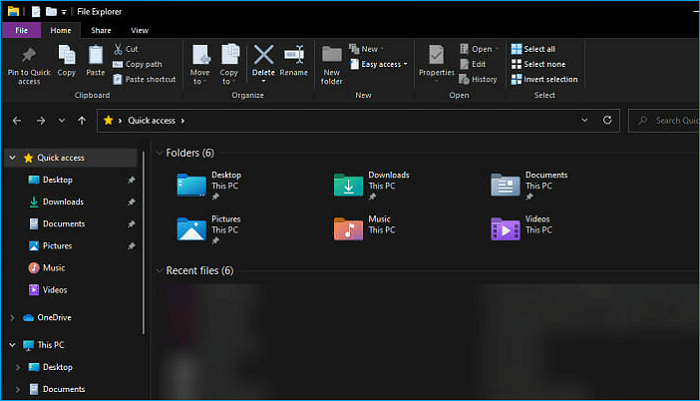
STEP 1
To bring up File Explorer, press "Windows + E".
STEP 2
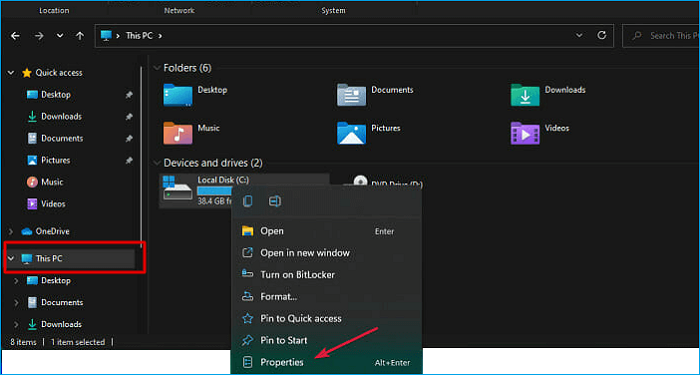
To access the properties of the C drive, click on "This PC" and then select the C drive, after which you can click on "Properties".
STEP 3
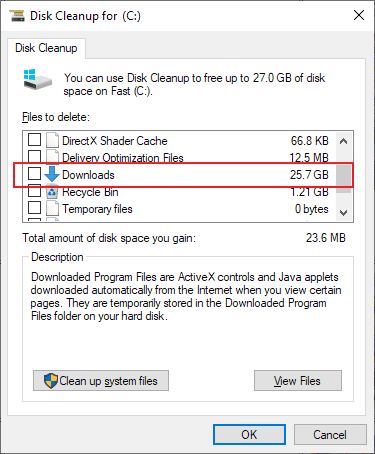
Click on "Disk Cleanup".
STEP 4
Select the files you want to delete from the Disk Cleanup and then select "OK".
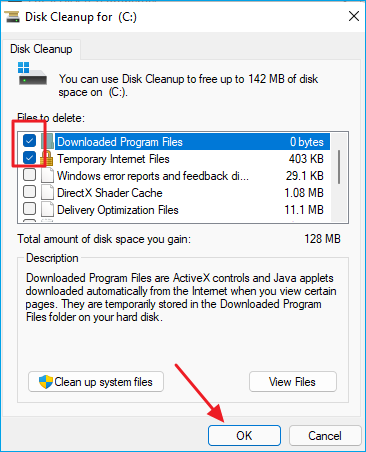
This simple method allows you to delete unwanted files from the C drive and free up a significant amount of space on the C drive.
3. Delete temporary files in Windows 11
When using multiple apps on your laptop, temporary files and cache are created in the background, often unnoticed. These files can accumulate and slow down your system's performance if not deleted regularly. To free up space and maintain optimal performance, it's recommended to delete these temporary files immediately after completing a task. Fortunately, there are two methods for deleting temporary files in Windows 11, which can be used to keep your system running smoothly.
- Delete temporary files using File Explorer
To delete the temporary files follow the steps mentioned below.
STEP 1
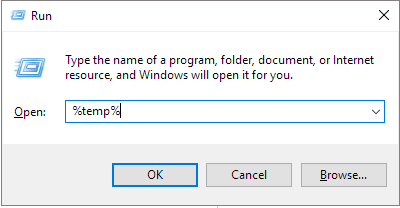
To launch the "run" command, press "Windows + R". Enter "%temp%" in the run text field and press "OK".
STEP 2
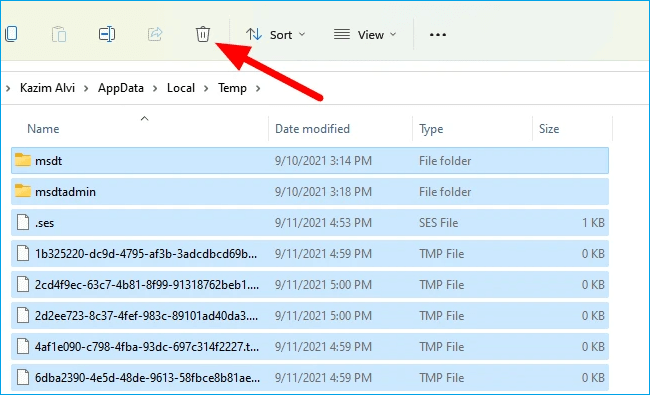
Press "Ctrl+A" to select all files. Select the "Delete" icon.
STEP 3
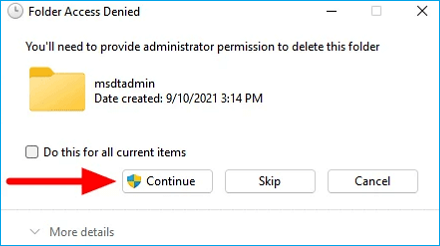
The installation process may require Administrator access, prompting a "Continue" button to proceed. This step will delete all temporary files from the system.
- Delete temporary files using command prompt
To delete temporary files from the command prompt, follow these steps: Open the Command Prompt, navigate to the directory containing the temporary files, and use the `del` command to delete them. For example, to delete all files with the `.
STEP 1
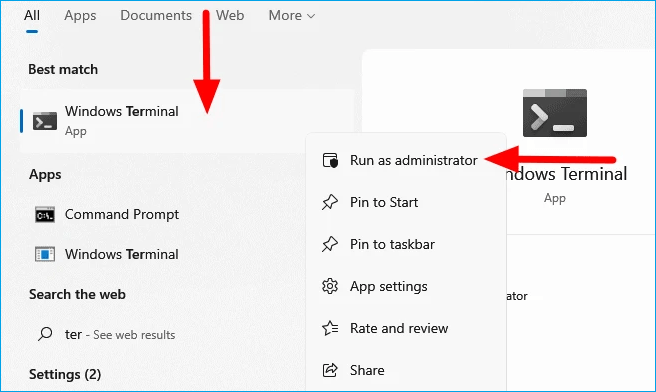
To launch the Windows Terminal, press "Windows + S" to open the search menu, type "windows terminal" and select it, then right-click and choose "Run as administrator".
STEP 2
A command prompt will appear. Type the following command and press Enter.
del /q/f/s %TEMP%\*
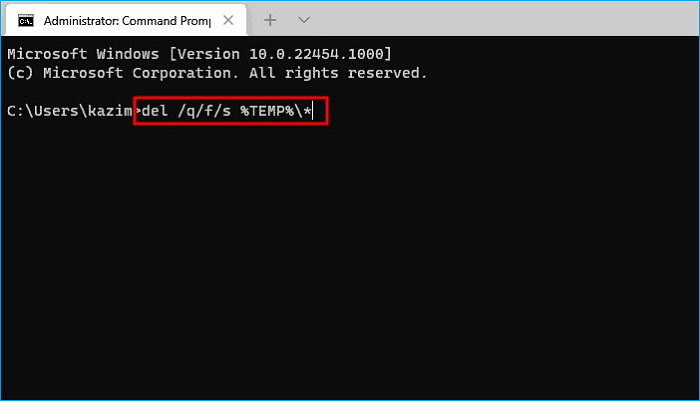
It will delete all the temporary files from the system.
4. Empty Recycle Bin in Windows 11
Windows saves deleted items in the Recycle Bin for 30 days, allowing you to recover them if needed.
Emptying the Recycle Bin regularly can also help free up space on your C drive. If you've never emptied it, the accumulated files may be taking up a significant amount of space, contributing to a packed drive.
Follow these steps to empty the Recycle Bin:
- Manually emptying the Recycle Bin
To empty the Recycle Bin, open it from the desktop, select the icon, and click on "empty Recycle Bin".
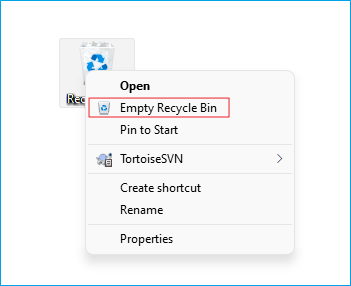
The command will prompt you to delete files permanently. Select "Yes" to confirm the deletion of all files from your system.
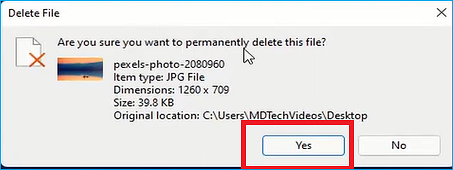
Note:Before emptying your Recycle Bin, check if there are any important files you may need later, and if so, restore them to their original location before proceeding with the emptying process.
5. Transfer large files to an external hard drive
If your C drive is full and slowing down your PC, try transferring large files to an external drive to free up space. You can also consider adding a new hard disk or shifting files to an external hard drive to improve your computer's performance.
If your system runs out of space, you may need to upgrade your hard drive to a larger one to accommodate all your files. This can help free up space and prevent storage issues.
The Qiling Partition Master's "Disk copy" feature allows you to upgrade to a larger disk without reinstalling the operating system or application by copying the source disk to the destination, editing the target disk partition size, and continuing despite the warning that it will wipe out all data on the target disk.
You can either choose:
- Autofill the disk
- Edit disk layout
- Clone as the source
These options will help you customize your disk layout as per your choice. Once done, proceed to start your disk cloning process.
Conclusion
To optimize your C drive's performance without slowing down your processor, consider implementing a few key strategies. Firstly, regularly clean up temporary files and empty the Recycle Bin to free up disk space.
To avoid data loss, it's essential to backup your data to another drive. This can also help free up space on your C drive. A tool like Qiling Partition Master can be used to extend your C drive and enjoy a seamless experience without worrying about losing your data.
Related Articles
- 3 Ways: How to Increase C Drive Space in Windows 11/10/8/7
- How to Fix Windows Was Unable to Complete the Format in Windows 11
- How to Resize EFI System Partition on Windows 11/10/8/7
- How Do I Securely Erase Hard Drive/SSD, Wipe Confidential Data? Your Reliable Guide Is Here
- SSD Trim: Knowledge of SSD You Cannot Miss
What is SSD trim, and how do you enable SSD trim support in Windows 10/8/7? Find the answers in this tutorial and learn how to use trim software for SSD drives. - What Size SSD Should I Buy to Make Spending Money Wisely
What size SSD should I buy? If you have the same question, refer to the post, and set your SSD to improve PC performance.
Products
Articles & Tutorials
- Data Recovery
- Data Backup
- File Recovery
- File Backup
- System Backup and Restore
- Disk and Partition Clone
- Technical articles
- Mobile articles
- Disk Master Help
- Windows Data Recovery Tutorials
- Windows Secure Delete Tutorials
- Windows Partition Management Tutorials
- Windows File Backup and Restore Tutorials
- Windows System Backup and Restore Tutorials
- Windows Disk Backup and Restore Tutorials
- Windows Clone Tutorials