[Fixed] Change Drive Letter and Paths Greyed Out in Windows 10
Change Drive Letter and Paths Greyed Out in Windows 10 Disk Management, Help!
The Windows 10 Disk Management tool is unable to change the drive letter for a partition due to the 'Change Drive Letter and Paths' option being greyed out. This issue prevents users from modifying the drive letter, which can be a problem if the drive letter is conflicting with another drive or if it needs to be changed for any other reason. To resolve this issue, users can try running the Disk Management tool as an administrator, or they can use the built-in Windows utility called 'Drive Letter Assignment' to change the drive letter.
To change a drive letter on your Windows 10 PC, you can use the built-in Disk Management tool, but if it's not working, you can try using the Command Prompt or PowerShell. You can also use third-party software like Qiling Partition Master or MiniTool Partition Wizard, which offer more advanced features and a user-friendly interface. Alternatively, you can also use the built-in Windows feature, 'Drive Letter Assignment', which can be accessed by typing 'drive letter assignment' in the Windows search bar. This feature allows you to easily assign or change drive letters for your partitions. If you're still having trouble, you can try restarting your computer and then running the Disk Management tool again. If the issue persists, you may want to consider seeking assistance from a Windows support specialist or a professional computer technician.
As a Windows built-In the management tool, Disk Management, users can perform various disk management tasks on Windows 10, Windows 8, and Windows 7, such as changing device drive letters, shrinking or extending partitions, deleting partitions, formatting partitions, and more. However, sometimes users may encounter issues where they cannot change drive letters and paths using Disk Management, with the "change drive letter and paths" option being greyed out, as shown in the screenshot.
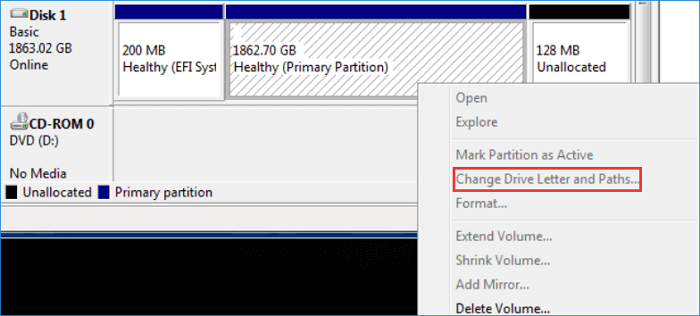
When the 'Change Drive Letter and Paths' is greyed out in Windows 10 Disk Management, you can't assign a new drive letter to your hard drive partition, USB flash drive, SD card, or external storage devices. However, you can solve this problem by using the Disk Management console, the Diskpart command, or the Drive Letter Manager tool to change the drive letter and paths.
Change Drive Letter and Paths Greyed Out, How to Change Drive Letter Without Using Disk Management
If the Disk Management tool is not working to change a drive letter on your PC or storage devices, you can either use the built-in Command Prompt or the Diskpart utility to achieve the desired outcome. These alternatives can help you successfully change the drive letter, ensuring that your system and storage devices function as intended.
Method 1. Change Drive Letter with Free Partition Management Tool
Qiling Partition Master Free allows you to change a device's drive letter without formatting in Windows 10/8/7, making it a simple process with just a few clicks.
This tool offers a range of free disk and partition management features, including resizing/moving partitions to address low disk space issues, creating/deleting/formatting partitions, cloning disks, merging partitions, wiping data, and converting disks/partitions.
Download this mature partition manager for free on your PC and follow the step-by-step guide to change drive letter without using Disk Management.
Step 1.To change the drive letter of a partition, run Qiling Partition Master, click on the target partition, click "More..." and select "Change Drive Letter".
Step 2. To change the drive letter of a partition, open the Disk Management window, select the partition you want to modify, right-click on it, and choose "Change Drive Letter and Paths". In the new window, select a drive letter from the drop-down menu and click "Proceed".
Method 2. Change Drive Letter with CMD
If you're not comfortable using a third-party program, you can use Command Prompt to change a drive letter, but this method is more suitable for computer experts. For beginners, we recommend using a free partition manager like Qiling for assistance.
Step 1. Right-click the Start icon. Select Command Prompt (Admin).
Step 2. Sign in as administrator and type: diskpart, hit Enter to continue.
Step 3. Enter DiskPart window and type: list disk, hit Enter.
Step 4. Type: list volume and hit Enter.
Step 5. To fix the issue, you can try running the command: select disk = 0 (replace 0 with the drive number of your disk) and hit Enter. This command will allow you to select the disk and then you can proceed with the necessary actions to fix the problem.
Step 6. To select a volume, type the command `select volume = 0` (replace 0 with the drive number of your disk) and press Enter.
Step 7. Type: assign letter = D (Replace D with the new drive letter that you want to add) and hit Enter.
After completing these operations, you'll have successfully added a new drive letter to your device. If you're still having issues with the Disk Management tool, - there are more solutions to help you get it working again.
How to Fix Disk Management Change Drive Letter and Paths Greyed Out Issue in 2 Ways
If you're experiencing issues with Disk Management not allowing you to change drive letters and paths on Windows 10, there are two methods you can try to resolve the problem. Firstly, you can try opening Disk Management, selecting the drive you want to modify, right-clicking on it, and selecting 'Change Drive Letter and Paths'.
Method 1. Check and Repair System Disk Error
If the Disk Management tool is not functioning normally, it may be due to system disk errors or bad sectors, so checking and repairing these issues may resolve the problem.
Qiling Partition Master Free offers a "Check File System" option, allowing users to verify and repair the file system on their disk with ease.
Step 1. To check the file system in Open Qiling Partition Master, locate the disk and right-click the partition you want to check, then choose "Advanced" > "Check File System".
Step 2. In the Check File System window, select the "Fix the error on the disk" option and click "Proceed".
Step 3. The software will check your partition file system on your disk and then click "Finish" once it's completed.
Method 2. Perform a System Restore to Repair Disk Management
If file system check doesn't work, you may try to restore Windows 10 to a previous state using system restore, which can help Disk Management work normally.
Step 1. Go to "Start" > "Settings" > "Update & security" > "Recovery".
Step 2. Click "Restart now" under Advanced startup.
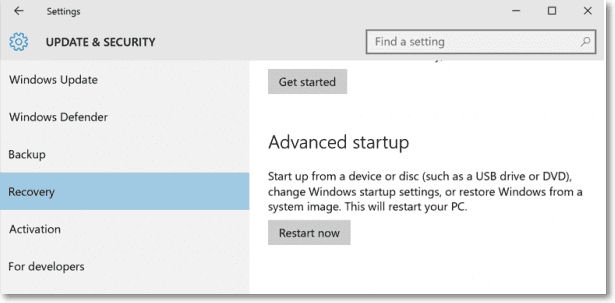
Step 3. Select the "Troubleshoot" option from the Choose an option menu, then choose "Advanced options", and finally select "System Restore".
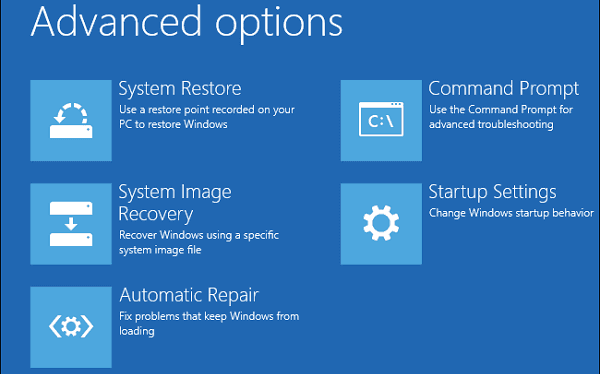
Step 4.To fix the issue, select a proper system restore point and follow the on-screen instructions to complete the system restore process.
After completing the steps, you'll be able to use Windows 10 Disk Management to change drive letters and perform other operations.
To Sum Up
When encountering a change drive letter and paths greyed out problem in Disk Management, you can try using Qiling Partition Master Free or CMD to resolve the issue. It's recommended to use Qiling Partition Master to manage your disk or partition for improved system performance.
Change Drive Letter and Paths Greyed Out FAQs
The issue of change drive letter and paths being greyed out on Windows 10 can be resolved by checking the file system type and ensuring it's not set to read-only. Additionally, verifying that the drive is not in use by any other process or program can also resolve the issue.
Why can't I change drive letter and paths?
The "Change drive letter and paths" option may be greyed out due to various reasons, such as the system being in a locked-down state, the drive being a system drive, or the drive being in use by another process. This option might also be unavailable if the drive is not a local drive or if it's a network drive.
- The volume is not formatted in FAT or NTFS.
- The drive is write-protected.
- There are bad sectors on the disk.
How do I force a drive letter change?
If you're unable to change drive letters and paths on Windows 10 using Disk Management, you can consider a reliable and free alternative to accomplish the task.
Step 1. Download and start Qiling Partition Master Free.
Step 2. Right-click the target partition, and choose "Change Drive Letter".
Why is a drive letter not available?
If a drive letter is not available, it may be because another drive is using it. You can check which drive letters are being used in File Explorer. Each partition has a unique drive letter that cannot be reused.
Is it safe to change drive letters?
Assigning a new drive letter to a drive usually won't cause any data loss or damage, but backing up your data beforehand is a good idea if you're concerned about security.
Related Articles
- How to Delete EFI Partition in Windows 11| What Is EFI Partition Windows 11
- Complete Guide - How to Combine Two SSD Drives
- 3 Ways to Convert Dynamic Disk to Basic Without Data Loss (Free/Paid)
- How to Manage Partitions with Disk Partition CMD in Windows 11/10?
- Can't Shrink the 3 TB USB Drive, How to Fix?
If you have encountered the 'Can't shrink the 3 TB USB drive' problem, this post may be able to help as it contains an effective method of shrinking a 3 TB USB drive. - Can't Format/Clean USB Bootable Flash Drive, How to Fix
Why can't format/clean WinTo USB bootable flash drive? How can you fix this error efficiently? this article will guide you on how to remove this error.
Products
Articles & Tutorials
- Data Recovery
- Data Backup
- File Recovery
- File Backup
- System Backup and Restore
- Disk and Partition Clone
- Technical articles
- Mobile articles
- Disk Master Help
- Windows Data Recovery Tutorials
- Windows Secure Delete Tutorials
- Windows Partition Management Tutorials
- Windows File Backup and Restore Tutorials
- Windows System Backup and Restore Tutorials
- Windows Disk Backup and Restore Tutorials
- Windows Clone Tutorials