Clear/Reformat/Erase/Wipe SD Card & USB Flash Drive
Differences between erasing and formatting a memory card/USB drive
Clearing or reformatting an SD card, USB flash drive, pen drive, or hard drive is often necessary, but it wipes all data on the device. The two operations serve different purposes: clearing is typically done to remove temporary files and free up space, while reformatting is usually done to prepare the device for new data or to change its file system type.
You can clear or wipe an SD card or USB flash drive to erase all data, files, and folders, effectively restoring it to its original, blank state. This can be useful for recycling the device, transferring files to a new location, or simply to start fresh with a clean slate.
- To resolve the issue of running out of space on your device when the SD card or USB drive is full, consider the following steps:
- Before selling your device, it's recommended to erase all the data on the SD card and USB flash drive to protect your personal information. You can do this by formatting the SD card and USB flash drive.
- To remove unknown viruses or malware from an SD card or USB flash drive, first, disconnect the device from the computer or device it's currently connected to. Then, insert the SD card or USB flash drive into a separate, virus-free computer or device.
You may reformat an SD card/USB flash drive to:
- Clean the SD card, USB flash drive, and hard drive by deleting their partitions when they are not functioning properly. This process helps to remove any corrupted data and formatting issues that may be causing the devices to malfunction.
- To fix a RAW issue, you can change the file system from RAW to FAT32, NTFS, or other supported file systems. This can be done by using a file system converter or a disk management tool, such as Disk Management in Windows or Disk Utility in macOS.
- To restore your SD card to its full capacity, try formatting it with your computer or phone. This will erase all data on the card, so make sure to back up any important files before doing so.
- To restore a USB drive to its full capacity when it shows the wrong capacity, you can try formatting it. This process will erase all data on the drive, so make sure to back up any important files before proceeding.
- Change the file system to use the SD card, USB flash drive, hard drive in different devices, for example, format PS4 hard drive for PC
After learning the differences between erasing and formatting an SD card/USB drive, you can choose the right method to fix your issue. You can use free partition software, compatible with Windows 10/8/7/XP/Vista, to wipe your SD card in the easiest and most efficient way. Simply connect the SD card or USB drive to your PC and follow the step-by-step tutorial to format or clear it with ease.
How to clear, erase or wipe SD card/USB flash drive
Here list three ways to clear SD card/USB flash drive. Now, you can try the detailed steps based on your needs. We put the most straightforward way in the first position.
How to wipe a flash drive with USB eraser
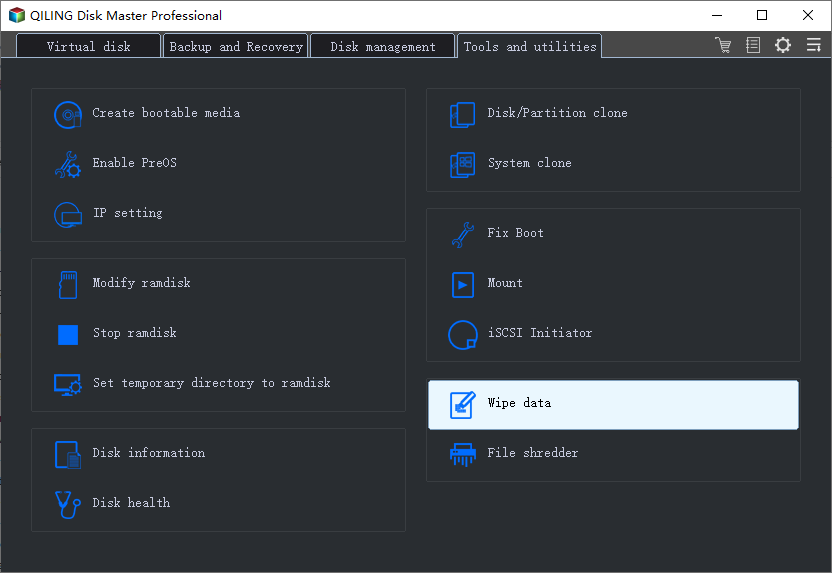
Step 1. Connect external devices to the PC, then go to the Tools and utilities page and click Wipe Data.
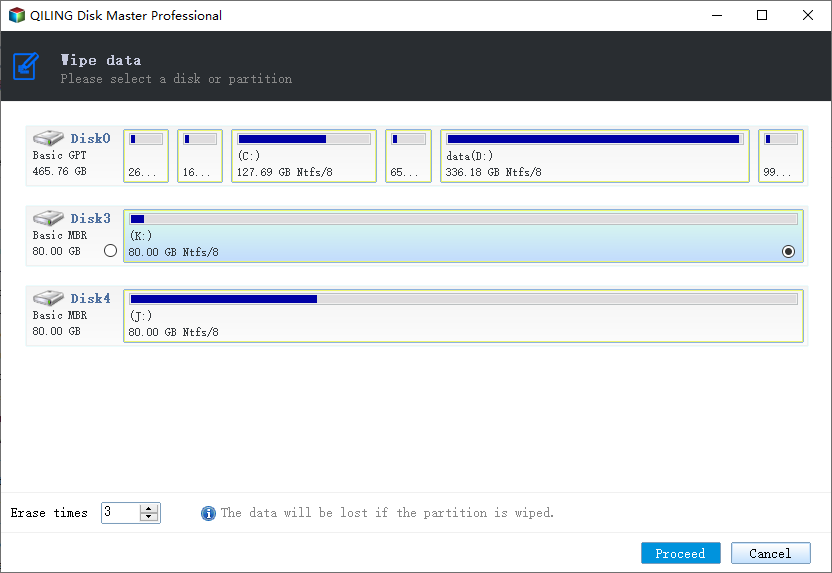
Step 2.Click the external device, set the number of times to wipe data, and then click Proceed. You can set the number of times to wipe data to 10 at most. Then, click the external device. Then, click Proceed.
Step 3. You can see a warning window, click "OK" to confirm the data wipe.
How to wipe SD card/USB flash drive via Diskpart
For users who choose to erase an SD card using Diskpart, they must exercise caution to avoid accidental data loss. If the wrong disk is selected, the data on the SD card will be irreversibly deleted.
Step 1. Press Windows + R, input Diskpart, and press Enter, and run Diskpart as administrator.
Step 2. Use the Clean All function to erase SD card.
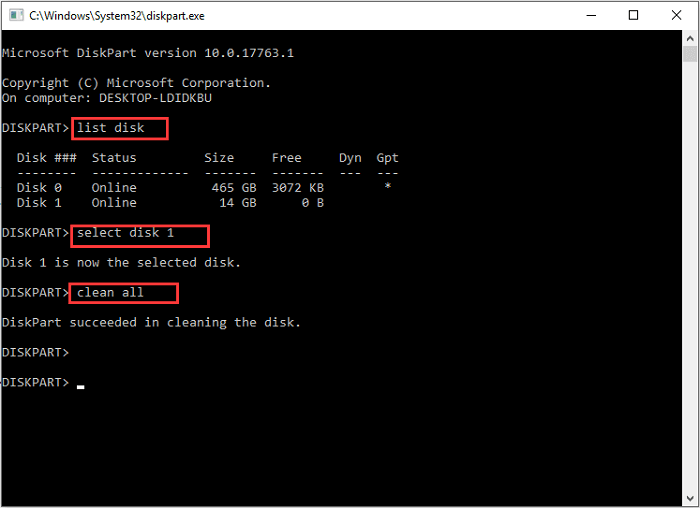
1. Input list disk > Enter. (Your SD card will listed on it.)
2. To select the SD card, you need to run the command `select disk*` in the Command Prompt, where `*` represents the disk number of the SD card. Once you enter, you can proceed with the next step.
3. Run Clean All >Enter
- Notice:
- The Clean All function will securely erase all data on the SD card, using a process called SD secure erase. This is a thorough method that completely removes all data from the card.
How to erase SD card/USB flash drive with Disk Management
You can also use Windows' built-in Disk Management tool to erase an SD card or USB drive, eliminating the need to use the SD card/USB eraser or Diskpart.
Step 1. Press Windows + X and choose Disk Management.
Step 2. Format SD card.
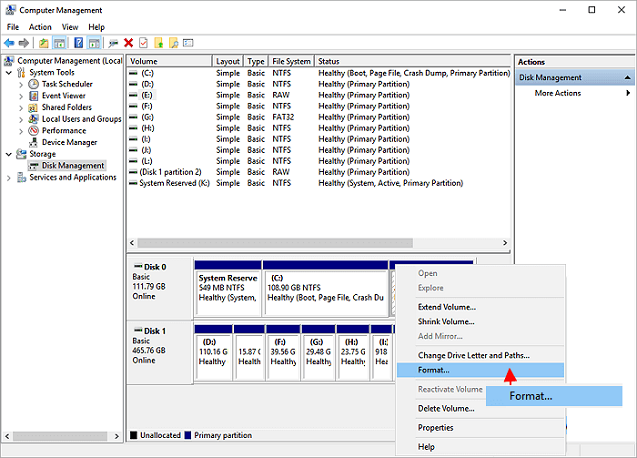
1. Choose partition on the SD card.
2. Right-click the partition and select Format.
3. Set the Volume label, File System, Allocation unit size.
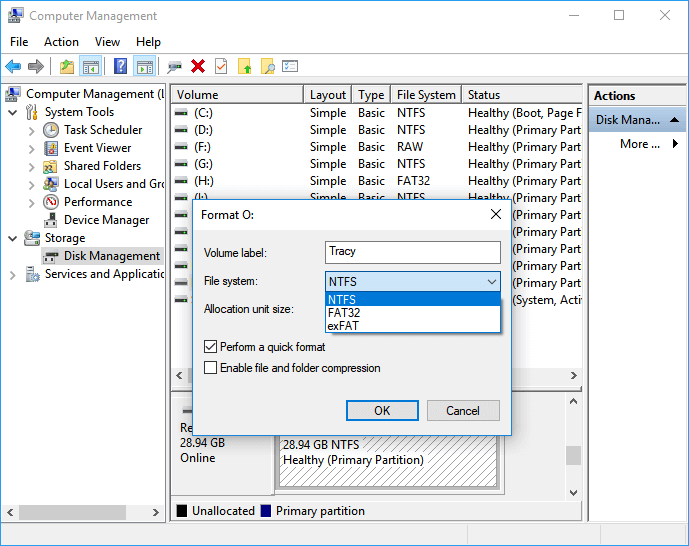
4. Click OK to wipe/erase SD card.
- Tip
- (Quick Format VS Full Format)
The quick format will not really erase all data, which marks the partition as formatted and delete the journal file, leaving the data still on the hard drive. This can lead to incorrect operations, such as formatting the wrong partition, resulting in data loss.data recovery software is ready. - The Full Format will completely clear data, with no chance of recovering it.
How to format & partition SD card/USB flash drive
- Right-To format an external drive or USB, click on it to select it, then choose the "Format" option. This will erase all data on the drive.
- Set the Partition label, File system (NTFS/FAT32/EXT2/EXT3/EXT4/exFAT), and Cluster size.
- Click "OK" to continue.
- Click the "Proceed" button to format the hard drive partition.
To format an SD card or USB flash drive, you can follow the steps outlined in the post "How to format SD card on Windows 10".
Related Articles
- How to Format Corrupted SD Card
- How to Expand RAID 5 Array Partitions in 2022 [New]
- Diskpart Has Encountered an Error Access Is Denied | How to Fix
- How to Clone 2TB HDD to 1TB SSD in Windows 11/10/8/7? Your Guide Is Here
- Why Can't I Transfer Large Files From One SSD to Another
Why can't I transfer large files from one SSD to another? Is my SSD broken? Check on this page and you will find the answers. - Why Is My External M.2 SSD Slowing Down to 40 Mbps Write Speed
Why is my external M.2 SSD slowing down to 40 Mbps write speed? Can I speed it up? Continue reading, and you will find a solution here.
Products
Articles & Tutorials
- Data Recovery
- Data Backup
- File Recovery
- File Backup
- System Backup and Restore
- Disk and Partition Clone
- Technical articles
- Mobile articles
- Disk Master Help
- Windows Data Recovery Tutorials
- Windows Secure Delete Tutorials
- Windows Partition Management Tutorials
- Windows File Backup and Restore Tutorials
- Windows System Backup and Restore Tutorials
- Windows Disk Backup and Restore Tutorials
- Windows Clone Tutorials