Do I need EFI System Partition? Can I Delete the EFI Partition?
The first partition listed, often next to the primary partition, is usually the System Reserved partition. This partition is used by the operating system to store boot files, the boot manager, and other essential system files. It is not typically necessary to delete this partition, as it is required for the proper functioning of the operating system. In fact, deleting this partition can cause problems with booting the computer and may even render it unusable. So, it's best to leave it as is and use the available space on other partitions for storing files.
Quick Navigation:
What is EFI System Partition?
Does Windows 10 need an EFI partition?
Can I Delete the EFI Partition?
What is EFI System Partition?
The EFI partition is a hidden storage space on Windows PCs with UEFI BIOS, where the UEFI loads the operating system and other utilities when the PC boots.
The partition created during Windows installation on a UEFI system contains the Boot and System Volume Information folders, with the latter holding the bootmgr and Bootsect.bak files, as well as system utilities, device drivers, boot loaders, and data files.
These files contain the exact information to load Windows using the Boot Manager code and Boot manager database.
OEMs also use the EFI System Partition for storing drivers, utilities, and other crucial components, which are used during a fresh install or PC reset, utilizing a script to refresh the PC.
Does Windows 10 need an EFI partition?
The EFI partition should not be disturbed because it's required to boot into the OS and contains tools needed when the PC is in trouble.
If you set the boot path properly, you will lose access to tools like Safe mode, Automatic Recovery, and advanced startup options, and if you're using encryption, Bitlocker will also be affected.
So you can clearly see that there are more advantages of keeping that partition than removing it.
Can I Delete the EFI Partition?
You can use various methods to delete the EFI partition, but be aware that doing so will render your machine unbootable and delete the bootloader functionality. The EFI partition is similar to MBR but can support more partitions and types, making deletion risky. Most EFI partitions are small, around 100-500 MB, and deleting them through Windows Disk Manager is not an option due to the risk of losing bootloader functionality.
In some cases, deleting the EFI partition is still possible, and it may be necessary for certain tasks like flashing a new BIOS or removing a hard drive from a Mac. To do this, you can use a partition manager like Qiling Partition Master, which will allow you to delete the partition without making the PC unusable.
Step 1. To delete a system involved partition like the EFI system partition, you'll need to operate in a WinPE environment. First, use the "WinPE Creator" feature in Qiling Partition Master to create a bootable USB drive to start. This will allow you to access the WinPE environment, which is required to delete system involved partitions. For a more detailed guide on creating and accessing the Qiling WinPE bootable disk, click here.
Step 2. Open Qiling Partition Master WinPE edition, right-click on the EFI system partition and choose "Delete".
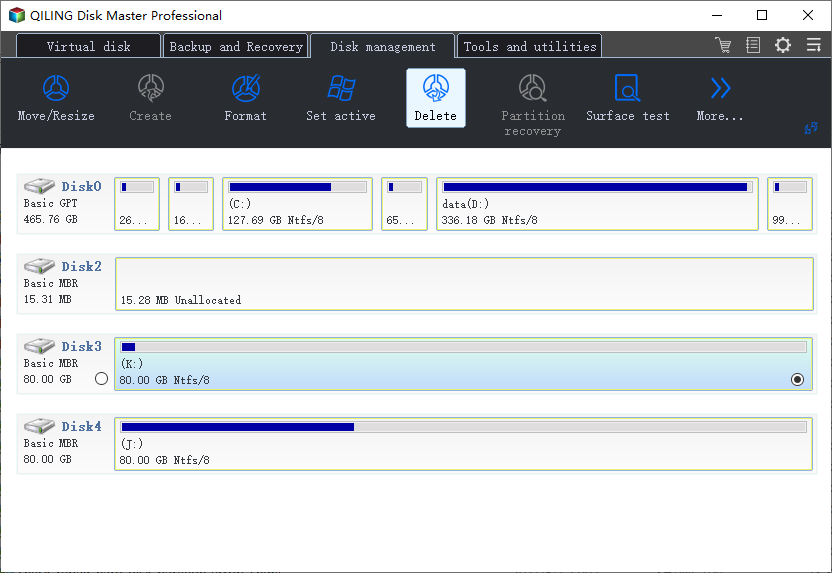
Step 3. Click "OK" to confirm the deletion of the selected partition. This will permanently remove the data on the partition. Be cautious as this action cannot be undone.
Step 4. In the new window to completely remove the EFI system partition.
The tool will ensure the boot records are in place or recover them if there's an issue.
Conclusion
With a clear understanding of the EFI partition, also known as the System Reserved Partition, its pros and cons are evident. If you have multiple operating systems installed on your computer and the EFI is taking up too much space, you can use software like Qiling Partition Master to delete the EFI partition. However, it's essential to have a proper backup in place to ensure you can recover your system in case something goes wrong.
Related Articles
- How to Install Windows 11 on Windows 7 (Get In-depth Guide)
- How to Remove Write Protection from Pen Drive
- Format EXT4 on Windows 10,8,7 with Best EXT4 Format Freeware
- How to Format 64GB SD Card/USB Flash Drive to FAT32
- What Is HP Default Admin Password & How to Reset It
HP Default Administrator Password is not a fixed password, but rather a default account name, which is “Administrator”. The password for this account is not provided by HP, and users are advised to create their own strong password for security reasons. - How to Fix HP Laptop Running Slow on Windows 11/10 [2024 Newest]
If your HP laptop is running slow on Windows 11/10. This article offers 8 practical solutions to help you overcome the issue and get your laptop back to its optimal performance.
Products
Articles & Tutorials
- Data Recovery
- Data Backup
- File Recovery
- File Backup
- System Backup and Restore
- Disk and Partition Clone
- Technical articles
- Mobile articles
- Disk Master Help
- Windows Data Recovery Tutorials
- Windows Secure Delete Tutorials
- Windows Partition Management Tutorials
- Windows File Backup and Restore Tutorials
- Windows System Backup and Restore Tutorials
- Windows Disk Backup and Restore Tutorials
- Windows Clone Tutorials