Complete Guide to Migrate Windows 11 to a New Hard Drive or SSD
Complete Guide to Migrate Windows 11 to a New Hard Drive or SSD – Qiling
If your operating system is slow or not working properly, consider transferring Windows 11 to a new hard drive to improve system speed. Although this process can be challenging, using a reliable migration tool can make it easier. We'll discuss a top-notch tool that can help you with the process, making it a worthwhile task to enhance your system's performance.
For certain files and folders, like documents, music, photos, or videos, you can easily drag and drop them to a new hard drive using Windows Explorer. However, it's not recommended to drag and drop OS-related files as they won't be bootable.
If you're looking for a complete guide to move Windows 11 to a new hard drive or SSD, this guide can help. It provides a step-by-step guide on migrating Windows 11 to a new hard drive, as well as making Windows 11 bootable on a new hard drive, meeting all the necessary criteria along the way.
| Workable Solutions | Step-by-step Troubleshooting |
|---|---|
| 1. Prerequisites | Step 1: Install a new hard drive on your Windows 11 computer correctly...Full steps |
| 2. Complete Guide to Migrate Windows 11 | Run Qiling Partition Master, select Migrate OS from the top menu....Full steps |
| 3. Make Windows 11 Bootable on New Hard Drive | Restart your computer, peep pressing F1 or F2 or del or delete keys...Full steps |
Why Need to Migrate Windows 11 to a New Hard Drive?
When your system starts to fail, it's better to migrate your windows to a new hard drive rather than reinstalling the operating system. This approach saves time and effort, and prevents storage loss, which can be caused by system overload, viruses, service time limits, or unknown errors.
People may need to migrate Windows 11 to a new disk due to various reasons, including running out of storage space, experiencing performance issues, or wanting to upgrade to a faster or larger storage device. This could be a result of installing too many programs, accumulating large files, or using the disk for other purposes.
1. Upgrading to a new hard drive is recommended to improve Windows 11's performance on an old system.
2. The computer is running out of storage space, making it difficult to install and download new programs and apps, and a new hard drive is needed to free up sufficient space.
3. Upgrading to a new hard drive can improve your computer's performance and prevent issues with old and unhealthy hard drives, which can cause your computer to hang and run slowly.
Prerequisites: What Needs to Be Prepared for Migration Windows 11 to a New Hard Drive
Before migrating Windows 11 to a new hard drive, it's essential to be aware of certain conditions. These include follow the steps below. Understanding these conditions will ensure a smooth migration process. Once you're ready, we can proceed to the "How To" part.
Step 1: Install a new hard drive on your Windows 11 computer correctly
To install a new hard drive or SSD in your PC, unplug all unnecessary devices, especially those with important data. If your computer only has space for one hard drive, connect the new one via a USB cable, being aware that there's a risk of memory loss during the upgrade process.
The step-Here's a one-paragraph, step-by-step guide to install a hard drive in your PC:
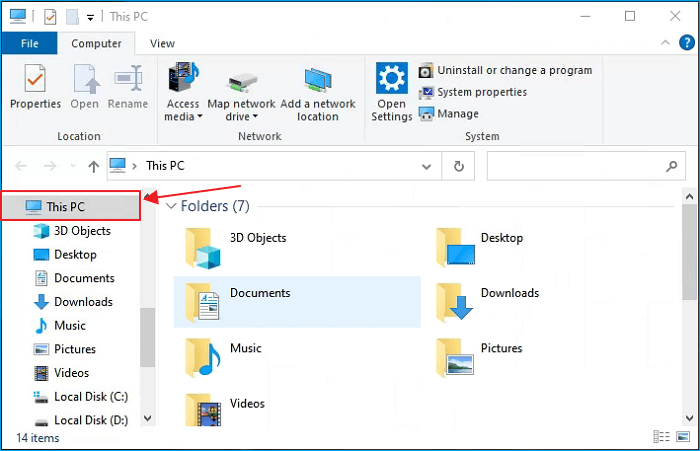
- Go to "This PC" on your system
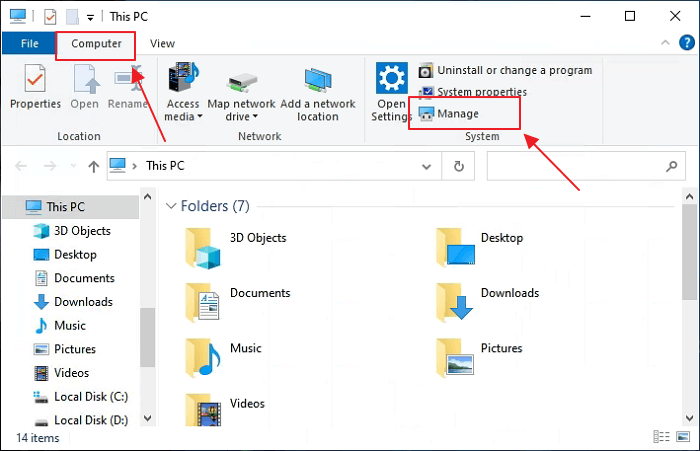
- Click on "Computer" then select "Manage"
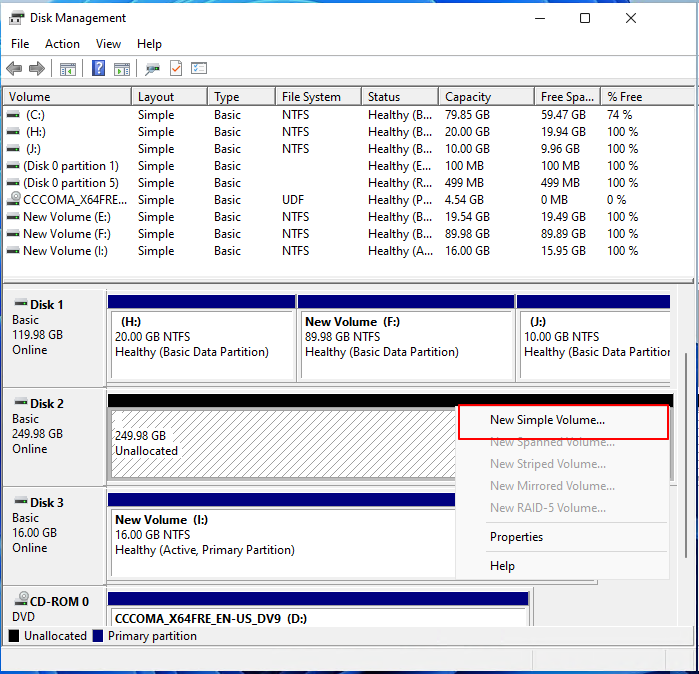
- To create a new simple volume on the unallocated disk, go to "Disk Management" and right-click on the unallocated disk, then select "New simple volume".
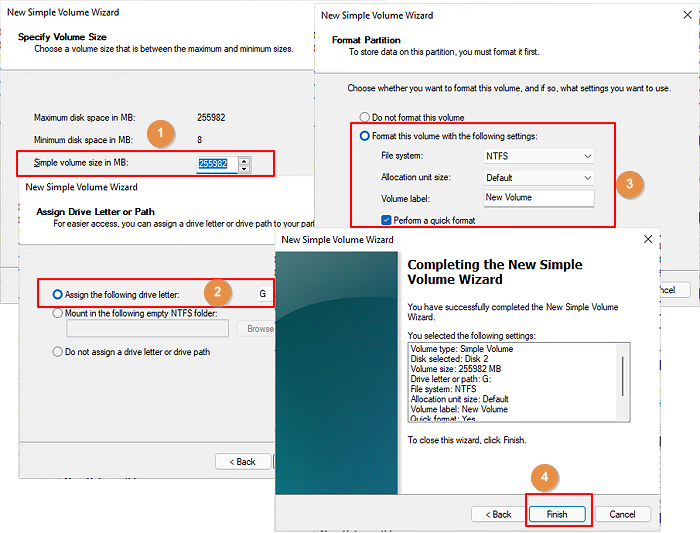
- A wizard will appear and click on "Next"
- Assign a location to your drive. Select a drive with a suitable disk size that suits your needs.
- After clicking "Next" in the previous step, you will be taken to a screen where you can assign a name to your hard drive. This is called the "Volume Label".
- Click on next and press "Finish". The hard drive is successfully installed in your system.
- The newly installed hard drive can be seen in the "Devices and Drives" section.
Step 2. Initialize new hard drive
To initialize a new hard drive to GPT on Windows 11, follow these steps:
- To start the process, you need to have a SATA cable and a new hardware device.
- Connect the external hard drive to your PC using a SATA cable.
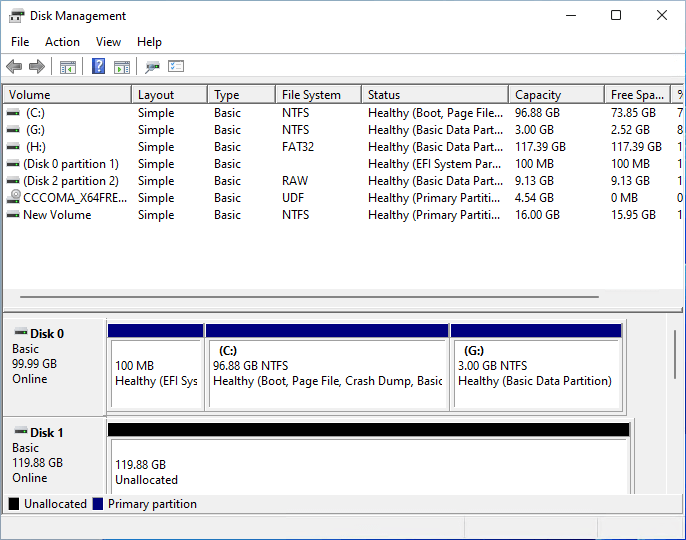
- To access the Disk Management tool, go to the Computer Management section and select Disk Management.
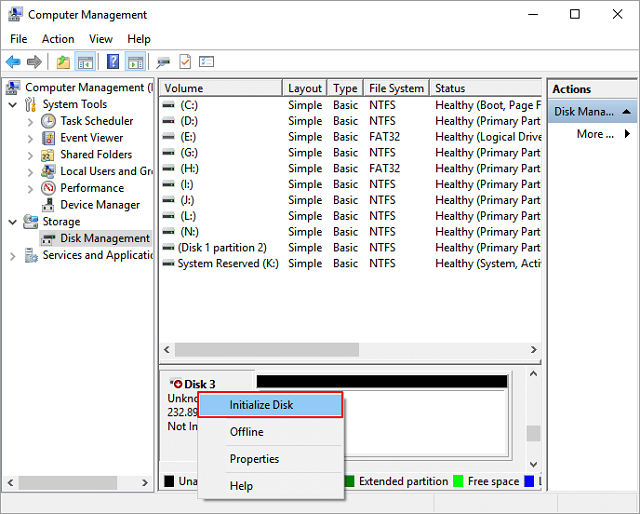
- After right-clicking, select the option of ''Initialize Disk''.
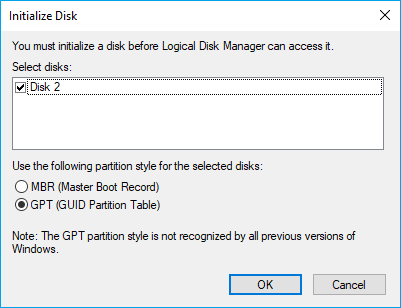
- To set the default partition style, select the correct disk and click "OK" to confirm the choice. This will ensure that the disk is formatted with the correct partition style.
Once you've completed these steps, assign the space to the new simple volume by right-clicking on it. Then, repeat the steps from STEP 1.
Step 3. Download Windows 11 OS Migration Software
Windows 10 doesn't have a user-friendly migration process, making it complicated to transfer your OS to a new hard drive. To simplify this process, consider using Qiling Partition Master, a professional tool that efficiently migrates your OS and organizes your hard disk without data loss.
Qiling Partition Master has positive ratings and is recommended by professionals. We suggest downloading and installing it to help with creating a partition of your disk space efficiently. This software offers a convenient solution for managing your disk space, making it a great option for your Windows OS migration needs.
Complete Guide to Migrate Windows 11 to New Hard Drive
If you want to transfer Windows 11 files, apps, and programs from the C drive to a new hard drive without reinstalling, this guide is for you. You can either connect a new hard drive and install it onto your system or use a tool like Qiling Partition Master to make the transfer seamless, eliminating the need for a reinstall.
Steps to migrate OS to HDD/SSD:
- Run Qiling Partition Master, select Migrate OS from the top menu.
- Select the SSD or HDD as the destination disk and click Next.
- Be aware that the process will erase all data and partitions on the target disk, so make sure to back up any important data beforehand. If you haven't already, do it now to avoid any potential loss.
- Then click Continue.
- Preview the layout of your target disk, then click Proceed to start migrating your OS to a new disk.
Note: When migrating an operating system to an SSD or HDD, be aware that the process may delete existing partitions and data on the target disk if there's not enough unallocated space. To prevent losing important data, back up any saved files to an external hard drive beforehand.
Qiling Partition Master simplifies the partitioning process, making it accessible to home, office, and service provider users. Even those new to the software can easily navigate the process with the self-explanatory guide provided. The trial version is available for download online, allowing users to try it out in their system with ease.
Some of the notable features that made Qiling an exceptional tool are listed below:
- This tool offers support for migrating and transferring all Windows Operating System and Windows server OS, allowing you to transfer your OS without reinstalling apps using Qiling Partition Master.
- Qiling Partition Master allows for the migration of operating systems from any type of hard drive to any other type of hard drive, including SSDs, M.2, NVMe SSDs, and hybrid drives, making it possible to transfer Windows 11 to a new hard drive.
- Qiling Partition Master has a user-friendly interface that makes it accessible to both beginners and advanced users, allowing them to execute various operations with ease.
Make Windows 11 Bootable on New Hard Drive
To make Windows 11 bootable on a new hard drive, you'll need to create a bootable USB drive with the Windows 11 installation media, then use the built-in Windows 11 installation tool to transfer the operating system to the new hard drive. This process typically involves booting from the USB drive, selecting the "Upgrade this PC" option, and following the prompts to transfer the Windows 11 installation to the new hard drive.
- Restart your computer.
- To access the BIOS settings of your computer's motherboard, keep pressing the F1, F2, Del, or Delete keys while rebooting your computer. This will allow you to enter the BIOS settings and make any necessary changes.
- To set a new hard drive or SSD as the boot drive, go to the boot order section in your system's BIOS settings and switch the order to prioritize the new drive. This will allow your system to boot from the new drive instead of the original one.
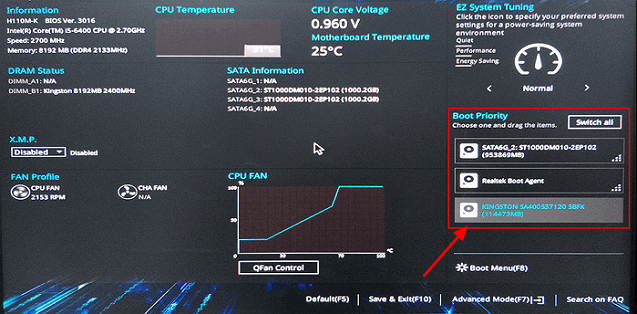
- And save the changes by pressing F10 and restart computer.
Migrating Windows 11 to a New Hard Drive Is Possible and Necessary, You Can Make It Alone
The migration of Windows is a process that requires attention and speed, which is largely dependent on the other components of your personal computer, such as the Central Processing Unit and Random Access Memory (RAM). This method is preferred over reinstalling the entire Windows operating system because it preserves your valuable data, saving you the effort and time that would be needed to recover it.
Migrating the OS, such as from Windows 11 to a new hard drive, may be necessary when the computer or OS drive gets old. This process can be done independently with the aid of reliable software, with Qiling Partition Master being a paid yet excellent tool that can help overcome any hurdles.
A simple software tool helps with data migration and transfer, making partitions and storing data without needing a separate hard drive. It includes error checking and correction features, allowing you to review and fix any mistakes. You can download and test it out for yourself.
Related Articles
- How to Hide or Unhide Partition in Windows 11 [3 Tools]
- How to Remove Partition on External Hard Drive in Windows 11/10
- Free Up Disk Space in Windows 11 Can Be Easy Enough Now
- 5 Ways to Hide Drives in Windows 10 | Check Your In-depth Tutorial
- SD Card Benchmark App 2024 Updated Recommend [Detailed Guide]
Do you want to check your SD Card Performance? Then check out the best SD Card Benchmark App with a detailed guide. This article introduces a reliable app for SD Card benchmarking. - Top 5 Best SD Card Benchmark Software Recommend 2024
Discover the top 5 best SD card benchmark software of 2024. In this comprehensive guide, we highlight the key features, usability, and performance metrics of each SD card benchmark software, helping you select the optimal tool for testing and enhancing your SD card's performance.
Products
Articles & Tutorials
- Data Recovery
- Data Backup
- File Recovery
- File Backup
- System Backup and Restore
- Disk and Partition Clone
- Technical articles
- Mobile articles
- Disk Master Help
- Windows Data Recovery Tutorials
- Windows Secure Delete Tutorials
- Windows Partition Management Tutorials
- Windows File Backup and Restore Tutorials
- Windows System Backup and Restore Tutorials
- Windows Disk Backup and Restore Tutorials
- Windows Clone Tutorials