Repair Corrupted SSD/HDD Without Losing Data
| Workable Solutions | Step-by-step Troubleshooting |
|---|---|
| Recover Data from Corrupted Hard Drive |
Connect SSD/HDD with Another SATA Port /Cable/PC to Restore Data...Full steps Use Hard Drive Data Recovery Software for Corrupted SSD Recovery...Full steps |
| Repair Corrupted SSDRepair SSD in Windows 10 Manually |
1. Check and Fix File System ...Full steps 2. Rebuild MBR to Repair SSD...Full steps 3. Format/Erase the Damaged SSD...Full steps |
| Repair SSD in Windows 10 Manually |
1. Update SSD's Firmware to Repair SSD...Full steps 2. Update your SSD Drivers...Full steps 3. Run CHKDSK to Fix File System Error...Full steps |
SSD/HDD Failed to Respond and Corrupted
Losing data on a corrupted SSD or HDD drive can be frustrating, especially if your disk becomes RAW or your computer can't boot from it. If you're looking for solutions to repair corrupted SSD/HDD and restore lost data, there are options available.
Here, you'll find effective methods to repair corrupted SSD or HDD without losing data offered. Let's see how to fix and repair corrupted SSD or hard disk drive now.
How Do I Know If My SSD Is Corrupted
If your SSD is exhibiting any of the following five significant symptoms, it may be corrupted or damaged and in need of repair: 1) frequent crashes or freezes, 2) slow performance or lag, 3) errors or glitches when booting up or shutting down, 4) data loss or corruption, and 5) unusual noises or vibrations. If you're experiencing any of these issues, it's likely that your SSD is corrupted and may require repair.
1. File on SSD are unreadable
If some files on an SSD are unreadable, it's likely due to a bad block, which means the data is inaccessible and cannot be copied.
2. Unable to access, SSD drive runs slowly
If you're experiencing slow read/write speeds or frequent system crashes, your SSD may be damaged. To check for damage, use tools like CrystalDiskInfo or HDTune to monitor your SSD's health and performance.
3. Check file system
If the system frequently prompts the error that the file system needs fixing, it suggests that the hard drive is damaged.
4. The blue screen occurs for many times
Hard disk damage can cause a blue screen on the computer, which can be resolved by reinstalling the system. If this doesn't work, it's likely the hard disk is damaged.
5. Unable to write, SSD becomes read-only
If you're prompted that you can't write or write-protect a file on an SSD, it's likely that the drive is broken.
Recover Data from Corrupted Hard Drive Before SSD Repair
Before repairing an SSD, it's essential to perform a corrupted SSD data recovery in two ways to ensure data security. This involves taking steps to recover any lost data from the SSD, which can be done in two ways.
1. Connect SSD/HDD with Another SATA Port /Cable/PC to Restore Data
If you're experiencing issues with your SSD or HDD, try connecting it to another SATA port and cable, or even another PC, to restore data. This method can help resolve problems such as data loss, corruption, or inaccessibility due to hardware or software issues.
- Present PC cannot read or recognize SSD/HDD
- Current PC cannot boot properly
If you're having trouble accessing data on your SSD or HDD, it's possible that the issue is related to a faulty SATA port or cable. In this case, trying a new SATA port or cable, or even replacing your PC altogether, might resolve the problem and allow you to access your data.
2. Use Hard Drive Data Recovery Software for Corrupted SSD Recovery
If Method 1 fails to access data in your SSD or HDD, or if your SSD/HDD becomes corrupted with a RAW error, you'll need to use a professional hard drive data recovery software.
Here you may try Deep Data Recovery, a software that supports restoring all lost data on various storage devices, including HDD/SSD, external hard drives, USB, and SD cards, with support for all Windows systems. It can recover data in just three steps: running the software, selecting and scanning the disk data, and previewing and restoring the data from a RAW or corrupted SSD/HDD.

How to Repair Corrupted SSD with a Professional SSD Repair Tool
Qiling Partition Master is a disk and drive management tool that offers solutions to repair and manage SSDs, including checking file systems, rebuilding MBR, formatting, and erasing SSDs.
1. Check and Fix File System
Step 1. Right-click the target partition that has a problem.
Step 2. Choose "Advanced" > "Check File System".
Step 3. In the Check File System window, check the "Fix the error on the disk" option.
Step 4. Click "Proceed" to check errors on your partition.
2. Rebuild MBR to Repair SSD
If the master boot record on an SSD is damaged, the SSD will fail to boot. The system will prompt "Disk boot failure, Insert system disk and press enter" after booting up, indicating that the boot partition hard disk cannot be found or there is no boot file on the hard disk. To resolve this issue, you can install Qiling Partition Master and use its "Rebuild MBR" feature to fix the problem.
If your system disk is an SSD and the Master Boot Record (MBR) is damaged, your computer may not start properly. To resolve this issue, you can create a Qiling Partition Master WinPE bootable disk to rebuild the MBR. This allows you to boot into a Windows Preinstallation Environment (WinPE) and perform the necessary repairs to get your system up and running again.
Rebuilding the Master Boot Record (MBR) is only applicable to MBR disks, and will not work for GPT disks.
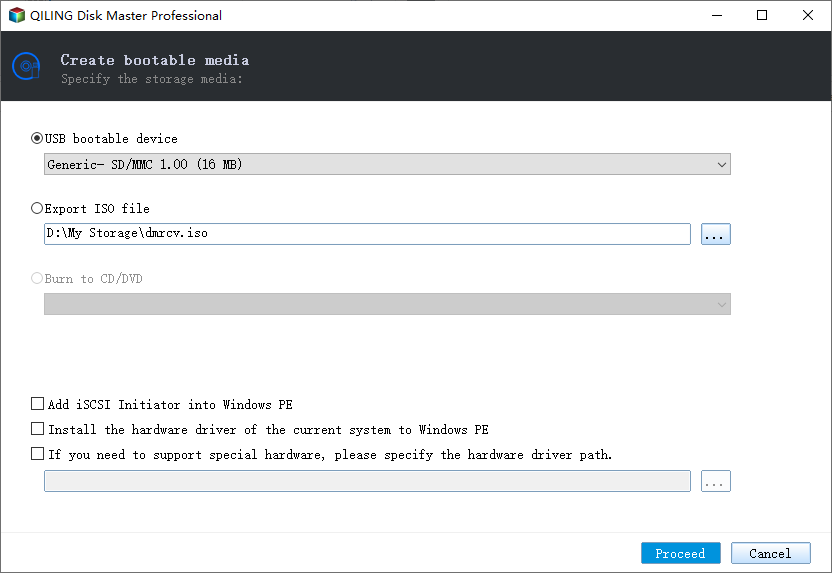
Step 1. Create a WinPE bootable disk
- Launch Qiling Partition Master, click "Create bootable media" on the tools page, and select to create the bootable disk on a USB drive or CD/DVD.
- Click "Proceed" to finish the process.
Step 2. Boot Qiling Partition Master Bootable USB
- Connect the bootable USB or CD/DVD to your PC.
- To access the BIOS screen, press F2 or Del when restarting the computer. Once in the BIOS, set the boot priority to "Removable Devices" or "CD-ROM Drive". After doing so, Qiling Partition Master will automatically run when the computer boots up.
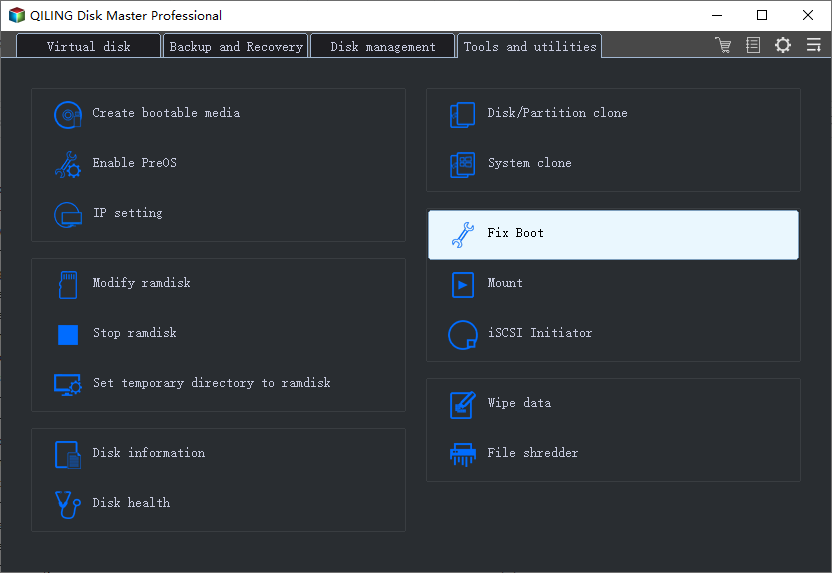
Step 3. Rebuild MBR
- Right-The user needs to click on the disk whose MBR (Master Boot Record) is damaged, and then choose the option to fix the boot.
- The Master Boot Record (MBR) type is determined by the operating system installed on the computer, which can be either 32-bit or 64-bit, and can also be either 32-bit or 64-bit UEFI. The MBR type can be either BIOS or UEFI, with UEFI being the newer and more secure type. The operating system's specifications or a tool like the BIOS/UEFI setting can be used to determine the MBR type.
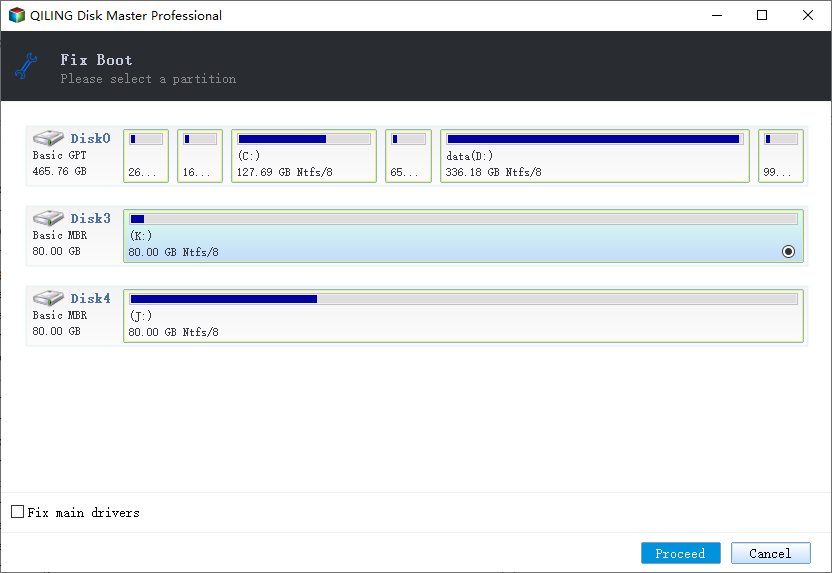
- After clicking "Proceed" to build the MBR, your computer's boot process should resume normally, allowing it to boot without any issues.
3. Format/Erase the Damaged SSD
If the above methods don't work and you can't repair the SSD, or if it's write-protected due to file system corruption, you can fix the corrupted SSD by formatting and securely erasing it. For a data SSD, you can reuse it after formatting and wiping, while for a system SSD, you can reinstall the system.
Launch Qiling Partition Master, right-click the SSD disk or drive, choose Wipe Data or Format and wait for the process to accomplish.
Summary: You can repair a corrupted SSD on Windows 10/8/7 using Qiling Partition Master's four options. This software offers not only excellent SSD repair functionality but also a range of other features, including resizing and moving partitions, merging, creating, formatting, and deleting partitions, performing SSD 4K alignment, and migrating the OS to SSD.
How to Repair SSD in Windows 10 Manually
There are various methods to attempt to repair a corrupted SSD, ranging from simple to complex solutions. These methods include updating firmware, drivers, or utilizing the Command Prompt for manual repairs.
1. Update SSD's Firmware to Repair SSD
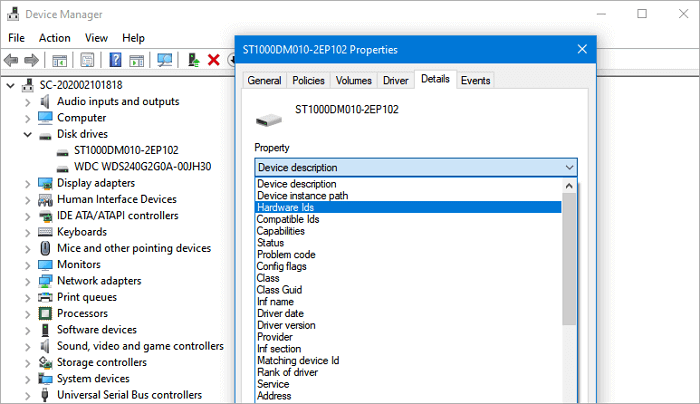
Step 1. Press Win+X keys and choose "Device Manager".
Step 2.To access the properties of your SSD drive, go to "Disk drives" and right-click on the SSD drive. From the context menu, select "Properties". In the Properties window, click on the "Details" tab and then click on the drop-down menu under "Property".
Step 3. Run the SSD firmware update tool and follow the on-screen instructions to update the firmware on your SSD.
2. Update your SSD Drivers
Step 1. Press Win+X keys > select "Device Manager".
Step 2. To update the driver for your SSD, right-click on it in Disk drives, choose "Update driver", and follow the on-screen instructions. After the process finishes, restart your PC.
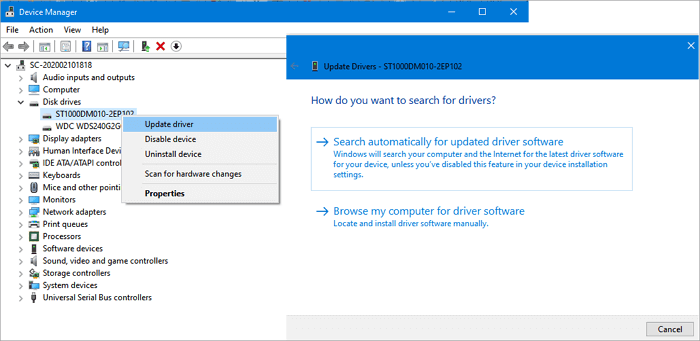
To troubleshoot the issue, you can try uninstalling and reinstalling the driver.
3. Run CHKDSK to Fix File System Error
- Press "Win + R" to open the "Run" dialog.
- Type: cmd and hit Enter to open "Command Prompt".
- Click "Run as administrator" and log in as Administrator.
- The command `chkdsk C: /f /r /x` in Command Prompt will run a full disk check on the C: drive, fixing any errors it finds (/f), recovering any readable information from the bad sectors (/r), and forcing the system to dismount the volume before scanning (/x).
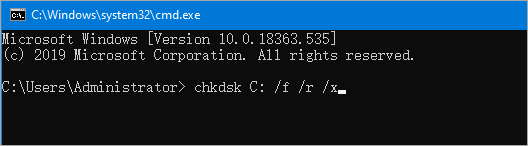
Note: C: shall be the drive letter of your corrupted SSD or HDD and do remember to replace C: with the right letter. Wait for the process to complete, then type exit and press Enter to close the command prompt.
The three basic methods to repair a corrupted SSD or HHD include running a disk check, using a data recovery software, and booting from a live CD. If these methods fail, a professional SSD repair tool can be used for assistance.
People Also Ask
1. Can SSD drives be recovered?
Due to SSD TRIM technology, data recovery software can't restore deleted files or folders from an SSD drive. However, if TRIM is disabled, you can use a data recovery tool like Qiling to recover lost data on an SSD.
2. How do I know if my SSD is failing?
If you are encountering the following issues, your SSD may be failed.
- File on SSD are unreadable
- Unable to access, SSD drive runs slowly
- Check file system
- The blue screen occurs for many times
- Unable to write, SSD becomes read-only
3. Can SSD fail?
Although SSDs are faster, more stable, and consume less power than traditional HDDs, they have a shorter lifespan due to a limited write cycle, which can cause them to fail before reaching their expected lifespan of five to seven years.
4. Can data be recovered from a failed SSD?
You can use the Qiling data recovery program to recover data from a failed SSD that can be detected by the computer. This application can help you recover all data from crashed and failed SSD drives in just a few clicks.
5. How do I fix a corrupted SSD?
If your SSD is corrupted, you have six solutions to fix it. You can try updating the SSD's firmware and drivers, checking and fixing the file system, rebuilding the Master Boot Record (MBR), formatting the drive, or erasing the problematic SSD. These steps can help resolve the issue and get your SSD working properly again.
6. How do I fix my SSD when it won't show up?
To resolve the issue of a solid-state drive (SSD) not showing up, you can try fixing the SSD by changing the drive letter, initializing the SSD, reinstalling the SSD driver, and other methods. Once the SSD is visible, you can proceed with repairing any corrupted SSD using the methods outlined in this tutorial.
Related Articles
- Free Download HDD Regenerator Crack + Serial Key (Safe Alternative)
- 3 Best Windows Server Partition Tool/Software Free Download [Free & Paid]
- How to Delete All Partitions on Windows 11
- How to Permanently Delete Files from Computer Without Recovery Windows 11/10/8/7
- How To Check Storage on PC [Step-by-Step Guide]
Storage is an important value for monitoring the status of the computer. This article aims to teach users how to check storage on PC. - How to Format an External Hard Drive Without Losing Data
Are you looking for a way to format your external hard drive without losing data? In this guide, learn how to format an external hard drive without losing data.
Products
Articles & Tutorials
- Data Recovery
- Data Backup
- File Recovery
- File Backup
- System Backup and Restore
- Disk and Partition Clone
- Technical articles
- Mobile articles
- Disk Master Help
- Windows Data Recovery Tutorials
- Windows Secure Delete Tutorials
- Windows Partition Management Tutorials
- Windows File Backup and Restore Tutorials
- Windows System Backup and Restore Tutorials
- Windows Disk Backup and Restore Tutorials
- Windows Clone Tutorials