SD Card Says Full or Is Not Accessible: Recover Data First
An SD card that appears full or inaccessible may have hidden files, a damaged file system, a write-protect switch, a faulty reader, or failing flash memory. Do not format it until you decide whether the existing files must be recovered.
Identify the Failure Without Writing to the Card
Check the physical lock switch on a full-size SD card or adapter, reseat the card, and try a known-good reader and USB port. In Windows Disk Management, compare the reported capacity and partition state with the card label. A zero-byte capacity, repeated disconnects, or a capacity far below the label may indicate hardware failure or a counterfeit card.
If the card has a drive letter, enable View > Show > Hidden items in File Explorer to check whether files are merely hidden. Do not run diskpart clean, format, or write test while data is still needed. If Windows offers to format the card, choose Cancel for now.
Recover Files with Qiling Deep Data Recovery
Use a different healthy disk as the recovery destination. Recovery software cannot guarantee success on a physically failed card, and further reads can aggravate an unstable device.
Step 1. Connect the SD card through a stable reader, open Qiling Deep Data Recovery, and choose the scan mode appropriate for the loss. Do not select the card as a save location.
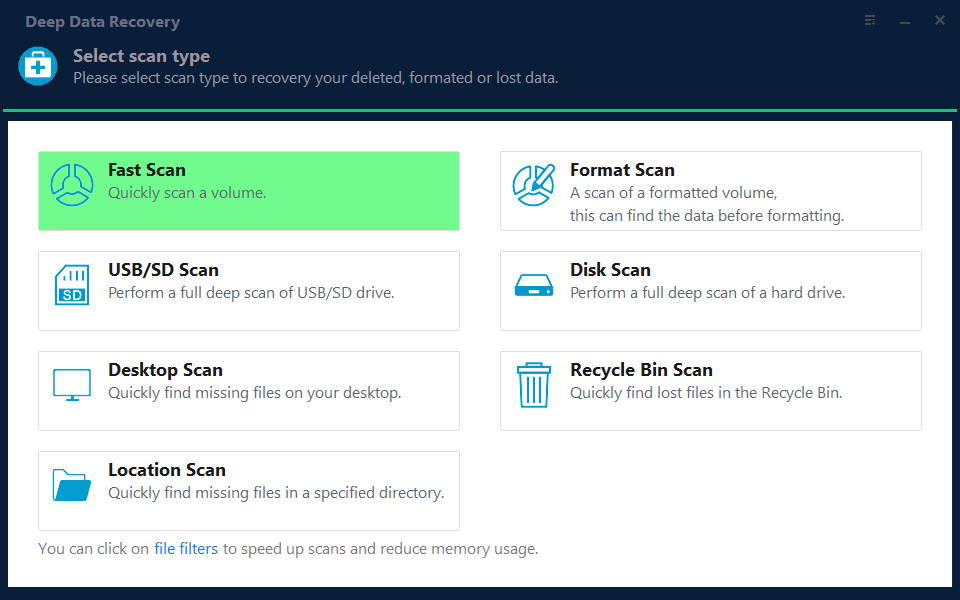
Step 2. Select the SD card by its capacity and drive letter on the location screen, then start the scan. If the card does not appear or disconnects repeatedly, stop and consider specialist recovery rather than repeated scans.

Step 3. Filter or search the results, preview a few files to assess quality, and choose the folders to recover. Save them to the computer or another external drive, never back onto the source SD card.
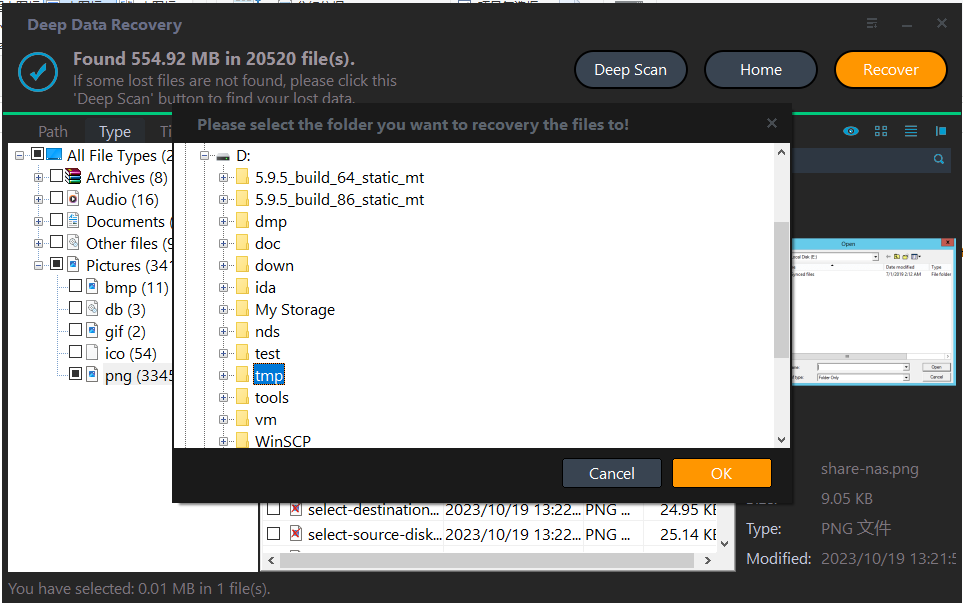
Step 4. Open several recovered photos or documents and confirm their contents before changing the SD card.
Repair or Reformat Only After Recovery
Once the files are safe, use Disk Management to inspect whether the card has a normal partition. A read-only chkdsk check may help identify file-system problems, but write repairs can alter metadata and are not a substitute for recovery. If you intend to reuse the card, format it in the intended camera or device when its manual recommends that method, and then copy a small test file and read it back.
If formatting fails, the card remains read-only, or errors recur, replace it. Flash cards have limited endurance and a controller may lock a failing card against further writes. Do not entrust new photos or backups to an unreliable card.
Why the Capacity Can Look Wrong
Hidden or system files, an unexpected partition, file-system corruption, and fake capacity can all make usage figures confusing. Compare the card's physical model with its reported capacity and test only after needed data is safely copied. Formatting does not increase the card's actual hardware capacity.
Conclusion
Separate reader problems from card failure, recover files to another disk first, and only then test, format, or replace the card.
Related Articles
- SD Card Shows 0 Bytes
Diagnose a card that reports no usable capacity. - Cannot Open a USB Drive
Follow a similar recovery-first workflow for removable media.
Products
Articles & Tutorials
- Data Recovery
- Data Backup
- File Recovery
- File Backup
- System Backup and Restore
- Disk and Partition Clone
- Technical articles
- Mobile articles
- Disk Master Help
- Windows Data Recovery Tutorials
- Windows Secure Delete Tutorials
- Windows Partition Management Tutorials
- Windows File Backup and Restore Tutorials
- Windows System Backup and Restore Tutorials
- Windows Disk Backup and Restore Tutorials
- Windows Clone Tutorials