Best Free Windows 10 Data Recovery Software
PAGE CONTENT:
Here are the Top 5 Best Free Windows 10 File Recovery Software
- Recuva (Windows) - Recuva is a 100% free data recovery software.
- Disk Drill (Windows, Mac) - Disk Drill is a free data recovery program available for both Windows and Mac operating systems.
- Deep Data Recovery is a software tool that allows users to recover lost files on both Windows and Mac operating systems. The process is straightforward and only requires three steps.
- Stellar Data Recovery (Windows, Mac)
- Puran File Recovery (Windows)
Lost Data in Windows 10, Help!
After upgrading to Windows 10, I lost my study report, but everything else worked great.
My report got lost due to a false operation and it was thoroughly removed from my computer. Do you know how to recover it? A free method will be highly appreciated."
When data is lost in Windows 10, there are easy and free methods to restore important data. Data loss can occur due to various reasons such as accidental deletion, disk formatting, or system crashes. Fortunately, free data recovery software can help retrieve lost data. By using software like Disk Drill, Deep Data Recovery, or Recuva, users can scan their system for lost files and recover them.
Causes of Data Loss in Windows 10/11
The Windows 10 upgrade is a common cause of data loss, often resulting from Microsoft's regular OS updates. As users update their operating system to the latest version, they may experience issues such as data loss. This is a recurring problem that arises with each new Windows release, highlighting the importance of backing up data before upgrading.
In addition to the causes mentioned earlier, other factors can lead to data loss in Windows 10, such as hardware failures, software bugs, user errors, and system crashes, which can result in the permanent deletion of files, folders, and other important data.
- 1. Windows OS upgrade or installation
- 2. Improper operations: deletion, formatting or partition deletion, etc.
- 3. Windows 10 crash or system error
- 4. Virus/malware/spyware attack
- 5. Hard drive or storage device failure
Data loss issues in Windows 10 can be caused by various unknown reasons, making it challenging to resolve the problem. To address such issues, it's essential to troubleshoot and identify the root cause of the data loss, which can be a software or hardware problem. A systematic approach to resolving data loss issues involves checking for corrupted files, running disk checks, and updating drivers.
Restore Data with Windows 10 Free Data Recovery Software
After identifying the cause of the data loss, the next step is to find a reliable free data recovery software for Windows 10. With the help of professional data recovery software, it's easy to rescue the lost data.
Download Best Free Data Recovery Software for Windows 10
Here, we recommend you to try the free Windows 10 data recovery software - Deep Data Recovery Free. It enables you to securely restore whatever files you've lost.
Here are a few features of this software that will help you decide why you need it:
- User-friendly interface that allows easy navigation and access to various tools and features.
- Robust project management system that enables teams to collaborate and track progress in real-time.
- Support 2GB free data recovery capacity.
- This software supports various versions of Windows, including Windows 10 (1903, 1809, 1803, 1709, 1703, etc.) and Windows 8.1, 8, 7, Vista, and XP, and is compatible with both 64-bit and 32-bit operating systems.
- The software supports all data loss scenarios, including deletion, formatting, RAW, system crash, virus attack, and other unforeseen events that could result in data loss.
- The software supports the restoration of over 200 different file types, including documents, music files, videos, graphics, emails, and more.
If your lost data in Windows 10 is larger than 2GB, you can update Deep Data Recovery to the pro version to restore unlimited lost data.
4-Step Guide: Restore Lost Data with Qiling Free Data Recovery Software
Without any hesitation, use this software to restore lost files on your Windows 10 PC:
Note: To maximize the chances of successful data recovery, install a data recovery software like Qiling on a separate disk, not on the original disk where the files were lost.
Step 1. To start the Deep Data Recovery process, launch the software on your Windows computer (Windows 11, Windows 10, Windows 8, or Windows 7) and select the desired file types. Click "Fast Scan" to begin the recovery process.
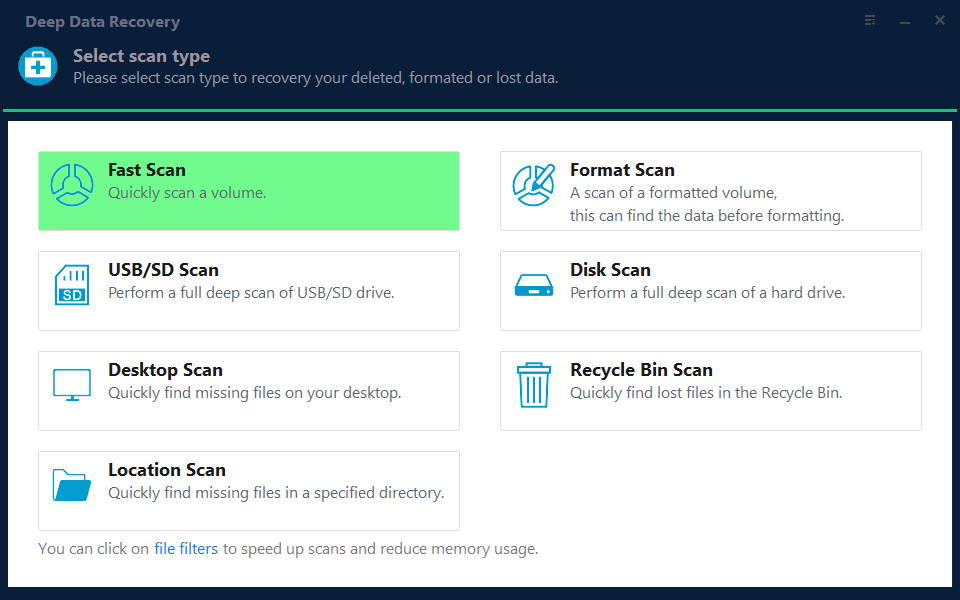
Note: You can choose different search modes based on where and why the data was lost.
Step 2. Select the disk partition or storage location where you lost data and click "Scan" to initiate the recovery process.

Step 3. This recovery software will start scanning the disk to find all lost and deleted files. Once the scan process completes, you can click "Filter" > "Type" to specify the types of lost files you're looking for.

Step 4.To recover lost Windows files, you can use a file recovery tool that scans your PC and allows you to preview the scanned files by double-clicking on them. Once you've selected the target data, you can click the "Recover" button to save them to a safe spot on your PC or an external storage device.
If you have other data loss issues on Windows 10 or other storage devices, Deep Data Recovery can help.
Bonus Tip: Protect Windows 10 Data
While using Windows 10 free data recovery software as an emergency rescue is not ideal, it's also essential to form habits to protect your Windows 10 data. This includes regularly backing up your files, using cloud storage services, and implementing a backup strategy to ensure your data is safe in case of any unexpected events or system failures. By doing so, you can prevent data loss and minimize the need for data recovery software.
- 1. Back up Windows 10 data and system regularly
Professional Windows backup software or File History can usually perform the backup job for you, allowing you to restore the Windows OS and lost data from the backup in case of a system crash or reinstallation. Qiling Backup Free, in particular, offers a free solution for backing up and restoring Windows 10 data with ease.
- Tip
- It's essential to create a backup of your data on an external disk or in the cloud, in addition to the local backup, to ensure that your files are safe in case the local backup gets corrupted or destroyed. This way, you have a second line of defense against data loss and can recover your important files even if the local backup is compromised.
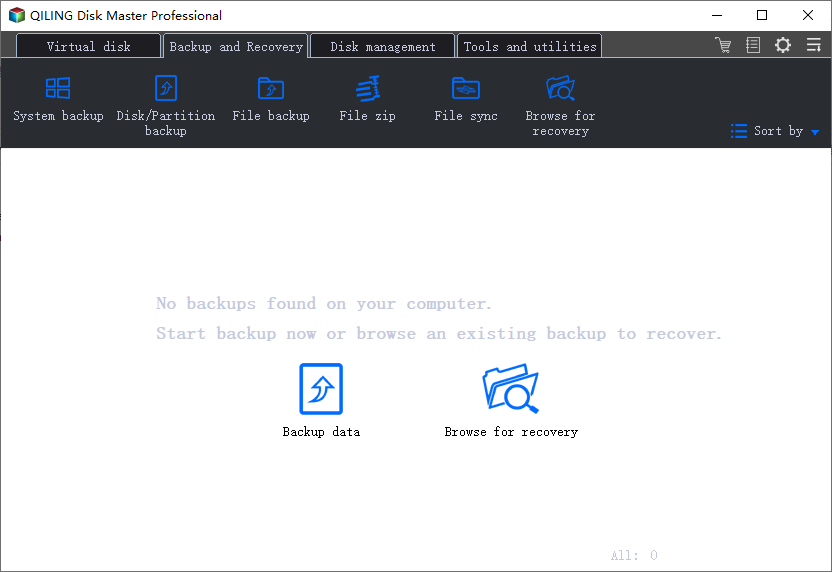
Step 1. Click the "File backup" button to start backup.
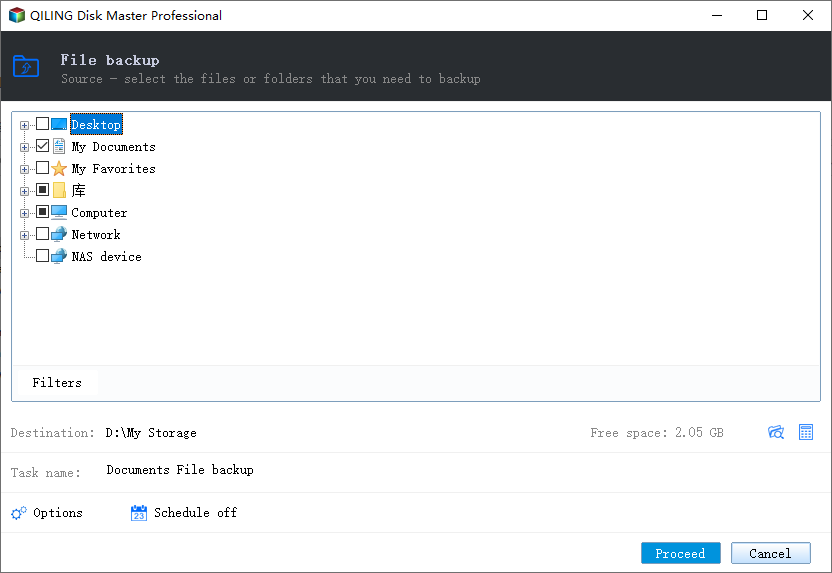
Step 2. Local and network files will be listed on the left, allowing you to expand directories and select files to be backed up.
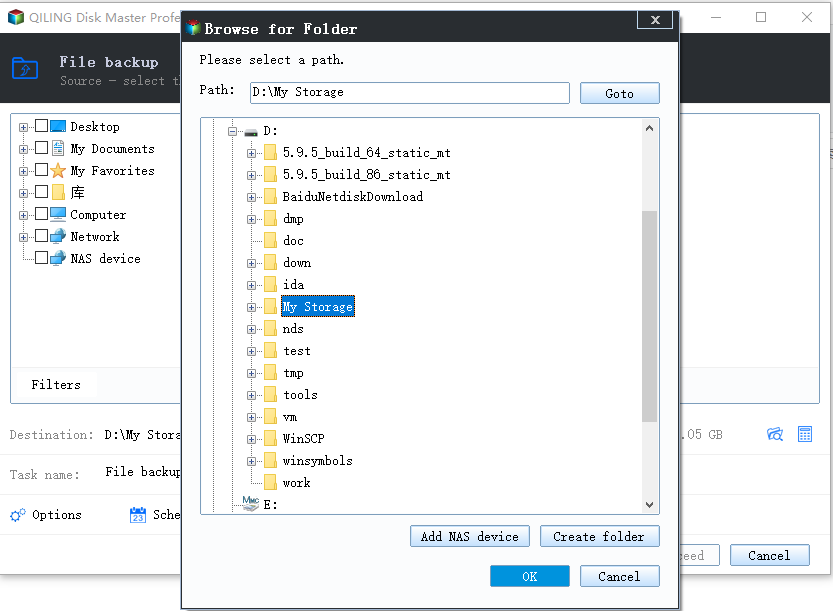
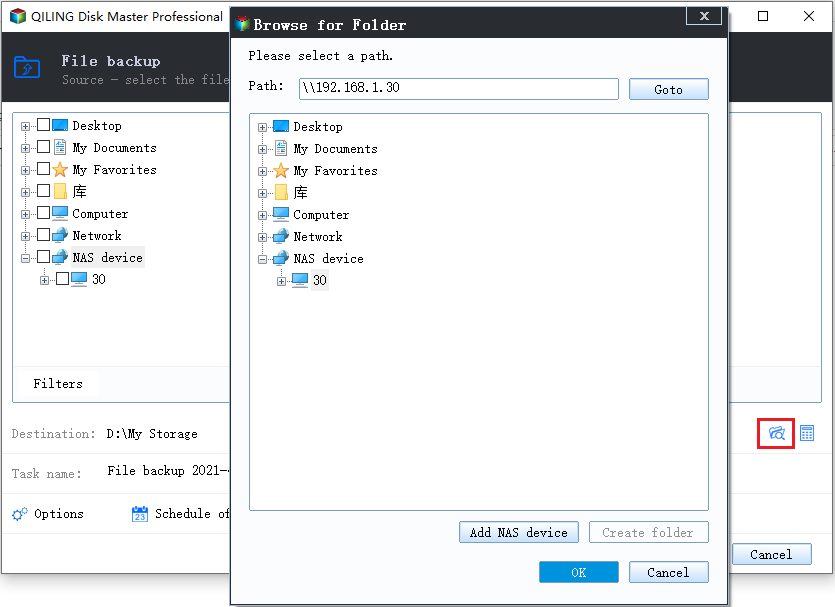
Step 3. Select the destination where you want to save the backup, following the on-screen guide.
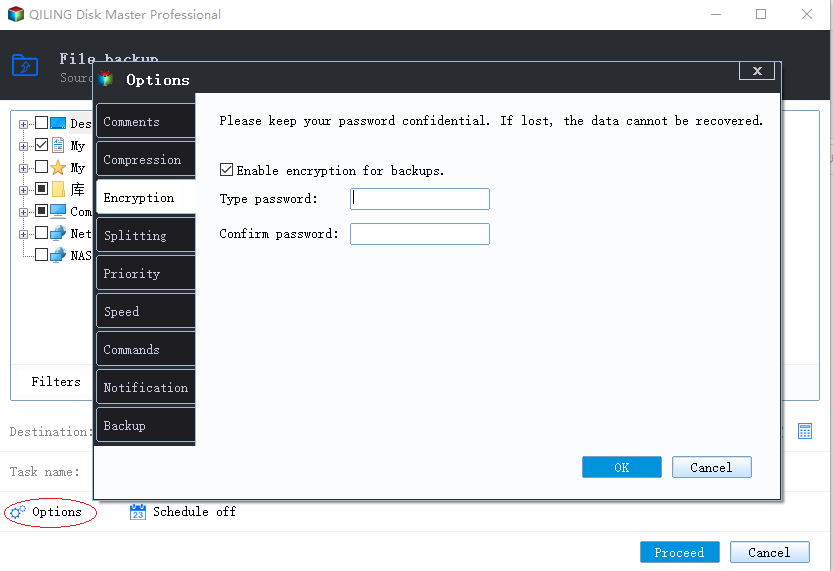
Step 4. To encrypt the backup with a password, click on the "Options" tab and select the "Backup Options" section. This will allow you to customize the backup task and explore other options available.
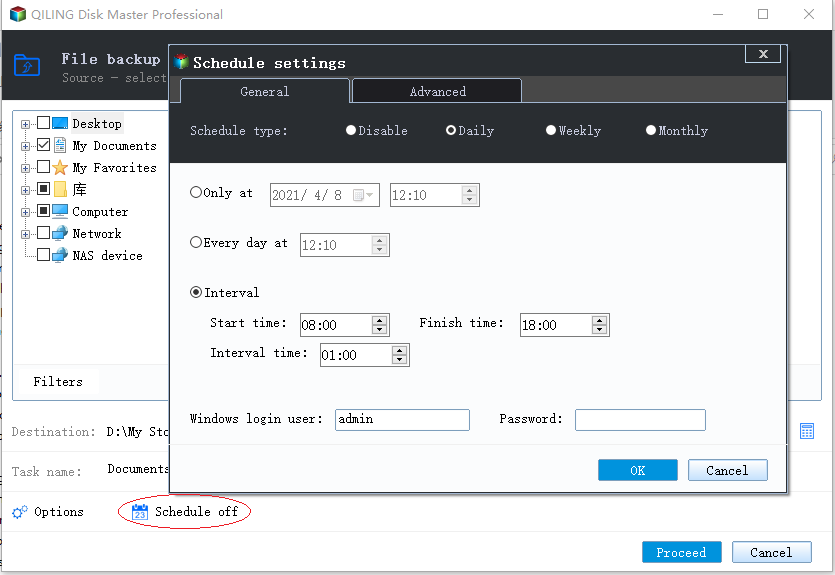
Set the backup schedule and choose to start back up at a certain event in "Backup Scheme".
Step 5. The backup can be stored on a local drive, Qiling's cloud service, or a NAS (Network-Attached Storage) device.
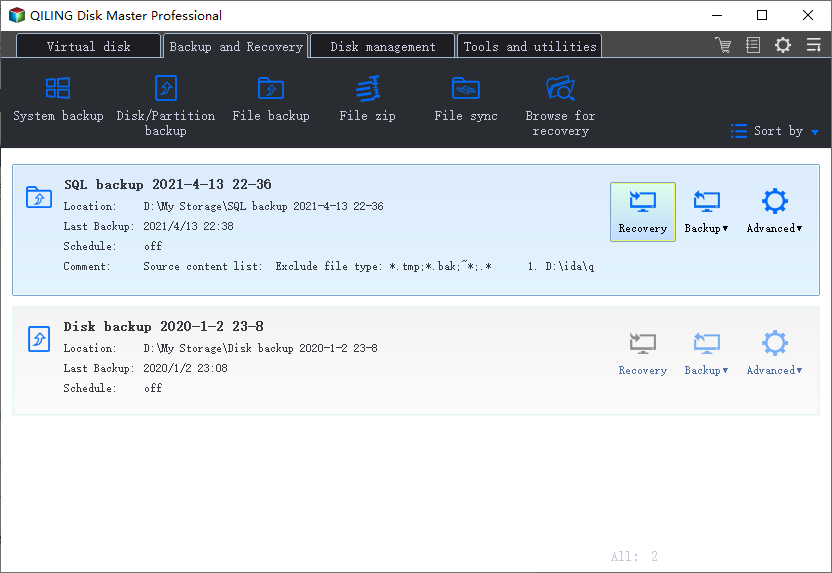
Step 6. Click "Proceed" to initiate the backup process. Once the backup is complete, it will be displayed as a card on the left panel, allowing further management through right-clicking on the task.
Other useful ways to protect Windows 10 data:
- 2. Use anti-virus software to clean up virus
- 3. Awareness of daily operations on Windows 10 PC
- 4. When your system drive fails to boot or reaches a point where it's got too many bad sectors, it's time to upgrade or replace it. This is often a last resort, but it's essential to prevent data loss and ensure your system continues to run smoothly.
Data Recovery Software for Windows 10/Windows 11 FAQs
Here are a few questions related to recovery software for Windows 10. You should read these to learn more.
Is it safe to use data recovery software?
Choose a trustworthy data recovery software to avoid making the data loss worse or infecting your computer with malware.
What is the best free data recovery software?
Here are the best data recovery solutions that offer some degree of free recovery:
- Deep Data Recovery
- Recuva
- Disk Drill
- Stellar Data Recovery
- Puran File Recovery
Is there any free unlimited data recovery software?
There are free unlimited data recovery solutions available, such as PhotoRec, a freeware program that offers unlimited recovery capabilities. However, it's worth noting that free solutions often lack the same level of functionality as commercial products.
Related Articles
- Fixed: Samsung SSD Not Showing Up in BIOS
- Why is My Camera Not Working on Laptop | Fix Camera Not Working
- Download Deep Data Recovery Professional 14.2 Full Version with Torrent
- Excel Found A Problem with One Or More Formula References in This Worksheet [Solved]
- How to Recover Deleted WhatsApp Audio from PC/Mac/iPhone
Here are the step-by-step guide for how to recover deleted WhatsApp audio files from PC, Mac and iPhone. - How to Recover Files from RAW Partition/Disk for Free
If your hard drive is inaccessible and the file system shows as RAW, you can recover data from it using a free method in Windows 11/10 or Mac.
Products
Articles & Tutorials
- Data Recovery
- Data Backup
- File Recovery
- File Backup
- System Backup and Restore
- Disk and Partition Clone
- Technical articles
- Mobile articles
- Disk Master Help
- Windows Data Recovery Tutorials
- Windows Secure Delete Tutorials
- Windows Partition Management Tutorials
- Windows File Backup and Restore Tutorials
- Windows System Backup and Restore Tutorials
- Windows Disk Backup and Restore Tutorials
- Windows Clone Tutorials