How to Recover Deleted SQL Server Database without Backup
To enable the 'SQL Server Browser' service on your MS SQL Server, you need to start the service from the Services console. Here's how:
- Q 1. How do I restore a deleted SQL database?
- Unfortunately, if you don't have a backup of your database, it's unlikely that you'll be able to recover the lost data in SQL Server. However, you can try to recover the database by using the built-in SQL Server tools like SQL Server Management Studio (SSMS) or the SQL Server Database Console. These tools allow you to restore a database from a backup or attach a database file.
Here are two effective methods to help you restore lost or deleted SQL database without backup. You can use SQL recovery software or a manual way to recover your database. This is a lifesaver for SQL Server administrators who have experienced a data disaster due to accidental deletion or loss of their database. The software can scan the database files and recover the data, while the manual method involves using SQL scripts to recover the database.
Recover Deleted SQL Database without Backup Using File Recovery and MS SQL Recovery Software
Restoring lost SQL Server databases or resolving SQL database corruption errors can be easily and safely done with the help of professional file recovery and SQL recovery software.
First. Scan and restore deleted database file
To recover deleted SQL Server database files, you can use file recovery software such as Deep Data Recovery. This software allows you to fully scan your SQL Server hard drive on a local computer and restore the deleted database file, including MDF or NDF files, in just 3 steps.
Step 1. Select a location to start finding data.
Step 2. You can use the command `dbcc checkdb` to scan your partition where you save the SQL Server database file. This command checks the integrity of the database file and reports any errors or inconsistencies it finds.
Step 3. Preview and recover the deleted database file.
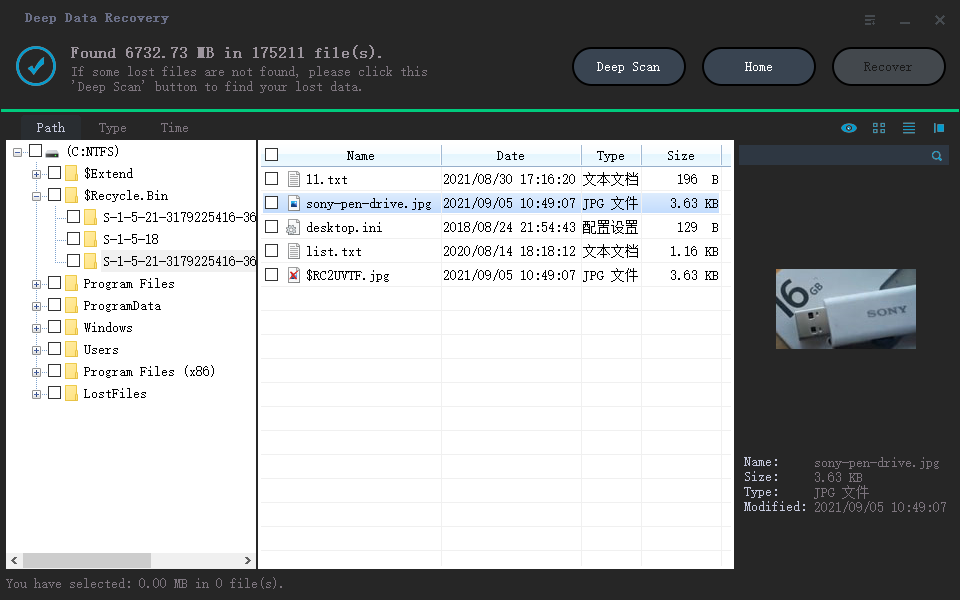
Next. Restore database file back to SQL Server
After restoring the MDF or NDF SQL database files, you can import it back to your database to see if you can run the Server or not. This process allows you to test and ensure the database is functioning correctly, and if any issues arise, you can troubleshoot and resolve them before proceeding with any further actions.
If yes, congratulations.
If the found database file may have corrupted, The MDF or NDF database file may also be corrupted, but it's not a cause for concern. If the database file is corrupted, it can be easily restored or recreated. The system can still function normally even with corrupted database files.
Professional Qiling MS SQL Recovery is a tool that can help you recover deleted records, including tables, queries, and procedures, as well as repair corrupted MDF or NDF database files, and retrieve deleted contents in just a few steps.
Plus: Qiling MS SQL Recovery fully supports the recovery of MS SQL Server databases from versions 2017, 2016, 2014, 2012, 2008, and earlier.
Step 1: Select the corrupted database for recovery
- Launch Qiling MS SQL Recovery.
- Click "Browse" or "Search" to select the corrupted database file.
- After selecting the file, click the "Repair" button to start the Analyzing process.
Note: To use this software, you need to stop the SQL Server service.
Step 2: Repair the corrupted database
- The software displays all recoverable items in a tree-like structure, with items shown in a left pane.
- To recover a desired component, select it from the window and click the "Export" button.
Step 3: Export to the database or as scripts
- You can choose to export the database objects to a database or export the items as scripts, depending on your specific needs and preferences. This allows for flexibility and customization in how you manage and utilize the database objects.
- To export data to a database, select the "Export to database" option, provide the necessary details, and choose the target database.
- A window prompts you to enter credentials to connect to the server and specify a destination to save the recovered items. To initiate the repair process, click "OK".
Note: To restart the SQL Server service, you need to click "OK" on the dialog box that appears after clicking "OK" on the previous dialog box. This will prompt a restart of the SQL Server service.
After restoring and repairing the database, you can save the database file as MDF/NDF back to SQL Server, allowing you to access and run the database again. This should enable you to get back to work with your business as usual.
Manual Methods to Recover SQL Database without Backup
To restore a deleted SQL Server database, you can use the following commands:
- DBCC CHECKDB (DATABASE_NAME) is a command used to check the entire database for any issues that may require repair. It can be executed in a command line or query, and is useful for identifying problems that may be affecting database performance or integrity.
- Repair data by allocating and deallocating rows, which may remove damaged text, rows errors, page and column errors, potentially resulting in data loss.
- The repair process is done quickly, but it only makes minor changes to the data.
- To recover a corrupted database table, use the DBCC CHECKTABLE command in the command line or query manager, specifying the table name. This command checks the table for errors and recovers it if possible.
Note: This manual way can only be performed within Microsoft SQL Server Management Studio.
To restore the deleted SQL database, you can run MS SQL Server Management Studio in your system and follow these steps:
Step 1. Go to the Toolbar, click on "New Query" button.
Step 2. On a new query page, enter the following SQL command:
EXEC sp_resetstatus [DATABASE_NAME];
ALTER DATABASE [DATABASE_NAME] SET EMERGENCY
DBCC CHECKDB ([DATABASE_NAME])
ALTER DATABASE [DATABASE_NAME] SET SINGLE_USER WITH ROLLBACK IMMEDIATE
DBCC DATABASE ([DATABASE_NAME], REPAIR_ALLOW_DATA_LOSS)
ALTER DATABASE [DATABASE_NAME] SET MULTI_USER
Step 3. Click "Execute" to start the recovery process.
"Wait patiently for the process to complete, as the longer it takes, the more severe the corruption in the database."
If the process doesn't work out well, you'll still need to turn to an automated method or SQL repair tool for help.
Tip: Create Regular Backups of MS SQL Server Database
To repair and restore a deleted SQL database, you can try using the methods in this guide, but they may not be enough to fully recover the database.
As a wise SQL administrator, it's essential to have a plan in place for regularly backing up your SQL database. You can opt for a manual approach or utilize automated SQL Server backup software to ensure your data is safely secured.
If you're unsure which SQL backup software to choose, consider Qiling Backup Advanced Server, which offers free SQL database backup in both manual and automatic modes.
Related Articles
- How to Rebuild Master Database in SQL Server
- How to Fix A Corrupted SQL Server Transaction Log File
- [Solved] MS SQL Server Database Corruption Repair
- MS SQL Repair Tool | Repair Corrupted MDF/NDF File
- Best Free Data Migration Software for Windows 7/10
Are you looking for the best free data migration software to transfer data from one location to another? Look no further! Here are 5 top-notch free data migration software tools that can help you migrate data quickly and efficiently. - Best Hard Drive Recovery Software - Free Download
If you accidentally delete or lost files from hard drive or formatted the hard disk, You can try the following guide for how to use hard drive data recovery software to recover data from hard drive on Windows or Mac OS.
Products
Articles & Tutorials
- Data Recovery
- Data Backup
- File Recovery
- File Backup
- System Backup and Restore
- Disk and Partition Clone
- Technical articles
- Mobile articles
- Disk Master Help
- Windows Data Recovery Tutorials
- Windows Secure Delete Tutorials
- Windows Partition Management Tutorials
- Windows File Backup and Restore Tutorials
- Windows System Backup and Restore Tutorials
- Windows Disk Backup and Restore Tutorials
- Windows Clone Tutorials