Recovered Files Won't Open or Not Opening
Why Recovered Files Not Opening
Many users experience issues opening recovered files after using third-party data recovery tools like Qiling data recovery, Deep Data Recovery, Qiling file recovery software, ZAR, or Stellar. Despite successful data recovery, some files remain inaccessible.
Recovering files is not always a guarantee that they can be viewed or opened. Various factors can prevent this, including corrupted file formats, incomplete recovery, or incompatibility with the original software used to create the file. This can apply to a range of file types, such as Word documents, JPEG images, videos, and emails, making it difficult or impossible to access the recovered content.
- File recovery failure (partial data were not restored correctly)
- File corruption
- File encryption (due to Virus/malware infection)
- Data overwriting
Troubleshoot Recovered Files Not Opening or Unreadable
To resolve these issues, it's recommended to identify the root cause and then apply the relevant solution to restore all files.
Fix File Recovery Failure - Use Another Reliable File Recovery Software
When recovering incomplete files with software like Deep Data Recovery, Stellar, Qiling file recovery software, or other tools, you may encounter difficulties opening the recovered files. In such cases, you can try to open the files with a hex editor like HxD or a text editor like Notepad++, which may allow you to view the contents, or you can attempt to repair the file with a tool like the Microsoft System File Checker (SFC) or the built-in Windows System File Checker, which may help restore the file's integrity and make it usable again.
- To use the software effectively, make sure you are using it in the right way.
- To recover a corrupted or deleted file, first, try to identify the cause of the issue. If the file is corrupted, you can try to open it with a different software or version.
Deep Data Recovery can assist with issues of 'recovered files not opening or recovered files can't error on all Windows versions, including 10/8.1/8/7/XP and Vista. This tool allows you to scan and restore lost files in just 3 simple steps.
Step 1. Run Deep Data Recovery. Select file types and click "Fast Scan" to start.
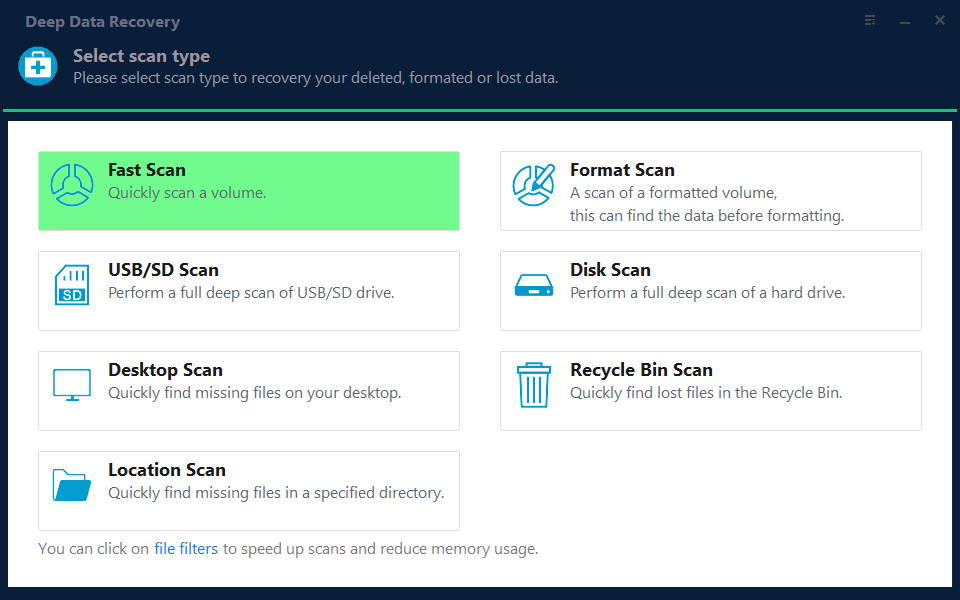
Note: You can choose different search modes based on where and why the data was lost.
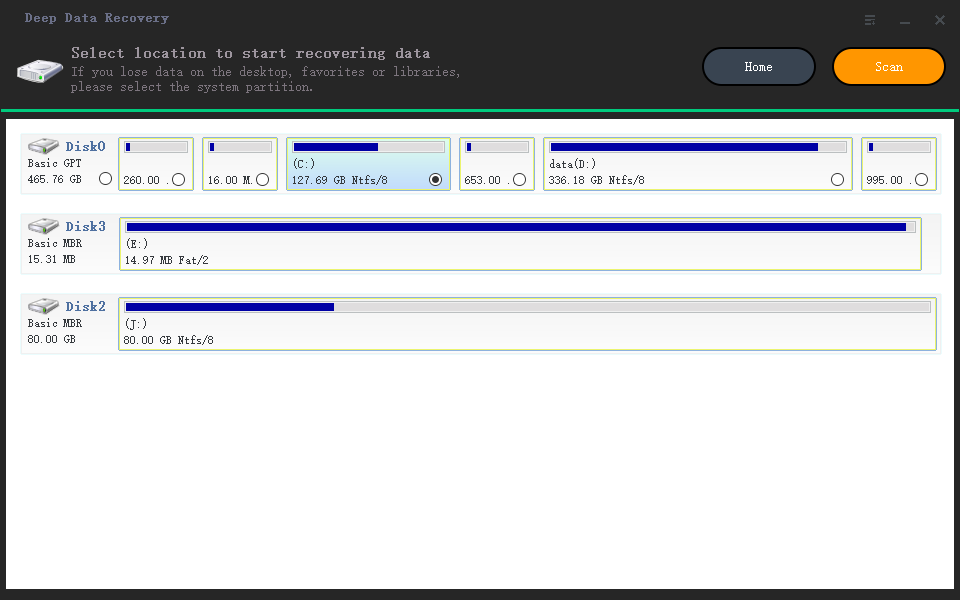
Step 2. Launch Deep Data Recovery in Windows, choose the place where the data was lost, and click "Scan" to start the recovery process.
Step 3. After scanning, use the file format filter to locate the desired files. You can then click the "Preview" button or double-click a file to view its content.
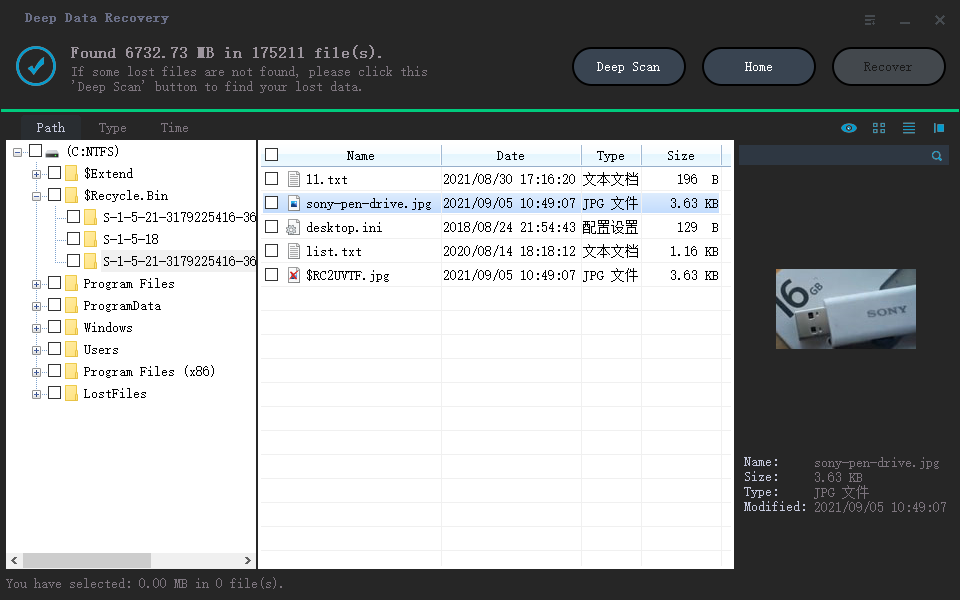
Step 4. To recover lost data, select the file you want to recover, check the box next to it, and click "Recover" to save it to a secure location.
If you've taken the right steps to recover files, but they still won't open, it's likely that the files have been fragmented or corrupted. This can happen when the recovery process itself causes further damage to the files.
- Tip
- 1. If Qiling file recovery software can't recover all of your lost files, please email support@idiskhome.com with the details of your issue.
- Qiling data recovery experts will contact you and help to resolve your problem as soon as possible.
- 2. Save recovered files to another secure device to prevent further damage or overwriting.
Fix File Corruption - Apply File Repair Tool for Help
When recovered files are corrupted, you can't open them by simply clicking. To fix this, use a reliable file repair tool like Qiling, which not only recovers data but also repairs corrupted files after recovery, ensuring the recovered files can be opened automatically.
Qiling data recovery program supports comprehensive file repair solutions. For instance:
- Repair corrupted Word files
- Repair corrupted Excel or Word documents for various reasons
- Fix multiple broken files at the same time
- Preview the repaired files for free
- Repair damaged files from various storage devices, including PCs, laptops, external hard drives, SD cards, and USB flash drives.
Qiling data repair software can repair corrupted Excel files, helping to fix the issue of recovered sheets not opening. The software takes you through a series of steps to recover your data, allowing you to fix corrupted Excel files and access your recovered sheets.
Step 1. Run Deep Data Recovery. Select file types and click "Fast Scan" to start.
Note: You can choose different search modes based on where and why the data was lost.
Step 2.To recover corrupted files, launch Deep Data Recovery, select a disk location where the files are saved, and click "Scan" to start the process. Qiling's file repair tool can fix damaged documents, videos, and pictures in various formats.
Step 3. After scanning, you can quickly find corrupt data by file type. This allows you to select and repair damaged files of specific categories such as Documents (Word, Excel, PDF), Pictures, or Videos (JPEG, PNG, BMP, MOV, MP4, GIF, etc.).
Step 4.Qiling file repair software automatically fixes broken files, allows preview of repaired files before recovery, and recovers files by clicking "Recover" and saving them to a different location to avoid data overwriting.
Fix File Encryption - Clean Virus and Decrypt Files with
If you lost an encrypted file, after recovery, you can decrypt it with your password. However, if your files were encrypted by a virus, you should immediately disconnect from the internet, seek professional help, and consider formatting your device to prevent further damage.
Step 1. Run virus cleaner software to remove viruses from your PC and storage devices. You can use free antivirus software or virus removal tools like Free Antivirus, Virus Removal Software, etc. to clean up the virus.
Step 2. Use file decryption tools or software for help.
If you're having trouble opening a file, there are various tools that can help decrypt it. Some of these tools include 7-Zip, WinRAR, WinZip, File Explorer, Notepad, WordPad, Microsoft Excel, Google Drive, Dropbox, OneDrive, ZIP, RAR, ISO, BIN, IMG, TAR, GZ, XZ, CBR, CBZ, 7Z, LZH, LHA, ARC, ARJ, HJSplit, HxC, MagicISO, WinISO, UltraISO, PowerISO, Daemon Tools, Alcohol 120%, MagicDisc, Virtual CloneDrive, Free ISO Burner, PowerArchiver, PeaZip, Keka, Bandicam, Camtasia, Snagit, IrfanView, XnView,
- McAfee Ransomware Recover
- File Encrypt Decrypt
- EncryptOnClick
- Decryption Tool
Data Overwritten - Restore Overwritten Files
When files are overwritten by a new file, they can no longer be opened or restored using normal file recovery software.
Fortunately, you may still have the last chance by restoring it from the previous version or restoring the overwritten file by performing System Restore, as detailed in the guide on how to recover overwritten files.
The Bottom Line
If your recovered files won't open, don't panic! We've identified the common reasons behind this issue, such as file corruption, incorrect file type, or incomplete recovery. To resolve each problem, try running the file through a repair tool, checking the file type and ensuring it's compatible, or using a data recovery software like Deep Data Recovery for a second chance at recovering your lost files.
If you're unable to recover files from a damaged drive, you can try using Qiling file repair software to fix corrupted files. Alternatively, if the recovered files are corrupted or damaged and can't be opened, this software can also help repair them effectively.
Recovered Files Not Opening FAQs
If you're experiencing issues with recovered files not opening or Qiling data recovery files not opening, you can find more information and guides on the topic by checking the relevant sections and resources.
Can't open recovered files from Qiling?
Qiling data recovery files may not open after recovery due to various reasons. The causes could be related to the file system, the recovery process itself, or the way the recovered files are being accessed. For example, the file system might be corrupted, the recovery software might have encountered an error, or the recovered files might be in a format that's not compatible with the system or software being used to access them.
- The lost file itself has been damaged
- Physical damage or bad sectors in the storage device
- The file contents are overwritten with other data
- The damaged file system on the storage device
You can solve Qiling recovered files not opening in different ways. You have the option of either fixing the files themselves or the storage device where they are stored.
Why recovered files cannot be opened?
The recover files can't be opened if one or more of the following conditions occur:
- Data recovery doesn't complete or fails.
- The files have been corrupted or damaged before recovery.
- The files have been encrypted due to a virus or malware infection.
- New data has overwritten the files.
- The storage device is experiencing issues due to physical damage or bad sectors, which are affecting its functionality.
Can't open recovered Word files?
After recovering your data, if you're unable to open the recovered Word files, you can use Qiling's file recovery and repair tool to help you out. This program can repair corrupted Word files during the recovery process, eliminating the need to look for additional Word file repair software.
How do I open recovered files?
You can open the recovered files in the way below:
- Double-click the file on your computer to open it in its default application.
- To open a file in an application, first open the application, then go to the File menu, and select Open.
Can corrupted files be recovered?
In some cases, corrupted files can be recovered and fixed using a professional file repair program. However, if recovery is not possible, the file may need to be deleted and replaced with an earlier saved version.
Related Articles
- How to Recover Lost Data after Disk MBR to GPT Conversion
- 7-Zip Data Error Fix (4 Methods)
- Data Recovery Software Full Version Free Download (in 2022)
- Pen Drive Recovery: Pen Drive Data Recovery Software Full Version Free Download
- Solid State Drive Data Recovery: How to Retrieve Your Lost Files
How can you make Solid State Drive data recovery? In this article, we will explore the world of SSD data recovery and guide you on how to retrieve your lost files effectively. - [Answered] Where Do Deleted Files Go on PC/Mac/Android/iPhone
Where do deleted files go on a computer, Mac, Android phone, or iPhone? You'll get the answers here. You can recover deleted files with Qiling data recovery software on Windows and Mac with simple steps.
Products
Articles & Tutorials
- Data Recovery
- Data Backup
- File Recovery
- File Backup
- System Backup and Restore
- Disk and Partition Clone
- Technical articles
- Mobile articles
- Disk Master Help
- Windows Data Recovery Tutorials
- Windows Secure Delete Tutorials
- Windows Partition Management Tutorials
- Windows File Backup and Restore Tutorials
- Windows System Backup and Restore Tutorials
- Windows Disk Backup and Restore Tutorials
- Windows Clone Tutorials