Full Guide on SATA Hard Drives
The tech world is full of storage devices with confusing acronyms, making it difficult to keep track of them all. While shortening technical terms and gadgets may save time, it's common to feel overwhelmed by the numerous abbreviations.
Serial Advanced Technology Attachment (SATA) is the acronym of the day. SATA stands for Serial Advanced Technology Attachment, and it's a type of interface used by hard drives to connect to motherboards in computers. SATA drives are a common type of hard drive found in many everyday consumer gadgets, offering a faster and more efficient way of storing and accessing data compared to classic hard disk drives.
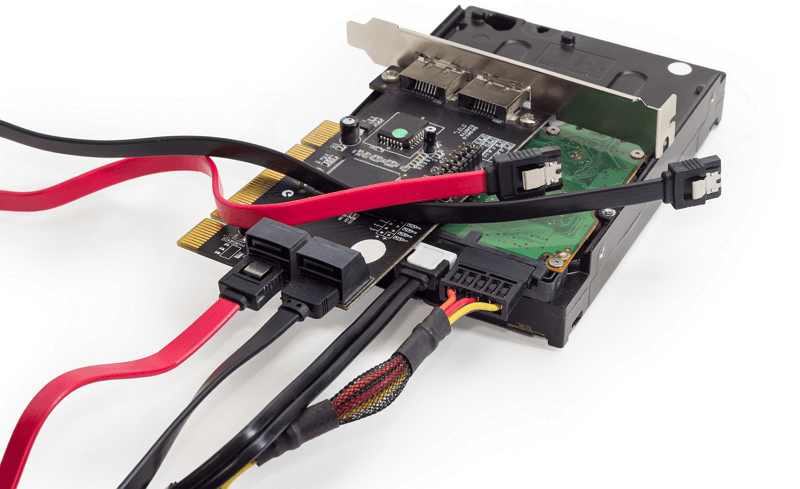
The basics of SATA drives include how they function, why they're utilized, and how they compare to other standard storage options. SATA drives are a type of storage technology that allows for the connection of hard drives and solid-state drives to a computer system.
What Is a SATA Hard Drive (Definition)
SATA (Serial Advanced Technology Attachment) is a connection type that allows data to be transferred between a hard drive and a processor. It is commonly used in personal computers, notebooks, and workstations, as well as some video game systems, such as the PlayStation 3 and 4, and Xbox 360 and One, thanks to collaborations with Microsoft and Sony.
SATA devices come in various sizes, depending on their primary use, with 3.5-inch drives often referred to as desktop drives and smaller form factor drives used in laptops.
Laptop SATA hard disks typically measure 2.7 inches in diameter, 0.37 inches in height, and 3.96 inches in length. 2.5-inch disk disks are the common name for them.
The History Of SATA Hard Drives
Parallel ATA (PATA) interface hard drives were the primary storage option before SATA drives were introduced, with a slower and bulkier design compared to modern SATA hard disks.
SATA Version 1.0: PATA drives can write at a speed of 66 to 133 megabytes per second, which is significantly slower than SATA drives, which can write at 600 megabytes per second, a six-fold increase in performance.
SATA Version 2.0: The Serial ATA Working Group, a non-profit association of leading computer firms, published the initial SATA drive standards in 2000.
SATA Version 3.0: The Serial ATA International Organization has produced many variations of SATA technology since its introduction in 2000, and the system remains useful in 2018 as it was then.
SATA Hard Drives VS. SSDs
HDDs and SATA-SATA-enabled solid-state disks, also known as SATA SSDs, are the primary type of SATA-enabled hard drives. They perform similarly to traditional hard disk drives (HDDs) in most respects.
SATA-enabled HDDs and SSDs differ significantly in their data storage methods. While HDDs take a bit longer to boot, their SATA transfer rates are the same as SSDs. However, HDDs typically have a three- to four-year lifespan and are often troubled by maintenance problems, making them less reliable than SSDs.
Compared to hard disk drives (HDDs), solid-state drives (SSDs) have a relatively short lifespan of around ten years at best, but they make up for this with significantly faster performance, boasting quicker startup times and read/write rates.
HDDs are less expensive than SSDs, with prices for the same storage roughly halved.
5 Best SATA Hard Drive Data Recovery Tools
Even though you don't have a backup, data recovery software for hard drives may still be able to retrieve your contents. Various hard drive recovery software solutions are available that can potentially recover data from a corrupted hard disk.
1. Deep Data Recovery
Supported OS: Mac and Windows
Deep Data Recovery is a trusted tool that has simplified the data recovery process, making it accessible to the general public, without the need to read a long handbook to understand the menu items.
To start the data recovery process with Deep Data Recovery, first choose a storage device to scan, such as a hard drive or memory card, or select a specific folder like the Recycle Bin. Once you've made your selection, click Scan and wait for the program to locate your lost or deleted data.
Pros
- Makes data recovery accessible to anyone
- Let users sort and filter deleted files
- Reliable data recovery performance
Cons
- Only supports 2GB data recovery for free
- Includes unrecoverable files alongside recoverable files
How to Recover Deleted/Lost Data from SATA Hard Drives
To recover lost files on your hard drive, download and run Qiling hard drive data recovery software. This software can help you retrieve lost data from your hard drive.
Step 1. Select file types
Launch Deep Data Recovery, select the desired file types, and click "Fast Scan" to initiate the recovery process.
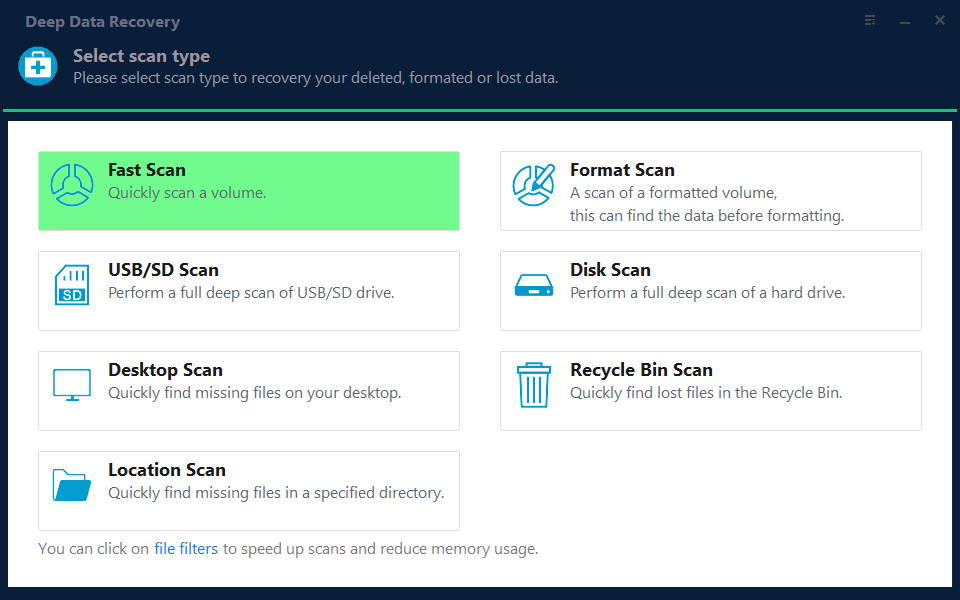
Note: You can choose different search modes based on where and why the data was lost.
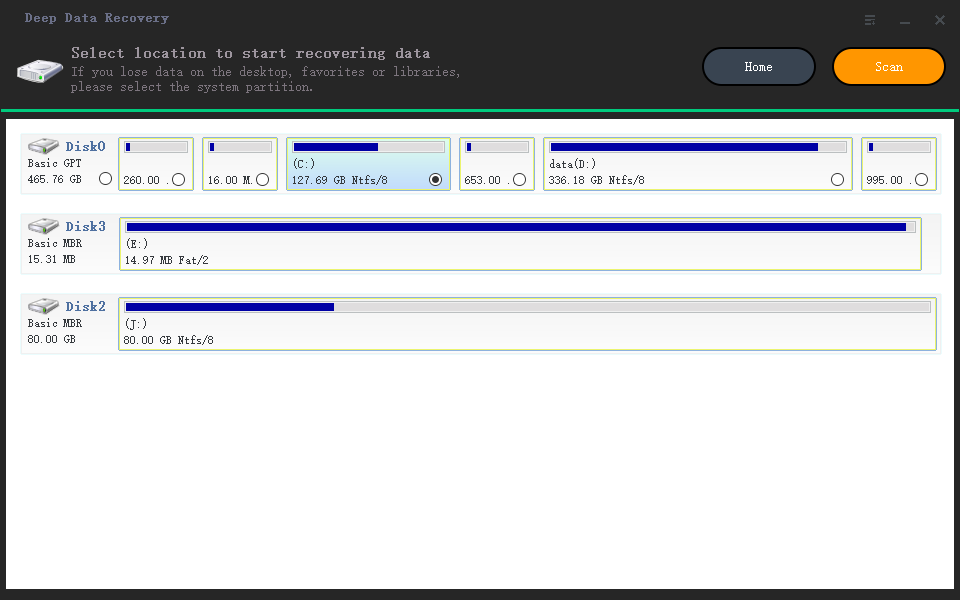
Step 2. Scan the hard drive partition
To recover lost or deleted files, select the drive on your hard disk where the files were lost, then click "Scan" to let the Qiling data recovery software scan for all lost data and files on the selected drive.
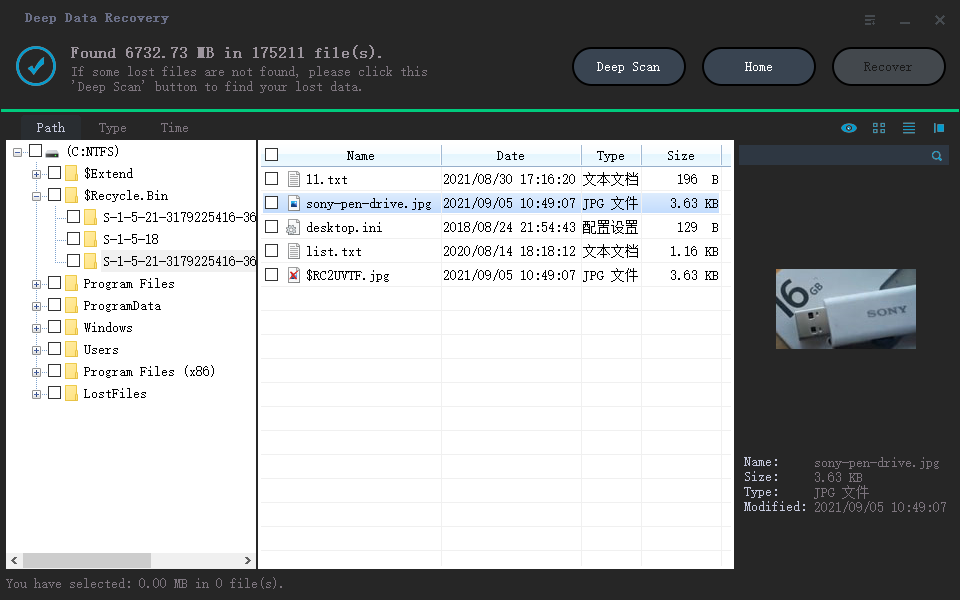
Step 3. Check the results
After the scan is finished, you can apply filters or search for files and folders to locate the lost files on the hard drive.
Step 4. Restore lost hard drive data
Select the files you want to recover and click on the "Recover" button to save them to a safe location.
2. Recuva
Supported OS: Windows
You can use Recuva to recover lost or deleted files, including photos, audio, and movies, from various devices such as your computer's hard drive, memory cards, floppy drives, iPod or MP3 players, and USB flash drives.
While Recuva is our top pick due to its affordability, user-friendly interface, and ease of use, it successfully recovered only about two-thirds of the lost data during my test. To be on the safe side, I recommend at least checking out the free version.
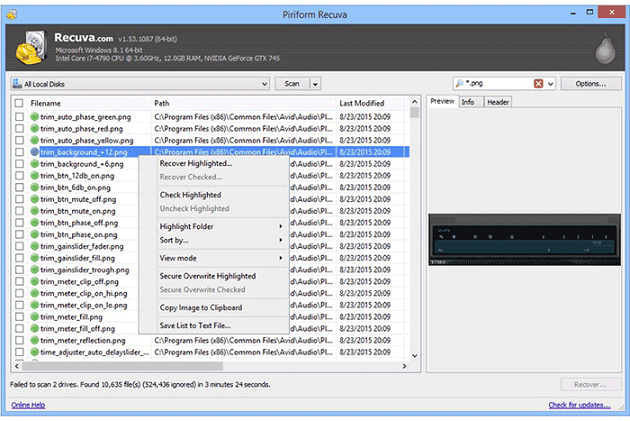
If you're looking for a file recovery tool, Stellar Phoenix Windows Data Recovery is a good option. It can locate and recover files without requiring additional software. The tool is user-friendly and suitable for non-technical individuals, but those who prefer a more advanced performance may prefer Ontrack EasyRecovery, which has a less intuitive interface.
Pros
- Preview screen
- Beautifully clear interface
- Free version
Cons
- May not recover too many files
- Lags sometime
- It may not be as user-friendly
3. TestDisk
Supported OS: Windows, Mac, and Linux
TestDisk is not suitable for recovering a single file that has been accidentally deleted, as it is designed to recover entire file systems and partitions, not individual files. (self-contained and concise)
A data recovery tool can restore access to deleted data by fixing partition layouts and repairing boot sectors, among other functions.
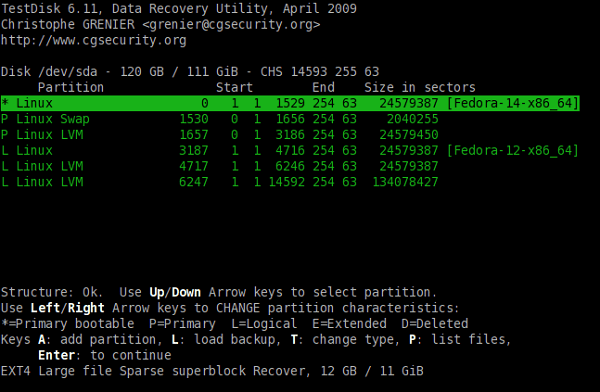
TestDisk can undelete files from various file systems, including FAT, exFAT, NTFS, and ext2/ext3/ext4, but this feature is hidden in the advanced menu and retrieving individual files can be challenging due to the inability to preview data before recovery.
Pros
- Free and open-source
- Broad operating system
- Capable of recovering many different filesystems
Cons
- Repairs damaged partitions and file
- Lacks an intuitive graphical user interface
4. Stellar Data Recovery Software
Supported OS: Windows and Mac
Stellar Data Recovery is a professional-grade data retrieval program designed to handle even the most severely damaged or unbootable systems, making it a reliable solution for recovering lost data.
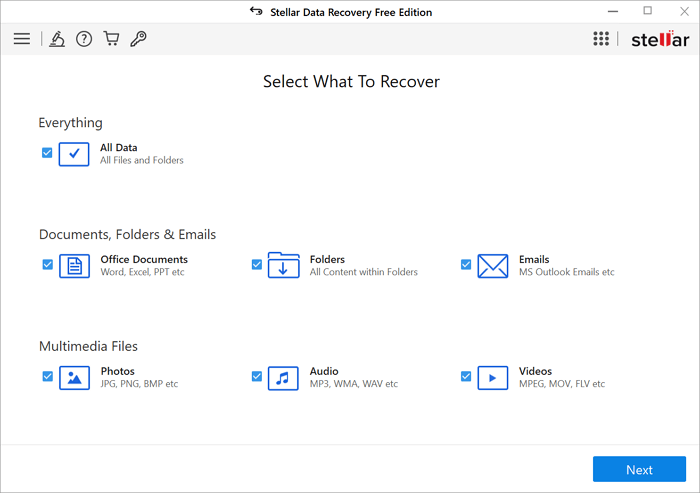
This data recovery program supports file systems for ExFAT and FAT (FAT16/FAT32) and works with various storage media, including USB flash drives, memory cards (SD, Micro SD, CF), and more.
Pros
- Useful preview feature
- Easy-to-use
- Support for a wide range of storage devices
Cons
- Glitchy store device selection
- Slow scan and recovery speed
- Relatively expensive
5. R-Studio
Supported OS: Windows, Mac, and Linux
R-Studio is primarily designed for experts who already have a working knowledge of data recovery techniques. It supports data files and partition design techniques, and can handle damaged or deleted partitions.
R-Studio enables users to run multiple data recovery tasks concurrently in separate tabs, unlike other software that guides users through the process step-by-step.
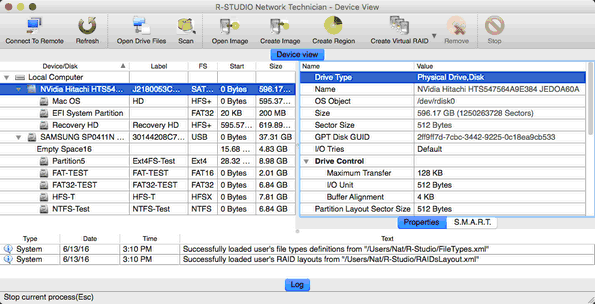
You can sort retrieved data by file extensions, creation time, and other characteristics, and use the built-in hex analyzer to inspect the quality of a document or conduct a partial recovery.
Pros
- Disk sanitization feature
- Available as a bootable ISO image
- Advanced features for data recovery professionals
Cons
- Can preview only limited file formats
- Doesn't display scan results while scanning
- Not suitable for non-technical users
Conclusion
Data recovery tools may not always be necessary to recover lost data, as some cases of data loss can be resolved with simple troubleshooting and recovery methods.
You can recover data using your operating system's built-in capabilities or software like Qiling data recovery software, especially after a computer crash or virus attack.
Related Articles
- 5 Ways | How to Fix Data Error Cyclic Redundancy Check
- How to Repair PDF File Using Acrobat? 2022 Adobe PDF Repair Tool
- [Fixed] Windows 11/Windows 10 Preparing Automatic Repair Loop
- Best Way to Store Digital Photos Long Term
- 4 Methods To USB Drive Recovery [2023]
You can recover a USB flash drive on a Mac or Windows PC, and this page will guide you through the process in 2023. Below, you'll find a safe and effective way to retrieve your USB files. - How to Recover Deleted Photos from WhatsApp on Computer
WhatsApp Photo Recovery allows you to recover deleted photos from WhatsApp in just 3 simple steps: install the software, scan for deleted photos, and recover them on both your computer and phone.
Products
Articles & Tutorials
- Data Recovery
- Data Backup
- File Recovery
- File Backup
- System Backup and Restore
- Disk and Partition Clone
- Technical articles
- Mobile articles
- Disk Master Help
- Windows Data Recovery Tutorials
- Windows Secure Delete Tutorials
- Windows Partition Management Tutorials
- Windows File Backup and Restore Tutorials
- Windows System Backup and Restore Tutorials
- Windows Disk Backup and Restore Tutorials
- Windows Clone Tutorials