Remove Virus That Automatically Delete Files
About Virus That Automatically Delete Files
The CIH virus, also known as the Chernobyl virus, is a type of virus that automatically deletes files and erases core system code, posing a significant threat to certain types of computers.
How to Protect Files from Virus That Automatically Delete Files
When you can't open a file or folder by double-clicking as usual, be cautious - you might be dealing with a virus! Many people are reporting that the virus deletes files when they try to open them, and seeking an effective solution for virus file recovery.
If you're experiencing issues with files on your USB stick turning into shortcuts and being deleted when double-clicked, it's likely due to a virus. To remove the virus, try using an antivirus software to scan your USB stick and delete any infected files. You can also try booting your computer in Safe Mode and then running a virus scan. Additionally, make sure to avoid opening any suspicious files or clicking on any pop-ups that may be trying to install malware. If the issue persists, consider formatting your USB stick to start fresh. It's also a good idea to use a reputable antivirus software to protect your computer from future infections.
How to Recover Files from Virus That Deletes Files
The computer and laptop virus is not only loathsome and disgusting, but also extremely dangerous. It can cause significant harm to your system, slowing down its performance and deleting all your important files. What's even more alarming is that it can encrypt files, making it extremely difficult to retrieve them. This can have devastating consequences, making it essential to take immediate action to protect your device from such malicious threats.
If a virus deletes files when you try to open them, you can recover the files using the command prompt or a third-party file recovery software. These methods can be effective in retrieving the deleted files.
Deep Data Recovery is a software that specializes in recovering deleted or hidden data from various storage devices, including hard drives, USB drives, SD cards, and more, after they have been affected by a virus.
Step 1. Select file types and click "Fast Scan" to start
Run Qiling virus file recovery software on your Windows PC, select file types, and click "Fast Scan" to start the recovery process.
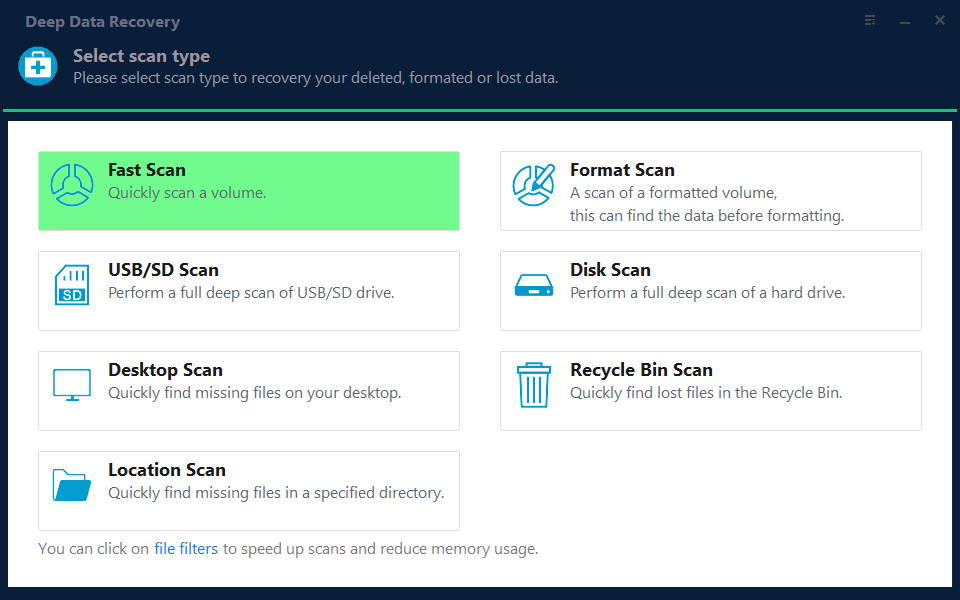
Note: You can choose different search modes based on where and why the data was lost.
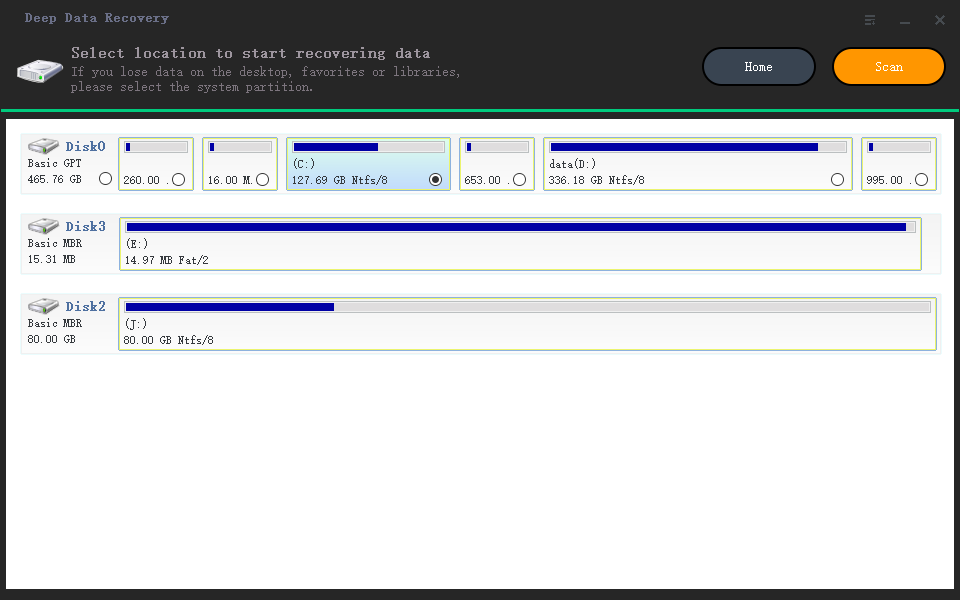
Step 2. Select the virus infected drive to scan
To scan for lost or hidden files, select the disk affected by the virus and use a file recovery tool to search for and retrieve any missing files. This process can help recover lost data, but be aware that it may not be able to recover files that have been intentionally deleted or overwritten.
- If the issue is with a hard drive (HDD) where files were hidden or deleted by a virus, it's recommended to install the software on a separate volume or an external USB drive to prevent overwriting of existing data.
- If the infected device is an external hard drive, flash drive, or memory card, it's okay to install the software on the local drive of the computer.
Step 3. Check all scanned results
Deep Data Recovery will start a scan process to find deleted or hidden files on a virus-infected hard drive. To quickly locate files, users can use the "Filter" or "type grouping" feature to display specific file types, such as pictures, videos, documents, or emails.
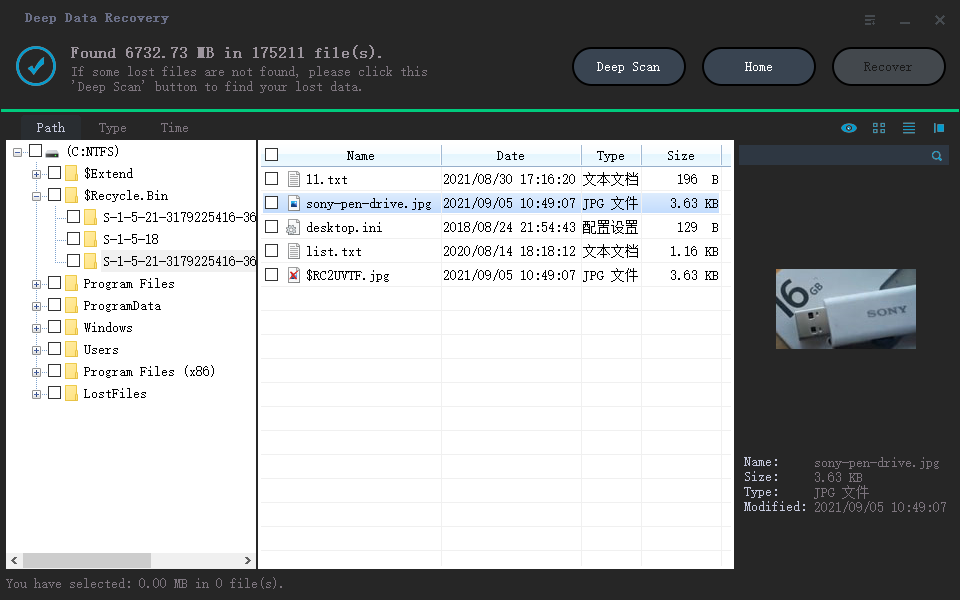
Step 4. Preview and recover deleted/hidden files
After the scanning process is complete, you can preview the recovered files. Select the desired files and click the "Recover" button. It's essential to save the recovered files to a different, secure location on your computer or storage device, rather than the original location where they were lost. This ensures the recovered files are not overwritten or lost again.
How to Remove Virus That Automatically Delete Files
After protecting and restoring your files, it's time to take action against the virus. Look for a powerful antivirus software to install and consider using the Command Prompt (cmd) to remove the virus from any drive in Windows 10, 8.1, 8, or 7.
Follow the detailed guide to remove virus that deletes everything
To remove the autorun.inf virus from your USB drive (D:), you can use the following steps: Open Command Prompt as administrator, navigate to the USB drive (D:), and use the command "del autorun.inf" to delete the virus. If the virus is causing issues, you can also try using a tool like Autorun Scanning Tool or Malwarebytes to scan and remove the virus.
1. Right-click on Start and select Command Prompt (Admin).
Sign in with your Administrator account and password if the system asks.
2. Type: D: and hit Enter. (Replace D: with the drive letter where the virus files exist.)
3. Type: attrib and hit Enter.
4. Type: attrib -r -a -s -h *.* and hit Enter.
5. Type: del autorun.inf and hit Enter.
Manual execution of the command line is not recommended for non-professionals, as it can cause more harm than good. Instead, Qiling CleanGenius is a user-friendly tool that allows users to check and fix file system errors, enable/disable write protection, and update their system with a single click, making it a more secure and user-friendly alternative.
To show hidden files using this 1-click-fix software, follow these simple steps:
Step 1. DOWNLOAD Qiling CleanGenius for Free.
Step 2. Start Qiling CleanGenius, choose "Optimization" on the left panel. Next, click "File Showing" on the right panel.
Step 3. Select the hard drive and click "Execute".
Step 4. After the operation completes, click the here link to check the hidden files.
Virus That Automatically Delete Files FAQs
1. Is Autorun a virus?
Autorun.inf is a virus that spreads through infected external devices, destroying files and replicating itself, making it difficult to remove.
2. Can a virus delete all your files?
Viruses can be very troublesome, causing issues such as deleting important files, making data inaccessible, converting files to shortcuts, and even destroying your system. However, you don't have to panic as there are ways to remove the virus that deletes files. In fact, if your files have been deleted, you can also recover them using a virus recovery program.
3. How to recover files eaten by virus?
If you encounter a virus that automatically deletes files, you can recover files eaten by the virus using Qiling virus recovery software in three steps.
Step 1. Launch Deep Data Recovery, select the disk partition where the deleted files are located, and click the "Scan" button to begin the process.
Step 2. When scanning for lost files, you can have a preview before selecting them.
Step 3. Choose the files to recover you want.
4. How to remove the Blackmail virus that deletes files?
A blackmail virus is set to delete files, and to remove it, you need to clean your networks of a malicious mass-mailing computer virus before compromised systems reach the first trigger date and start deleting eleven types of files.
5. How do I remove auto delete virus?
To remove a virus that automatically deletes files, use the following CMD. After this, use anti-virus software to remove the virus completely.
Step 1. Right-click on Start and select Command Prompt (Admin).
Step 2. Type D: and hit Enter. Replace D: with the drive letter where the virus files exist.
Step 3.Type attrib and hit Enter.
Step 4. Type attrib -r -a -s -h *.* and hit Enter.
Step 5. Type del autorun.inf and hit Enter.
6. Is it better to quarantine or delete a virus?
Removing viruses is crucial for maintaining your computer and data security. You can use the Command Prompt (CMD) and anti-virus software to effectively remove the virus and prevent any further damage.
Related Articles
- Windows 10 Startup Folder Location, How to Change Startup Programs
- 3 Ways to Recover Deleted or Lost Torrent Files
- [Solved] Recover Corrupted or Invalid ZIP Files
- How to Fix Runtime Error 1004 in Excel
- How to Fix Dell No Hard Drive Detected Error
If your Dell laptop is experiencing the frustrating “no hard drive detected” error, there are solutions. This article provides 5 fixes to help you resolve the issue and get your Dell laptop up and running again. - Ultimate Guide on SD Card Recovery in 2022
Recover deleted photos, videos, and files from SD cards used in digital cameras. Learn safe recovery methods for Windows, Mac, and Android.
Products
Articles & Tutorials
- Data Recovery
- Data Backup
- File Recovery
- File Backup
- System Backup and Restore
- Disk and Partition Clone
- Technical articles
- Mobile articles
- Disk Master Help
- Windows Data Recovery Tutorials
- Windows Secure Delete Tutorials
- Windows Partition Management Tutorials
- Windows File Backup and Restore Tutorials
- Windows System Backup and Restore Tutorials
- Windows Disk Backup and Restore Tutorials
- Windows Clone Tutorials