How to Recover Corrupted Macro Enabled Excel File with Top 5 Ways
Question: You can try recovering a corrupted Microsoft Excel macro-enabled workbook by using the built-in "Repair" feature or by opening it in a text editor, such as Notepad, to extract any recoverable data. If the file is severely damaged, you may need to use a specialized data recovery software or contact a professional data recovery service.
| Workable Solutions | Step-by-step Troubleshooting |
|---|---|
| Fix 1. Open and Repair | On the File tab, click Open. Browse the location...Full steps |
| Fix 2. Set the Calculation to Manual | Create a new blank Excel file by File > New...Full steps |
| Fix 3. Use External References | Click File > Open > right-click on the folder...Full steps |
| Fix 4. Open in Wordpad | If Wordpad can open your Excel file with macro...Full steps |
| Fix 5. Recover Macros | Open Excel> Set the calculation...Full steps |
Overview of An Excel File Get Corrupted
When an Excel workbook fails to open due to various errors, it's likely that the file has become corrupted. This can occur for a number of reasons, including sudden power outages, software or hardware issues, or other unforeseen circumstances.
- Error #1. Excel cannot open the file
- Error #2. Microsoft Excel is not responding
- Error #3. The file is corrupted and cannot be opened
How Does An Excel File Get Corrupted?
A corrupted Excel file can occur due to various reasons such as power outages, virus attacks, or software conflicts. If your Excel file is corrupted, you can try recovering it by using built-in Excel features or third-party recovery tools. In Windows 10, you can also use the built-in File Recovery feature to scan your hard drive for corrupted files, including Excel files. Additionally, you can try using online Excel recovery services or seeking professional help from Microsoft Support if the file is critical.

The macro-enabled Excel file may be corrupted even if it can be opened normally in Excel, potentially affecting data, formulas, and macros stored within the workbook.
What's Macro in Microsoft Excel?
The Macro feature is available in various versions of Excel, including Excel for Microsoft 365, Excel 2019, Excel 2016, Excel 2013, Excel 2010, and Excel 2007.
To automate repetitive tasks in Microsoft Excel, you can record a macro that captures your mouse clicks and keystrokes, allowing you to run the same actions multiple times with ease. This process involves creating a macro, which can then be edited to make minor adjustments to its functionality. By doing so, you can streamline your workflow and save time by eliminating the need to manually perform repetitive tasks.
What's Macro Enabled Excel (.xlsm) File?
Microsoft provides an example where a user creates a report for their accounting manager every month. To format the names of customers with overdue accounts, the user wants to apply red and bold formatting to the cells. A macro can be created and run to quickly apply these formatting changes to the selected cells.
When creating a workbook in Excel 2007 or later, enabling macros changes the file extension from .xlsx to .xlsm. This distinction is key, as .xlsm files can execute embedded macros written in Visual Basic for Applications (VBA), whereas .xlsx files cannot.
Is Macro Good for Everyone to Adopt?
We don't need to turn on macros for daily work, as it poses a significant security risk and can cause files to become corrupted, unless we're sure what the macros do and want the specific functionality they provide.
How Do I Fix A Corrupted Macro Enabled Excel File?
Microsoft Excel can automatically repair minor corruption in a file, but more severe damage may require further troubleshooting.
The macro enabled file is an XLSM file, while a regular Excel file is an XLSX (from Excel 2007) or XLS (earlier versions like Excel 2003). Restoring a corrupted macro enabled Excel file is similar to recovering a corrupted XLSX or XLS file. In Windows 10, 8.1, 8, and 7, five methods can be helpful for recovering a corrupted macro enabled Excel workbook.
Way 1. Use the Open and Repair Tool
- To open a corrupted macro-enabled workbook, go to the File tab, click Open, and navigate to the location and folder containing the workbook.
- In the Open dialog box, select the corrupted workbook that you want to open. Once you have selected the workbook, click on the "Open" button to attempt to open it.
- To repair the file, click the arrow next to the "Open" button and select "Open and Repair" from the dropdown menu.
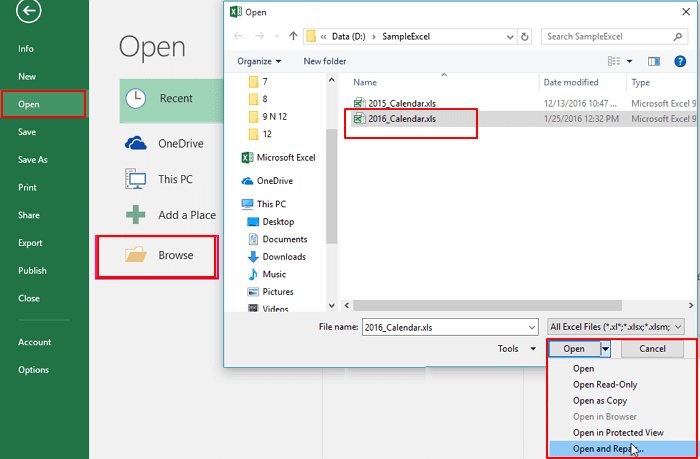
You can choose between Repair and Extract Data options based on your specific needs. Which one would you like to proceed with?
- To recover as much of the workbook data as possible, click Repair.
- To extract values and formulas from the workbook when an attempt to repair the workbook is not successful, click Extract Data.
Way 2. Set the Calculation Option in Excel to Manual
- To create a new blank Excel file, go to the menu, select "File", then click on "New" and choose "Blank workbook".
- Click on File and then Options.
- In the Formulas category, under Calculation options, select Manual and then click OK.
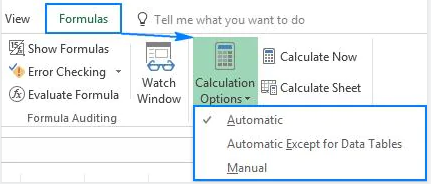
- To open a corrupted workbook, go to File > Open, locate the corrupted workbook, and then double-click it to open it.
Way 3. Use External References to Link to the Corrupted File
This method involves extracting data from a corrupted Excel file that has been enabled with macros, without retrieving formulas or calculated values.
- Click File and go to Open.
- Right-click on the folder that contains the corrupted workbook.
- Click Copy, and then click Cancel.
- To start, click on the "File" tab at the top left corner of the Excel window. From the dropdown menu, select "New" to create a new workbook.
- To recover data from a corrupted workbook, first, copy the corrupted workbook to a new workbook. Then, in the new workbook, in cell A1, type an Excel formula that references the corrupted workbook, such as =File Name!A1, where File Name is the name of the corrupted workbook without the file extension, and press Enter.
- If the "Update Values" box appears, click "OK" on the corrupted Excel.
- If the Select Sheet dialog box appears, choose the appropriate sheet and click "OK".
- Select cell A1 and click Home and then Copy.
- Select an area in your current workbook, starting from cell A1, that is roughly the same size as the range of cells that contain data in the corrupted workbook. This will help you to easily import data from the corrupted workbook into the current one.
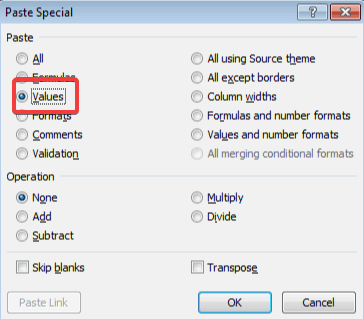
- Click Home and Paste.
- To copy all selected cells again, click on the "Home" tab and then select the "Copy" option from the toolbar.
Way 4. Open the Corrupted Workbook in Wordpad
Trying to open a corrupted Excel file in Word can help, but the results will be limited. Using Wordpad may be a better option for corrupted macro-enabled Excel files, as it can provide better results than Word.
If Wordpad can open your Excel file with macro enabled, you can recover important data stored in the file as well as the VBA procedures (macros), which can be found by searching the recovered text for Sub and Function.
Way 5. Recover Macros from the Corrupted File
If you're still unable to recover macros after trying the previous methods, you can proceed with the last ultimate guide to recover macros, which may be able to help you recover your data.
- Open the Microsoft Excel application
- Set the calculation option to Manual. The guide is in Way 2.
- To enable the High security option for macros in Excel, go to the Tools menu, select Security, and choose the High option. Alternatively, in Excel 2007, click the Office button, select Excel Options, and choose Trust Center. Click the Trust Center Settings button, select Macro Settings, choose Disable All Macros Without Notification, and click OK twice.
- If Excel opens the corrupted workbook, it will display a message that the macros are disabled. If Excel shuts down, this method will not work.
- Press Alt+F11 to open the Visual Basic Editor (VBE).
- To export a module, right-click on it in the Project Explorer, which can be accessed by pressing Ctrl+R, and select the "Export File" option from the context menu. This will allow you to save the module as a file.
- Enter a name and folder for the module.
- To export all the modules, repeat the process of right-clicking each module and selecting "Export File" as many times as necessary, for each module that needs to be exported.
- Close the VBE and exit Excel.
- Open a new blank workbook (or the newly constructed workbook that contains recovered data from the corrupted workbook) and import the modules.
How to Prevent Corruption Issues in Microsoft Excel 2003/2007/2013/2016/2019...
- Automatically save a backup copy of a workbook
- Automatically create a recovery file at set intervals
To ensure 100% security for our Excel work, we should focus on preventive measures. This includes taking real-time backups and keeping an auto-recover copy to protect against file corruption, loss, and other risks such as careless deletion, disk formatting, virus infection, and interrupted file transfers.
To ensure the integrity of your data, it's essential to take care of your massive data files. Besides knowing how to apply the top five ways to deal with a corrupted file with or without macro enabled, it's also necessary to find a trustworthy and powerful Excel file recovery program for lost, deleted or unsaved Excel files.
Deep Data Recovery is the top-recommended free file recovery software, ideal for recovering lost documents, pictures, videos, emails, and other file types when data loss occurs.
How to Recover Excel Files That Were Lost, Deleted, Formatted or Virus Infected:
Step 1. Choose file types and click "Fast Scan" to start
Launch Deep Data Recovery, select the desired file types, and click "Fast Scan" to initiate the recovery process.
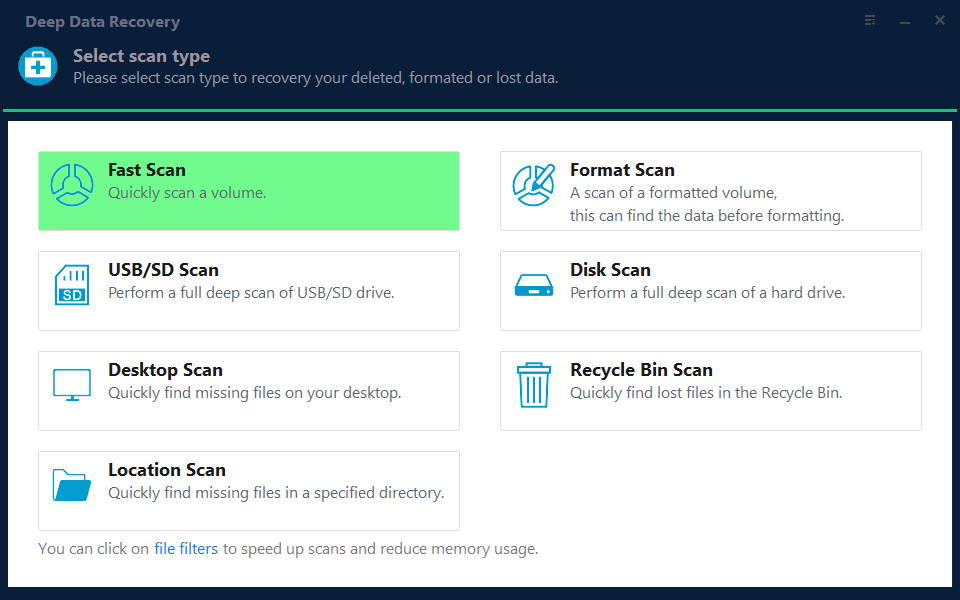
Note: You can choose different search modes based on where and why the data was lost.
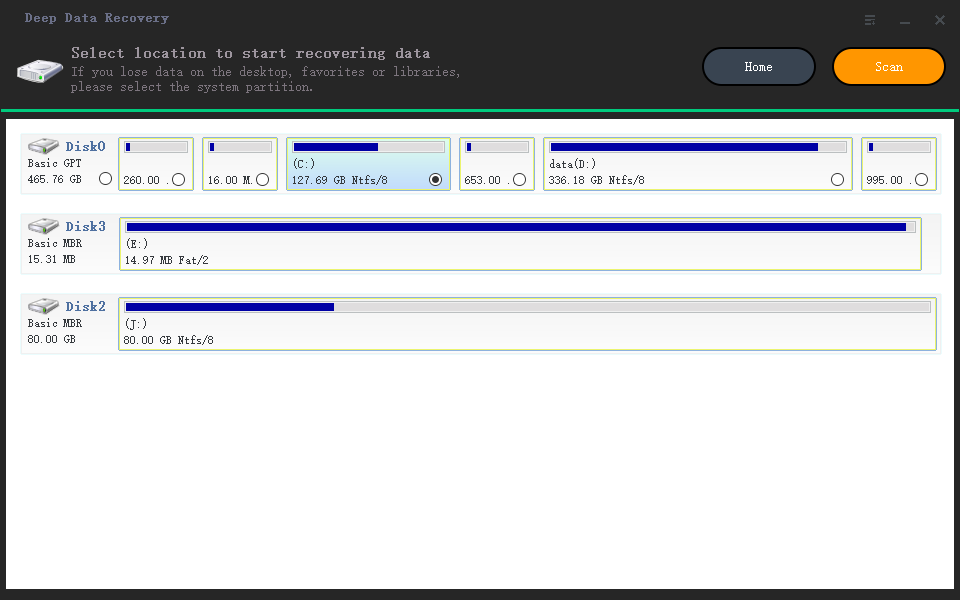
Step 2. Select location and click "Scan"
Choose the drive or a specific folder on Desktop or somewhere else where you lost the excel files, and click the "Scan" button to start the recovery process.
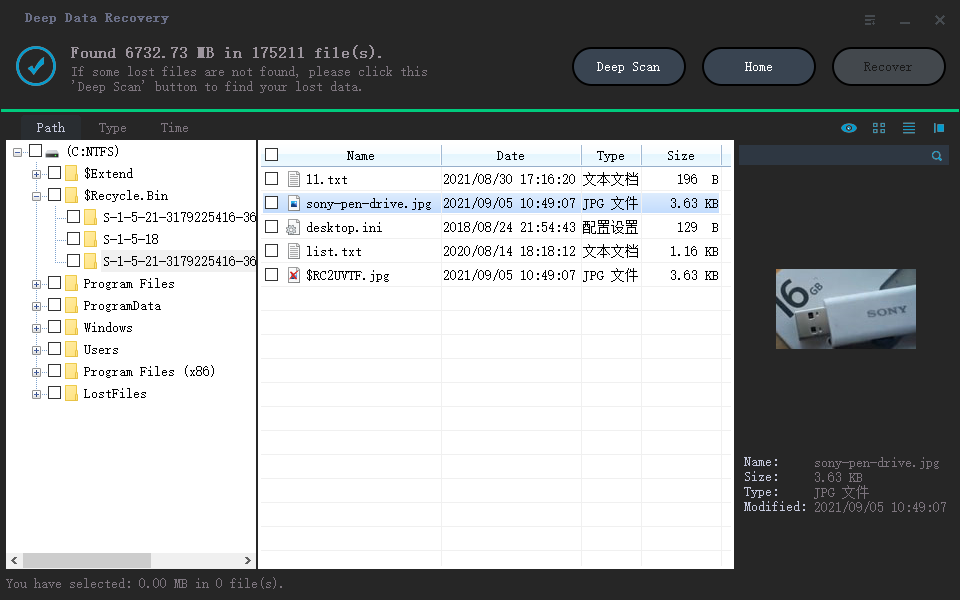
Step 3. Locate your excel files
To quickly find the Excel files from the scan results, click "Documents" in the left panel, select "Excel", and click "Preview" to verify the files.
Step 4. Recover Excel files
Select the desired Excel files, click the "Recover" button, and choose a folder to save the files to another location.
Related Articles
- Fixed: Restart to Repair Drive Errors on Windows 10
- How to Recover Deleted Files by Date/Time
- How to Remove/Delete Directory in Linux
- How to Tell if Your Computer Is 32 or 64 Bit Windows 10 [Full Ways]
- How to Fix "Can't Convert to Dynamic Disk" Error [Step-by-Step Guide]
Fix the cannot convert to dynamic disk error with four practical methods and learn why Windows may block disk conversion. - How to Solve 'Can't Delete Partition on SD Card' [100% Working Solutions]
If you're experiencing issues with deleting a partition on your SD card in Windows, this article can help. It explains why Disk Management may not allow you to delete the partition on your SD card and provides solutions to make space available on your SD card.
Products
Articles & Tutorials
- Data Recovery
- Data Backup
- File Recovery
- File Backup
- System Backup and Restore
- Disk and Partition Clone
- Technical articles
- Mobile articles
- Disk Master Help
- Windows Data Recovery Tutorials
- Windows Secure Delete Tutorials
- Windows Partition Management Tutorials
- Windows File Backup and Restore Tutorials
- Windows System Backup and Restore Tutorials
- Windows Disk Backup and Restore Tutorials
- Windows Clone Tutorials