How to Recover Data from SD Card Formatted As Internal Storage
On this page, you'll learn about the causes of data loss on an SD card formatted as internal memory on an Android phone, how to recover data from such an SD card, and why people need to and what happens when they format an SD card as internal memory.
To recover lost data from an SD card, first, stop using the card to prevent overwriting the data. Then, download and install a reliable data recovery software, such as Deep Data Recovery or Disk Drill.
- How to Recover Data from SD Card Formatted As Internal Memory
- Why Do you Want to Format SD Card As Internal Storage
- What Happened to SD Card If Formatted As Internal Memory
Causes of Data Loss on SD Card Formatted as Internal Memory
When adopting an SD card as internal memory, it's encrypted and data is completely erased. If you didn't back up photos or important files on the SD card, you can use data recovery software to retrieve erased data.
Using an SD card as permanent storage can also lead to data loss due to its limited lifespan. As the card is used for frequent read/write operations, its performance will degrade over time, making it more susceptible to data loss and corruption. This is in addition to the risk of losing data due to the lack of backup, making it essential to have a reliable backup plan in place to safeguard your important files.
It'll become slow, corrupt, as a result, data is inaccessible.
How to Recover Data from SD Card Formatted As Internal Memory
To recover data from a formatted SD card or access data from a slowly corrupted SD card, Deep Data Recovery - a professional hard drive data recovery software - can make it possible.
To recover data from your SD card, you first need to decrypt it so that Windows can recognize it. Since the card is encrypted, you'll need to format it as portable, then follow the tutorial below to recover your data.
#1. Decrypt SD Card from Android Internal Memory
- To access storage settings on your phone, navigate to Settings, then select Storage, and finally choose Storage Settings.
- Tap Format as portable
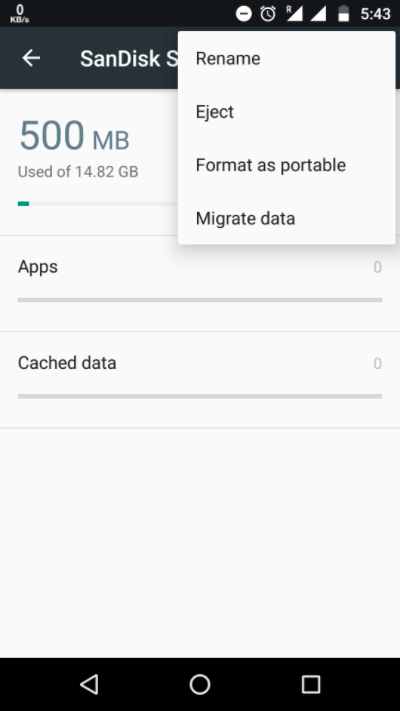
- Tap "Format".
Safely unmount the SD card from your Android after making it portable again.
#2. How to Recover Data from Formatted SD Card
To recover your files from the SD card, download and install the trial version of Qiling disk data recovery software on your computer. Then, connect the SD card to the Windows system using a card reader. Follow the software's simple guide to recover your files.
Here are the detailed steps to recover data from an SD card formatted as internal storage:
Step 1. Choose file types and click "Format Scan" to start
- Download and install Deep Data Recovery on your Windows PC.
- Use the proper way to connect your SanDisk/Lexar/Transcend SD card to the computer.
- Open Qiling SD card recovery software, select the desired file types, and click "Format Scan" to initiate the recovery process.
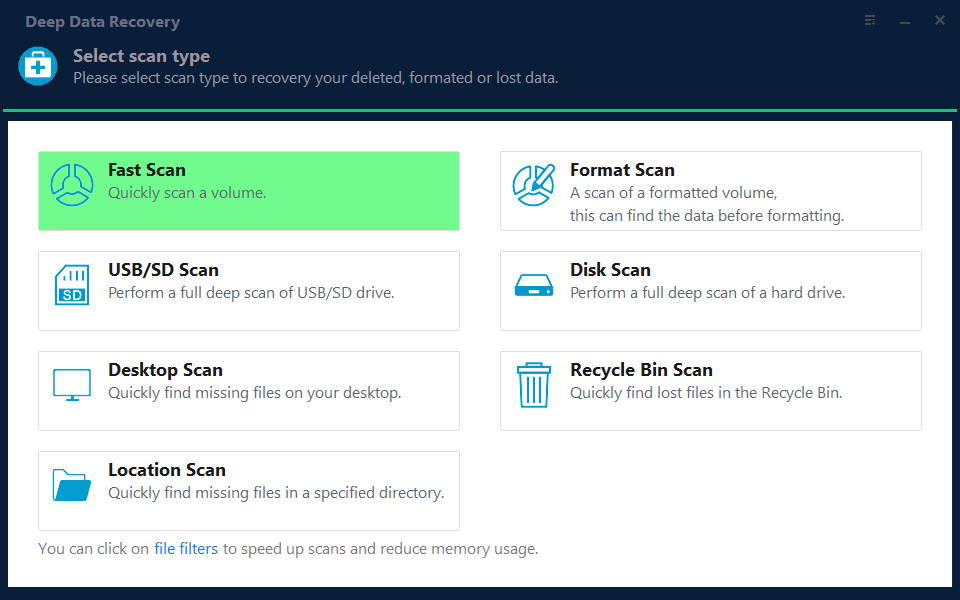
Note: You can choose different search modes based on where and why the data was lost.
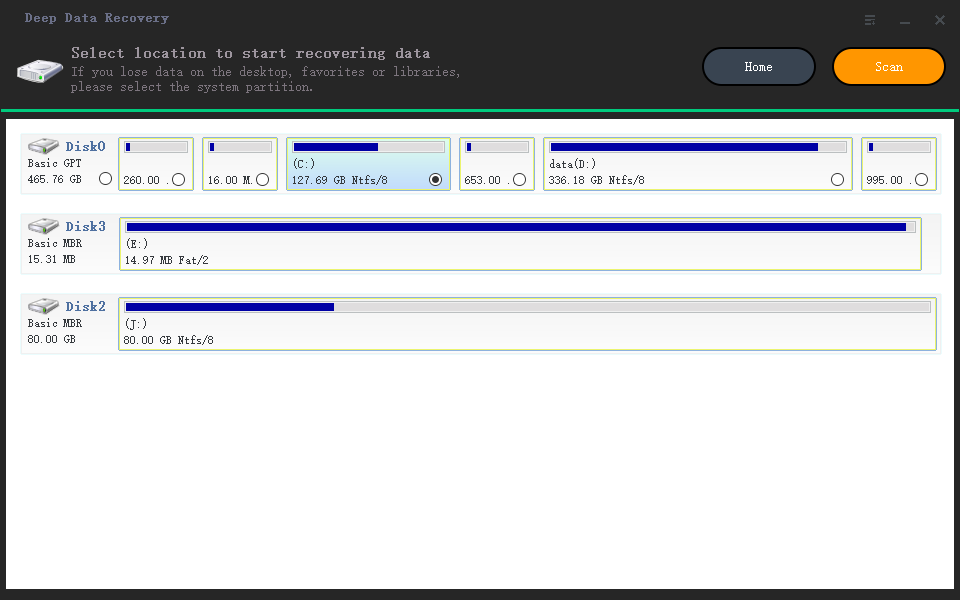
Step 2. Select the SD card to scan
- Select the SD card you want to recover data from and click "Scan" to start the scanning process.
Step 3. Check for scan results
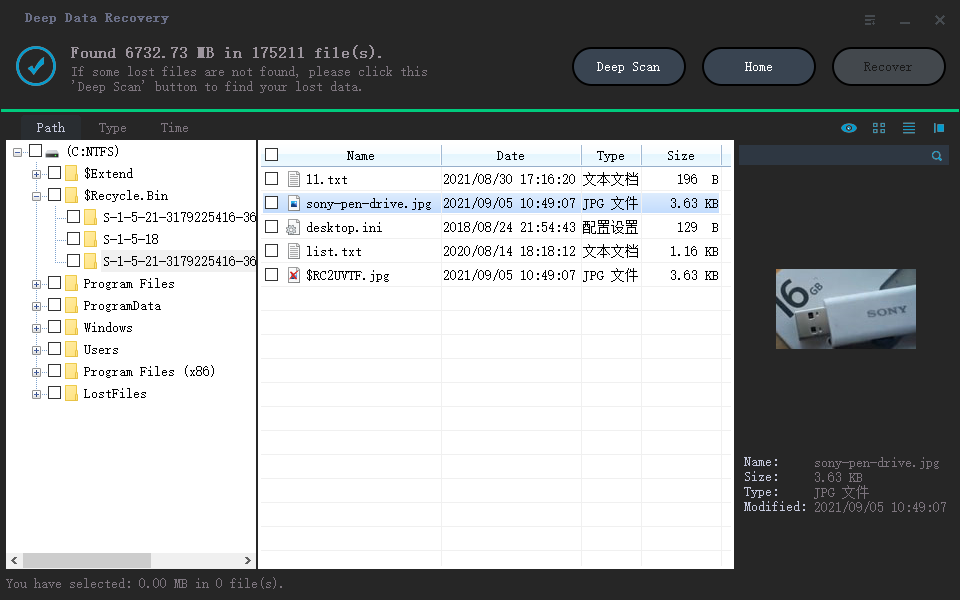
- Wait for the scanning process to complete.
- To narrow down the search results, click on the "Filter" button and select one or multiple file types from the list, such as Pictures, Word documents, Excel files, PDFs, Videos, and more.
- Click "Preview" to check if they are the wanted files.
Step 4. Recover SD card data
- Choose desired files and click "Recover".
- Choose a different location to save the recovered files instead of the original SD card.
Consult with Qiling Data Recovery Experts for a one-on-one manual recovery service, which includes a free diagnosis. After the diagnosis, we could offer various services such as.
- Repair corrupted RAID structure, unbootable Windows OS and corrupted virtual disk file (.vmdk, .vhd, .vhdx, etc.)
- Recover/repair lost partition and re-partitioned drive
- Unformat hard drive and repair raw drive (BitLocker encrypted drive)
- Fix disks that become GPT protected partitions
Why Do You Want to Format SD Card As Internal Storage
Formatting an SD card as internal storage means that it will be treated as part of the device's internal memory, allowing you to store apps, files, and data directly on the card, rather than on the device's internal storage. This can help free up internal storage space and provide more room for apps, photos, and other data. It's a way to effectively increase the device's internal storage capacity by using the SD card as an extension of the device's internal memory.
Android devices treat the SD card as part of the internal storage pool, allowing apps to be installed and data to be stored on it, similar to internal storage.
What Happened to SD Card If Formatted As Internal Memory
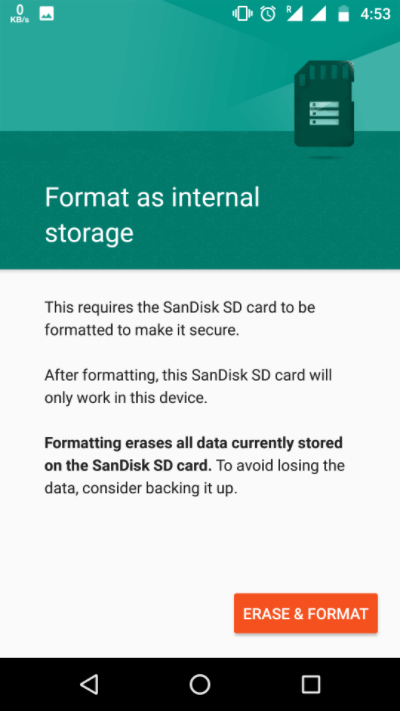
- Your Android phone erases all data on the SD card
- Android formats and changes the regular FAT32/exFAT format to ext4 or f2fs, which are more suitable for internal storage. This allows for better performance and more efficient use of storage space.
- Your SD card is encrypted, so it can't be mounted on another Android device.
Android's internal memory can be expanded using external storage, but this is not permanent. The good news is that Android allows users to expand their internal memory using external storage, such as an SD card or USB drive.
For Android phones with 4GB to 8GB of internal storage, space can quickly fill up with app installations. With Android 6.0 Marshmallow's Adoptable Storage feature, users can expand their internal storage by installing a removable SD card, which can be used to store apps, unlike traditional use for photos, songs, and videos.
To use an SD card as internal storage on an Android device, the card must be formatted, which erases all existing data. It's recommended to back up the data before formatting.
How to Format/Use SD Card As Internal Storage on Android
1. Go to "Settings", and then select "Storage & USB".
2. At the bottom of the list, you should see the SD card's details, including the option to format it and make it "Internal" storage.
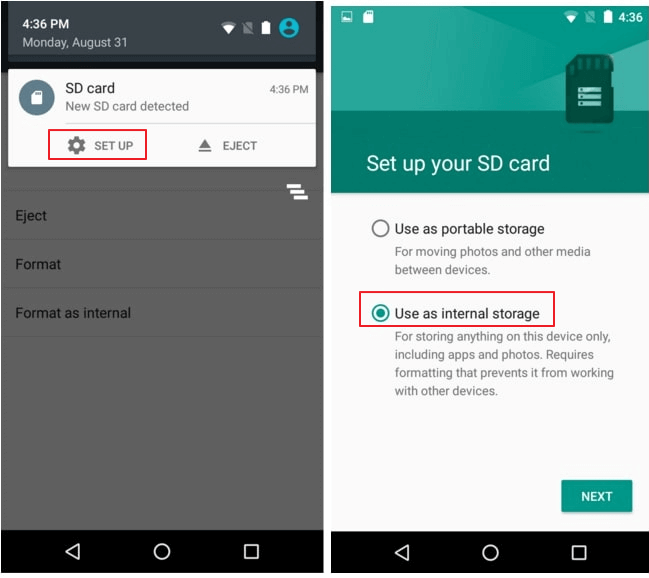
3. Once you've copied the contents of the SD card to the computer, you can remove the SD card from the device, and then reboot the device. After it's rebooted, you can start running things from the card.
- Tip
- If a micro SD card is not detected in a device, the formatting procedure may become stuck. Clicking on the provided link can lead to further instructions on how to resolve this issue.
Related Articles
- Fixes for Windows 10 Corrupt/Crash in Boot
- How to Fix/Remove Bad Image Error Windows 10
- 4 Ways to Fix Windows System Backup Failed in Preparing the Backup Image
- Delete OS from A Hard Drive
- How to Solve Can't Delete Volume on USB [100% Working Solutions]
Are you facing issues of can't Delete Volume on USB in Windows? This article discusses the issue of why Disk Management does not delete the volume on USB and provides appropriate solutions with proper guidelines so that you can make space in your USB drive. - Can't Read From the Source File or Disk? Find Your Solutions Here
If you're experiencing the 'can't read from the source file or disk' error while opening or copying a file, it's a solvable issue that won't harm your file. This error can be resolved using various solutions, which are discussed in the article below.
Products
Articles & Tutorials
- Data Recovery
- Data Backup
- File Recovery
- File Backup
- System Backup and Restore
- Disk and Partition Clone
- Technical articles
- Mobile articles
- Disk Master Help
- Windows Data Recovery Tutorials
- Windows Secure Delete Tutorials
- Windows Partition Management Tutorials
- Windows File Backup and Restore Tutorials
- Windows System Backup and Restore Tutorials
- Windows Disk Backup and Restore Tutorials
- Windows Clone Tutorials