Break Windows 10 Roll Back Limit - Roll Back to Windows 7/8 after 30 Days
Are you feeling regret for having not created system backup image when you updated Windows 7 or Windows 8 to Windows 10? Now it's already 30 days later or even months later, you are unable to rollback to Windows 7 or Windows 8 again.
There is no one-size-fits-all answer, as the best method for rolling back to Windows 7/8 will depend on your specific situation and the software you're using. However, some effective methods for rolling back to Windows 7/8 include using a Windows installation disc, using a Windows recovery tool, or using a third-party software solution. It is also a good idea to back up your data before attempting to roll back to an earlier version of Windows.
Backup Windows system and data first
To avoid unexpected system failure or data loss due to a Windows 10 downgrade issue, it's recommended to back up your current Windows system and important data.
Qiling Backup is a free professional Windows backup software that allows you to simply backup your wanted data, partition, or even system within 30 days. With just a few simple clicks, you can complete all backup jobs, and you can download the software for free to start backing up your data and system now.
Step 1. Launch Qiling Backup on your computer, and click System Backup on the home screen.
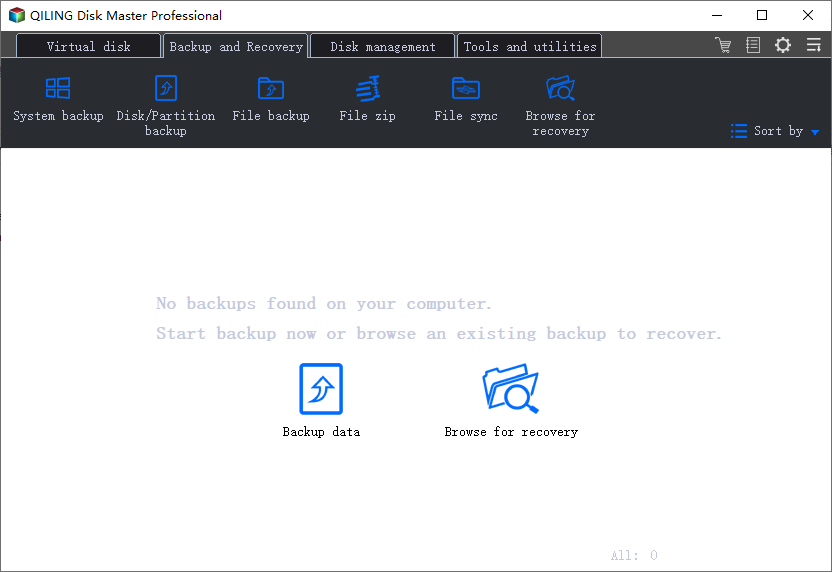
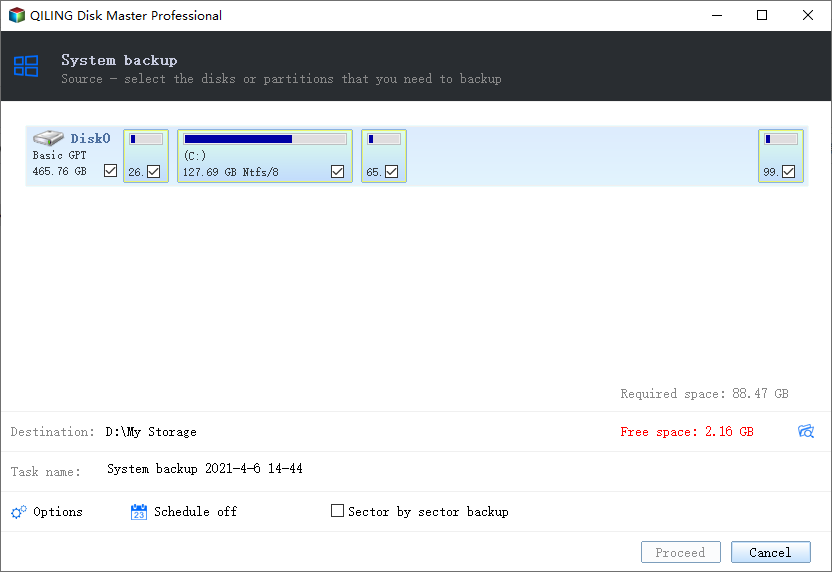
Step 2. During this step, your Windows operating system information and all system-related files and partitions will be automatically selected, so you won't need to manually select anything. Next, you'll need to choose a location to save the system image backup by clicking on the illustrated area.
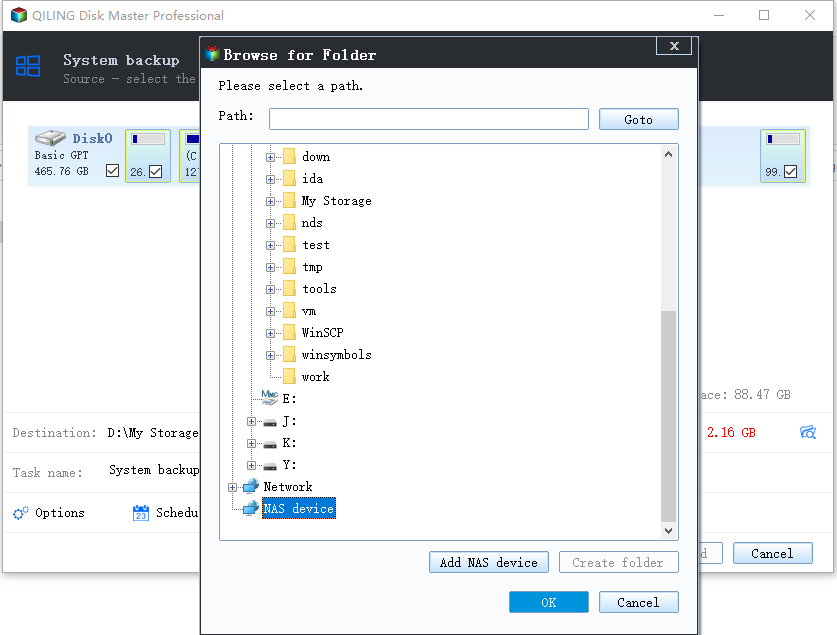
Step 3. The backup location can be another local drive, external hard drive, network, cloud, or NAS, and it's recommended to use an external physical drive or cloud to preserve system backup files.
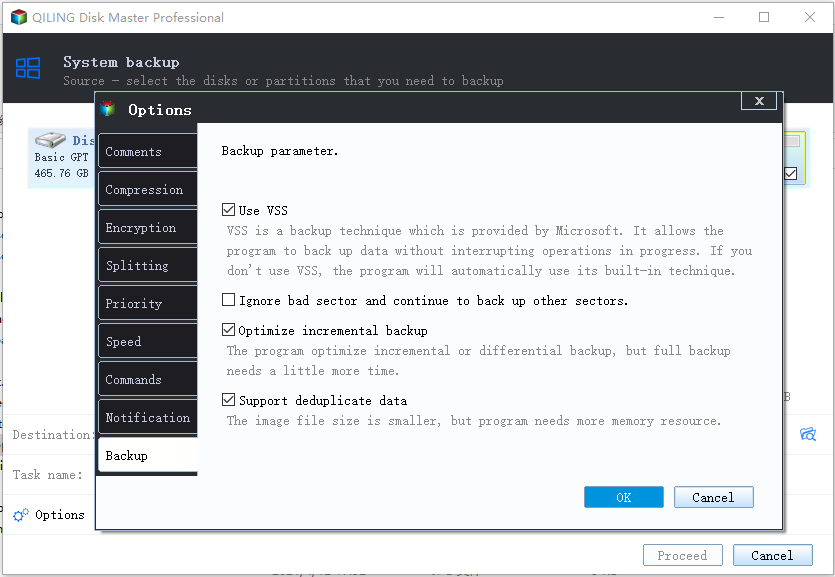
Step 4. To customize your Windows system backup, click on the "Options" button. Here, you can set up automatic backup schedules, such as daily, weekly, or monthly backups, or even trigger a backup upon a specific event. You can also choose to make differential and incremental backups. Once you've set your preferences, click "Proceed" to initiate the backup process.
After completing the system downgrade task, you can use Qiling Backup to restore data backups to Windows 7 or 8 and continue using them again. This allows you to roll back to Windows 7 or 8 after the 30-day limit.
Downgrade Windows 10 to Windows 7 or 8 after 30 days
There are four methods available. Carry out the one best suited to your needs.
Method 1. Roll back to Windows 7/8 on 31 day
This is true that if you just happen to update to Windows 10 for a month if you start right now, you can still have a chance (which shall be your last chance) to downgrade Windows 10 to Windows 7/8 directly:
To go back to Windows 8.1 or Windows 7, go to Settings, then tap Update and Security, and click Recovery. Tap Get Started under Go Back to Windows 8.
Wait patiently for the old Windows 7 or 8 to be restored to your computer.
Method 2. Change folder name within 30 days and roll back to the previous system after 30 days with ease
This method requires you to change some folder names within 30 days after updating to Windows 10, allowing you to roll back to a previous system like Windows 7 or Windows 8 without any limits after the 30-day period.
Solution 1. Rename the folders: $Windows.~BT, $Windows.~WS, and Windows.old to Bak-$Windows.~BT, Bak-$Windows.~WS, and Bak-Windows.old respectively.
If you rename the Windows.old folder to something else, Windows 10 will not be able to delete it because it's looking for the original name.
If you need to rollback after 30 days, you can simply rename the folders back to their original names and follow the steps outlined below to restore the original settings.
Solution 2. To go back to Windows 8.1 or Windows 7 from Windows 10, go to the "Settings" app, then select "Update & security", followed by "Recovery", and finally click on "Go back to Windows 8.1 or Windows 7".
To backup and downgrade the system, backup three folders (AppData, Program Files, and Windows) to an external drive with their original names. When you need to downgrade, copy these three folders back and then follow the downgrade process to restore the system.
Method 3. Uninstall delete Windows 10 after 30 days so to roll back to Windows 7/8
This method is suitable for Windows 10 users who have only updated once, from Windows 7 or 8 to Windows 10. If you've updated multiple times, it may not work. However, if you've only updated once, you can uninstall and delete Windows 10 to roll back to Windows 7 or 8 within 30 days.
To reset your device, go to Settings, then Update & security, followed by Recovery, and select Get Started. From there, choose Restore factory settings.
The Restore factory settings option will erase all personal files, apps, and settings, and reinstall the original version of Windows that came with the PC.
Method 4. Roll back to Windows 7 or 8 by performing a clean install
If you've updated to a later Windows 10 build or failed to roll back to Windows 7 or 8 using the methods above, your best option is to perform a clean installation of Windows 7 or Windows 8. This will give you a fresh start and allow you to install the operating system from scratch.
You can download the Windows 7 or Windows 8 ISO files or installing patches directly from the Microsoft Windows page, and then perform a clean install on your PC.
If the original installation was Windows 7, check the available paths back from Windows 10 to Windows 7 before wiping the disk.
Related Articles
- Fix Kernel Security Check Failure Error in Windows 10/8/7
- Upgrade Windows 10 from Home to Pro Edition for Free
- How to Restore Missing Downloaded Files Steam
- Fix: There Was a Problem Resetting your PC in Windows 10/8.1/8
- RAR vs ZIP. What Is The Difference Between ZIP and RAR?
The article explores the differences between ZIP and RAR files, two popular compression formats used to reduce the size of digital files. - eSATA External Hard Drive: Everything You Should Know
In this article, we will discuss what is eSATA external hard drive and its pros and cons. Besides, you can get some recommendations for eSATA external hard drives.
Products
Articles & Tutorials
- Data Recovery
- Data Backup
- File Recovery
- File Backup
- System Backup and Restore
- Disk and Partition Clone
- Technical articles
- Mobile articles
- Disk Master Help
- Windows Data Recovery Tutorials
- Windows Secure Delete Tutorials
- Windows Partition Management Tutorials
- Windows File Backup and Restore Tutorials
- Windows System Backup and Restore Tutorials
- Windows Disk Backup and Restore Tutorials
- Windows Clone Tutorials