Fix Kernel Security Check Failure Error in Windows 10/8/7
The Kernel Security Check failure with BSOD (Blue Screen of Death) error in Windows 10/8 can be caused by various factors, including corrupted system files, driver issues, or hardware problems. To resolve this issue, you can try running the System File Checker (SFC) tool to scan and replace any corrupted system files, or use the DISM (Deployment Image Servicing and Management) tool to repair any corrupted system components.
"To fix the Blue Screen of Death (BSOD) error after upgrading to Windows 10 or Windows 8/8.1, try restarting your computer in Safe Mode, then update your drivers and check for any hardware issues. You can also run the System File Checker (SFC) and DISM commands to scan and replace corrupted system files.into Windows 10 and Windows 8 yesterday.
This morning, when I tried to start these two computers and then the BIOS error came up with the error message 'Your PC ran into a problem and needs to restart. We're just collecting some error info, and then we'll restart for you. (10% complete) If you'd like to know more, you can search online later for this error: KERNEL_SECURITY_CHECK_ERROR'. I then tried to Google the answer and it seemed that quite a lot of users are having a similar issue to me. So how can I fix this issue and get my computers out of the Kernel Security Check failure with BSOD error?"
If you're experiencing a BSOD (Blue Screen of Death) issue on your PC due to a Windows system install or update, but the Kernel Security Check error prevents you from resolving it, don't worry. Qiling software has compiled some reliable solutions, including a quick fix and four methods, to help you effectively get rid of the Kernel Security Check issue on your Windows 10, 8, or 7 PC. By following these steps, you can easily resolve the problem and get your PC up and running smoothly again.
Quick fix Kernel Security Check failure with BSOD error
To boot your Windows 10/8 PC into Safe Mode, follow these steps:
1. To open the System Configuration window, press the Windows key + R keys to open the Run dialog, type "msconfig" and then press Enter.
2. Go to Boot option > Select Safe boot > OK.
To boot into Safe Mode with an internet connection, select the "Network" option under the "Safe boot" category.
3. To boot your computer into Safe Mode, click the Restart button. This will restart your computer and boot it into Safe Mode, where only the most essential system processes will run.
If the Kernel Security Check failure goes away after booting into Safe Mode, you should investigate which programs or drivers are causing the issue and either uninstall or update them to resolve the problem.
If the error still exists in Safe Mode, it's very likely that the RAW or hard drive got something wrong.
Note: If Safe Mode doesn't help, you can directly boot PC into desktop and follow the offered solutions to fix the Kernel BSOD error.
2. If you're unable to boot your PC into the desktop, try performing a hard reboot by pressing the power button for 10-15 seconds to shut down the computer completely, then press it again to turn it back on. This can sometimes resolve issues with the boot process.
- To shut down your PC, press and hold the power button until it turns off. Then, restart it by pressing the power button again.
- Repeat the steps till you see Please wait comes out.
- Click See advanced repair options > Troubleshoot > Advanced options.
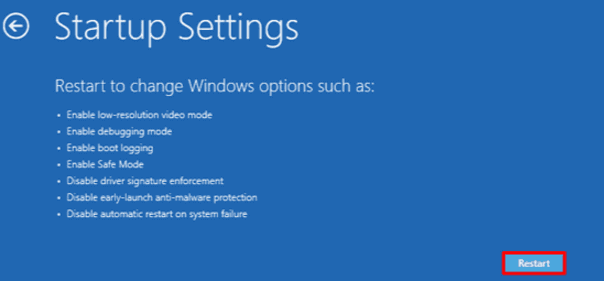
- To boot your PC into desktop, go to Startup Settings, restart your PC, and press F4, F5, or F6 to select options 4, 5, or 6.
Resolutions to fix KERNEL_SECURITY_CHECK error in Windows 10/8/7
Here are three reliable methods to fix the KERNEL_SECURITY_CHECK failure error in Windows 10/8/7. You can try one of them to resolve the issue.
Before starting, it's recommended to run a full scan on your computer using anti-virus software to remove any potential viruses or malware. You can watch a video first and then read the details.
Method 1. Repair System file and bad sectors that cause Kernel Security Check failure issue
Run System File Checker:
1. To open Command Prompt as an administrator, type "cmd" in the search box, right-click on Command Prompt, and select "Run as administrator".
2. Click Yes to continue with administrator permission;
3. To resolve the BSOD error with Kernel Security Check failure, type `sfc /scannow` and press Enter. This command will scan and repair corrupted system files, which may be causing the error.
Run partition manager:
If your Windows system's hard drive or partition has bad sectors, it may not boot normally and instead display a Blue Screen of Death (BSOD) error.
Fortunately, powerful partition manager software from Qiling will effectively help fix this issue with its Check Partition feature.
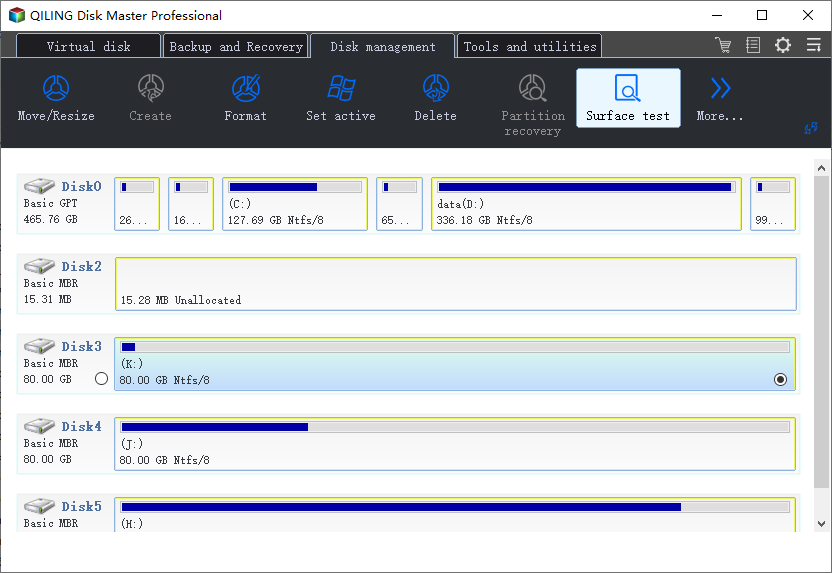
Step 1. Click the target partition that has a problem.
Step 2. Choose "Surface test".
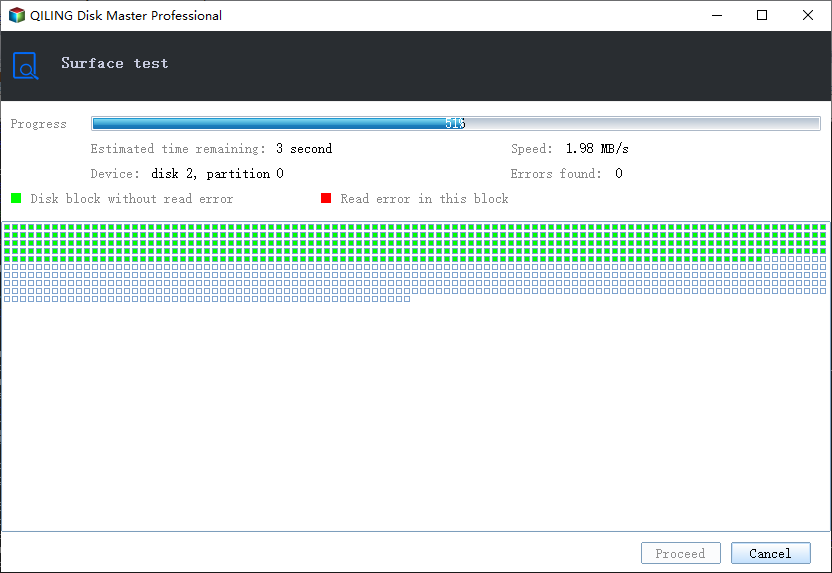
Step 3. Click "Proceed" to check errors on your partition.
Method 2. Scan and fix system hard disk error
1. Click Start > File Explorer > This PC;
2. To check and scan a hard drive, right-click on it and select Properties.
3. Go to Tools tab > Click Check;
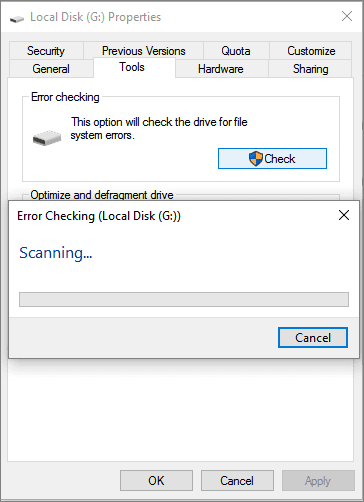
The Error Checking tool in Windows automatically checks and fixes system hard disk errors that may cause a Kernel Security Check failure issue on a PC.
Method 3. Run Memory Diagnostic Tool to fix the Kernel Security Check failure issue
1. Press Win + R keys to open Run dialog > Type: mdsched.exe and hit Enter;
2. Choose Restart now and check for problems (recommended) to check the status of memory card right now;
Or select Check for problems the next time I start my computer;
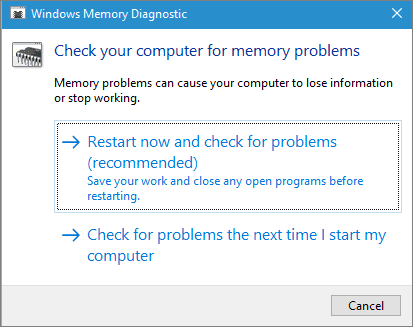
3. The Memory Diagnostic Tool will automatically run to check for errors on the Memory card in your PC.
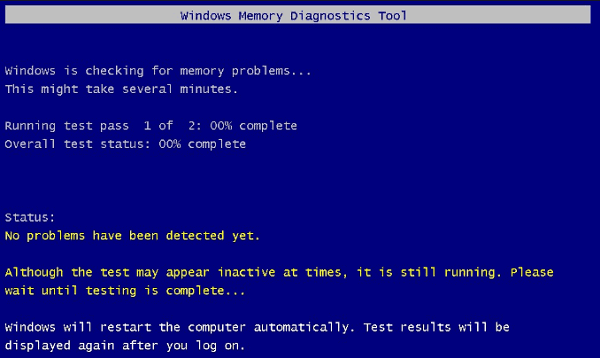
If no errors are checked, your memory card is working perfectly fine with no problem.
If you're experiencing a BSOD (Blue Screen of Death) with a Kernel Security Check failure error, try replacing the current memory card with a new one to resolve the issue. This should help eliminate the error.
Method 4. Try System Restore to repair PC from Kernel BSOD issue
1. To boot your PC into Safe Mode, follow the guidelines in the Quick Fix, which will guide you through the process of safely starting your computer in a minimal environment with only the essential drivers and services running.
2. To access the Recovery feature, click on the "Control Panel" icon on the Start menu, and then select "Recovery" from the list of items in the All Control Panel Items section.
3. Click on "Open System Restore". Then, select "Check" and choose a different restore point.
4. To continue, select the exact restore point (a healthy Windows restore point) that you created previously and click Next > Next.
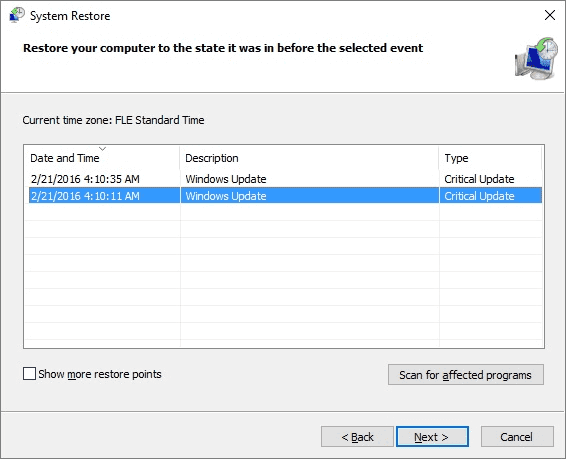
5. Confirm that you want to execute the System Restore operation.
To fix the Kernel Security Check error or BSOD issue, you can try using System Restore to revert your Windows system to a previous point when the issue didn't exist. After running System Restore, wait for the process to complete, and your previous Windows system will be restored, eliminating the Kernel Security Check error or BSOD issue.
Related Articles
- How to Fix PS4 Safe Mode Loop Without Losing Data
- Fix: There Was a Problem Resetting your PC in Windows 10/8.1/8
- Fix macOS 10.13/10.13.4 High Sierra Update Failure/Stuck/Installation Error
- Fix NTFS_FILE_SYSTEM BSOD Error in Windows
- How to Fix Windows Defender Not Turning On | 7 Methods
Windows Defender not turning on can occur due to various reasons, and if not resolved quickly, it can risk the protection of your computer. To address this issue, you can refer to the post for guidance on how to turn on Windows Defender again. - How to Backup An External Hard Drive to Another External Hard Drive in Windows 10
Learn how to back up an external hard drive to another external hard drive in Windows 10. Follow three clear methods to copy, transfer, or protect your files safely.
Products
Articles & Tutorials
- Data Recovery
- Data Backup
- File Recovery
- File Backup
- System Backup and Restore
- Disk and Partition Clone
- Technical articles
- Mobile articles
- Disk Master Help
- Windows Data Recovery Tutorials
- Windows Secure Delete Tutorials
- Windows Partition Management Tutorials
- Windows File Backup and Restore Tutorials
- Windows System Backup and Restore Tutorials
- Windows Disk Backup and Restore Tutorials
- Windows Clone Tutorials