Fix macOS 10.13/10.13.4 High Sierra Update Failure/Stuck/Installation Error
To smoothly update your MacBook Pro to macOS High Sierra, make sure to back up your data before updating, as this will ensure you don't lose any important files. Also, ensure your MacBook Pro meets the minimum system requirements for the update, which includes at least 2GB of memory and 14.3GB of available storage space. Additionally, consider restarting your MacBook Pro in safe mode before updating to clear out any problematic system extensions. Finally, be patient and allow the update process to complete without interrupting it, as this will help prevent any potential issues during the update.
Mac Data Recovery Software
Recover lost data after macOS update
Get It NOW
$89.95
If you're trying to update your Mac to the latest macOS High Sierra, you're in the right place. To download and install macOS 10.13/10.13.4, or to fix update errors, follow the steps outlined in the next two parts. This will help you successfully update your Mac to the latest version of High Sierra and resolve any update-related issues.
Part 1. Upgrade to macOS 10.13/10.13.4 High Sierra without losing data
To upgrade to macOS 10.13/10.13.4 High Sierra on your MacBook Pro, MacBook Air, iMac, or other compatible Mac, follow these steps. First, make sure your Mac is running macOS 10.
Step 1. Back up Mac computer data before macOS 10.13/10.13.4 update
Here are two options to backup Mac data before updating to macOS 10.13/10.13.4: You can use Time Machine or a third-party Mac backup software for assistance.
Option 1. Back up Mac data with Time Machine
- 1. Connect an external hard drive to your Mac, making sure it's at least as large as your Mac's drive, and then launch Time Machine.
- 2. To set up automatic backups, turn the Time Machine slider on, then select "Backup Disk" to choose the external hard drive as the backup destination.
- 3. Select important data to backup now.
Option 2. Backup Mac data with Mac backup software
Qiling Backup for Mac allows you to easily back up your Mac data in just 3 simple steps, making it a convenient solution for protecting your important files and data.
1. Download, install and launch Qiling Backup for Mac.
To create a backup project, click on the first "Backup" tab or click the plus (+) button at the left corner of the left pane. This will open a window where you can name the backup project and click "OK" to proceed.
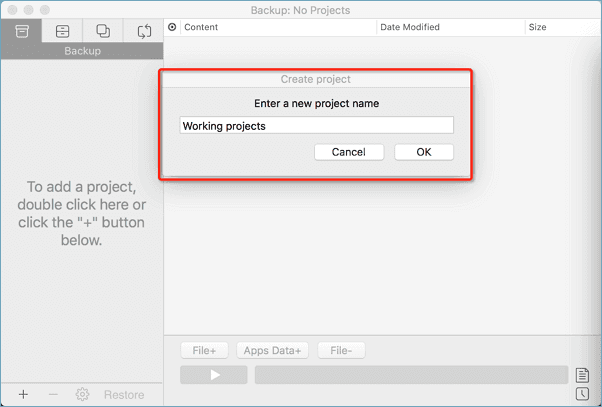
2. Set up the backup destination where you want to store Mac files as backups, select the automatic backup frequency, and click OK.
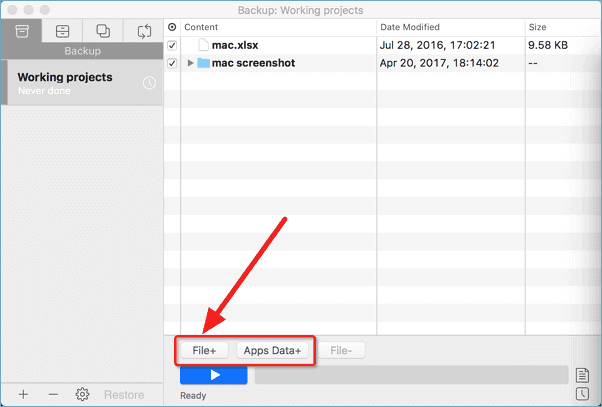
3. Add files and folders to the backup project.
To back up your Mac data, select the files and folders you want to save by clicking "File+ " and then click the blue "Start" button to initiate the backup process to an external drive or device.
Step 2. Download and install macOS 10.13/10.13.4 High Sierra
1. Go to the Apple store > Find macOS 10.13/10.13.4 update.
2. Click Download and fill in your Apple ID when asked.
3. After downloading the macOS 10.13/10.13.4 upgrade software, install it and update your Mac computer to macOS 10.13 or 10.13.4 High Sierra by following the on-screen instructions.
If no update problems occur, restart your Mac computer and enjoy the new macOS on your device.
If you're having trouble installing macOS 10.13 or encounter issues, follow the troubleshooting steps outlined in Part 2 to resolve the problems and successfully install macOS 10.13 on your device.
Part 2. Fix macOS 10.13/10.13.4 High Sierra update stuck/failure or freeze error
If your Mac is experiencing issues with downloading or installing the macOS 10.13 update, or if the installation process gets stuck, freezes, or fails, follow these steps to resolve the problem. First, ensure that your Mac meets the system requirements for the update. If it does, try restarting your Mac and then attempt the installation again. If the issue persists, try resetting the System Management Controller (SMC) and the power management unit (PMU) on your Mac.
Fix 1. macOS Sierra 10.13/10.13.4 downloaded but won't install
If you're having trouble installing the downloaded macOS 10.13/10.13.4, try the following tips to resolve the issue: If you get stuck or fail to install, check if you've followed the installation instructions carefully, and ensure that your Mac meets the system requirements. If you've downloaded the correct version of macOS, try restarting your Mac and then attempting the installation again.
- Open Launchpad > Delete "Install macOS Sierra" file with a question mark on it.
- Reboot Mac and retry downloading a new macOS Sierra update 10.13/10.13.4.
- Click Apple Menu > Select App Store > Click Update next to macOS Sierra in the Update section.
Fix 2. macOS 10.13/10.13.4 High Sierra fails to install/gets stuck or freezes while installing
To fix the macOS 10.13/10.13.4 installation failure error, you can try either of the following two options:
Option 1. Install macOS update in Safe Mode to fix the macOS High Sierra 10.13/10.13.4 update stuck error
- Disable or uninstall any anti-virus software on your Mac.
- Ensure Mac computer has a proper and reliable internet connection.
- Install macOS Sierra in Safe Mode.
- To boot your Mac into Safe Mode, hold the Power button until it shuts down, then turn it back on and hold the Shift key until the Apple logo appears on the screen. Release the Shift key at this point, and your Mac should boot into Safe Mode.
- Then try to install macOS 10.13/10.13.4 update again.
If you're unable to install macOS 10.13/10.13.4 in Safe Mode, try a clean installation of the new update.
Option 2. Clean installation of macOS Sierra 10.13/10.13.4 to fix macOS fails to install issue
To complete a clean installation of macOS Sierra 10.13/10.13.4 on your Mac, you'll need to prepare a few things beforehand. This includes backing up your important files and data, erasing the startup disk, and creating a bootable installer drive.
Step 1. Create a bootable installer
- To download the macOS Sierra 10.13/10.13.4 installation package, go to the Mac App Store and search for "macOS Sierra". Click the "Get" button to start the download process.
- Connect a new USB drive to your Mac, then open Disk Utility from the Applications/Utilities folder. Select the thumb drive in the sidebar and click the "Format" button.
- Format the USB drive by naming it "Untitled" and choosing "OS X Extended", then click "Erase". Once the USB is formatted, open Terminal and finish downloading macOS Sierra.
- Ensure the USB drive named "Untitled" is connected to the Mac. Then, type the following command in Terminal and press Enter: `sudo /Applications/Install\ macOS\ Sierra.app/Contents/Resources/createinstallmedia --volume /Volumes/SierraBootInstall --applicationpath /Applications/Install\ macOS\ Sierra.app --nointeraction &&say Done`
- Enter the Administrator password if necessary, and the command will create a bootable Sierra installer on the USB drive.
Step 2. Clean installation of macOS 10.13/10.13.4 update
- Connect a USB bootable drive to your Mac, then restart the Mac by holding the Option key until you hear the reboot tone.
- To install macOS Sierra, select the disk called "Install macOS Sierra" in the drive list that appears on the screen.
- Once the USB drive is booted, select Disk Utility, choose Mac's startup from the list, and click Erase.
- Once Mac's startup disk is formatted, return to the Utilities window and select Install macOS, choose the recently erased startup drive to install macOS, and follow onscreen prompts to complete the installation.
Extra Tip: Restore lost data due to the macOS 10.13/10.13.4 High Sierra update
If you forgot to create backups for your Mac data before the macOS 10.13/10.13.4 update, you can still recover lost data using professional data recovery software.
Mac Data Recovery Software
Recover lost data after macOS update
Get It NOW
$89.95
Deep Data Recovery for Mac is a professional software that can recover all lost data due to a macOS update or other reasons, allowing you to restore your files using bootable media.
1. To create bootable media for your Mac, you can follow the steps outlined on the tutorial page about creating bootable media for Mac. This will guide you through the process of preparing a USB drive or CD/DVD to boot your Mac from, which can be useful for various purposes such as installing the operating system, troubleshooting, or running diagnostics.
2. To boot your Mac from the Deep Data Recovery for Mac Bootable Media, follow the steps to create the bootable media, then restart your Mac and hold down the power button until the boot menu appears. Select the Deep Data Recovery for Mac Bootable Media as the startup disk to boot from it.
3. Launch Deep Data Recovery and select the file types of lost data. Click Next.
4. Choose the volume where the data was lost, then click Scan to let the program scan the lost data for you.
To recover lost data on your Mac, choose the Deep Scan option and let the program search for more lost data for you.
Important Note --If your Mac hard drive uses an APFS file system, you can only use the deep scan option to scan and find all lost data on the drive.
5. To recover data from the found hard drive, select the desired data and click the "Recover" button to save it to a safe location on your Mac.
Related Articles
- [Fixed] Unable to Reset Your PC. A Required Drive Partition Is Missing
- How to Reinstall Windows 10 Without CD (3 Ways)
- Service Host: Local System High Disk, CPU and Memory Usage [100% Solved]
- Delete OS from A Hard Drive
- How Many Pictures Can a 32GB SD Card Hold [Full Info]
A 32GB SD card can hold approximately 9,000 to 10,000 high-quality photos, depending on the camera's resolution and file format. The storage capacity of an SD card is affected by factors such as image resolution, file format, and compression level. - How to Backup Google Account on Android and PC
Backing up your Google Account is crucial in today's digital age. To do so, you can follow the methods to back up your Google Account data on Android and PC, which will be detailed below. Additionally, we'll provide you with solutions on how to further secure your Google data.
Products
Articles & Tutorials
- Data Recovery
- Data Backup
- File Recovery
- File Backup
- System Backup and Restore
- Disk and Partition Clone
- Technical articles
- Mobile articles
- Disk Master Help
- Windows Data Recovery Tutorials
- Windows Secure Delete Tutorials
- Windows Partition Management Tutorials
- Windows File Backup and Restore Tutorials
- Windows System Backup and Restore Tutorials
- Windows Disk Backup and Restore Tutorials
- Windows Clone Tutorials