What Is SDRAM? Synchronous Dynamic Random-Access Memory Explained
What is SDRAM?
SDRAM, or Synchronous Dynamic Random Access Memory, is a type of dynamic random access memory (DRAM) that provides faster speed compared to regular DRAM, making it a common form of RAM found in most computers.
The introduction of SDRAM in the 1990s replaced the asynchronous interface of earlier processors with a synchronized external clock signal, improving input control signal timing.
The interface of SDRAM is synchronous with the system bus, allowing for rapid responses in sync with the system bus, making it a popular choice for computer devices.
SDRAMs offer several advantages over conventional asynchronous DRAMs, including higher data transfer rates and concurrency. Additionally, SDRAMs have a simple design that is cost-effective, making them a preferred choice in the computer memory market, especially for RAM applications.
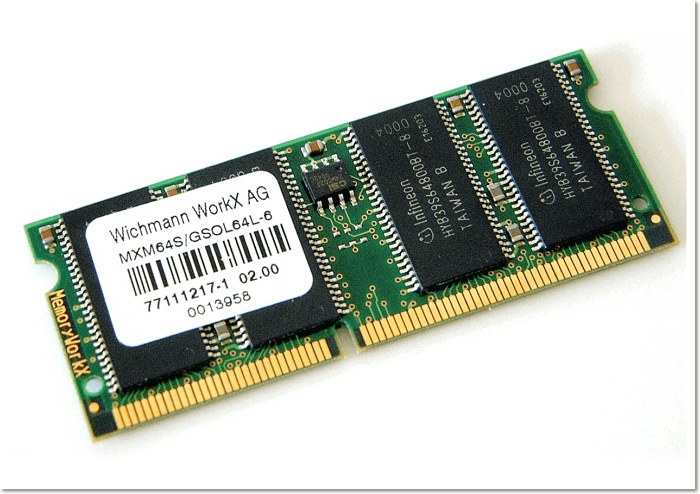
Development of SDRAM
SDRAM has undergone significant evolution over the years, with each generation offering improved functional capabilities. From its early beginnings to the latest generation, SDRAM has seen various advancements, making it a crucial component in modern computing systems.
DDR (1st Generation)
The first generation of SDRAM, known as DDR (Double Data Rate) SDRAM, preceded SDR interfaces, providing more strict control of phasing the clock signals and thus greater transfer rates.
The DDR interface features double pumping, which enables data transfer on both edges of the clock cycle, effectively doubling the bandwidth of the data bus and preventing clock frequencies from getting too high, thus keeping signal integrity requirements manageable.
The DDR clock rate falls between 133 and 200 MHz, with a prefetch buffer size of 2n (two data words per memory access). This results in a data transfer rate of 2.1-3.2 GB/s, and the operational voltage is 2.5/2.6.
DDR2 (2nd Generation)
The Double Data Rate 2 SDRAM was introduced by Samsung in 2001, succeeding the first generation of DDR SDRAM. It offered improved performance with a prefetch length of four bits for every bit in a word, compared to its predecessor. Additionally, DDR2 was available in two clock rates: 200 and 266MHz.
Increasing the prefetch length in DDR2 resulted in almost double the data transfer rate over the data bus, but this came with a trade-off: a spike in memory latency between three and nine cycles, despite the goal of maintaining processor power consumption.
The highest recommended voltage for DDR2 is 1.9V, and it operates at a bus clock of 266-400MHz, allowing for a data transfer rate of 4.2-6.4 GB/s. However, due to its higher pin density of 240, DDR2 modules are not backward compatible with DDR modules, which have 184 pins.
DDR3 (3rd Generation)
The 3rd generation of double data rate SDRAM, DDR3, emerged in devices since 2007, featuring distinct signaling voltages and timings that made it incompatible with its predecessors.
DDR3's prefetch buffer size is double that of DDR2, allowing for up to eight times the data transfer speed, which has enabled DDR3 to provide greater data transfer rates and higher bandwidths.
DDR3 memory modules have a voltage tolerance of 1.35-1.5V and support transfer rates of 8.5-14.9 GB/s.
DDR4 (4th Generation)
DDR3 was succeeded by DDR4 in 2014, a significantly different technology that is incompatible with its predecessors. DDR4 offers a data transfer rate of 8.5-14.9 GB/s, marking a notable improvement over earlier RAM types.
DDR4 offers higher module density and data transfer speeds compared to previous generations of DDR SDRAMs, all at lower voltages (up to 1.2V at frequencies between 800 and 1600 MHz). The prefetch length in DDR4 remains the same as DDR3 (8n), but the DRAM banks have been divided into two or four selectable groups to enable higher bandwidths.
DDR5 (5th Generation)
The latest generation of double data rate SDRAM, released in 2020, is the DDR5. It offers the same prefetch buffer size and latency as previous generations, but supports a bandwidth of 4.8 GB/s, a significant improvement over its predecessors. Additionally, the DDR5 has seen a further voltage drop, reaching up to 1.1V.
The highest speed offered by DDR5 was 6400 MT/s released in 2019 by SK Hynix, with Samsung later releasing a 512 GB 7200 MHz DDR5 DIMM in 2021. This allows DDR5 to support up to eight bank groups with a maximum of four banks per group, enabling greater bandwidths.
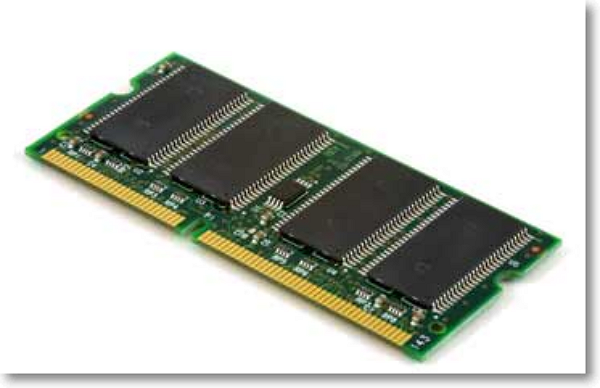
SDRAM vs. DDR
SDRAM and DDR differ across several generations. The following summary table highlights the key distinctions between these memory technologies, providing a clear understanding of what sets them apart.
| SDRAM | DDR |
|---|---|
| It was released in 1997 for commercial use. | Introduced in 2000 for commercial computing utility. |
| Operates on a voltage of 3.3V. | Works perfectly within the range of 1.8-2.5V. |
| Contains 168 pins and 2 notches across the connector. | The connector contains 184 pins and one notch across the connector, which allows for enhanced operations. |
| Offers prefetch timing of 1ns. | Prefetch timing is improved to 2ns. |
| Features a data rate of 0.8-1.3 GB/s. | The data rate is approximately double the value at 2.1-3.2 GB/s. |
| Provides an internal rate range of 100MHz – 166MHz. | Covers an internal rate range of 133MHz – 200MHz. |
| Lesser speed in comparison to DDR. | DDR RAM has a speed that is almost double as compared to SDRAM's speed. |
Conclusion
SDRAM has become extremely popular since its release, replacing DRAM in most computer devices due to its fast speed and synchronous interface. The latest generation, DDR5, offers higher bandwidth at significantly lower power consumption.
Related Articles
- What Is the SysWOW64 Folder? SysWOW64 vs System32
- What Is System Partition? [Best Explained in 2022]
- [Beginner Guide] What Is PCIe? What Is It Used for?
- MTS File : What Is It and How To Open It [Updated 2022]
- What Is Toshiba Boot Menu | Get Clear Ideas Here!🏆
Learn how to open the Toshiba boot menu, choose a boot device, enter BIOS, and boot from USB for repair or installation. - Ubisoft Game Save Folder (Everything You Need to Know)
People often use Ubisoft to save game files when their games don't support Cloud, or they prefer local storage for backup purposes.
Products
Articles & Tutorials
- Data Recovery
- Data Backup
- File Recovery
- File Backup
- System Backup and Restore
- Disk and Partition Clone
- Technical articles
- Mobile articles
- Disk Master Help
- Windows Data Recovery Tutorials
- Windows Secure Delete Tutorials
- Windows Partition Management Tutorials
- Windows File Backup and Restore Tutorials
- Windows System Backup and Restore Tutorials
- Windows Disk Backup and Restore Tutorials
- Windows Clone Tutorials