What Is System Partition? [Best Explained in 2023]
A system partition is necessary for booting the BIOS and the computer, and it is typically stored on the same disk as the operating system. If a separate boot partition is desired, it would be created within the system partition.

System partitions are an essential part of a computer's operating system, containing critical files and settings. If they are deleted or missing, it can cause significant problems, including boot issues and data loss.
What Is System Partition?
The system partition, also known as the system volume, stores essential files required to boot a computer, including Boot.ini, BCD, Ntldr, and bootmgr. These files are crucial for the bootup process, enabling the computer to complete its startup sequence when turned on or restarted.
The system partition, where the operating system is stored, is typically located on the disk where the OS is installed, such as Local Disk (C:). There can only be one system partition per disk.
What Is the Difference Between a Boot Partition and a System Partition?
The boot partition is a separate storage location on a computer that contains the bootloader, which is responsible for loading the operating system.
You can create a boot partition to run multiple versions of an OS, such as Windows 8 and Windows 10, or older versions like Windows 7 and Windows Vista, without any problems.
The boot partition size is only a few megabytes, making it easier on system resources and requiring fewer resources to activate. This results in a faster and more efficient boot process.
The system partition is responsible for storing the boot files and the boot partition, which is separate from the user's personal files and data.
System Reserved Partition Missing? How to Recover?
If you're missing the system reserved partition, you can recover it using Qiling Partition Master, which simplifies the process by helping to recover lost partitions from any disk with unallocated space, manage disk partitions, and more.
If a system reserved partition is missing on your computer, you can try to recover it by booting from a Windows installation media, accessing the command prompt, and running the command "bootrec /fixmbr" to fix the master boot record. If that doesn't work, you can try running the command "bootrec /fixboot" to rebuild the boot sector.
Use the Qiling Partition Master to recover the lost system reserved partition
Step 1. Download and open Qiling Partition Master, then navigate to the Partition Recovery section in the left menu.
Step 2. Select the disk that is missing the system partition and click on "New Scan" to initiate a new scan for the system partition.
Step 3. Allow a few minutes for the scan to be completed. Once the scan is done, select the file marked as "Lost" in the status section from the list of files that appears.
Step 4. Now click on the "Recover" button.
Step 5. Once recovered, click on "Done."
Rebuild the system partition with CMD
To resolve the issue, you'll need bootable media. Create the media by downloading the Windows 10 installation media creation tool, running it, and selecting the appropriate options for your device. Once you have the media, insert it into your device and follow the on-screen instructions to boot from it.
Step 1. Turn off your computer and plug in the device with the boot media to your computer.
Step 2. Turn on your computer and immediately press the Shift+F10 key to open the command prompt when you see the "Where do you want to install Windows" window.
Step 3. The command "bcdboot c:\windows /s c:" is used to boot a Windows installation from a different drive. Here's how you can use it: In the Command Prompt, type "bcdboot c:\windows /s c:" and press Enter.
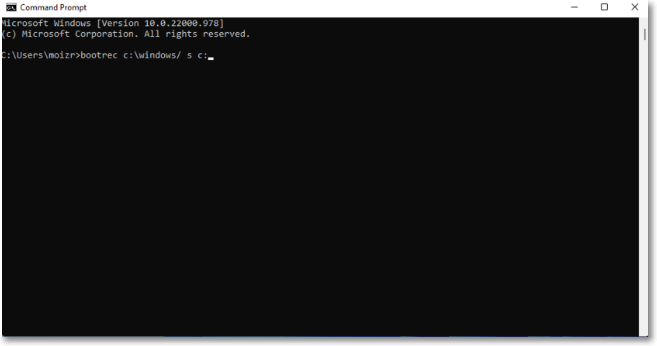
Step 4. Enter the command "bootrec /fixmbr" and press Enter.
Step 5. To resolve the "Element not found" error, activate the partition using Diskpart. Open Command Prompt as administrator, type "diskpart", and press Enter. Then, run the following commands in the Diskpart prompt: "list disk", "select disk X" (where X is the disk number containing the partition), "list partition", "select partition Y" (where Y is the partition number), and finally, "active".
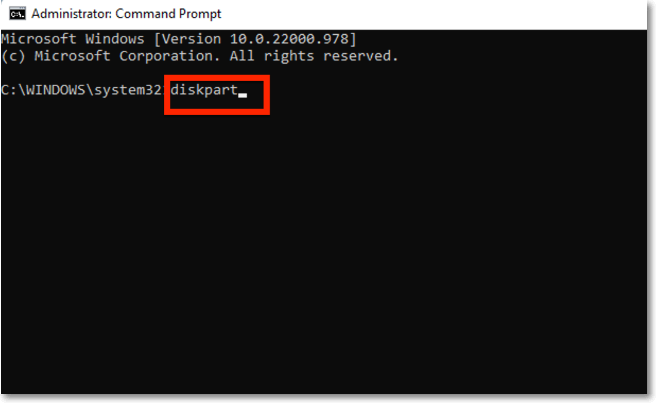
- "list disk"
- To select the system drive, type "select disk n" in the command prompt, where "n" is the disk number of the system drive.
- "list partition"
- "select part 1"
- The correct message should be: "DiskPart marked the current partition as active".
- "Exit"
- After entering the "Exit" command, you will exit Diskpart.
- Now, enter these two commands:
- bootrec /fixboot
- bootrec /rebuildbcd
- To recover a missing system-reserved partition, simply restart your computer. This will allow the system to automatically recover the partition.
Conclusion
The system partition is a crucial element in booting up a computer. If any system partition file is missing, it can be recovered using Qiling Partition Master or the CMD. Additionally, it's possible to extend the partition in Windows 10.
System Partition FAQs
What is the system partition and why is it necessary?
1. What are the differences between a system partition and a system reserved partition?
A partition located before the system partition is called the system reserved partition, whereas the system partition is located before the system reserved partition.
2. Why is my SSD system reserved?
When you install or reinstall Windows, your SSD stores the necessary Windows bootable data or Bitlocker startup files, typically using around a few hundred MBs, which can be seen in the "System Reserved" section of disk management.
3. How can I merge the system partition and the boot partition on one hard drive?
Follow these steps to merge them:
- Open Command Prompt as administrator.
- Type the command "bcdboot" and press the "Enter" button.
- To use the built-in Windows utility to wipe a disk, open Command Prompt as an administrator. Type "diskpart" followed by "select disk 1" and then press the "Enter" button.
- Then type "select partition 1" and hit the "Enter" key.
- To merge the system partition and boot partition on a hard drive, type "ACTIVE" and press the "Enter" button. This will combine the two partitions into one.
The boot and system partitions have been merged into one on your hard drive.
Related Articles
- What Is Cloud NAS (Network Attached Storage)? [Full Information]
- How to Open Windows Device Manager [Full Guide in 2022]
- How to Stop Windows 11 Update (Block It Forever)
- [Bad Sector Explained in 2022] What Is Bad Sector?
- CPU Comparison Guide: Compare and Choose the Best CPU in 2023
Are you planning to purchase a new CPU? As we all know, the better your CPU is, the faster your computer will run, so how to choose the best and appropriate CPU for yourself? Follow this CPU Comparison Guide, where we compare and choose the best CPU in 2023. - CR2 Photos Not Opening, How Do I Fix and Open CR2? Your Guide Is Here
CR2 photos not opening on Windows or Photoshop? Learn what CR2 files are, common causes of the issue, and 3 proven fixes including using correct programs, converting to JPG, and repairing corrupted CR2 files.
Products
Articles & Tutorials
- Data Recovery
- Data Backup
- File Recovery
- File Backup
- System Backup and Restore
- Disk and Partition Clone
- Technical articles
- Mobile articles
- Disk Master Help
- Windows Data Recovery Tutorials
- Windows Secure Delete Tutorials
- Windows Partition Management Tutorials
- Windows File Backup and Restore Tutorials
- Windows System Backup and Restore Tutorials
- Windows Disk Backup and Restore Tutorials
- Windows Clone Tutorials