What Are the System Recovery Options on Windows? [Detailed Description]
Startup repair, restore, System image recovery, and diagnostic tools are available in the System Recovery Options menu, also known as WinRE, or Windows Recovery Environment.
The menu was replaced by Advanced Startup Options, but to learn more about system recovery options, read the next part.
What Are the System Recovery Options?
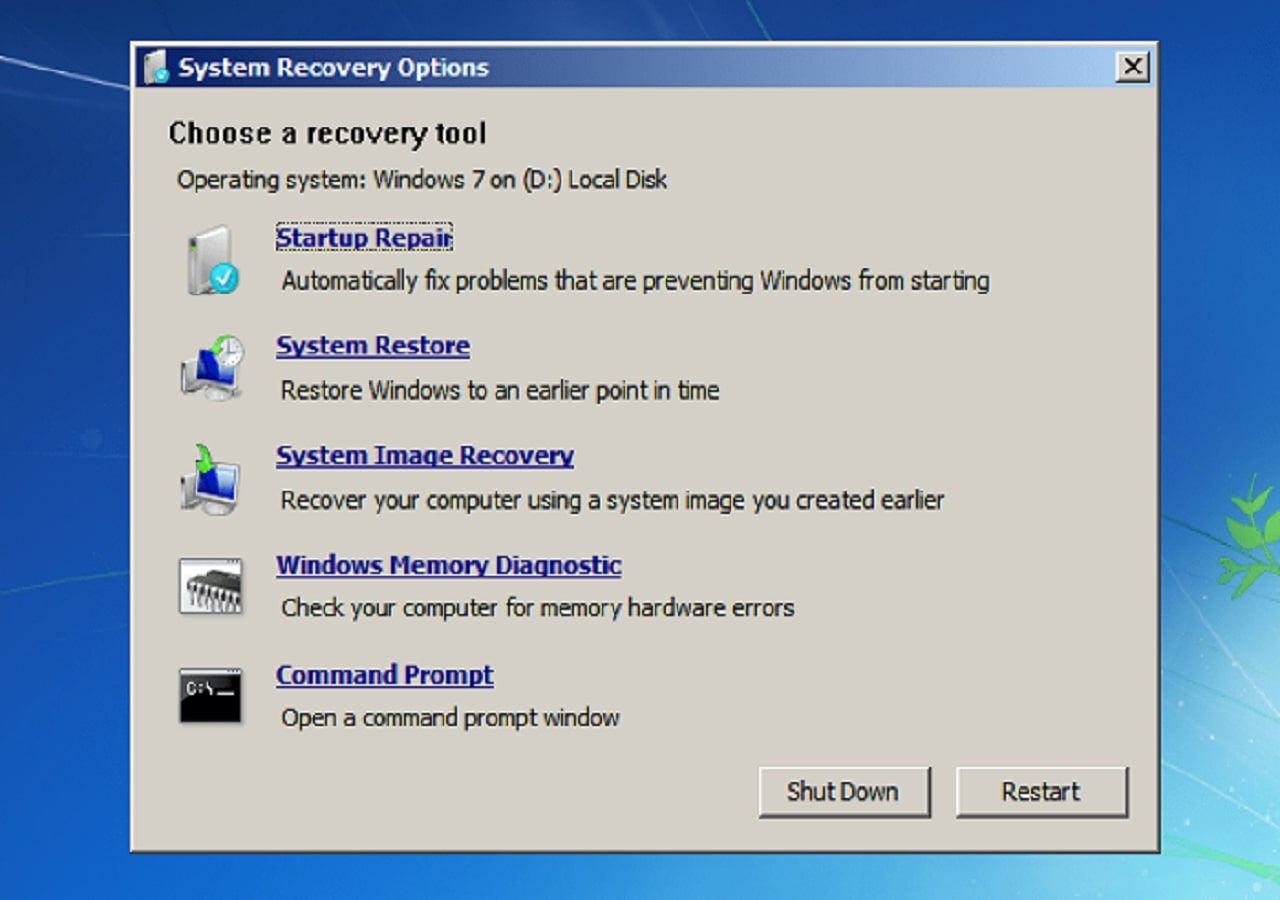
In Windows 7 and Windows Vista, the System Recovery Options menu offers five recovery tools: System Restore, System Image Recovery, Windows Memory Diagnostic, Windows Startup Repair, and Windows Recovery Environment. Each tool serves a specific purpose, such as restoring your system to a previous state or repairing startup issues, and can be accessed through the menu.
Startup Repair
This update fixes issues that could prevent Windows from launching correctly, such as missing or damaged system files.
System Restore
Restores the system files on your computer to a previous state without damaging files, including emails, documents, and images.
If you use System Restore from the System Recovery Options menu, you cannot undo the restoration operation. However, if another restore point is available, you can run System Restore again and select a different point.
The following article related to System Restore is provided for you. Keep reading if you're interested:

Windows 10/8/7 System Restore Points Not Working
You can manually repair Windows System Restore or use software to bypass it, and here are five solutions to get your Windows 10/8/7 System Restore working.
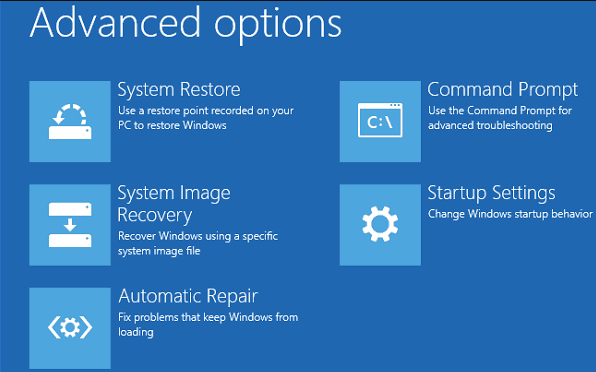
System Image Recovery
To utilize this choice, you must have already built a system image. A system image is a customized backup of the Windows disc that includes user data, papers, photos, music, and software, allowing you to restore your computer to its previous state in case of a problem.
A system image is a complete backup of your computer's operating system, programs, and settings, essentially capturing the state of your computer at a specific point in time. It's a snapshot of everything, including the operating system, installed applications, drivers, and even the desktop layout. This type of backup is useful for restoring your computer to its exact state in case of a system failure, malware infection, or hardware issues.
Windows Memory Diagnostic Tool
Analyzes the memory of your machine for mistakes.
Command Prompt
Advanced users have access to the Command Prompt, which they can use to run additional command line tools for problem-solving and recovery-related tasks.
How to Run the System Recovery Options?
Open System Recovery Option on your PC
Step 1. Restart your computer by pressing the power button after removing any CDs or DVDs.
Step 2. Choose one of these:
- When your PC restarts and only has one operating system installed, press and hold the F8 key. If you have multiple operating systems, wait until the Windows logo appears, then restart and try again by waiting for the Windows logon prompt.
- If your machine has multiple operating systems, use the arrow keys to choose the one you want to repair, then press and hold F8.
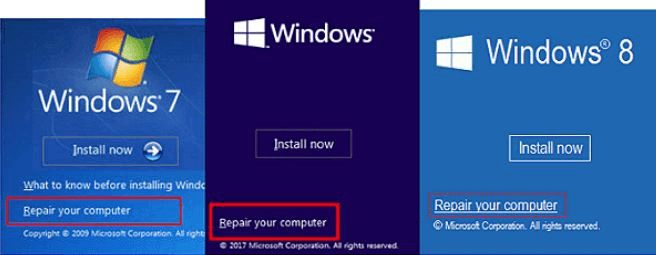
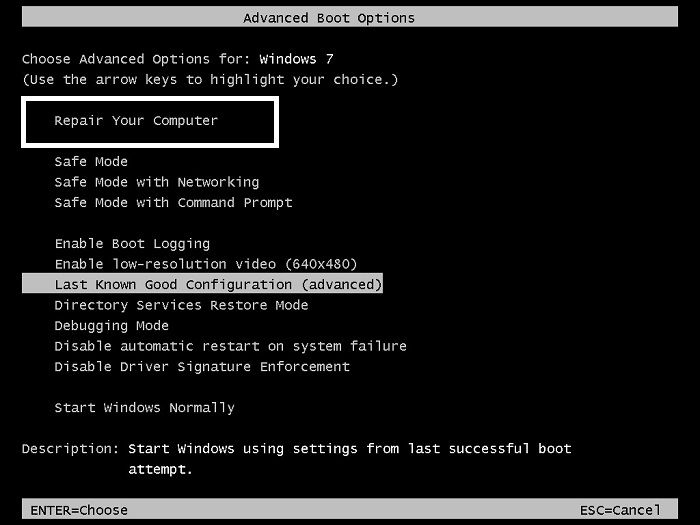
Step 3. To access the Advanced Boot Options screen, use the arrow keys to select "Repair your computer" and press Enter. If the option to repair your computer isn't available, it may be due to a lack of inbuilt recovery features or the network administrator disabling them.
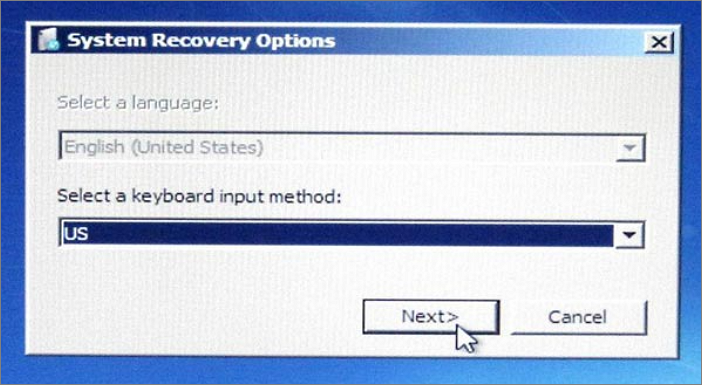
Step 4. After choosing a keyboard layout, click Next.
Step 5. Select a tool from the System Recovery Options menu to run it.
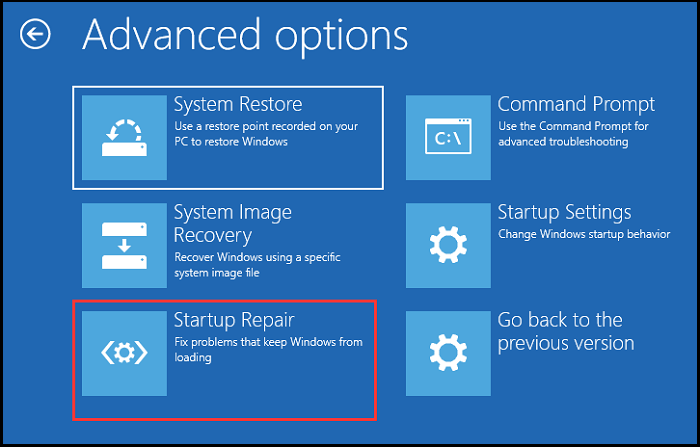
Using the Windows 7 installation disc, a USB flash drive, or a system repair disc
If your computer's system is severely damaged and you can't access it on your machine, you can use the Windows 7 installation disc, a USB flash drive, a system repair disc, or a system repair disc that you previously generated to access the System Recovery Options menu.
To troubleshoot issues with your computer, you can try booting it from a disc or USB flash drive. This can help you bypass any problems with your current operating system and start from a clean slate.
Step 1. Insert the Windows 7 installation disc, USB flash drive, or system repair disc into your computer, then shut it down.
Step 2.Press the power button on your computer to restart it.
Step 3. Press any key to continue.
Step 4. During the installation process, make language and other preference selections on the Install Windows page or the System Recovery Options page, then click Next.
- Tip
- If the Install Windows page or the System Recovery Options page doesn't appear, or if you're not prompted to press any keys, you may need to adjust some system settings.
Step 5. If you're using the Windows installation disc or USB flash drive, click Repair your computer.
Step 6. After selecting the Windows installation you want to repair, click Next.
Step 7. Click on the System Recovery Options link to access the available recovery tools.
Conclusion
This article explains system recovery options and provides instructions on how to use them in two different ways, allowing you to recover your system effectively.
FAQs
Below are answers to common questions about system recovery options:
1. How do I repair system recovery options?
You can repair system recovery options using the following methods:
- Open System Recovery Options directly on your PC by pressing F8 during startup.
- Use a Windows installation disc, USB flash drive, or system repair disc to access the recovery environment.
2. How do I find my password for system recovery options?
To access the Advanced Boot Options page again, press the F8 key repeatedly. This will allow you to log in without a password and perform a Startup Repair or System Restore.
Related Articles
- What Is DOS? Disk Operating System Explained (All You Need to Know)
- What Are Fsck Commands and How to Use It in Linux? [2022 Guide]
- 0xC1900101 Error in Windows Update, Cannot Install Windows 11 [FIXED]
- What Is File Explorer? [Everything You Should Know]
- How to Wipe a Computer and How to Delete Everything on Windows 7/10
If your computer or laptop is running slow due to accumulated trash, or you want to completely wipe everything before selling or giving it to others, this page will guide you on how to do so on Windows 7 and Windows 10. - How to Fix This Device Cannot Start (Code 10) with 10 Free Ways
If you are wondering how to fix this device cannot start (code 10) error on your computer, you've come to the right place! Let's decode the error and resolve it efficiently. If you have data loss problems, you can run Qiling data recovery software to get your data back.
Products
Articles & Tutorials
- Data Recovery
- Data Backup
- File Recovery
- File Backup
- System Backup and Restore
- Disk and Partition Clone
- Technical articles
- Mobile articles
- Disk Master Help
- Windows Data Recovery Tutorials
- Windows Secure Delete Tutorials
- Windows Partition Management Tutorials
- Windows File Backup and Restore Tutorials
- Windows System Backup and Restore Tutorials
- Windows Disk Backup and Restore Tutorials
- Windows Clone Tutorials