FIX 'the device has either stopped responding or is disconnected' Error
The error "Cannot copy item. The device has either stopped responding or has been disconnected" may occur when trying to transfer large files from a Windows 10 computer to an Android device via USB, even with USB debugging enabled. This error suggests a problem with the file transfer process, possibly due to the size of the files or an issue with the USB connection.
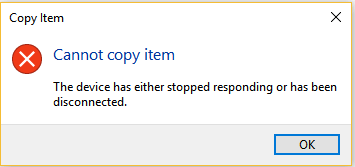
What Does "The device has either stopped responding or is disconnected" Imply
The "the device has either stopped responding or is disconnected" error message typically appears when trying to copy files from an external device, such as an iPhone, iPad, phone, USB drive, or SD card, to a computer.
The error of copying files from your computer to a connected device or vice versa may be caused by various factors, such as a faulty USB port, a corrupted file system, a malfunctioning device driver, or a software glitch. It could also be due to a hardware issue, such as a failing hard drive or a malfunctioning device. Additionally, issues with the operating system, such as a corrupted registry or a faulty update, could also be contributing to the problem.
- Copying many files at once or performing multiple tasks simultaneously with the phone, SD card, or USB drive.
- Connection problems, such as using a card reader for the SD card or a non-original USB cable for your Android, iPhone, or iPad.
- Driver or hardware problems preventing the drive from functioning normally.
- Notice:
-
Back up files from the computer or Android using Qiling free backup software, as they are prone to corruption during the transfer process.
- To back up files on your computer, click on the "Start" button and select "File Explorer" or "This PC". Navigate to the location of the files you want to back up, select them, and right-click to choose "Copy" or "Copy to".
- To protect your Android SD card files, click and learn how to back them up.
General Troubleshooting Solutions
There are four common tips that you should try first.
Method 1. Reconnect Your Device
Step 1. Unplug the phone, SD card or USB drive from the computer
Step 2. To troubleshoot the issue, try closing all background applications, then plug the device back in and see if the error persists.
Method 2. Restart Your Devices
Restart your phone and PC. After it's off, plug your phone into a USB port again to turn your phone and PC back on.
Method 3. Check Your Device Settings
If your phone has a separate USB setting for data and charging, check the settings to ensure the data connection is enabled.
To connect an Android phone to a computer, simply go to Settings > Developer Options > USB Configuration, select the audio source while connecting to the computer, and choose Media Transfer Protocol (MTP). The device driver will automatically install.
Method 4. Check the USB Port
A broken USB port can cause issues. To troubleshoot, try plugging another USB into the same port on your computer to see if it works, or use the same USB cable on a different computer's USB port.
If you're experiencing issues with your USB port not working, it's possible that the problem is due to a hardware or software issue. If you've tried the troubleshooting steps and the problem persists, it's likely that there's a hardware fault with the USB port itself.
Advanced Troubleshooting Solutions
If none of the previous tips work, you can try more advanced methods.
Method 1. Troubleshoot the Hardware Issue
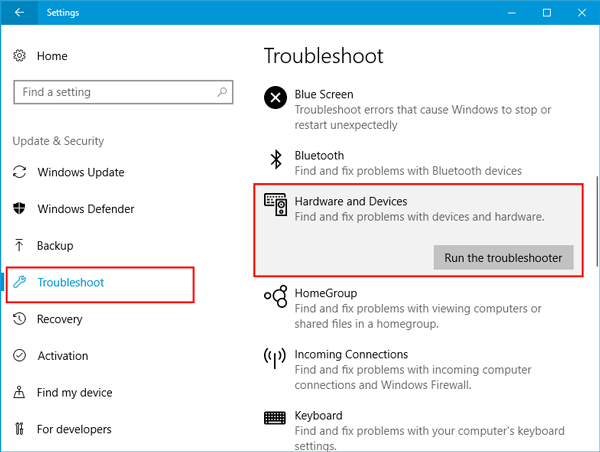
Use the Hardware and Devices Troubleshooter in Windows to troubleshoot hardware issues that may cause your device to stop responding or disconnect. This tool can help identify and resolve problems with hardware devices connected to your computer, such as printers, scanners, and external hard drives.
Step 1. Press "Win + I" to open the Windows Settings panel and navigate to "Update & Security" > "Troubleshoot".
Step 2. Click on the "Hardware and Devices" option and then click on the "Run the troubleshooter" button.
Method 2. Reinstall the USB Controller
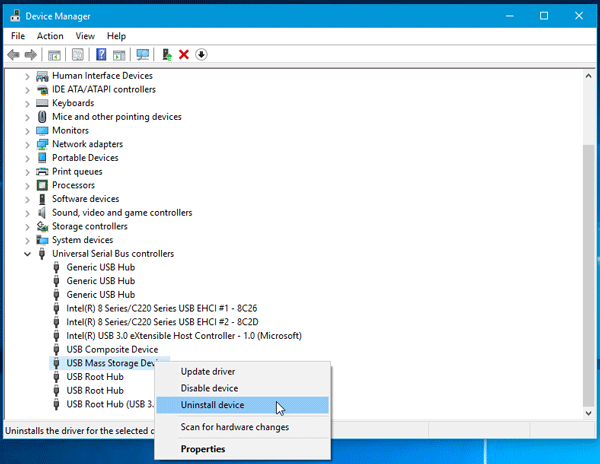
An internal issue with the USB controller can cause the error "The device has either stopped responding or has been disconnected". To resolve this, try uninstalling and reinstalling the USB controllers.
Step 1. Press "Windows + R" keys to open the Run dialog box. Type devmgmt.msc and hit "Enter".
Step 2. Then the Device Manager will open. Navigate to "Universal Serial Bus controllers".
Step 3. Expand the menu, find the current USB device causing the issue, right-click on it and select "Uninstall Device" to resolve the problem.
Step 4. A popup will open. Select the "Uninstall" option.
Step 5. Unplug the device, restart your computer, and plug the device back in. You will then be prompted to reinstall the controller.
Alternative Troubleshooting Solutions
If the troubleshooting solutions don't work, consider alternative methods for transferring files, such as using backup software like Qiling Backup, which can also serve as a file transfer tool by backing up files and allowing them to be restored to any location.
To tackle the problem of meeting "The device has either stopped responding or is disconnected" error while copying large files from your computer to an external storage device, you can use Qiling Backup to back up the disk on your computer to an external hard drive, making it easy to transfer large files. Simply follow the steps to back up your computer's disk to the external hard drive, which you can easily switch to if needed.
Step 1. Go to the Backup and recovery page and click on Disk backup to initiate the backup process.
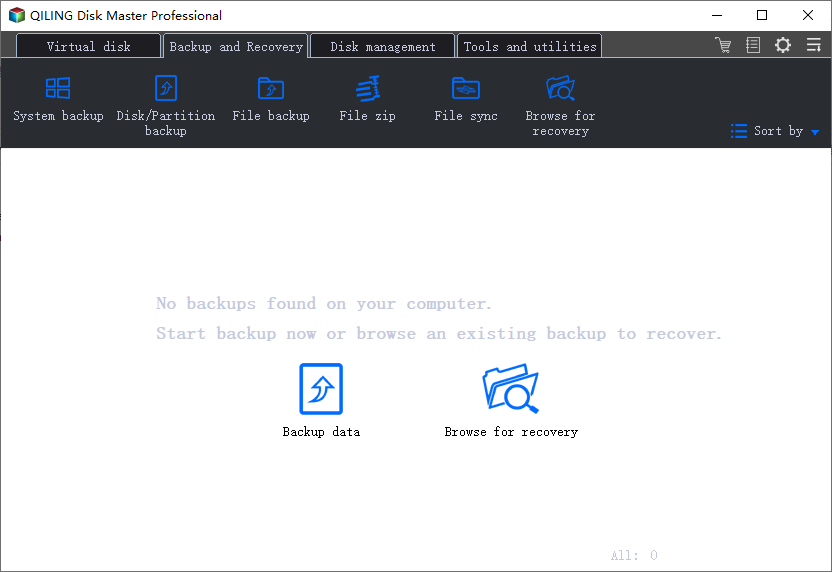
Step 2. It is available to back up a whole disk or a certain partition. Choose the one you need.
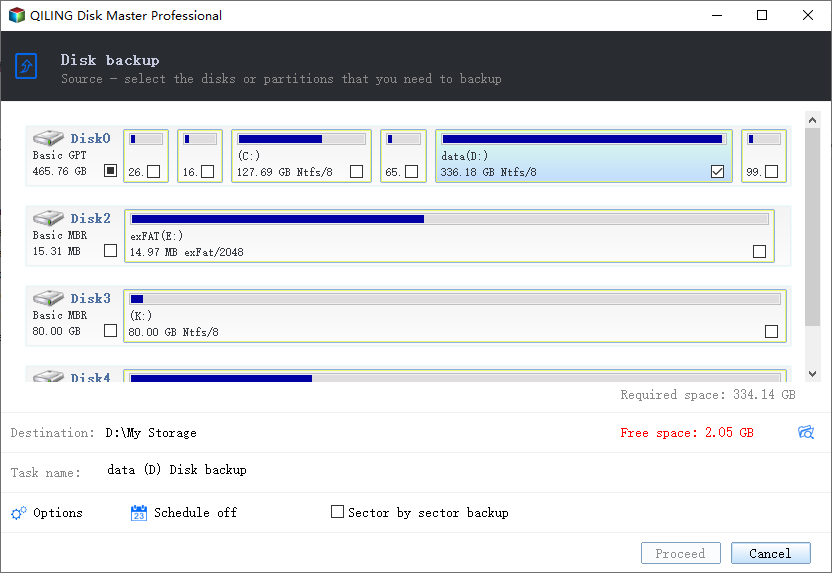
Step 4. Select the destination where you want to save the backup.
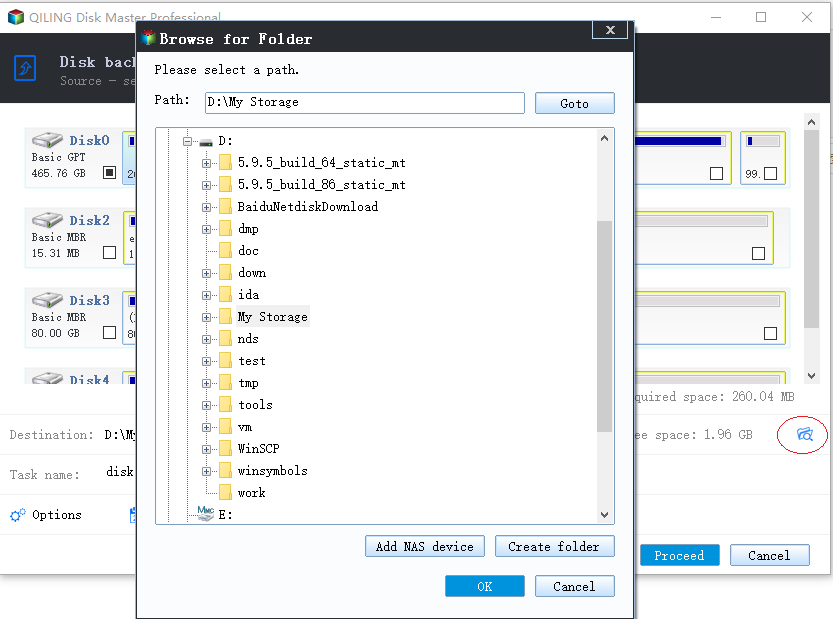
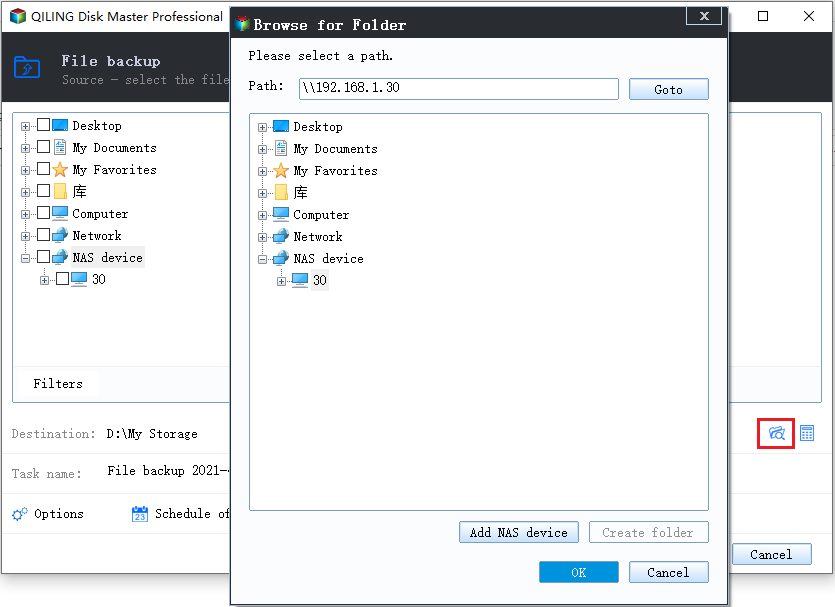
Step 5. For disk/partition backup, you can choose to save the backup to a local drive or a Network-Attached Storage (NAS) device.
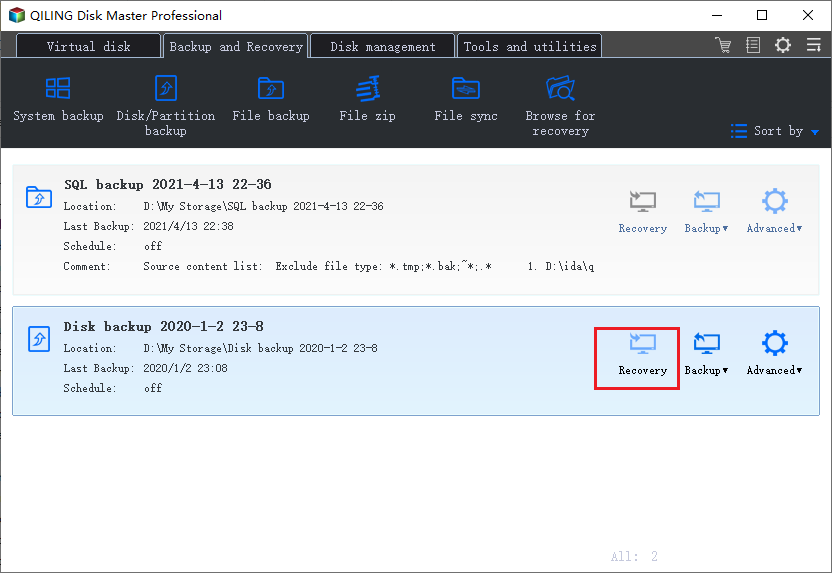
Step 6. After the backup process is completed, your task will be displayed at the left. You can then click on any task to further manage your backup, such as recovering it or creating an incremental backup.
Related Articles
- Windows 10 System Restore Points Gone and Missing
- [Too Slow!] How to Fix USB 3.0 Transfer Speed Pretty Slow
- Automatically Copy Files When USB Drive Connected
- How to Fix File Explorer Keeps Popping Up Without Losing Data
- Fix External Hard Drive Not Formatted Error without Data Loss
Receive the "external hard drive not formatted" error when you try to access or open it? This article will tell you the possible reasons and how to fix it without losing data. - How to Factory Reset Samsung Phone[Galaxy S8/9/10/20/21/22]
Learn how to factory reset Samsung Galaxy S8/S9/S10/S20/S21/S22 phones. Step-by-step guide covering data backup, factory reset via Settings, and restoring backup to a new Samsung device.
Products
Articles & Tutorials
- Data Recovery
- Data Backup
- File Recovery
- File Backup
- System Backup and Restore
- Disk and Partition Clone
- Technical articles
- Mobile articles
- Disk Master Help
- Windows Data Recovery Tutorials
- Windows Secure Delete Tutorials
- Windows Partition Management Tutorials
- Windows File Backup and Restore Tutorials
- Windows System Backup and Restore Tutorials
- Windows Disk Backup and Restore Tutorials
- Windows Clone Tutorials