Windows 10 System Restore Points Gone and Missing
Since the "System Restore not working and no restore points were showing" issue is happening all the time, check out Qiling Backup for a solid backup plan instead, which protects all restore points 100% safe from disappearing. Follow quick access to HOW to USE.
Fix 1: Check and Remove Suspicious Viruses, Programs
Computer viruses often target and delete restore points, making it difficult to revert to a previous state and potentially causing data loss.
Use your antivirus software to scan and remove any suspicious viruses and malicious software from your computer.
Create a system restore point all over again after cutting out the risk.
McAfee Quick Clean has an option called "System Restore Point Cleaner" that can clear Windows restore points without user notice if enabled.
Fix 2: Disable System Restore and Then Enable It
Restore points may be missing due to corrupted system files, disk space issues, or incorrect system restore settings. To resolve this, you can first try disabling and re-enabling System Restore to clear any corrupted restore data.
To resolve the issue where the System Restore folder is corrupted, causing no restore points to be saved, you can delete the entire System Restore folder by disabling and then re-enabling System Restore. This will allow the backup routine to continue and create new restore points.
In Windows 10/8.1/8/7:
- Right-click on This PC/Computer and choose Properties and then click System Protection.
- Click on the Configure button under the System Protection tab.
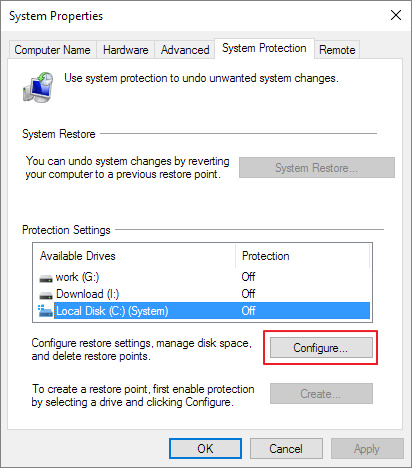
- In the Restore Settings, you will see an option that asks you to Turn off system protection.
- Apply the changes you made.
To turn System Protection back on, restart your computer, then go to Settings, System, and click on the "System Protection" tab. From there, you can toggle the switch to turn System Protection back on.
To create a restore point, go to the System Properties window, click on the "System Protection" tab, and click on the "Create" button. This will create a restore point at the current system state.
Fix 3: Adjust Disk Space Usage
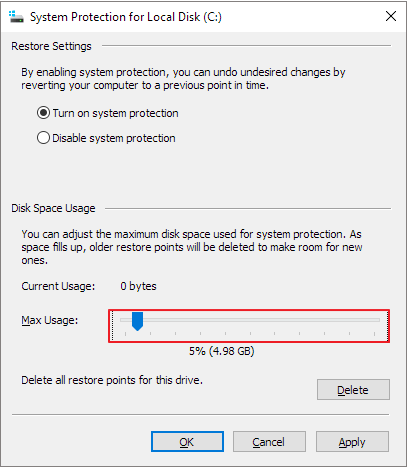
In the same place in the System Protection settings, there is an area for you to allocate disk space to backup files.
System Restore needs a certain amount of disk space. If the size of old restore points exceeds the allocated value, they will be automatically deleted to make room for new ones. The disk usage setting is often the reason restore points disappear.
5% of the backup drive's capacity is recommended for keeping restore points.
- Follow the procedure in Fix #2 to open System Protection.
- Click Configure.
- To free up disk space, go to Disk Space Usage and move the bar in Max Usage to 5 percent, which will allow Windows to use up to 5 percent of your disk space for system protection. This is equivalent to about 5GB of disk space. This change will help prevent Windows from running out of disk space and potentially causing issues.
Fix 4: Repair Corrupted System Files
Another corruption issue that could delete your restore points is related to the system disk where backups were created, potentially causing problems.
You can try to use Chkdsk /f to fix the corruption problem in the hard disk in Windows 10.
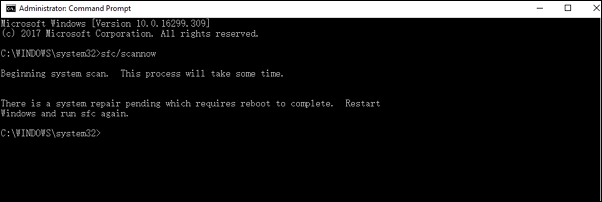
Run the command `sfc /scannow` in the Command Prompt to scan and replace any corrupt or missing system files on Windows. This will help resolve issues caused by damaged system files.
Fix 5: Restore System Points in Safe Mode
Safe Mode allows you to create system restore points even if previous fixes failed, and you may be able to see the restore points list in Safe Mode if it's not showing in your operating system. You might want to try this.
- To access the Advanced Boot Options, continuously press the F8 key as soon as your computer starts to restart. This will bring up a menu with various boot options, including Safe Mode, Safe Mode with Networking, and Enable Boot Logging.
- At the Advanced Boot Options, select Safe Mode with Command Prompt. Press Enter.
- Type: rstrui.exe and press Enter.
- To restore your computer, follow the System Restore instructions and select a suitable restore point from the available list.
If no list was found, your System Restore may not have created any restore points of your system.
A Solid Backup and Recovery Plan - Qiling Backup
The system backup and restore feature of Qiling Backup is fully non-destructive, eliminating the need to worry about losing data. If you're struggling to locate missing restore points in Windows 10, you might want to consider alternative solutions.
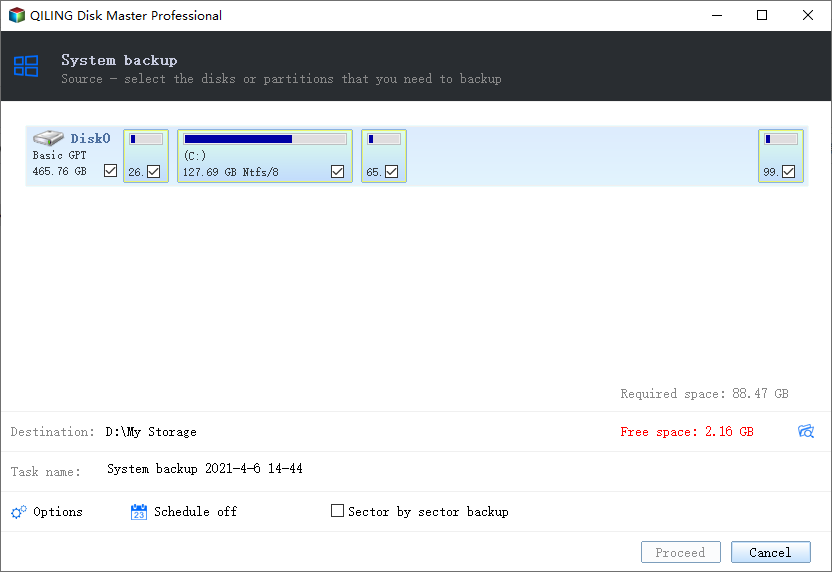
With Qiling backup software, you can easily create a backup of everything you want, including disk/partition, system, and files, with just one click. This allows for a seamless recovery from the backup in case of any issues.
Click System backup -Save the system backup to a location of your choice -> Click Proceed.
To recover the system from a Qiling backup image, you can simply boot from the backup image and follow the on-screen instructions to restore the system to its previous state. This process is quick and straightforward, allowing you to get back up and running with minimal downtime.
Related Articles
- Adobe Illustrator AutoSave, Backup and Protect Illustrator from Crash Error
- External Hard Drive Takes Forever to Load
- Fix: Windows 10 Upgrade Stuck at 75% or 76%
- Solved: What Is Taking Up Space on My Hard Drive in Windows 10/8/7
- eMMC VS HDD: Which Is Better & What's The Difference
Compare eMMC and HDD storage by speed, capacity, durability, price, and best use cases. Learn which option is better for your device. - [10 Fixes] Error 0x800701b1 Troubleshooting on Windows 11/10
If you're experiencing Error 0x800701b1 on your Windows PC and struggling to copy files. This guide provides a simple solution to fix the issue.
Products
Articles & Tutorials
- Data Recovery
- Data Backup
- File Recovery
- File Backup
- System Backup and Restore
- Disk and Partition Clone
- Technical articles
- Mobile articles
- Disk Master Help
- Windows Data Recovery Tutorials
- Windows Secure Delete Tutorials
- Windows Partition Management Tutorials
- Windows File Backup and Restore Tutorials
- Windows System Backup and Restore Tutorials
- Windows Disk Backup and Restore Tutorials
- Windows Clone Tutorials