Solved: What Is Taking Up Space on My Hard Drive in Windows 10/8/7
Q: Something is eating my hard drive space in Windows 10, help!
"About three weeks ago, my 500GB hard drive suddenly became extremely slow and had only 50GB left. Now the hard drive only has just 100MB left, and I can't even open the drive to use a file quickly. It looks like something is eating my hard drive space, but I don't know what it could be.
How can I find out what's taking up space on my hard drive and resolve this issue? Can anyone help? I'm using Windows 10."
Your hard drive may suddenly become full without a clear reason. If it's a system disk and nearly full, Windows may slow down. To address this, you'll need to figure out what's taking up space on your hard drive and then free up some disk space.
How to See What Is Taking Up Space on Hard Drive in Windows 10/8/7
What's taking up space on your hard drive? There are two steps you can take to find out.
Step 1. Show hidden files on the hard drive
To display hidden files on your computer's hard drive, you can refer to our guide, which provides three methods to do so. The guide is available on the page "How to Show Hidden Files" and offers a step-by-step approach to accessing these files.
Step 2. To identify what's consuming hard drive space, you can use built-in tools or third-party software. On Windows, use the "Storage" settings in the "Settings" app to see a breakdown of disk usage.
To see what's taking up space on your hard drive, you can follow the same steps on Windows 10, which can also be applied to Windows 8.1/8/7. On Windows 10, go to File Explorer, click on "This PC" or "Computer" in the left sidebar, right-click on the drive you want to check (usually C: or the main hard drive), and select "Properties." This shows you the total capacity and available space, as well as a breakdown of the space used by files, folders, and other items.
1. Right-click on the Windows icon and select "Settings".
2. Click "System", then click "Storage" on the left-side panel.
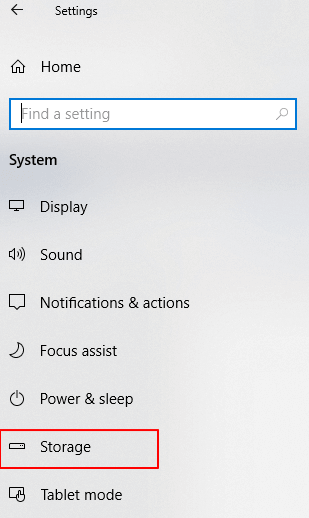
3. In the Storage window, you'll see a view of the space usage situations on all your hard drive partitions.
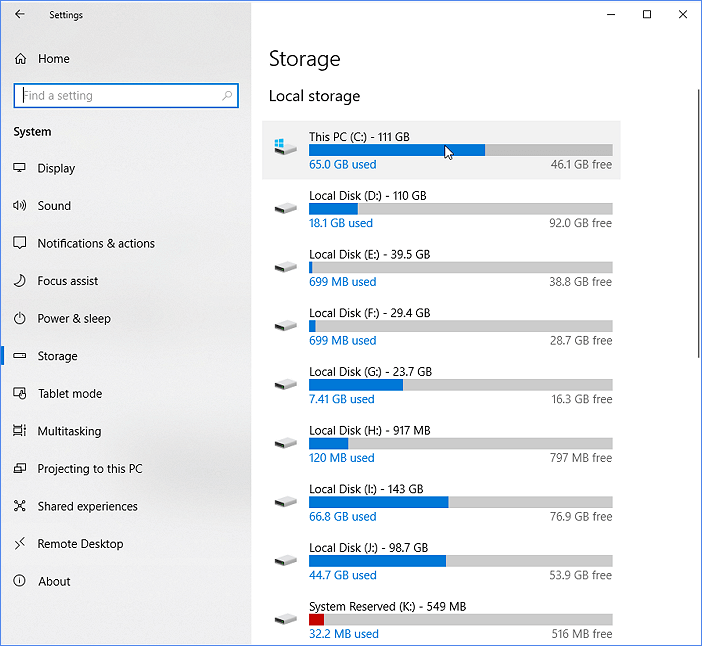
4. To see what's taking up the most space on your PC, click on a nearly full hard drive partition. This shows you what's using up the most storage, including apps and features.
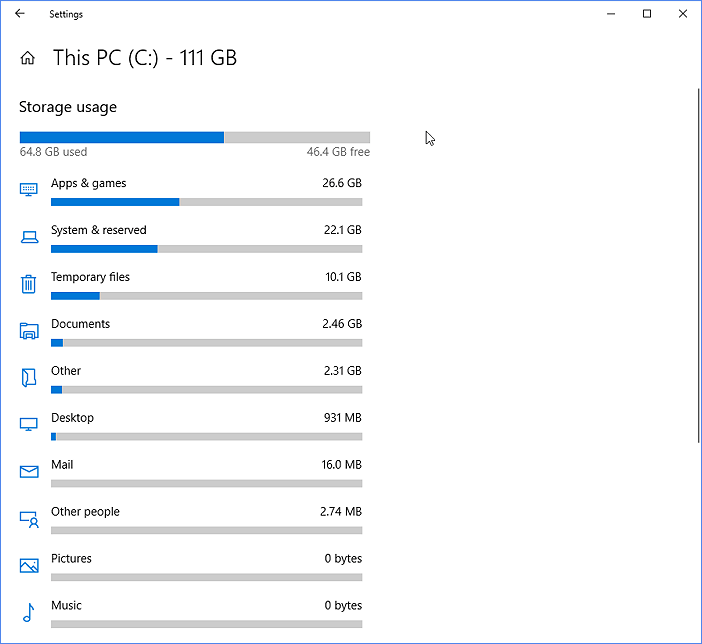
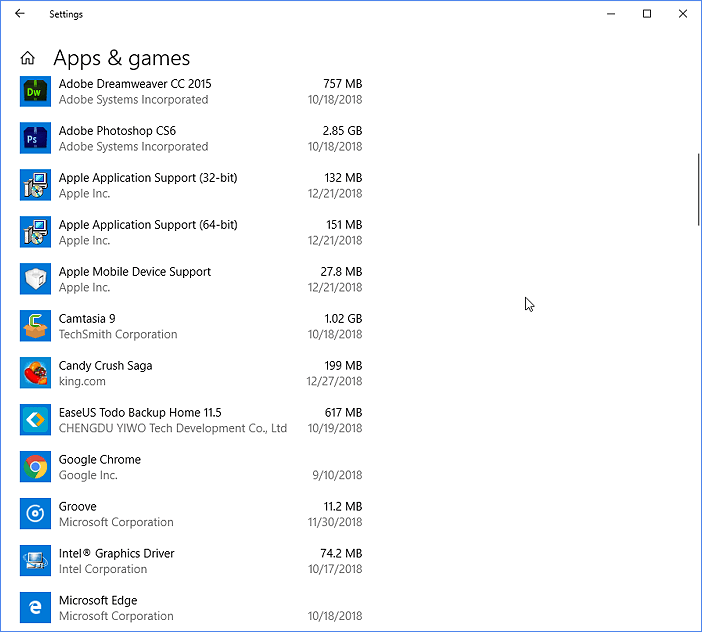
Now that you've identified what apps and features are taking up storage on your PC, you can manually clean up your hard drive by removing temporary files, useless apps, and other unnecessary data.
Click each hard drive partition to identify what's consuming space, then review each category to remove unnecessary apps, files, and other items that are taking up room.
If you're tired of manually deleting files, there are ways to automatically free up disk space and boost your computer's speed. To thoroughly clean up your disk and speed up Windows 10, you can use various methods, including deleting temporary files, uninstalling unused programs, and removing system logs and other unnecessary files. Additionally, you can also use built-in tools like Disk Cleanup and System File Checker to automatically remove unnecessary files and fix corrupted system files, making your computer run faster and more efficiently.
7 Effective Ways to Free Up Disk Space on Windows 10/8/7
After checking what's taking up the most space on your hard drive in Windows 7, 8, or 10, you can free up space for important files and programs by following the provided approaches, which can also help improve your computer's performance.
- Remove Junk Files/Useless Large Files
- Run Disk Cleanup to Clean Temporary Files
- Uninstall Unused Bloatware Software
- Free Up Space by Storing Files on Another Hard Drive or the Cloud
- Transfer Programs, Apps, and Games to External Hard Drive
- Disable Hibernate
- Upgrade to a Larger HDD/SSD
1. Remove Junk Files/Useless Large Files
Qiling CleanGenius is a free and lightweight program that can help solve various tough problems, including removing write protection from USB, SD, internal, and external hard drives in Windows 10/8/7, making it an ideal tool for clearing up space taken up by temporary files or useless large files.
The System Optimize Tool allows you to quickly clear up space on your hard drive by cleaning up junk files and large files, effectively cleaning up all hard drive partitions. This feature can be installed on your PC to improve computer performance and free up space.
Step 1. Download and install Qiling Partition Master Suite.
Step 2. Click PC Cleaner and install Qiling CleanGinus. Then, click "Cleanup" and click "Scan" to start cleaning up the system and make your PC as good as new.
Step 3. The software scans your entire computer to identify large, unnecessary files that consume a significant amount of disk space. You can select and remove useless large files, system junk files, and Windows invalid entries with a single click of the "Clean" button, initiating the system cleanup process.
Step 4.When the scan is complete, click "Done" to finish cleaning system junk files.
You may also choose "Clean Large Files" to remove useless large files, which can help clear out a lot of free space.
2. Run Disk Cleanup to Clean Temporary Files
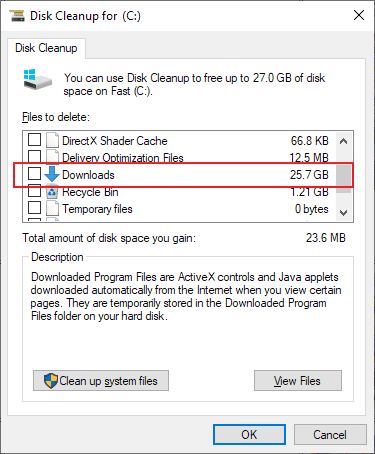
Unlike disk defragmentation, which rearranges files, Disk Cleanup works to remove temporary files and other unimportant data on the hard drive, helping to reclaim your disk space.
Step 1.Open This PC, right-click on your system drive and choose "Properties".
Step 2.To free up space on your computer, click on the "Properties" button on the "Computer" icon, then click on the "Disk Cleanup" button under the "General" tab. This will start scanning your drive and calculating how much space you can free.
Step 3. When the process is complete, select the "Clean up system files" option in the window to have the tool scan your disk again.
Step 4. After the scan completes, click "OK" in the new window, then a notification will appear asking if you're sure you want to permanently delete the files. Click "Delete Files" and rest assured, as these operations only remove unnecessary files, you won't lose any important ones.
If disk cleanup is not working in Windows 10, there are a few troubleshooting steps you can take to resolve the issue. Firstly, ensure that the disk cleanup tool is enabled in Windows.
3. Uninstall Unused Bloatware Software
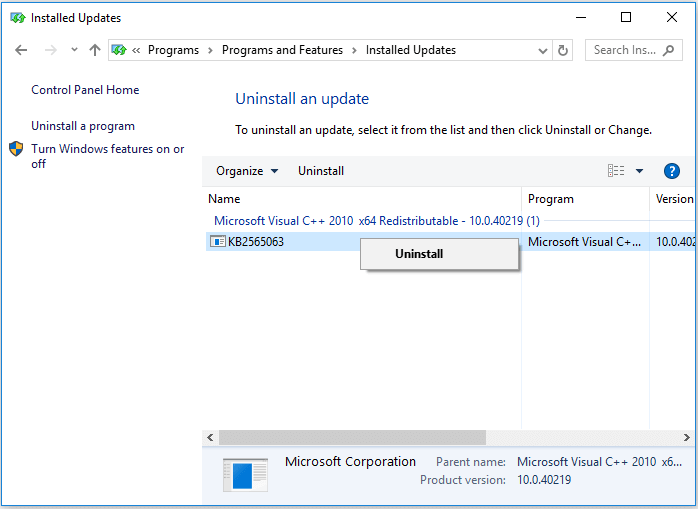
To free up space on your hard drive and make your Windows 10 run faster, you can uninstall the pre-installed programs you don't want or need, which are taking up unnecessary space and slowing down your computer.
Right-To uninstall a program, click the Start menu, choose "Control Panel" and then select "Programs" and click "Uninstall a program". From the list, select the programs you no longer need and click "Uninstall" at the top of the list.
4. Free Up Space by Storing Files on Another Hard Drive or the Cloud
To free up space on your hard drive, you can try compressing large files using tools like 7-Zip or WinRAR, which can reduce their size by up to 90%. Alternatively, you can store these files on an external hard drive or cloud storage services like Google Drive or Dropbox, which can provide a convenient and secure way to access your files from anywhere.
Tip 1. To add a new disk to your PC and move files to it, first ensure the disk is properly connected and recognized by your computer. Then, navigate to the "This PC" or "Computer" section on your desktop, find the new disk, and right-click on it to select "Properties" or "Format" to initialize it.
Tip 2. Store files to an external storage device.
Tip 3. Store files to a cloud account, such as OneDrive.
Tip 4. Backing up big files into an image with a compressed format can save a significant amount of space on your disk, approximately half the space that would be required if the files were backed up in their original, uncompressed form.
5. Transfer Programs, Apps, and Games to External Hard Drive
If your Windows internal hard drive is full of installed programs, applications, and games, you can change the install location to free up space by moving them to an external hard drive. To do this, you can use a tool like Qiling PCTrans to easily migrate the programs with just a few clicks.
Step 1. Connect your external hard drive to your computer, then open Qiling Disk Master and select "App Migration > Start".
Step 2. Find and choose the applications (marked as "Yes") that you want to transfer. You can select multiple apps.
To move apps to an external hard drive, click the triangle icon and choose your external hard drive as the destination to store the apps.
Step 3. To transfer your programs to an external hard drive, first, click on the Start button and then on the "Settings" icon. Next, click on "Update & Security" and then on "Backup" from the left menu.
6. Disable Hibernate
When you hibernate your system, it saves the contents of its RAM to your hard drive, allowing you to resume where you left off without power usage. Windows stores this data in the C:\hiberfil.sys file, which can be disabled to save hard drive space.
If you are using this feature and it's useful for you, don't turn it off. It's up to you.
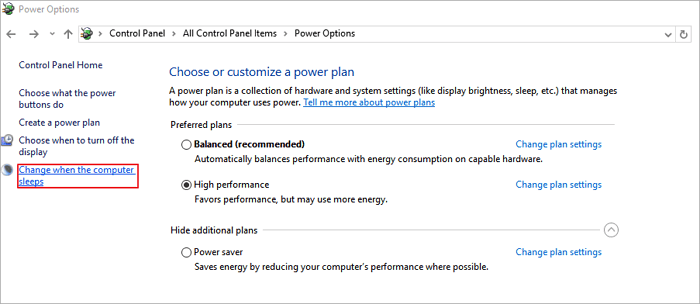
Step 1. To change the sleep settings on your computer, click on Start, then open Control Panel and select "Power Options". From there, click on the "Change when the computer sleeps" option on the left side.
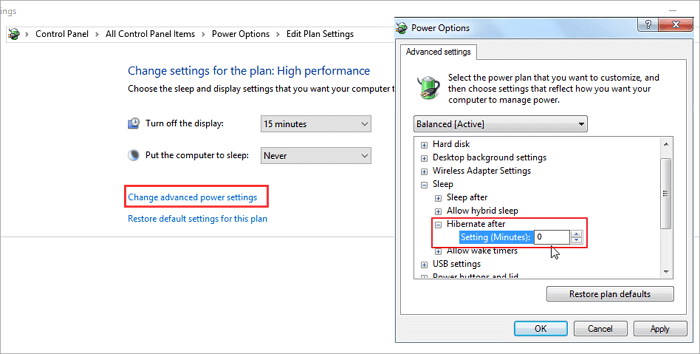
Step 2. To turn off hibernation, go to the Power Options window, click on "Change advanced power settings", expand the "Sleep" section, then expand "Hibernate after", and change the minutes to 0.
Step 3. Or you can specify the amount of minutes you want to pass before it goes into hibernation. Click "Apply" and "OK" then close out of the remaining screens.
7. Upgrade to a Larger HDD/SSD
If you're running out of free space on your Windows 10 or Windows 7 hard drive, and other options won't free up enough space, the most effective solution is to replace the old hard drive with a larger new one. Cloning is the best way to do this, as it allows you to transfer all your data to the new drive without losing any information, making the process very convenient.
Qiling Partition Master allows you to clone an entire disk to another, even if the destination partition is smaller than the source, enabling the cloning of a larger HDD to a smaller HDD.
Download this easy-A disk management program can be used to clone a hard drive to a new HDD or SSD with ease. To do this, you'll need to download and install a disk cloning software such as Qiling Backup.
Step 1. Select the source disk.
Right-To clone or copy a disk, click on the disk you want to clone or copy, then select the "Clone" option.
Step 2. Select the target disk.
Select the desired storage device, such as a hard disk drive (HDD) or solid-state drive (SSD), as your destination and proceed by clicking "Next".
Step 3. View the disk layout and edit the target disk partition size.
When preparing to install a new operating system, you may need to wipe the target disk. To do this, go to the Disk Management console, select the target disk, and click "Delete Volume" or "Delete Partition" depending on the disk's current configuration. Click "Continue" when the program warns that it will erase all data on the disk. If you have valuable data on the target disk, be sure to back it up in advance to avoid losing it.
You can choose from three options to customize your disk layout: "Autofit the disk", "Clone as the source", or "Edit disk layout". The last one is recommended if you want to reserve more space for the C drive.
Step 4. Click "Proceed" to start the disk cloning process.
Qiling Partition Master offers a range of one-stop disk partition features beyond disk cloning, including resizing/moving partitions to address low disk space issues, merging partitions, creating, deleting, or formatting partitions, wiping partition data, and converting disks or partitions.
Final Verdict
You've learned how to identify what's taking up space on your hard drive in Windows 7/8/10 and how to free up space using seven feasible fixes. However, high disk space usage can still occur even with a larger hard drive, so it's essential to regularly clear up your disk space using these methods.
Related Articles
- [2022 Fixes] How to Fix Your Computer Was Unable to Start
- Fix 'Startup Repair cannot repair this computer automatically' in Windows 10/8/7/Vista
- Full Guide: How to Fix HP Laptop Black Screen
- Repair Time Machine Backup (Solved): Time Machine Backup Failed, Corrupted, Missing
- How Do I Transfer Windows OS to a Different SSD?🔥
How do I transfer Windows OS to a different SSD? Do you want to get the answer? This article will tell you how to transfer your Windows to a new SSD and introduce a tool to help you. - How Do I Uninstall Ubuntu and Install Windows 10?
I want to uninstall my Ubuntu and get Windows 10 backup, but how do I uninstall Ubuntu and install Windows 10? This guide can help. This article will tell you how to uninstall Ubuntu and install Windows 10 and offer a tool to help you.
Products
Articles & Tutorials
- Data Recovery
- Data Backup
- File Recovery
- File Backup
- System Backup and Restore
- Disk and Partition Clone
- Technical articles
- Mobile articles
- Disk Master Help
- Windows Data Recovery Tutorials
- Windows Secure Delete Tutorials
- Windows Partition Management Tutorials
- Windows File Backup and Restore Tutorials
- Windows System Backup and Restore Tutorials
- Windows Disk Backup and Restore Tutorials
- Windows Clone Tutorials