What Is a Snapshot and How Is It Different from a Backup
You're likely familiar with Snapshot, but may not know what it actually is. This post provides a clear explanation of what a snapshot is and how it works.
What Is Snapshot
A storage snapshot is a reference marker for data at a specific point in time, serving as a directory holding copies of data that users can access. It assigns snapshot copies of system or system state, containing the directory structure of a hard disk, including every file and folder on the disk.
How Does Snapshot Work
Storing snapshots is based on the use of differential disks, which are a special kind of virtual hard disk.
When a device administrator creates a storage snapshot, it creates a new disk that mirrors the original virtual hard disk, leaving the original unchanged. The filesystem remains unaware of the differencing disk, and all writes are directed to the new disk. This process creates a tree-like structure with each snapshot forming a new branch, gradually accumulating a history of changes.
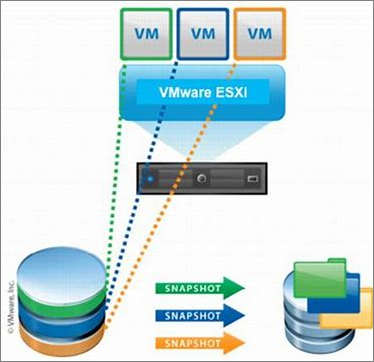
Snapshots are typically used to protect data, but can also be used for testing, data mining, and restoring lost data or system configurations in case of accidental changes or incorrect patches.
Snapshot Type
- Copy-on-write: When an I/O request tries to modify a block of storage, the block is first copied and retained by the snapshot to which it belongs, allowing the original block to remain unchanged.
- Redirect-on-write: When creating a new block, only one write to the snapshot is required.
- Continuous data protection: Snapshots will run every second backup.
- Mirror/clone/replication: A clone or mirror is a duplicate of a storage unit, and replication is a fast method of backing up data.
Snapshot Vs. Backup
Creating snapshots is a practical way to manage version control, allowing for the creation of lightweight and easily accessible versions of data or systems. This process is storage-efficient and time-efficient, as it doesn't take up a lot of space or require a lot of time to create copies.
A backup is a duplicate copy of a system or directory stored in a different location, used for data protection against loss due to server failure or accident, and can be performed on a regular basis.
You may be interested in Top 10 Offline Backup Software Recommended in 2022
Conclusion
Snapshot files save storage space, allowing administrators to store them alongside existing virtual machine files, eliminating the need to wait for backup files to be downloaded from elsewhere. However, they consume a lot of disk space, making it impractical to keep old snapshots for extended periods.
The administrator must rebuild the snapshot to restore the virtual machine, and if the previous snapshot file or the original virtual disk is damaged, the system cannot fix the snapshot. The system deletes any files from previous snapshots, making it necessary to fully restore the snapshot to retrieve a file.
Related Articles
- How to Build A PC? Follow A Complete Guide to Do It
- What Is ASD File? [Detailed Information]
- What Is Ping in Gaming? Everything You Need to Know
- What Is SFC Scannow Command? How to Fix Corrupted Files Using This System File Checker
- Seagate External Hard Drive [Full Information]
What is Seagate external hard drive? This article will show you all the information you want about Seagate external hard drives, including their capacity, working life, and how they differ from Western external hard drives. - Seagate NAS Cloud Backup and Most Reliable Alternative Solutions
Learn about Seagate NAS cloud backup and practical alternatives. Compare NAS backup options for file storage, data protection, and remote access.
Products
Articles & Tutorials
- Data Recovery
- Data Backup
- File Recovery
- File Backup
- System Backup and Restore
- Disk and Partition Clone
- Technical articles
- Mobile articles
- Disk Master Help
- Windows Data Recovery Tutorials
- Windows Secure Delete Tutorials
- Windows Partition Management Tutorials
- Windows File Backup and Restore Tutorials
- Windows System Backup and Restore Tutorials
- Windows Disk Backup and Restore Tutorials
- Windows Clone Tutorials