Backup and Sync No Longer Available: Try Another Way
The error "Backup and Sync is no longer available" started rolling out after October 1st, 2021, when Google retired Backup and Sync and replaced it with the desktop version of Google Drive.
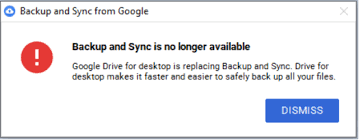
The two programs were merged into one, but this change wasn't well-received as people preferred the ease of having separate tools over a unified one.
With the discontinuation of Backup and Sync, Google Drive's standalone syncing feature, users are now left with other options. One viable alternative is Google One, which offers cloud storage, automatic backup, and syncing capabilities. Additionally, other cloud storage providers like Microsoft OneDrive, Dropbox, and pCloud also offer syncing features, along with varying levels of storage capacity and pricing plans. Furthermore, some users may also consider using local backup solutions like Qiling backup, which can provide an additional layer of protection for their data.
Is Backup and Sync Discontinued?
Google's Backup and Sync service has been discontinued since October 1, 2021, after being unified into Drive for desktop. The service had stopped working for users worldwide on that date.
People started searching for answers online, with many turning to YouTube for information. One user in particular spoke for many, sharing their thoughts on the change.
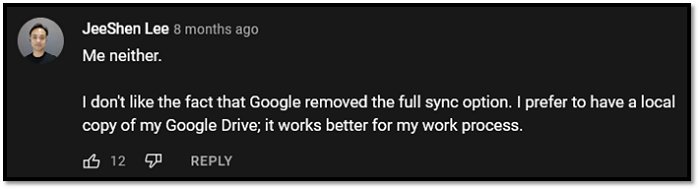
While others indicated they wanted a new or alternate option:

Google's recent move to replace Backup and Sync with Google Drive is being seen as a takeover by some, but the company wants users to view it as an addition of a new and more dependable program. This isn't the first time this has happened, as Backup and Sync was itself introduced as a replacement for Google Drive back in 2018. Instead, it's more of a "takeback" for Google Drive, with the company simply reclaiming its original name and branding.
Google's decision to discontinue Backup and Sync has not been taken lightly by users, with some even reporting data loss as a result. However, it's now clear that this was not an error, but rather a final decision, as evidenced by the official release notes from Google, which confirm that Backup and Sync is no longer available.
What to Do: Switch to Google Drive for Desktop
If your files are stored in your Google account, you can access them through Google Drive for Desktop, where you can use tools like Backup and Sync, now called Stream files or Mirror files.
To download and install Google Drive on your Desktop, follow these steps: First, go to the Google Drive website and click on the "Download" button. Then, follow the installation prompts to install Google Drive on your computer. Once installed, you can access your Google Drive account from your Desktop by clicking on the Google Drive icon. Alternatively, you can also access your Google Drive account by searching for it in the Start menu (for Windows) or Spotlight search (for Mac).
Step 1: Head to Google Drive's download page and download Drive for Desktop
Step 2: Install Drive on your computer
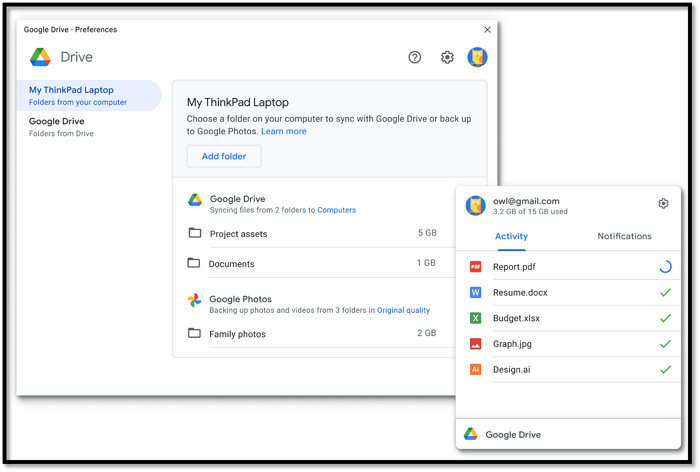
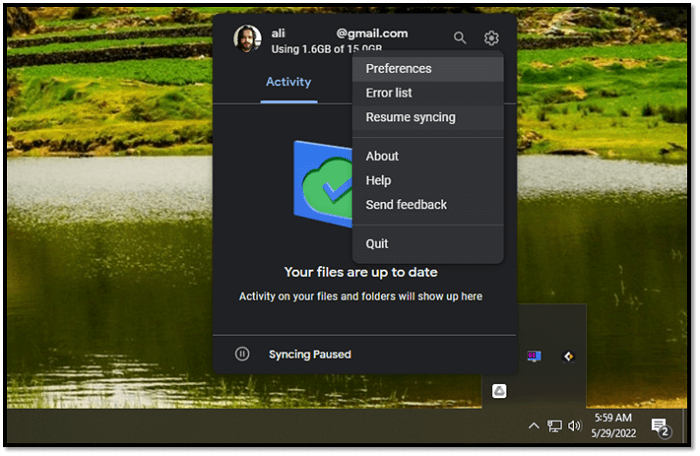
Step 3: Sign in to your Google account, click on the Google Drive tray icon, and right-click on it.

Step 4: Click on the Settings cogwheel and Resume Syncing
Backup and Sync was a separate app that allowed you to sync your Google Drive files to your computer, but it also included a backup feature that allowed you to create a local copy of your Google Drive files. The Google Drive desktop app, on the other hand, is a single app that provides both syncing and backup features, but with a focus on syncing your Google Drive files to your computer.
- Google Drive and Dropbox both allow users to access and use files from their own "My Drive" folders on their desktop, making it easy to keep files organized and accessible.
- Both can open Microsoft Office or non-Google files
- Drive for Desktop takes it a step further by showing who is currently editing a document, specifically for Docx files, providing a more collaborative and transparent experience.
- Both can sync folders like Documents or Desktop to your Google Drive account, allowing you to access your files from anywhere.
- Both can use various Google accounts at once
- Both access Apple Photos Library
- Both accept file uploads from USB
- Drive for Desktop is the only one with Dark Mode
The new features of Drive make it more favorable than its predecessor, but it takes time for people to accept changes related to computers and software.
Try A Professional Alternative - Qiling Backup
If you're fed up with Google's changes and the hassle of backing up files, consider switching to a more professional and user-friendly alternative like Qiling Backup. What sets this tool apart is its ability to provide a smoother and more efficient experience for users.
- Google Drive offers 15GB of free storage, while Microsoft OneDrive provides 250GB of free storage, a significant difference in capacity.
- The new backup solution has several improved features, including the Security Zone, which provides an additional layer of protection against ransomware by safeguarding your backups.
- Disk imaging is a method of keeping even the smallest files backed up properly, by creating a bit-for-bit copy of an entire disk or partition. This approach ensures that all data, including metadata and operating system files, is captured and preserved, providing a comprehensive backup solution.
- Instant recovery and quick restoration of files
This program offers a reliable and efficient backup solution, considering factors such as user interface, ease of use, compatibility, and features. It provides a straightforward backup process, allowing users to easily select and backup their files, making it a viable alternative for those seeking a dependable backup program.
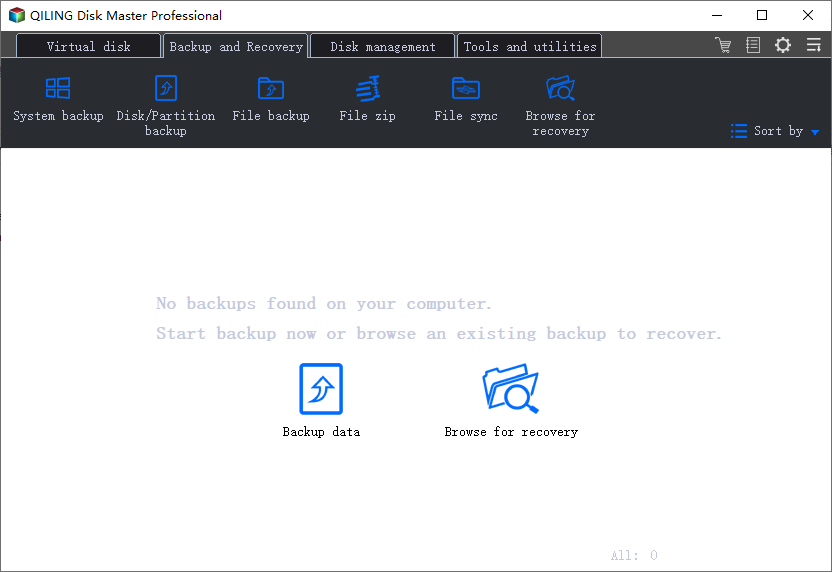
Step 1. Click the "File backup" button to start backup.
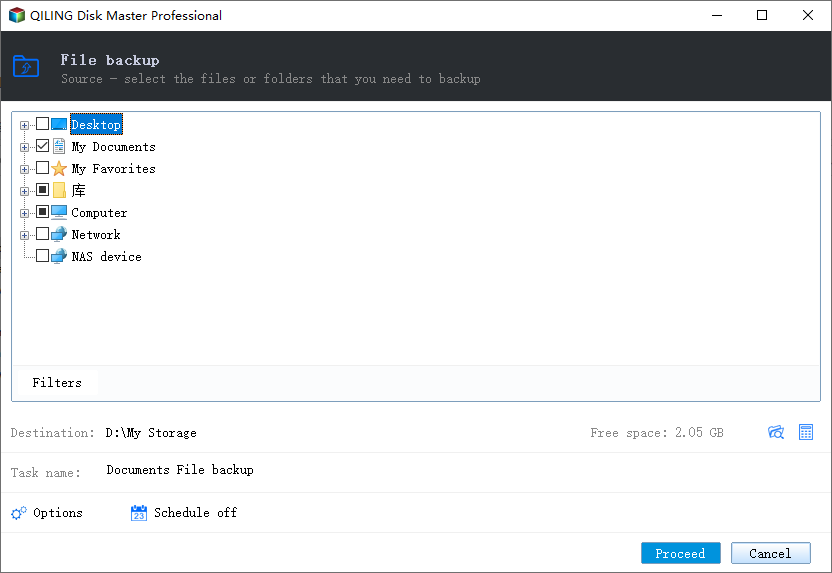
Step 2. Local and network files will be listed on the left, allowing users to expand directories and select the files to be backed up.
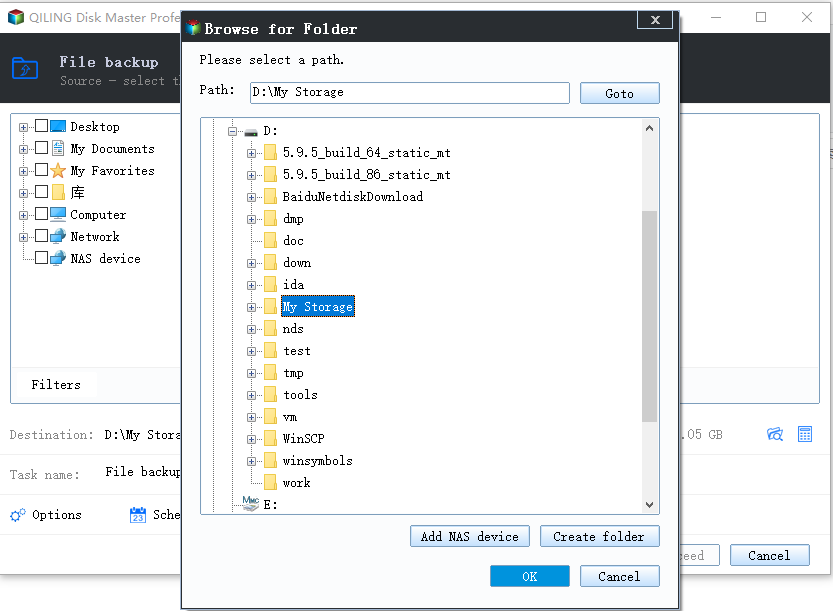
Step 3. Select the desired destination to save the backup, following the on-screen instructions provided.
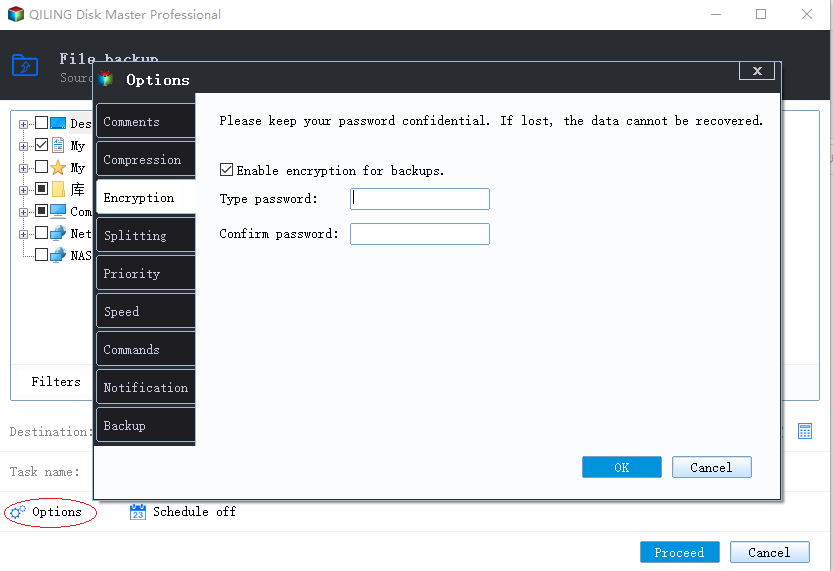
Step 4. To encrypt the backup with a password, click on the "Options" button and select the "Backup Options" menu. This will allow you to customize the backup task and explore other available options.
To set the backup schedule, go to the "Backup Scheme" section and select the frequency at which you want backups to occur. You can choose from options like daily, weekly, or monthly.
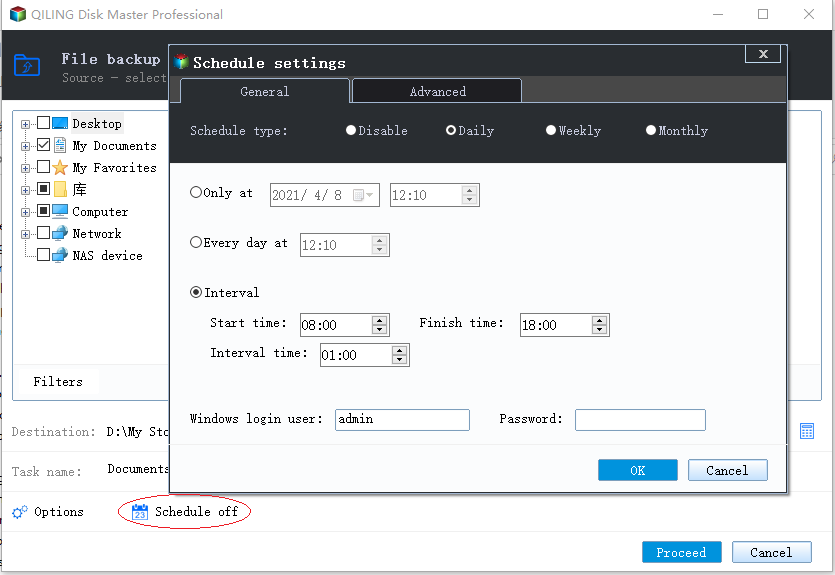
Step 5. You can store backups locally on your device, or to Qiling's cloud service, or even to a Network-Attached Storage (NAS) for added convenience and security.
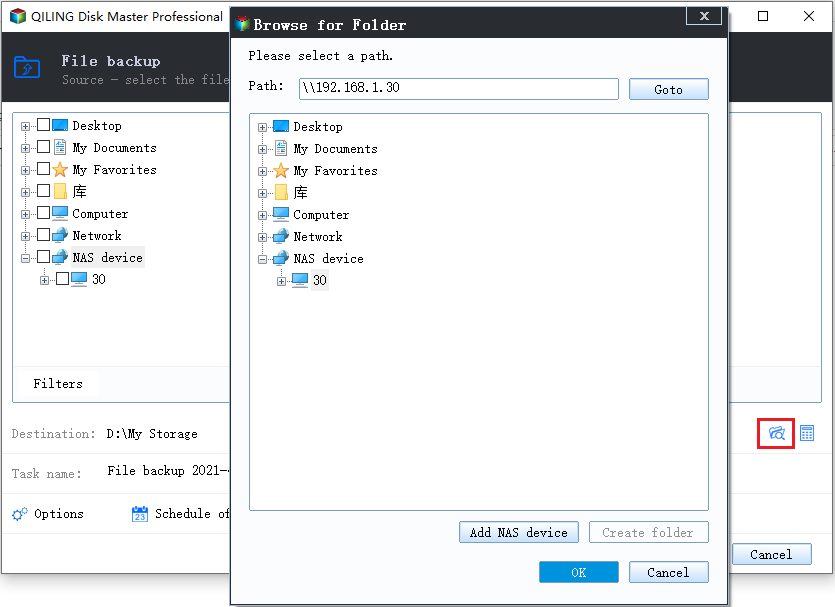
Step 6. Qiling Backup allows users to back up data to both third-party cloud drives and its own cloud drive.
If you want to back up data to a third-party cloud drive, select Local Drive, scroll down to add a Cloud Device, add your account, and log in.
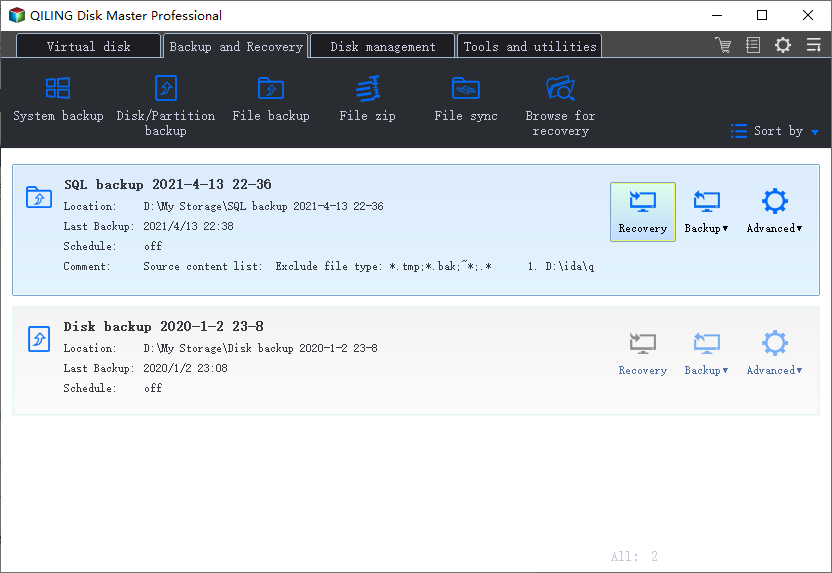
Step 7. To start a backup, click "Proceed" and the task will be displayed on the left side of the panel once completed. From there, you can right-click on the task to further manage it.
People Also Ask
1. Are Backup and Sync the same as Google Drive?
Google Drive was previously known as Backup and Sync, but in 2021, Google merged it with Drive Stream and renamed it back to Google Drive for Desktop.
2. Why did Google get rid of Backup and Sync?
Google has merged the functionality of two separate programs into a single desktop app, making it more convenient for users to access and use.
Conclusion
Backup and Sync are no longer available on your computer, but alternatives like Google's Drive app for desktops are available. You can also try Qiling Backup to ensure the safety of your important files and create a copy of your computer to an external hard drive.
Related Articles
- What Is Cloud-to-Cloud Backup? Definition & Examples of 2022
- Quick & Easy: Fix Cannot Download from Google Drive Problem
- Windows 11 Free Download Full Version 2022 (4 Options Got You Covered)
- Exclude OneDrive from Antivirus Software Scan
- How to Create a Local Backup of My 1Password Vault?
Is it possible to back up the 1Password vault? How to create a local backup of my 1Password vault? Do not pass this post, because you will find all the answers with detailed tips in this short post. - How to Delete System Restore Points Windows 7
Do you know how to delete system restore points Windows 7? If you do not know, this short post will help you. In addition, you can learn how to delete system restore points in Windows 7 and how to use a better way to protect your Windows 7 PC.
Products
Articles & Tutorials
- Data Recovery
- Data Backup
- File Recovery
- File Backup
- System Backup and Restore
- Disk and Partition Clone
- Technical articles
- Mobile articles
- Disk Master Help
- Windows Data Recovery Tutorials
- Windows Secure Delete Tutorials
- Windows Partition Management Tutorials
- Windows File Backup and Restore Tutorials
- Windows System Backup and Restore Tutorials
- Windows Disk Backup and Restore Tutorials
- Windows Clone Tutorials