Best Windows Backup Tools Before a Feature Update: 3 Choices
A major Windows update can fail or leave an application, driver, or setting unusable. A copy of your documents helps with lost files, but it cannot put the previous Windows installation back. If rollback matters, make a system image on another physical drive and check the path you would use to restore it.
What matters before an update
For this task we look for a whole-system image, an external or network destination, and a way to restore when Windows will not boot. We did not run a speed or reliability benchmark, so the order below reflects use cases rather than measured performance. Confirm the current edition and license before depending on a particular feature.
| Tool | Best fit | Check before updating |
|---|---|---|
| Qiling Disk Master | System imaging plus disk and partition tools in one Windows application. | Save the image off the system disk and prepare a usable recovery environment. |
| Veeam Agent for Microsoft Windows FREE | PC or volume-level backup with an external-drive or shared-folder target. | Create and test Veeam Recovery Media. |
| Macrium Reflect X Home | Image-based Windows recovery with dedicated Rescue Media. | Check the current trial or license terms and create Rescue Media early. |
Three practical choices
1. Qiling Disk Master: backup alongside disk tools
Qiling offers a System backup task that shows the Windows and boot-related partitions in the source layout. This is useful if you also manage disks with the same application. The image must remain accessible from the recovery environment if Windows later fails to start.
2. Veeam Agent FREE: dedicated PC backup
Veeam's free Windows agent supports image-based backup to an external drive or network location, and its recovery media can start outside Windows. It suits users who want a standalone backup agent rather than a broader disk-management suite.
3. Macrium Reflect X Home: image and rescue workflow
Reflect X Home provides image backup and a separate Rescue Media environment. Macrium currently presents a trial for its home product; do not assume the old Reflect Free edition is its current offer. Check the license terms before building a long-term schedule.
Windows File History and OneDrive can also protect selected files, but they do not by themselves replace an independently restorable system image. Keep a separate copy of your BitLocker recovery key and important account credentials.
Create a system image with Qiling Disk Master
Use a connected external HDD/SSD or a reliable network destination with enough free space. Do not put the only image on the same physical disk as Windows.
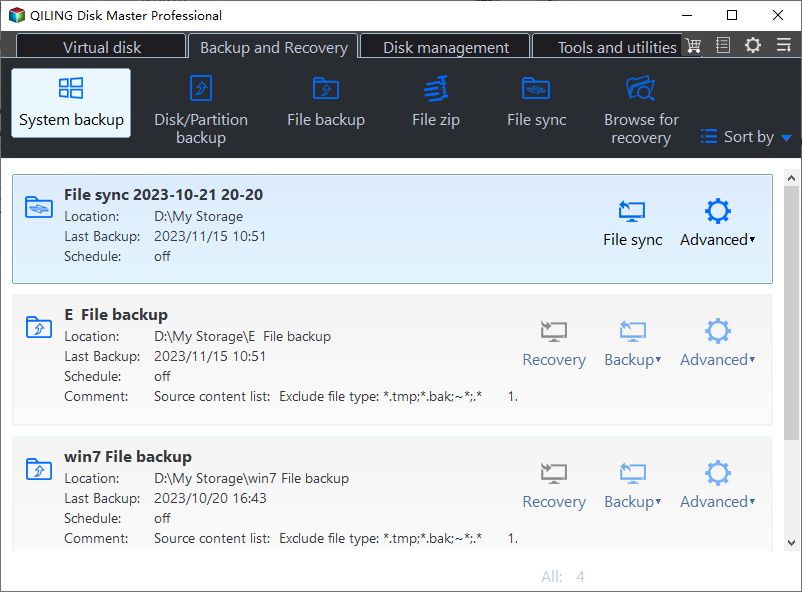
Step 1. Open Backup and Recovery and select System backup. Do this before starting the Windows feature update.
Step 2. Inspect the proposed source. Confirm it is the Windows installation you intend to protect and that its boot partitions are included.

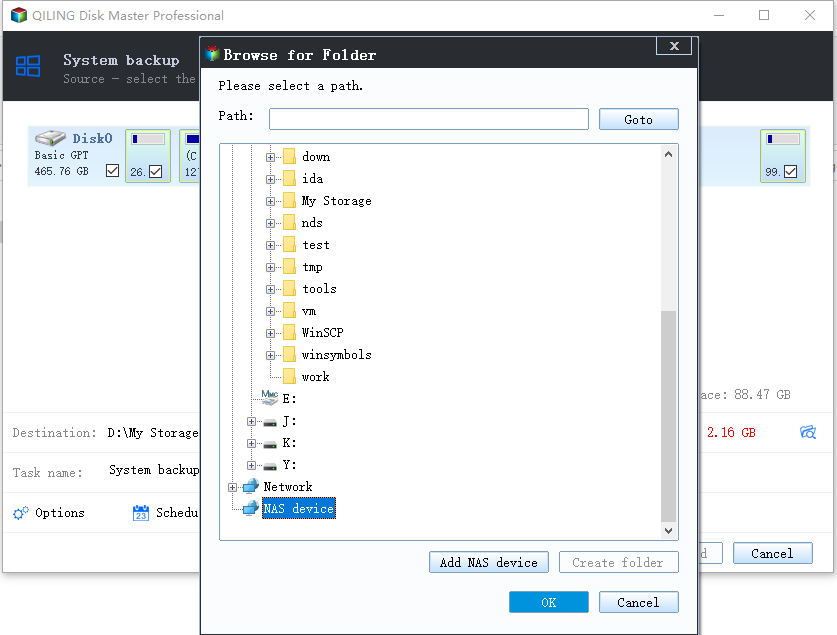
Step 3. Open the destination browser. Select a folder on the external drive or a reachable network share, then compare the estimated required space with the destination's free space. Change the destination if it is too small.
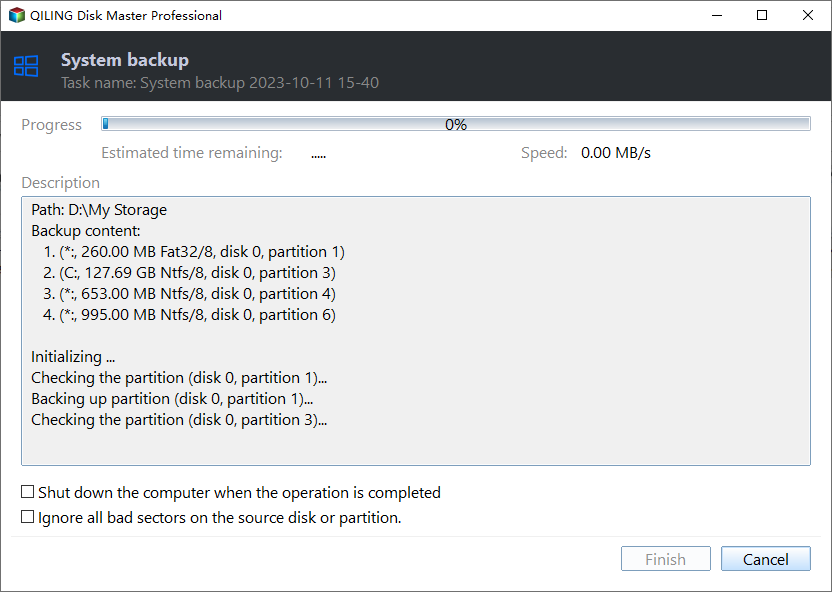
Step 4. Confirm source, destination, and task name. Click Proceed and leave the destination connected until the progress completes.
Check the backup before installing the update
Confirm the completed task and image can be found on the destination. Create recovery media and test that the PC can start it and see the backup location; do not initiate a restore merely to test visibility. Disconnect the external drive before the update if you will not need it during installation. For update-specific preparation, see backing up before a Windows 11 feature update.
Which backup tool should you use?
Choose Qiling if you want backup and disk management together, Veeam Agent FREE if a dedicated free PC backup agent fits your workflow, or Reflect X Home if you prefer Macrium's image and rescue process and its current license works for you. A tool is only useful for this purpose if you can locate the image and start the recovery environment when Windows is unavailable.
Related Articles
- Back Up Before Windows 11 25H2
Review files, system image, recovery keys, and update preparation. - Qiling Backup vs Macrium Reflect
Compare image backup, rescue media, scheduling, and current licensing.
Products
Articles & Tutorials
- Data Recovery
- Data Backup
- File Recovery
- File Backup
- System Backup and Restore
- Disk and Partition Clone
- Technical articles
- Mobile articles
- Disk Master Help
- Windows Data Recovery Tutorials
- Windows Secure Delete Tutorials
- Windows Partition Management Tutorials
- Windows File Backup and Restore Tutorials
- Windows System Backup and Restore Tutorials
- Windows Disk Backup and Restore Tutorials
- Windows Clone Tutorials