Can You Copy the Entire C: Drive to Another Laptop?
You can copy ordinary files from C: to another laptop, but a working Windows installation cannot be moved by selecting every visible file and pasting it. Windows depends on hidden boot partitions, permissions, drivers, and applications that may be tied to the old computer.
Decide What You Need to Transfer
For documents, photos, and game saves, file transfer is usually enough. For installed programs and settings, plan to reinstall the applications on the new laptop and sign in again. If you want a bootable copy of the old Windows installation, a whole-disk clone is a different operation and may not work on different hardware without repair or reactivation.
Before copying, open Settings > System > Storage and identify where your files actually live. Some may be on D:, an external disk, or in a cloud-only folder. A drive-letter match does not mean the data is the same. Record browser bookmarks, software licenses, and BitLocker recovery information separately.
Back Up Personal Files with Qiling Disk Master
Use this route when the destination is a different laptop. It creates a file backup, not a bootable Windows clone. Connect an external drive with enough free space, and leave the original laptop usable until restoration has been checked.
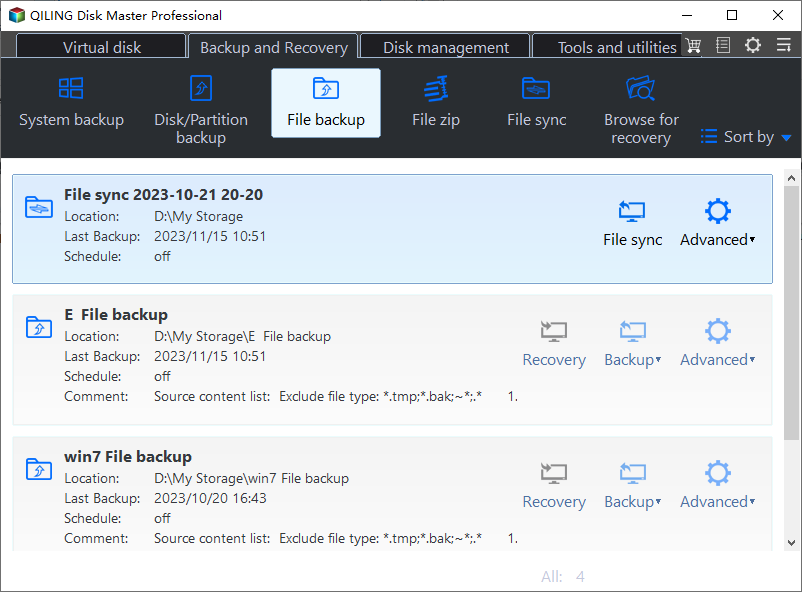
Step 1. Open Backup and Recovery > File backup in Qiling Disk Master.
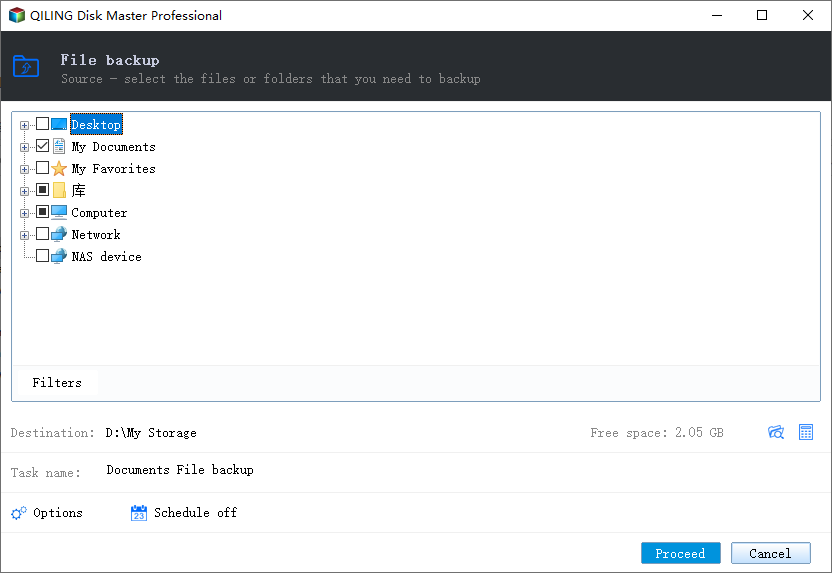
Step 2. Expand the source tree and select the user folders you need, such as Desktop, Documents, Pictures, Videos, and project folders. Add any data kept outside your profile; do not select the entire live Windows directory as a substitute for a system image.
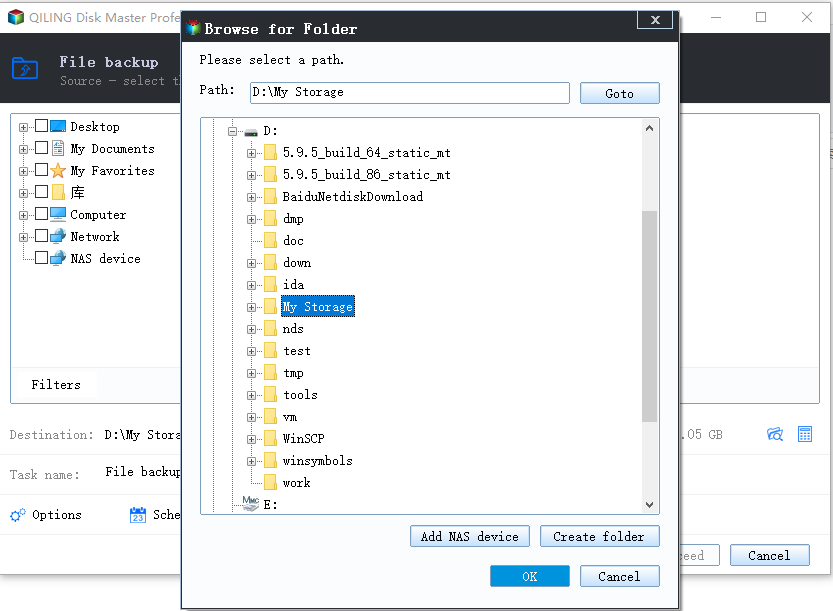
Step 3. Choose the external drive as the destination, confirm the available capacity and task name, and keep the destination separate from the source laptop.
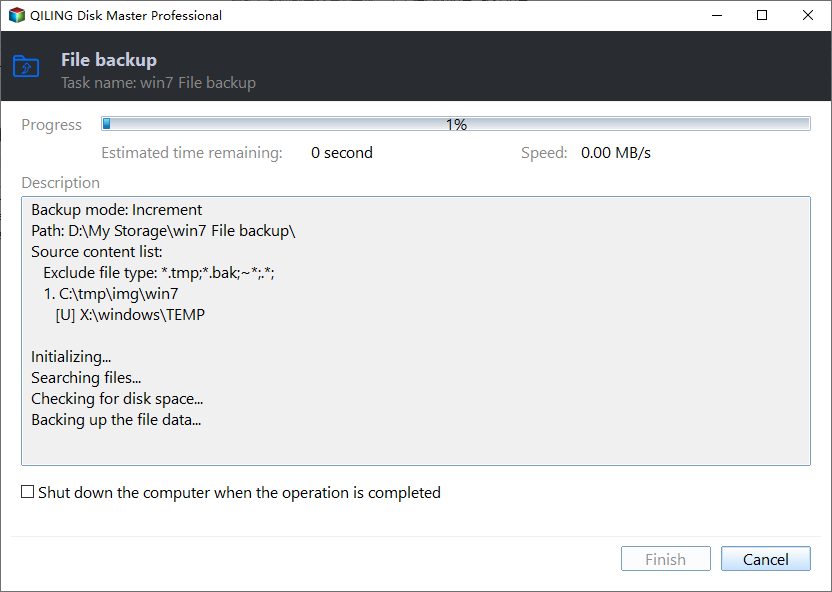
Step 4. Click Proceed, wait for completion, then browse the backup and restore a few sample files to verify they open.
Move Files to the New Laptop
Set up Windows and install current applications on the new laptop first. Attach the backup drive, use the Qiling recovery function if the backup is stored in its image format, and restore files into the new user's Documents, Pictures, and other appropriate folders. If you made a normal file copy instead, copy the folders in File Explorer and verify their contents.
Do not overwrite the new laptop's complete C:\Users tree or copy NTUSER.DAT over a live profile. Permissions, profile IDs, and application state differ between machines. Reconfigure email, cloud sync, and software licensing afterward, and keep the old laptop unchanged until you have checked important files and apps.
When a Clone Makes Sense
A whole-disk clone is best suited to replacing storage in the same laptop. It copies boot partitions and Windows along with data, but the destination is overwritten. Across different laptops, firmware mode, storage controller, TPM, drivers, and Windows licensing can interfere. If a replacement laptop is your goal, a fresh Windows setup plus verified file restore is usually easier to support.
Conclusion
Copy the files you need, not the live C: drive as a folder. Back up, verify the backup, set up the new laptop, and restore personal data before retiring the old one.
Related Articles
- Can an Entire C: Drive Be Copied to Another Computer?
Understand the difference between copying files and moving Windows. - Copy a Windows 10 Profile to Another User
Move personal folders without overwriting a live user profile.
Products
Articles & Tutorials
- Data Recovery
- Data Backup
- File Recovery
- File Backup
- System Backup and Restore
- Disk and Partition Clone
- Technical articles
- Mobile articles
- Disk Master Help
- Windows Data Recovery Tutorials
- Windows Secure Delete Tutorials
- Windows Partition Management Tutorials
- Windows File Backup and Restore Tutorials
- Windows System Backup and Restore Tutorials
- Windows Disk Backup and Restore Tutorials
- Windows Clone Tutorials