How to Migrate Dual Boot OS to New HDD/SSD
You're looking to replace your old dual boot OS drive with a new one, and you need a reliable guide to help you migrate your dual boot OS and upgrade to a new HDD/SSD.
If you're looking to upgrade and migrate your dual-boot operating systems to a new hard drive or solid-state drive (HDD/SSD), you're in a helpful guide. A comprehensive guide is available to help you through the process with ease. Let's get started!
PAGE CONTENT:
- #Preparation: Make Everything Ready for Dual Boot OS Migration
- #Start: Migrate and Clone Dual Boot OS Disk to New HDD/SSD
- #Follow-Up: Add Boot Option in BIOS for Dual Boot OS
This tool applies to cloning Windows 10/7, Windows 10/8, Windows 8/7, and other versions of Windows, including Windows 7/XP, from an existing disk to a new one.
Is It Possible to Upgrade Dual Boot OS to HDD/SSD
Dual boot OS is a popular choice among Windows professionals and advanced computer users, allowing them to run multiple operating systems on a single computer. The most common dual boot combinations include Windows 10/7, Windows 10/8, Windows 8/7, and Windows 7/XP.
As time passes, dual boot OS users may find their OS drive too small or their computer slowing down. To address this, users are exploring ways to clone and upgrade their dual boot OS to a new HDD or SSD.
It is possible for ordinary users to clone and upgrade a dual-boot OS drive to a new HDD/SSD. Follow the complete guide to learn how to upgrade your two operating systems to a new hard drive or SSD now.
#Preparation: Make Everything Ready for Dual Boot OS Migration
Here are two things to prepare for dual boot OS migration:
#1. Initialize New HDD/SSD
Step 1. Connect or install the new HDD/SSD to your computer correctly.
Step 2. Right-click"This PC/My Computer", click "Manage" and click "Disk Management".
Step 3. Right-click the not initialized new HDD/SSD and select "Initialize Disk".
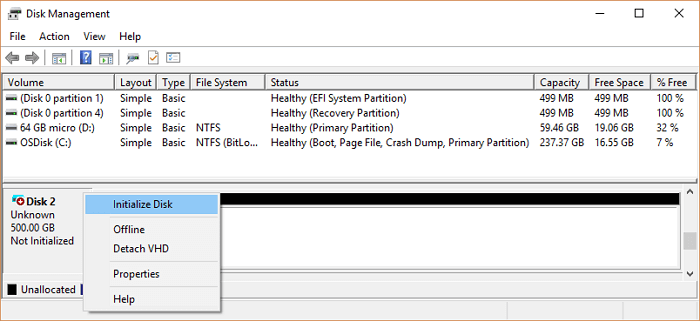
Step 4. Set "MBR" or "GPT" for HDD/SSD, and click "OK" to confirm.
To ensure a smooth transition, it's essential that your new hard drive or solid state drive (HDD/SSD) uses the same partition style as the source operating system (OS) disk. This means that if you're replacing the OS disk, the new HDD/SSD should also be set to use the same partition style, such as Master Boot Record (MBR) or GUID Partition Table (GPT), to avoid any compatibility issues.
#2. Download Reliable Dual-Boot OS Clone Software
Here, Qiling Backup with its System Clone and Disk Clone features can simplify the dual boot OS migration process, making it easy for anyone to upgrade their OS disk.
#Start: Migrate and Clone Dual Boot OS Disk to New HDD/SSD
After installing the new disk and Qiling Backup, you can now follow the guide below to upgrade and clone the dual boot to a new disk.
Notice:
This guide is about cloning a dual-boot OS from one drive to another new HDD/SSD. The process involves cloning the entire system, including the operating systems, to the new drive, while maintaining the existing dual-boot configuration.
When installing a dual-boot OS with two drives, you'll need to perform OS disk cloning twice:
1. Boot PC from the first OS disk, clone OS disk to a new drive.
2. Reboot the PC from the second OS disk, then clone the second OS disk to another new HDD/SSD. This process involves starting the computer from the second operating system installation disk and then using disk cloning software to create an exact copy of the second OS disk on the new storage device.
Step-by-Step Guide to Clone Dual Boot OS Disk to HDD/SSD:
1. To clone a disk using Open Qiling Backup, navigate to the "Clone" feature located on the tools page within the application.
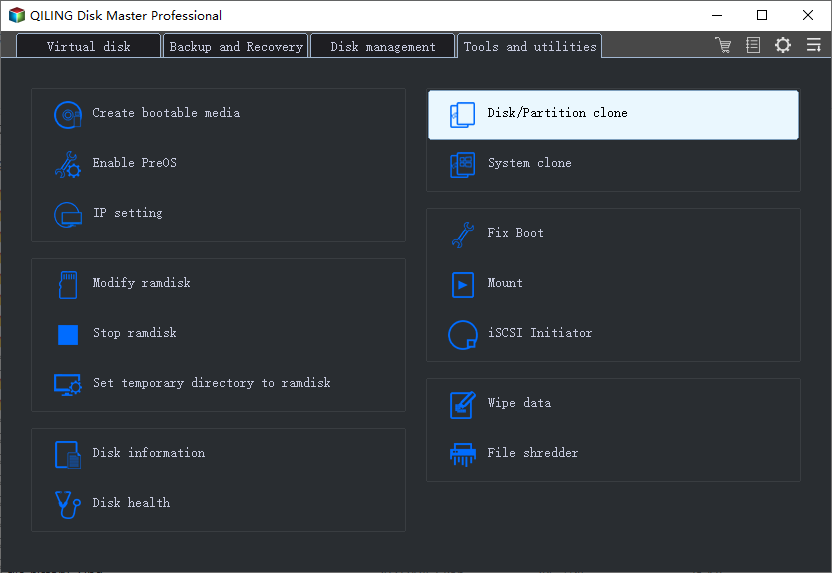
2. To select the whole disk that has your dual OS, click on the disk in the left-hand side panel and then click on the "Erase" button. This will delete all data on the disk, so make sure you have backed up any important files before proceeding.
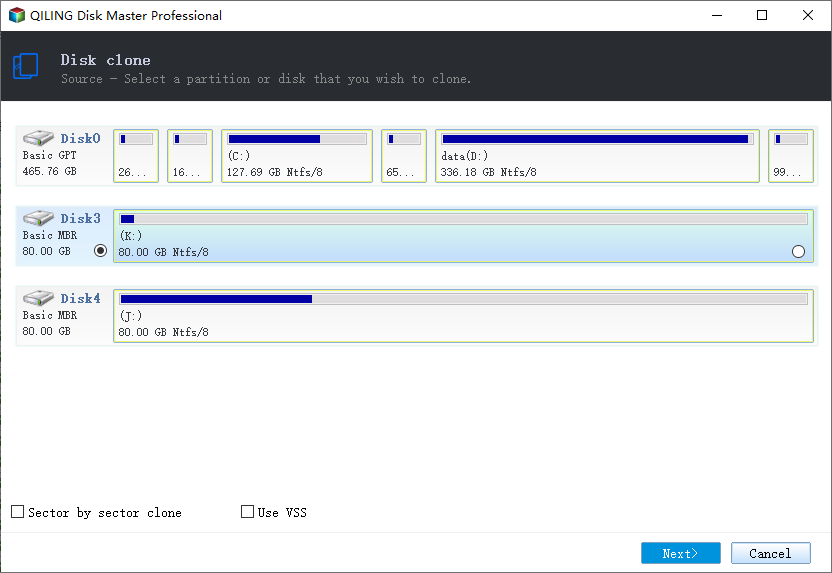
3. To save a dual operating system, choose the target partition or hard disk where you want to save it.
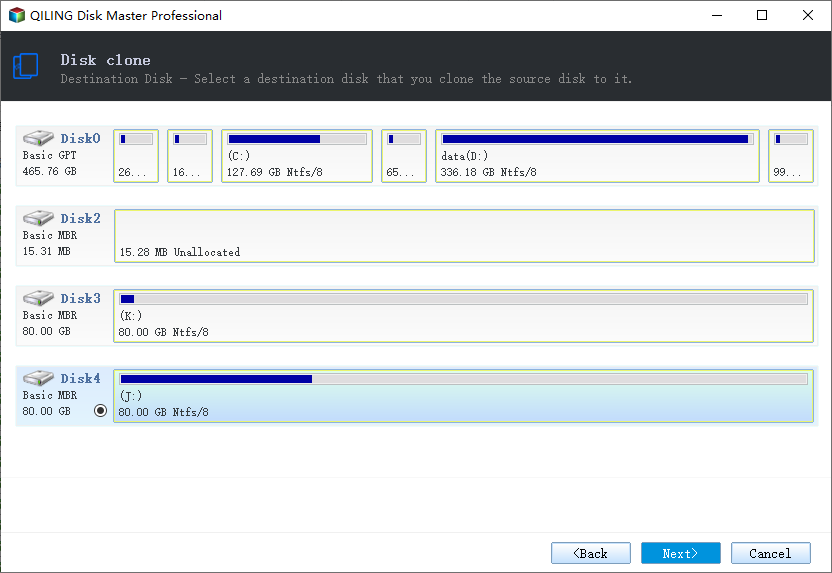
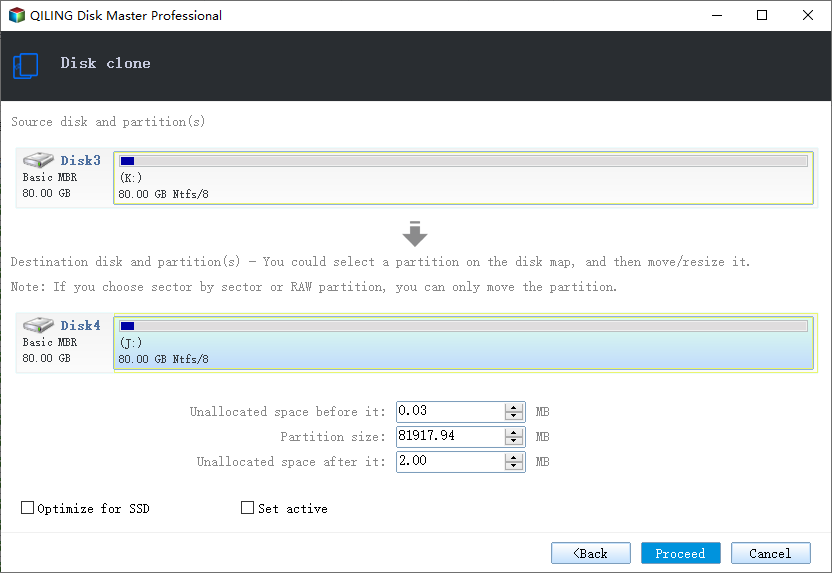
4. Verify the disk layout to confirm the source and destination disk settings, then click Proceed to execute the dual OS clone.
If the destination disk is an SSD, remember to tick Optimize for SSD under Advanced options.
#Follow-Up: Add Boot Option in BIOS for Dual Boot OS
After cloning your OS disk, there are still some follow-up operations to be completed. The cloning process is not the final step, but rather a crucial part of the overall process. Once the cloning is done, you'll need to take care of a few more tasks to ensure a smooth transition.
#1. Set New Drive as Boot Drive
Step 1. Restart the computer, press F2/F8/F11, or Del to enter BIOS.
Step 2. On the boot menu, enter the Boot Priority section and set the new disk as the boot drive.
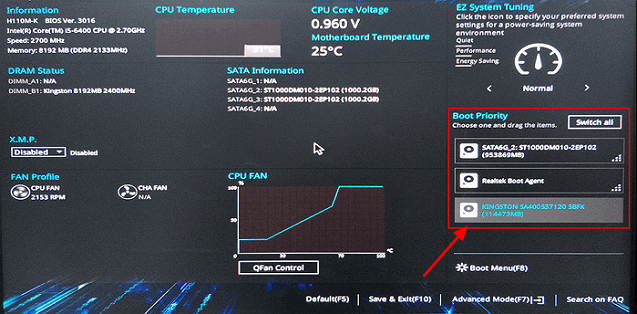
Step 3. Save the changes and reboot the PC.
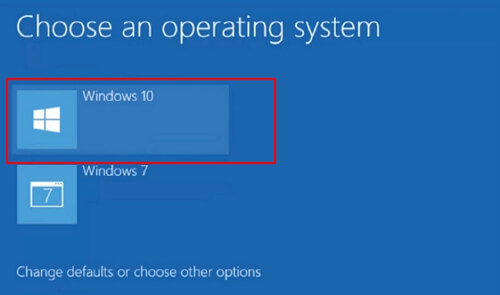
Step 4. Select the desired Windows on the Choose an operating system window boot up.
Tip
If you've installed a dual-boot OS on two new disks, you can set the major OS disk as the primary boot drive. Save the changes and exit the BIOS settings. Your computer will then automatically boot into Windows from the new OS disk.
#2. Add Boot Options to BIOS
If you found that the second OS is not bootable because no boot option is detected in BIOS, you'll need to add one to BIOS.
To do so, you have two ways out:
1. Turn to the Microsoft support team for help.
You can contact them by visit: support.microsoft.com.
2. Customize Qiling Tech Support Help.
Take Steps, You Can Have a New Dual Boot OS Drive
Cloning and migrating dual-boot systems into a new disk has become a relatively simple task for ordinary users, thanks to the availability of user-friendly software solutions. These tools allow users to easily clone their existing system, including multiple operating systems, to a new disk, making the process of upgrading or replacing a hard drive much more straightforward. This eliminates the need for advanced technical expertise, making it accessible to a wider range of users.
To clone and upgrade your dual boot OS drive to a new HDD/SSD, follow this guide and use Qiling Backup for assistance. This will provide a complete step-by-step process to transfer your operating system and data to a new storage device.
Upgrading your computer's RAM and storage can significantly improve its performance, allowing for faster reading and writing speeds, which can be a game-changer for productivity and overall user experience. It's definitely worth considering.
For a single Windows boot drive, follow the boot-drive migration checklist; a dual-boot disk needs extra care.
Related Articles
- How to Fix Error Code 0x80070002 in Windows Update
- 2021 Complete Guide: How to Boot from SSD After Cloning
- Create Portable Windows 10 Creators To Go USB Drive
- Can You Create Windows 10 Recovery/Repair Disk from Another Computer
- How to Clone Windows 8 Hard Drive Easily Along with Operating System And Applications
- Lenovo Onekey Recovery Driver Initialization Failed after Windows Update
Lenovo OneKey Recovery driver initialization failed please reinstall application and still fails after reinstalling, this mainly occurred after users upgrading Windows from 7 to 8 or 10. To reuse OKR, reinstall Win7 or just use Qiling Disk Master.
Products
Articles & Tutorials
- Data Recovery
- Data Backup
- File Recovery
- File Backup
- System Backup and Restore
- Disk and Partition Clone
- Technical articles
- Mobile articles
- Disk Master Help
- Windows Data Recovery Tutorials
- Windows Secure Delete Tutorials
- Windows Partition Management Tutorials
- Windows File Backup and Restore Tutorials
- Windows System Backup and Restore Tutorials
- Windows Disk Backup and Restore Tutorials
- Windows Clone Tutorials